Free tools Windows power users keep installed
One-click scans. No signup required.
Yes—coho salmon, also called silver salmon, are fished recreationally in parts of Alaska and along the Pacific coast, as well as in introduced Great Lakes and inland-reservoir populations. Whether you can target or keep one depends on the specific water, date, stock, and local rules. Check the current regulations before fishing; permission to catch a coho does not automatically mean permission to keep it.
Where and when can you catch coho salmon?
Coho occur across the North Pacific and in many coastal streams and rivers from Alaska to central California. They are most abundant in North American coastal waters from southeast Alaska to central Oregon. Introduced populations are also found in all five Great Lakes and in other landlocked reservoirs. NOAA Fisheries’ coho overview describes their range and life cycle.
Coho use both freshwater and saltwater. Juveniles rear in streams, estuaries, and wetlands; adults feed in the ocean for about 1½ years, then generally return to their natal streams in fall or early winter to spawn. That seasonal movement helps explain why coho opportunities vary by place and time. It does not establish a season for any particular fishery.
Can you legally keep a coho salmon?
There is no universal retention rule. Managers may set seasons, quotas, size limits, daily bag limits, and gear restrictions based on abundance and in-season returns. Rules can differ between ocean, river, lake, and reservoir fisheries, and between wild and hatchery fish. Check the current state, tribal, or federal regulation for the exact water and date you plan to fish.
#1 Best Overall

- UV GLOW COLORS HIGH VISIBILITY: These kokanee lures feature UV glow colors to increase visibility in low light or deep water. These squid lures fishing saltwater hoochies trigger strikes from kokanee, trout, and salmon in fresh and saltwater
- PRE-RIGGED WITH QUALITY OCTOPUS HOOKS: Each lure comes ready to fish with pre-rigged octopus hooks, reducing setup time. Perfect for trolling behind flashers, these rigs are ideal for anglers seeking convenience and performance right out of package
- SOFT YET DURABLE SYNTHETIC SKIRTS: Made with flexible synthetic materials that mimic natural baitfish movement. The soft squid skirts walleye fishing lures are resistant to wear and provide long-lasting action throughout multiple fishing trips
- VERSATILE FOR FRESHWATER & SALTWATER USE: These salt water lures fishing perform well in lakes, rivers, and coastal waters. Whether you’re chasing kokanee in the highlands or salmon in the bay, this gear adapts to your target and location with ease
- PERFECT SIZE FOR MULTIPLE SPECIES: Sized for high strike rates from trout, kokanee, and salmon. Ideal for trolling setups and trolling lures saltwater targeting finicky fish in a range of water conditions. Excellent addition to any tackle box
Two official examples illustrate how sharply rules can differ. A NOAA bulletin allowed coho retention from Cape Falcon to Humbug Mountain, Oregon, on September 20, 2026, with a daily bag limit of two salmon and no fin-clip requirement. That notice applies to the specified area and date; it is not a general Oregon season. By contrast, the California Department of Fish and Wildlife states: “Retention of coho (silver) salmon or steelhead trout is prohibited in any ocean fishery.” See its ocean fishing regulations and check for current updates before heading out.
Rules can change during a season. A past opening or allowance does not guarantee that retention is legal on your next trip.
Rank #2

- Ocean Run Salmon, Bass, Steelhead, Coho, Silver Salmon, Humpy, Pink Salmon, King Salmon, Chinook, Sockeye
- 42-inch and 40-lb leader optimized to troll for king salmon
- 4.7 Inches/12cm UV Coated
- Double Snell Hook, chemical polish, super sharp
- Gill squid skirt to increase attraction
How do you identify a coho?
Correct identification matters because wild, hatchery, and protected fish may have different rules. In ocean condition, a coho typically has a dark metallic blue or green back, silver sides, a light belly, and small black spots on its back and upper tail lobe. Its lower-jaw gumline is lighter than a Chinook’s.
As a coho enters freshwater to spawn, it darkens and develops reddish-maroon sides. Spawning males develop a strongly hooked snout and large teeth. For a comparison with other salmon, consult NOAA’s coho identification and biology information; do not rely on color alone when a legal decision depends on species or stock.
Rank #3
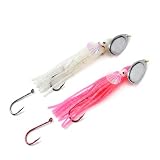
- Ocean Run Salmon, Bass, Steelhead, Coho, Silver Salmon, Humpy, Pink Salmon, King Salmon, Chinook, Sockeye
- 42-inch and 40-lb leader ready to troll for king salmon
- 4.7 Inches/12cm UV Coated
- Double Snell Hook, chemical polish, super sharp
- Gill squid skirt to increase attraction
Why do wild and hatchery status matter?
NOAA reports that one coho evolutionarily significant unit is listed as endangered and three are listed as threatened under the Endangered Species Act. These protections, along with local rules, make accurate identification and prompt release of fish that cannot be retained important. NOAA’s protected coho information describes the listed units.
In Washington, Oregon, and the Columbia River, adipose-fin clipping is used to mark hatchery fish so anglers can distinguish them from wild coho where regulations require it. Do not assume every unclipped fish is legal to keep: verify the local marking, release, and retention rules for the specific fishery.
Rank #4

- Ocean Run Salmon, Bass, Steelhead, Coho, Silver Salmon, Humpy, Pink Salmon, King Salmon, Chinook, Sockeye
- 42-inch and 40-lb leader ready to troll for king salmon
- 4.7 Inches/12cm UV Coated
- Each Lure has crenated hook(s), chemical polish, super sharp
- Gill squid skirt to increase attraction
What gear works for coho salmon?
There is no single best lure or method for every coho fishery. NOAA describes bait and lures in trolling fisheries and notes that recreational anglers use varied gear. Choose the approach permitted for your water and match it to the fishery:
- Ocean: trolling with bait or lures is used in some fisheries.
- Estuary, river, or lake: anglers use varied recreational gear; permitted techniques and tackle depend on local regulations and conditions.
- Lures and hooks: compare coho salmon fishing lures by how they suit the target water and technique, then check local rules for allowable gear and hooks.
NOAA calls coho “spectacular fighters and the most acrobatic of the Pacific salmon.” That reputation is no substitute for checking the rules before casting or trolling.
Quick Recap
What to check before a coho fishing trip
- Identify the exact water and jurisdiction, including whether the fishery is ocean, river, lake, or reservoir.
- Read the current regulation or official notice for the date you will fish; check for in-season changes.
- Confirm whether coho retention is allowed, and note any season, area, bag, size, or gear limits.
- Learn the local rules for identifying hatchery fish and releasing wild or protected fish.
- Keep the relevant regulation available while fishing, and release any fish you cannot confidently identify or legally retain.
Product prices and availability are accurate as of the date/time indicated and are subject to change. Any price and availability information displayed on Amazon at the time of purchase will apply.




