
Some links on this page are affiliate links: if you buy through them we may earn a commission, at no extra cost to you.
A scratching post solves a focused problem: it gives your cat a safe surface for clawing, stretching and scent marking. A cat tree does that only if it includes suitable scratchers, while also adding height, perches, hiding places and play space. Choose a post when scratching is the main issue or floor space is limited; choose a tree when your cat also seeks elevated lookout points or several separated resources. Many homes benefit from both, selected around the cat’s existing scratching direction and material preference.
What is the difference between a scratching post and a cat tree?
The key difference is scope. A scratching post is a dedicated scratching station. A cat tree is a larger, multi-level structure that may combine scratching surfaces with climbing, resting and hiding areas.
As an Amazon Associate I earn from qualifying purchases.
What’s actually slowing this PC down?
Pick the symptom - the matching free tool is one click away.
| Feature | Scratching post | Cat tree |
|---|---|---|
| Main job | Scratching, full-body stretching and marking | Scratching plus climbing, perching, hiding and vertical enrichment |
| Footprint | Usually compact and easy to place beside furniture or a sleeping area | Larger, with multiple levels and a greater need for floor space |
| Orientation | Vertical, horizontal or angled; match the cat’s preference | Often combines upright posts and horizontal platforms, but layouts vary |
| Materials | Sisal, rope, cardboard, carpet or wood | Often sisal or carpet posts with fabric-covered platforms |
| Stability requirement | Must not slide or tip during a full-body scratch | The base, posts and upper levels must stay stable during climbing and scratching |
| Best fit | A cat with a clear scratching target or a small home | A cat that also wants height, observation points, hiding places or several scratching locations |
Do cats need a cat tree if they already have a scratching post?
No. A cat does not need a cat tree merely because it has a scratching post. The post covers scratching and stretching; a tree becomes worthwhile when your cat regularly climbs, watches the room from high places, hides, or needs resources distributed across a multi-cat home.
Choose only a scratching post when
- Your cat reliably scratches furniture corners, chair legs or another specific spot.
- You have limited floor area or need a station directly beside the target.
- Your cat shows little interest in climbing or elevated resting places.
Add a cat tree when
- Your cat seeks windowsills, shelves or the tops of furniture.
- Several cats need separate elevated resting and scratching resources.
- You want one structure to combine perches, hiding space, play and scratching.
Inspect the actual layout rather than assuming every tree is suitable: some have only short posts, crowded platforms or no usable horizontal scratcher.
Popular on Amazon

- Dimensions: 12.2x13.8 inch base board, made of high-quality P2 particleboard, featuring a sturdy base
- Multifunctional Activity Center: Multi-level design, spacious cozy condos, perch, and round hammock
- Furniture Protection: 100% sisal-wrapped posts and pad are perfect for scratching, protecting furniture and curtains
- Safe and Reliable: Pet safety is the top priority, with no sharp edges, ensuring cats can play with peace of mind
- Easy to Assemble: Comes with detailed instructions and tools, can be completed in minutes
How do I choose the right scratching direction and size?
Start with what your cat already scratches. Furniture corners and chair legs indicate a preference for vertical or angled scratching; rugs and carpet indicate horizontal scratching.
- Observe the target. Note whether the cat scratches upright, flat on the floor or at a slant.
- Match the reach. A vertical post should let the cat stand on its hind legs with forelegs fully extended. A short post forces an awkward crouch and may send the cat back to furniture.
- Match the location. Put the scratcher beside the current target, near a sleeping area, or on a well-traveled route.
- Test stability. Push the base and apply the kind of force a scratching cat would use. It should not wobble, slide or tip.
If you later move a successful scratcher, shift it gradually after the cat is using it consistently; an abrupt move can make the original target more appealing again.
Is sisal, cardboard, carpet or wood best?
There is no universal winner. The most reliable choice is a material that resembles the surface your cat already selects, while still providing a secure grip.
Also popular on Amazon

- Multifunctional Design: Overall size 16.93"L x 13"W x 17.7"H. This cat cat tree is not only a climbing device, but also a comfortable sleeping platform, entertainment and play area, and a claw grinding board. Meet the various needs of cats
- Endless Fun with Spring&Hanging Balls: Watch your kitties go wild with excitement! The cat tree comes with various types of hanging balls and spring balls that provide endless fun and entertainment,keeping your cats engaged and happy for hours
- Cat Scratching Board to Save Furniture: The cat scratching board is covered by natural sisal material which is harmless and also durable, not only satisfies the scratching instincts of felines but also protects the expensive furniture from sharpening claws
- Cozy Top Platform for Relaxation: Our cat tree features a soft and comfortable top platform that provides the perfect spot for your cats to relax and catch some Z's.They'll adore lounging on thiscozy platform day and night
- Easy Assembly & Easy to move on: Easy to assemble, with detailed instructions and tools.Get it done in a few minutes, saving time and effort. And it's lightweight and easy to move.You can effortlessly move it to any corner of your home, ensuring your furry friends always have a new favorite spot
| Substrate | Useful characteristics | Points to check |
|---|---|---|
| Sisal or sisal rope | Tough and resistant to shredding; widely used on upright posts | Confirm the wrap is tight and the post remains firm as fibers wear |
| Corrugated cardboard | Inexpensive, commonly replaceable and available in horizontal forms | Expect loose shreds and replace it when the usable surface is gone |
| Carpet | Can suit cats that prefer soft textile surfaces | Avoid tight loops that can catch claws; carpet can wear and retain debris |
| Wood | Durable and closer to a natural rough surface | Check that edges are smooth and the structure cannot shift |
In a 2021 report from the American Animal Hospital Association and American Association of Feline Practitioners, cats used preferred substrates more often when offered either a simple upright post or a cat tree with at least two levels and at least 3 feet of height. Cats aged 10–14 years preferred carpet in that report, while other age groups more often preferred rope. Those findings describe observed preferences, not a rule for every cat.
How can I make a cat tree safe and useful?
Safety depends on the whole structure, not just its height. A tall tree is useful only when its base and upper platforms remain stable as the cat jumps, turns and scratches.
- Choose a broad, solid base that does not rock when pushed.
- Check every fastener after assembly and periodically thereafter.
- Make sure platforms do not twist and that hideaways have unobstructed entrances.
- Inspect fabric and carpet for loose threads or tight loops that could catch claws.
- Verify that the tree’s scratch surfaces are long enough for a full stretch, not merely decorative short posts.
- Place the structure where the cat already spends time, such as near a window or a sleeping area, while leaving a clear route around it.
For a large or multi-cat household, provide more than one separated scratching and resting resource. Spacing them apart lets cats avoid competition rather than forcing every cat to pass through one busy station.
Quick wins for a faster PC:
Clear out junk files and repair common Windows errorsFree Scan →Fix the driver behind crashes, sound loss and screen glitchesFind Drivers →Repair Windows errors before they cause bigger problemsFix Now →Also popular on Amazon
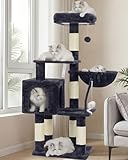
- Ideal design of structure: Structure of the cat tree is designed according the climbing habits of cats. Two jumping platforms not only increase the active space but also help kitties and older cats to climb up and down
- Stability is the Primary Consideration for A Cat Tower: Sturdy cat climbing frame base, sisal wrapped scratch posts and Anti-toppling devices ensures the security of active kittens and cats playing on the activity centre
- Spacious and Removable Top Perch: The well-padded top platform is suitable for kittens. They can lie on the soft place as a bed to sleep, observe and nap
- Lazy Cats Favorite Basket: Cats naturally like the feeling of being wrapped , which makes them feel safe, therefore a comfortable and strong basket are always necessary
- A Cat teasing stick and Plush Ball for Kittens to Play: The extra cat teaser stick increases the interactive fun of cat and its owner. The toy ball with bell do not make too much noise. It can meet the cats' play needs while not disturbing the owner
How do I redirect a cat that scratches furniture?
Redirecting works better than punishment because scratching is normal, instinctive behavior. Cornell University College of Veterinary Medicine notes that it is innate and can be difficult to stop; the ASPCA likewise emphasizes that cats like to scratch.
- Place the selected post or scratcher directly beside the furniture target.
- Invite investigation with a toy, treat, praise or a small amount of catnip if your cat responds to it.
- Reward voluntary use immediately.
- Do not force the cat’s paws onto the surface; that can make the station aversive.
- Once use is consistent, move the scratcher only a small distance at a time if its original position is inconvenient.
Protect the furniture temporarily while the new habit forms, but keep the approved surface available at the exact place the cat expects to scratch.
When should a scratching post or cat tree be replaced?
Wear is not automatically a defect: a ragged post is often evidence that the cat is using it. Replace a section when it no longer offers a usable grip, or when the material has become loose enough to create hazards.
Also popular on Amazon

- 【PREMIUM SISAL CAT SCRATCHING POST】This tall cat scratching post is made of 100% natural non-toxic sisal, proper sturdiness satisfies cats’ scratching needs. The cat scratching posts for indoor cats not only helps keeping cat's claws in shape, but also is a great exercise and a good way to reduce stress. A healthy cat is a cat that able to scratch and stretch without worry, and this is the reason why it is important for a cat and a cat owner to have a scratching post.
- 【COMFY STABLE BASE】Although the sisal post’s structure is simple, adult cats can have full stretch and scratch away on it, without this thing turning over! The reinforced base of this scratching post is made of heavy chipboard, which can provide strong stability and hold on up to violent attack. The flannel cover make the tall scratching posts for indoor cats adults also a great place to lay on for rest. Huge fun with the simple structure.
- 【3-in-1 CAT SCRATCHING POST】The cat sisal scratching posts equipped with total 3 stimulating cat toys, one dangling plush ball on the top, one dangling mouse in the middle, one spring plush ball on the base. With all these toys, cats can have more than scratch fun. Cats can jump, sit or lay down to play with this sisal post. Punching, swatting, scratching, no more "cats' rules" in the house. Releasing cats’ nature freely gives you a happy cat and also a happy pet owner.
- 【MINUTES INSTALLTION】With the included Allen key, you only need to screw all the parts of the sisal post together, assemble instruction also included. With just several minutes of simple screw and twist, you will get a 15.7"x 15.7"x 32" size scratching post, which can satisfy cats from new born to adult. Naughty cats can enjoy this brand new toy right away, no need to wait.
- 【FURNITURE SAVER】Cats scratch when they play, especially when they are marking their territory. Without any proper material for our feline friends' claws to scratch on, they will be likely to direct this behavior onto your furniture. ANWA cat scratching post's sisal surface and vertical design would satisfy most kitties. With the ideal 32" height, large cat not only can scratch their claws, but also can stretch their body.
- Retighten or replace fasteners when platforms or posts loosen.
- Remove carpet with snagging loops or damaged edges.
- Replace cardboard when it is flattened or no longer provides a meaningful scratching surface.
- Discard any structure that shifts or topples despite tightening.
There is no dependable universal service-life figure. Inspect the item according to use, material wear and structural stability rather than a calendar deadline.
Which setup works best for a multi-cat home?
Use multiple separated resources instead of one central station. Cats may need to scratch, rest or climb without being challenged by another cat, so distribute posts, horizontal scratchers, beds and elevated platforms through the rooms they already use.
A practical arrangement is one or more tall, stable posts near common scratching targets, horizontal cardboard or other preferred surfaces near sleeping areas, and a tree positioned on a prominent route or lookout point. The exact number depends on the cats and the home; the important test is whether each cat can reach a resource without having to pass a competitor.
Also popular on Amazon

- ENLARGED HAMMOCK - This cat tree is Equipped with a sturdy and spacious square hammock, this large cat tree tower offers a comfortable resting spot for your adult cat. The hammock design allows large cats to lie down, providing a relaxing space for napping and rejuvenation
- SPACIOUS AND COMFORTABLE CAT CONDO - This cat tower provides a spacious cat condo that allows cats to rest, hide, or play comfortably inside. The cat cave is a safe, private space that meets cats' needs
- SISAL ROPE SCRATCHING POST - The cat tower with 4 scratching posts and a scratching board is meticulously lined with durable natural sisal. The rough texture of sisal provides an ideal surface for your feline friends to scratch
- ENLARGED REMOVABLE TOP PERCH - Up to 70 inches tall cat tree includes the enlarged top platform is detachable for easy cleaning and maintenance. Offers a spacious resting and observation area for cats
- DUAL CLIMBING PATHS FOR VARIED ACTIVITY PLEASURES - This cat climbing tower features two upward climbing routes, integrating activity and rest to meet cats' various needs and enhance enjoyment
What should I check before buying?
- Behavior: vertical, horizontal or angled scratching?
- Substrate: sisal, cardboard, carpet or wood?
- Dimensions: can the cat fully extend its body?
- Stability: does the base stay planted under force?
- Layout: are platforms, hideaways and scratch surfaces actually usable?
- Household: are resources separated for multiple cats?
- Maintenance: can worn sections be tightened, cleaned or replaced?
Frequently Asked Questions
How tall should a vertical cat scratching post be?
It should be tall enough for the cat to stand on its hind legs and extend both forelegs fully. Measure the cat’s normal stretch rather than relying on a nominal product label.
Can I use a cat tree as the only scratcher?
Only if its posts match your cat’s preferred direction and material and remain accessible when the tree is occupied. A separate scratcher is useful when the tree’s surfaces are too short, crowded or located away from the cat’s usual target.
Are cardboard scratchers messy?
Corrugated cardboard commonly sheds loose pieces as it is used. Put it on a washable mat and replace it when the remaining surface is too flattened to grip.
How can I tell whether a carpeted cat tree is safe?
Look for securely attached covering without tight loops, loose threads or frayed edges. Recheck those areas after use because damaged carpet can catch claws.
Should older cats get a different scratching setup?
Offer easy-to-reach surfaces and observe which texture they choose. The 2021 professional report found carpet was preferred by cats aged 10–14 years, but individual choice should determine the final setup.





Leave a Reply