
Some links on this page are affiliate links: if you buy through them we may earn a commission, at no extra cost to you.
Most newly adopted pets need a decompression period, not instant obedience. A dog may hide, vocalize when left, or have accidents while it learns a new home; a cat may remain under furniture for days. The safest response is a quiet base, predictable care, reward-based training, and close observation. ASPCA’s 3-3-3 framework is a useful planning guide—about three days to decompress, three weeks to settle into routines, and three months for continued bonding—but individual animals may move faster or slower. Separation-linked panic, prolonged hiding, sudden accidents, refusal to eat or drink, or self-injury are not “bad behavior”: they warrant veterinary or qualified behavior help.
What should you expect during the first 72 hours after adoption?
Keep the first days intentionally small. Set up one quiet area with bedding, food, water, and species-appropriate retreats before the pet arrives. Limit visitors, noise, handling, and demands. Let the animal decide whether to approach; do not drag a dog from a crate or pull a cat from under furniture.
As an Amazon Associate I earn from qualifying purchases.
The ASPCA’s 3-3-3 framework describes a common pattern: the first three days are for calm space and basic routine, the next three weeks for settling and introductory training, and the first three months for bonding and habit-building. It is a planning aid, not a deadline. AAHA’s February 10, 2026 rescue-dog guidance likewise notes that hiding, reduced appetite, and uncertainty can occur at first, with personality and routines emerging over subsequent weeks.
Prepare a low-pressure base
- Use a room, gated section, or open crate that the pet can enter and leave safely.
- Keep food and water accessible; for cats, place the litter tray nearby but not directly inside the hiding place.
- Offer a covered bed, box, perch, or other retreat that fits the species and cannot collapse or trap the animal.
- Keep a written log of eating, drinking, urination, defecation, sleep, and unusual behavior.
Brief, calm contact is better than repeated checking. Sit nearby, speak softly, and allow the pet to initiate interaction. A quiet retreat is a coping tool, not a privilege that must be earned.
Popular on Amazon

- Certified Gentle & Safe Pet Carpet Cleaner Solution: Chlorine-free, color-safe, no hazardous propellants or residue; safe around pets and children; Certified Safe for all carpets with the CRI Seal of Approval
- Pet Enzyme Carpet Cleaner for Stains, Odors, Residue: If it's gross, it's gone; the stain and the stink, from pet urine and feces to vomit or other organic spills, this professional-strength eliminator tackles it all
- Cat & Dog Urine Enzyme Cleaner for Every Surface: For use on carpets, floors, furniture, clothing, litter boxes, kennels, carriers, and every pet living or sleeping area
- Enzyme Activated: Natural enzymes activate on contact with odors and stains, feeding on ammonia crystals and organic matter deep-down until they're completely eliminated
- Discourages Repeat Accidents: Makes odors disappear so pets are less drawn back to the same spot
How can you tell normal decompression from a problem?
Early caution is common; the pattern, intensity, and direction over time matter more than a single shy day. A pet that gradually eats, explores, rests, and accepts low-pressure interaction is generally settling. A pet that cannot eat or drink, injures itself trying to escape, or remains intensely distressed needs help.
| Pattern | What it can look like | Useful first response |
|---|---|---|
| Normal decompression | Hiding, quietness, reduced appetite for a short period, cautious exploration | Quiet base, predictable schedule, no forced contact; monitor trends |
| Separation-linked distress | Signs cluster around departure cues or begin soon after being left alone | Prevent panic, record episodes, begin sub-threshold absences, seek professional help when moderate or severe |
| Incomplete house-training | Accidents at varied times, especially when supervision or routine is inconsistent | Scheduled meals and outings, close supervision, immediate outdoor rewards |
| Marking | Small amounts, often on vertical surfaces, rather than a full bladder or bowel movement | Veterinary check and behavior assessment; clean thoroughly and manage triggers |
| Possible medical issue | Sudden change, frequent urination, diarrhea, pain, lethargy, refusal to eat or drink | Contact a veterinarian promptly |
AAHA cautions that anxiety or reactivity can be masked by initial stress and become obvious weeks or months later. Delayed onset does not prove that the adoption caused a new disorder; the animal may simply be showing more of its normal behavior as it feels safer.
Crashes, No Sound, or Screen Glitches?
Random freezes, missing sound and display glitches usually trace back to one bad driver. Find and replace yours safely.Free scan · under a minuteWindows Errors? Fix Them Before They Spread
Repair common Windows errors and clear accumulated junk for a smoother, more stable PC - no reinstall needed.Free scan · no reinstallWhy does an adopted dog or cat hide, and what should you do?
Hiding lowers stimulation and gives a frightened animal control. Punishing, pulling, blocking, or repeatedly coaxing it out removes that control and can prolong fear. Provide a safe retreat, keep essentials available, and reward voluntary steps into the open.
If your cat is hiding
Cats commonly hide for a few days after moving. Give the cat a quiet room and several approved hiding options. Put food, water, and a litter tray close enough to find but not inside the chosen hiding spot; crowding the refuge with bowls can make it feel unsafe. Sit quietly for short periods, avoid staring, and place a small food reward where the cat can take it without being cornered. Gradually reward exploration rather than carrying the cat into the rest of the home.
Cats Protection advises veterinary advice when hiding is prolonged or accompanied by health concerns. Do not wait for a calendar milestone if the cat is not eating or drinking, is not toileting, or appears painful or weak.
Also popular on Amazon

- FOR SEVERE DOG MESSES: Powerful enzymatic formula works to eliminate tough stains and odors from dog urine, diarrhea, vomit and other bio-based accidents.
- LIGHT FRESH SCENT: Dog odor control formula gets your home smelling clean again.
- ENZYMATIC FORMULA: Continues working as long as any bio-based mess is still present.
- DISCOURAGES RESOILING: Removes the odor from even the toughest dog messes.
- SAFE FOR PETS AND HOME: When used and stored as directed, this formula can be used around your pets.
If your dog is hiding
Allow a dog to remain in an open crate, behind a gate, or in another safe retreat. Calm speech and an invitation tossed with treats are reasonable; reaching in, dragging the dog out, or cornering it is not. Keep the leash and exit route safe, and use a predictable routine for meals, walks, rest, and toilet breaks.
Quick wins for a faster PC:
Repair Windows errors before they cause bigger problemsFix Now →Fix the driver behind crashes, sound loss and screen glitchesFind Drivers →Clear out junk files and repair common Windows errorsFree Scan →The Association of Shelter Veterinarians’ shelter-care guidelines state that all cats must have the opportunity to hide within their enclosure, and the same principle—choice, retreat, and enrichment—helps dogs adjust. A retreat should remain available even after the pet becomes social; removing it can make later stress harder to manage.
How do you recognize separation anxiety rather than ordinary house-training trouble?
Separation anxiety is distress specifically connected to separation. Look for a cluster of signs that starts around departure cues or within minutes of being left: barking or howling, pacing, panting, salivation, agitation, destruction near exits, escape attempts, urination, or defecation. An isolated accident at a random time is more consistent with incomplete training or a medical problem than separation panic.
Record the pattern safely
Use a camera or audio recording when practical, while keeping the episode short and safe. Note what happened before departure, how quickly signs appeared, where they occurred, and whether the dog could eat or settle. Do not create a long absence just to test the dog; a severe panic episode can make treatment harder.
Start below the fear threshold
ASPCA guidance recommends many short, non-distressing absences followed by gradual increases. Begin with a duration the dog can tolerate—sometimes only a few seconds. Return before anxiety starts, pause until the dog is calm, and repeat. Increase time in small, variable steps only while the dog remains relaxed. If distress appears, shorten the next repetition rather than pushing through it.
Also popular on Amazon
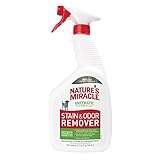
- SPOT STAIN & ODOR REMOVER: Begins to break down and remove stains immediately on contact.
- LIGHT CITRUS SCENT: Dog odor control formula gets your home smelling clean again.
- ENZYMATIC FORMULA: Continues working as long as any bio-based mess is still present.
- TRUSTED BRAND: From the maker of Nature’s Miracle products, the pet stain and odor removing brand you trust… because it works!
- SAFE FOR PETS AND HOME: When used and stored as directed, this formula can be used around your pets.
- Identify a calm baseline and departure cues that trigger concern.
- Practice neutral cues, such as picking up keys without leaving, until they no longer predict an absence.
- Leave for a few seconds, return quietly, and wait for calm before repeating.
- Build duration gradually across many sessions; change only one difficulty at a time.
- Arrange human care, daycare, or another safe management option when a longer absence exceeds the dog’s current ability.
Food-stuffed enrichment can support mild cases, but a highly anxious dog may be unable to eat when alone. Do not interpret refusal of a treat as stubbornness; it can indicate that the exercise is too difficult.
When professional treatment is needed
Moderate or severe distress, frantic escape attempts, self-injury, persistent vocalization, or inability to progress calls for a certified applied animal behaviorist, veterinary behaviorist, or appropriately qualified trainer. A veterinarian can also check for pain or illness and discuss whether medication should support a behavior plan. Flooding—forcing an animal to endure the feared separation—can worsen the problem.
Is a crate the right solution for an adopted dog?
A crate is useful only when the individual dog experiences it as a safe place. Introduce it with an open door, bedding, food, and voluntary short rests. Never use it as punishment or as a way to contain a dog that is panicking.
Panting, drooling, frantic escape attempts, persistent vocalization, or escalating agitation in the crate mean that setup is not calming. Use a dog-proof room, gate, pen, or supervised arrangement instead, and obtain behavior advice. A crate can also worsen injury risk when a dog tries to force its way out.
Do these 3 things before closing this tab:
1Scan for outdated or missing drivers - takes under a minute2Clear out junk files and repair common Windows errors3Fix the driver behind crashes, sound loss and screen glitchesHow do you house-train a newly adopted dog?
Start from the assumption that the dog needs a refresher, even if a shelter described previous training. A new home changes surfaces, schedules, smells, and access, so reliable habits must be rebuilt with management and immediate rewards.
Also popular on Amazon

- Eliminates Stains, Odors & Residue: If it's gross, it's gone; blowouts, urine, vomit and other organic spills disappear, leaving a subtle Meyer lemon scent that quickly dissipates
- Every Surface, Every Time: Fast-acting formula works on floors, furniture, clothing, pet bedding, litter boxes, travel crates, hamster cages, cars, campers, and anywhere else accidents happen
- Minerals & Enzymes: A mineral-based odor neutralizer added to our bio-enzymatic formula feeds on ammonia crystals and organic matter to get to the problem deep-down
- Gentle & Safe Carpet Spray: Chlorine-free, color-safe, no hazardous propellants; safe around pets and children when used as directed; Certified Safe with the CRI Seal of Approval
- Proudly Made in the USA with Domestic and Globally Sourced Components: An eco-friendly formula for the messiest moments of pet parenthood
Set a predictable schedule
- Feed meals at consistent times so elimination becomes easier to predict.
- Take the dog out after waking, after eating or drinking, after play, and at regular intervals appropriate to its age and health.
- Walk directly to the chosen toilet area and wait quietly rather than turning the trip into a long, distracting outing.
- Reward immediately outdoors with praise and a high-value treat, then allow a brief sniff or play period.
- Supervise indoors; use a leash tether, gate, or small dog-proof area when eyes cannot stay on the dog.
Young puppies, older dogs, dogs with gastrointestinal or urinary disease, and dogs coming from kennel environments may need different intervals. Adjust to the individual and consult a veterinarian when the pattern does not improve.
Handle an accident correctly
If you catch the dog in the act, interrupt gently without shouting and take it outside. If you find the mess later, say nothing to the dog; clean the area with an enzymatic product that breaks down odor and prevents repeat use. Never rub a dog’s nose in waste or punish after the fact. The dog cannot connect delayed punishment to the earlier elimination, and fear can produce hiding or secret toileting.
Separate accidents from marking or illness
Full puddles or stools at unpredictable times often reflect incomplete training, while small urine deposits—especially on vertical surfaces—can be marking. Either pattern can coexist with medical disease. Sudden accidents, straining, frequent urination, diarrhea, blood, pain, or a major increase in thirst require veterinary evaluation rather than a stricter training schedule.
What’s actually slowing this PC down?
Pick the symptom - the matching free tool is one click away.
What should you do when a pet will not eat, drink, or settle?
Reduce stimulation and verify that the pet can reach food, water, litter, and a safe toilet area without crossing a frightening space. Offer the familiar diet in small, quiet presentations and avoid surrounding the animal while it eats. Do not force-feed or repeatedly pull a hiding pet into view.
Contact a veterinarian for refusal to eat or drink, marked lethargy, vomiting or diarrhea, breathing difficulty, pain, dehydration, or any concern about safety. Seek urgent help for self-injury or frantic escape behavior. A behavior professional can coordinate with the veterinarian when fear, anxiety, and training problems overlap.
Also popular on Amazon

- SPOT STAIN & ODOR REMOVER: Begins to break down and remove stains immediately on contact.
- LIGHT CITRUS SCENT: Dog odor control formula gets your home smelling clean again.
- ENZYMATIC FORMULA: Continues working as long as any bio-based mess is still present.
- SAFE FOR PETS AND HOME: When used and stored as directed, this formula can be used around your pets.
- TRUSTED BRAND: From the maker of Nature’s Miracle products, the pet stain and odor removing brand you trust… because it works.
How should you decide which management setup to use?
| Situation | Preferred setup | Avoid |
|---|---|---|
| Cat needs a refuge | Quiet room with covered hide, elevated option, nearby resources, and a clear exit | Removing the hide, blocking it, or placing litter and food inside it |
| Dog is cautious but can relax | Open crate, gate, or small room with voluntary access and predictable routine | Forced handling or closing the dog in a crate before it is comfortable |
| Dog panics when alone | Below-threshold absences plus temporary human care or another safe arrangement | Long “practice” absences or flooding |
| House-training is incomplete | Close supervision, scheduled outings, enzymatic cleaning, immediate rewards | Unsupervised access and punishment |
How long will these adoption challenges last?
There is no reliable universal timeline. The 3-3-3 framework offers broad planning points, but separation distress, hiding, and toileting depend on the animal’s history, health, age, environment, and the consistency of management. Measure progress by observable changes: eating and sleeping normally, choosing to explore, recovering quickly after a departure cue, and producing more outdoor toileting with fewer accidents.
Review the plan weekly. If progress stalls, signs intensify, or a new symptom appears, involve a veterinarian and qualified behavior professional rather than simply increasing pressure.
Frequently Asked Questions
Can I leave my newly adopted dog alone on the first day?
Avoid a long, unavoidable absence on day one if you can arrange coverage. First establish a safe area and observe how the dog responds to brief departures; use a sitter, friend, or other safe care for commitments that exceed the dog’s calm tolerance.
Should I put food inside my cat’s hiding place?
Keep food and water close enough for easy access, but generally outside the exact hiding spot so the cat can eat without feeling trapped and the refuge remains uncluttered. Move bowls gradually as the cat begins exploring.
Why did my previously house-trained rescue dog start having accidents weeks later?
Stress can initially suppress normal behavior, and anxiety or reactivity may become visible only after the dog feels safer. Medical problems, marking, schedule changes, and incomplete generalization to the new home are also possible, so a veterinary check and a refreshed routine are appropriate.
Can calming music or a camera cure separation anxiety?
They may help you lower stimulation or identify the exact onset of distress, but neither replaces gradual, below-threshold training. A camera is most useful for preventing accidental progression to panic and for sharing an objective pattern with a professional.
Recommended Free Tools





Leave a Reply