Quick wins for a faster PC:
Clear out junk files and repair common Windows errorsFree Scan →Fix the driver behind crashes, sound loss and screen glitchesFind Drivers →Most familiar cat claims contain a grain of truth, but several point owners in the wrong direction. Scratching is normal feline behavior rather than revenge, declawing is an amputation rather than simple nail removal, milk is not a safe default treat, litter-box accidents often have medical causes, a meow does not carry a single fixed meaning, and cats see well in dim light but not in total darkness.
This article checks six of the most common claims against guidance from the Cornell Feline Health Center (Cornell University College of Veterinary Medicine) and the ASPCA. It does not attempt to cover every cat myth, and it does not address purring or catnip.
Does a cat scratch the furniture to get revenge?
No. Cornell’s feline health guidance describes destructive behaviors such as scratching as commonly part of normal investigation and play. Scratching also serves real feline needs: it leaves scent marks from glands in the paws, and it helps a cat remove the translucent outer sheath that builds up around its claws. A cat that shreds a sofa is usually doing something it is biologically motivated to do, in a place that does not suit the household.
That distinction changes the fix. Because the behavior is normal, the practical goal is to direct it rather than punish the cat’s motives. Cornell recommends consistent, immediate deterrence paired with an appropriate plan, and the ASPCA lists scratching pads and posts among the alternatives to declawing. Placing an appealing scratching surface close to where the cat already scratches is a common, sensible approach, though the sources reviewed here do not specifically prescribe that placement.
Windows Errors? Fix Them Before They Spread
Repair common Windows errors and clear accumulated junk for a smoother, more stable PC - no reinstall needed.Free scan · no reinstallOutdated Drivers Are Slowing You Down
One free scan finds every outdated or missing driver and matches the right update for your exact hardware.Free scan · exact hardware match#1 Best Overall
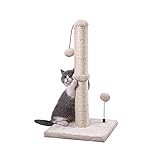
- Premium Quality Materials - This product is made of 100% natural sisal hemp.The base and top is a weighted MDF covering the carpet.Nature High Quality Sisal Safe Plush Long Lasting Usage Stable basement, never tip over easily.
- Protect your furniture - Grab sticks and plush toys combine to attract cats to play and grab, natural sisal is suitable for cats to grab, effectively preventing cats from grabbing furniture
- Designed for indoor use - Neutral colors work well with existing decor in your home.ideal for any living room, bedroom, or home office
- 22"Tall Cat Scratching Post -11.8 x 11.8 x 22 Inches,design for kitties or smaller cats.
- Easy Assemble - ust screw all parts together,Assemble needed, all tools and instructions included.Please contact us if you have any further questions.
Does declawing just remove the nails?
No. The ASPCA states that declawing, also called onychectomy, amputates the last digital bone, including the nail bed and claw, on each front toe. Cornell likewise describes the procedure as amputation and advises a thoughtful consultation with a veterinarian before considering it.
The ASPCA’s position is unambiguous. As its organizational position statement puts it: “The ASPCA is strongly opposed to declawing cats.” The organization lists anesthesia risk, bleeding, infection, post-operative pain, and possible chronic pain among the concerns. This is the ASPCA’s stated position; it is not a description of how every veterinary or legal jurisdiction regulates the procedure.
Rank #2
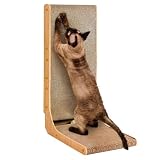
- HIGH QUALITY MATERIALS: The surface of the cat scratching board is made of non-toxic and high-density corrugated paper, which is durable enough to withstand cat scratching.
- INNOVATIVE DESIGN: Our cat scratcher for indoor cats features an L-shaped design. Please place it against wall and sofa to protect your furniture. The L-shaped cat scratcher provides more scratching area for cats to scratch in a variety of positions.
- MULTIFUNCTIONAL USE: Cats can scratch, relax and stretch on our cardboard cat scratcher. Our cat scratch pad also comes with a toy ball to play with. It provides a safe and comfortable environment for cats.
- MULTIPLE SIZES: We offer three sizes of cat scratching pad for you to choose from. The smallest size is specially for kittens. No matter what size your cat is, it enables your cat to scratch and play to its heart's content!
- EASY INSTALLATION: Our cat scratching board adopts a simple installation method and comes with instructions and necessary tools. We also provide an installation video so that you can install it quickly and easily.
Owners who want to manage scratching damage have several nonsurgical routes, summarized below. None is guaranteed to work for every cat, and the right choice depends on the cat and the household.
| Option | Surgical or nonsurgical | What it does | Professional input |
|---|---|---|---|
| Regular nail trimming | Nonsurgical | Keeps claws shorter, reducing damage from scratching | Veterinary or qualified grooming instruction if the owner is unsure how to trim (ASPCA) |
| Scratching pads and posts | Nonsurgical | Offers an appealing surface for the scratching the cat needs to do | Not stated in the sources reviewed |
| Deterrents such as double-sided tape | Nonsurgical | Makes unwanted surfaces less attractive | Not stated in the sources reviewed |
| Temporary claw covers | Nonsurgical | Limits damage while the cat’s claws are covered | Not stated in the sources reviewed |
| Behavior modification | Nonsurgical | Redirects the scratching behavior itself | Expert behavior help, as the ASPCA recommends |
| Declawing | Surgical | Amputates the last digital bone on each front toe | Veterinary surgery, with the risks listed above |
Do cats need milk?
Cats do not need milk, and Cornell’s feeding guidance says milk is not generally recommended as a treat. Many cats are lactose-intolerant and can develop gastrointestinal problems after consuming dairy. The word “many” matters: individual cats vary, so a single cat that seems to tolerate milk does not prove it is safe for all cats. A cat that has been given milk and develops vomiting, diarrhea, or other digestive upset should be assessed by a veterinarian.
The Tool Desk
Outbyte Driver Updater FREEScan for outdated or missing drivers - takes under a minuteDriver Scan →Outbyte PC Repair FREERepair Windows errors before they cause bigger problemsFix Now →Rank #3

- Scratching post provides a place for cats to sharpen their claws and keep nails healthy
- Includes a single pillar scratching post in neutral colors with a replaceable dangle toy
- Natural jute fiber provides an optimal scratching surface
- Sturdy wood base helps prevent the post from tipping
- Ideal for redirecting cats away from scratching household carpet or furniture; spot clean as needed
Is a cat outside the litter box being naughty?
Cornell identifies house soiling as the most common behavior problem reported by cat owners, and it stresses that the right response depends on the cause. The possible explanations include a medical problem, litter-box aversion, or a preference for a different location. Medical causes are a real and frequent consideration. Urinary inflammation can make elimination painful, so the cat avoids the box because it hurts rather than out of spite. Kidney disease, thyroid disease, and diabetes are also listed as possible contributors, through increased drinking, more frequent urination, and litter-box problems.
Because the cause cannot be determined from behavior alone, a cat with a new, persistent, or concerning change in litter-box use should see a veterinarian before any behavioral change is attempted. Once medical causes have been considered, the remaining explanations, aversion to the box or a preferred alternative location, can be addressed with changes to the setup.
Rank #4

- Scratching post provides a place for cats to sharpen their claws and keep nails healthy
- Includes a single pillar scratching post with a replaceable dangle toy
- Natural jute fiber offers an optimal scratching surface
- Sturdy base helps prevent the post from tipping
- Ideal for redirecting cats away from scratching household carpet or furniture; spot clean as needed
Does a meow always mean the cat wants food or attention?
No. The ASPCA describes meowing as normal feline communication with several possible causes. These include a request to be let in or out, heat in an unspayed female, and disorientation linked to cognitive dysfunction in older cats. Hunger and attention-seeking can be among the reasons, but the sound alone does not reveal the cat’s motive. An owner who wants to understand a specific meow should look at the context: where the cat is, what it is doing before and after, and whether the vocalization is new or has changed in frequency. A sudden increase in vocalizing in an older cat, for example, is worth discussing with a veterinarian because it may reflect disorientation.
Can cats see in complete darkness?
Cats see considerably better than humans in dim light, but not in complete darkness. Cornell explains that the tapetum lucidum, a reflective layer beneath the retina, gives light another chance to be absorbed. Cornell reports: “Thanks to the tapetum lucidum, a cat’s sensitivity to light is thought to be about six times greater than that of a human’s.” That figure is an estimate, and the source does not state a publication date for the page. The tapetum explains why a cat’s eyes shine in a flashlight beam, but it does not give cats vision in zero light.
Best Value
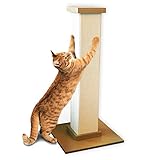
- 32″ height allows cats to stretch fully and tone muscles
- Sturdy 16″ by 16″ base eliminates tipping and wobbling
- Fibrous and durable woven sisal naturally inspires scratching
- Superior to carpeted posts that may snag nail
- Assembles with two included screws
Vision changes deserve prompt attention. If a cat bumps into objects, seems hesitant in rooms it knows, or shows changes in its eyes, Cornell advises contacting a veterinarian promptly rather than assuming the change is normal aging.
Quick Recap
Product prices and availability are accurate as of the date/time indicated and are subject to change. Any price and availability information displayed on Amazon at the time of purchase will apply.




