
Quick wins for a faster PC:
Repair Windows errors before they cause bigger problemsFix Now →Fix the driver behind crashes, sound loss and screen glitchesFind Drivers →Some links on this page are affiliate links: if you buy through them we may earn a commission, at no extra cost to you.
Senior cats commonly develop dental disease, arthritis, chronic kidney disease, hyperthyroidism, high blood pressure, diabetes, gastrointestinal disorders, cognitive changes, heart disease, and cancer. These are not inevitable consequences of aging, and age alone is not a diagnosis. Arrange veterinary advice for any persistent or progressive change in appetite, weight, thirst, urination, stool, grooming, movement, sleep, behavior, or litter-box use. Breathing difficulty, unusually rapid breathing, collapse, seizures, inability to urinate, severe weakness, or marked loss of appetite require urgent contact rather than a routine appointment.
What age counts as a senior cat?
Life-stage labels vary, but the University of Sydney describes cats at roughly 7–10 years as mature, 11–14 years as senior, and 15 years or older as geriatric. These are useful planning points, not strict medical cutoffs. A cat’s lifestyle, body condition, previous illnesses, medications, and current symptoms matter more than a single birthday.
As an Amazon Associate I earn from qualifying purchases.
Crashes, No Sound, or Screen Glitches?
Random freezes, missing sound and display glitches usually trace back to one bad driver. Find and replace yours safely.Free scan · under a minutePC Slower Than It Used to Be?
A free scan shows the junk files, broken settings and background clutter dragging Windows down - then fixes them in one click.Free scan · Windows 10 & 11Older cats often compensate for disease so well that the first visible sign is subtle: a little less jumping, a slower grooming routine, a changed sleeping pattern, or a gradual loss of muscle. The 2023 American Animal Hospital Association (AAHA) guideline states that “old age is not a disease.” A new change should therefore be treated as information to investigate, not dismissed as normal aging.
What are the most common health problems in senior cats?
Several conditions become more likely with age, and the signs can overlap. A cat that drinks more, loses weight, or stops grooming may have a kidney, thyroid, dental, metabolic, orthopedic, or other problem. Only an examination and appropriately selected tests can distinguish them.
Popular on Amazon

- HIGH QUALITY MATERIAL - This low entry senior cat litter box is made of high-quality plastic with good durability and long-lasting performance. The sturdy structure ensure that it can be reused without damage.The large size pet low entry open top litter box for senior kitten does not leave any unpleasant odor and it is not easily broken.
- LOW ENTRY CAT LITTER BOX - The cat litter box for kittens adopts a convenient low entrance design, allowing senior cats & kittens, elderly cats or disabled cats with weak and sickly conditions to enter the litter box without struggling to get in and out.The open top helps to reduce odors by providing better ventilation.
- LARGE SPACE - The spacious dimensions of this senior cat litter box are approximately 23.23 x 16.54 x 4.33 inches /59 x 42 x 11cm, providing ample space for pets such as big cats, bunnies, hamsters, etc.Say goodbye to cramped space.
- WIDELY APPLICATION - The low entry open top litter box for senior kitten is suitable for various occasions and purposes; With the generous size of the gigantic litter box, the large cat litter box is ideal for households with multiple cats, elderly cats, kittens, or small pets, this low entry cat litter box can meet all their needs; It is also very convenient for kittens to do behavioral training.
- EASY TO CLEAN - The smooth and non stick surface make it easy to wipe and clean, preventing litter buildup and odors and keeping your home fresh and your cat's space hygienic. The cleaning is quick and simple, which make it an ideal gift for busy pet owners.
Dental and oral disease
Dental disease is extremely common in older cats. Pain may appear as reluctance to eat, chewing on one side, dropping food, or difficulty with dry food rather than obvious crying. Look for foul breath, drooling, red or bleeding gums, heavy tartar, broken teeth, facial swelling, or a cat that approaches food and then walks away. Cats can continue eating despite substantial oral pain, so a normal appetite does not rule out a mouth problem.
Chronic kidney disease
Kidney function can decline over time. Increased drinking or urination, weight loss, reduced appetite, vomiting, dehydration, and lethargy are warning signs, but early disease may be quiet. Kidney disease can also contribute to high blood pressure and can coexist with thyroid disease, so a veterinarian may need blood pressure, blood, and urine assessment rather than relying on one symptom.
Hyperthyroidism and hypertension
Hyperthyroidism becomes more prevalent with age. Possible clues include weight loss despite eating well, increased thirst or urination, restlessness, vomiting, diarrhea, or a fast heartbeat. High blood pressure may cause no obvious sign until it damages the eyes, brain, kidneys, or heart; sudden vision loss, dilated pupils, disorientation, or unusual weakness are particularly concerning. Kidney disease and hyperthyroidism can both increase thirst and urination, so home diagnosis is unreliable.
Diabetes and gastrointestinal disease
Diabetes may cause increased thirst and urination, appetite changes, weight loss, weakness, or loss of muscle. Gastrointestinal disease can produce vomiting, diarrhea, constipation, appetite changes, abdominal discomfort, or progressive weight loss. These signs have many possible causes, including kidney, thyroid, dietary, inflammatory, and cancer-related disease. Repeated vomiting, persistent diarrhea, or a sustained appetite change warrants an examination instead of a dietary experiment at home.
Arthritis and other mobility pain
Osteoarthritis is one of the most significant and underdiagnosed diseases in cats, according to AAHA. Cats rarely limp dramatically; pain is more often seen as reluctance to jump onto furniture, climb stairs, use a high-sided litter box, groom the back or hindquarters, stretch, or move through the home. A cat may become irritable or hide because movement hurts. New lameness lasting more than one to two days is a reason for veterinary examination, according to VCA guidance.
Also popular on Amazon
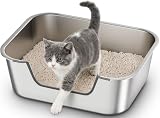
- Thoughtful 3.15in Low Entry Design – Each litter box features a 3.15" low front entry, making it easy for kittens, senior cats, or injured pets to step in and out with confidence. High sides still provide excellent splash protection, combining care and practicality
- High-Sided Anti-Splash Protection – Raised sides and back effectively block litter scatter and urine splash, keeping your floors clean while offering your cats a more comfortable and secure toileting experience
- 6 Sizes for Every Cat Family – Available in four sizes from 15.6"x11.6"x5.9" up to 27.5" × 19.6" × 7.8", ensuring the right fit for small cats, large breeds, or multi-cat households. Choose the size that suits your pets best
- Premium Stainless Steel Construction – Built with durable, odor-resistant stainless steel that outperforms plastic litter boxes. The smooth, non-stick surface resists scratches, prevents residue buildup, and makes cleaning quick and simple
- Easy to Clean & Time-Saving – Smooth stainless steel surface prevents litter and stains from sticking. Just rinse or wipe to keep the box spotless, making cleanup fast and effortless
Cognitive, sensory, and behavior changes
Night vocalization, altered sleep, hiding, disorientation, irritability, reduced interaction, or accidents outside the litter box can reflect cognitive dysfunction, but they can also signal pain, reduced vision or hearing, hyperthyroidism, hypertension, urinary disease, constipation, or diabetes. A behavior change is therefore a clinical clue, not proof of dementia. Note when it occurs and whether it accompanies appetite, mobility, vision, or litter-box changes.
Heart disease, cancer, skin disease, and other comorbidities
Older cats may develop heart disease, cancer, skin disease, or several conditions at once. Have masses, nonhealing sores, persistent coughing, an enlarging abdomen, reduced activity, or progressive loss of weight or muscle assessed. A single sign can be nonspecific; a trend across several weeks is often more informative. Cornell emphasizes that cats are skilled at hiding illness, including in old age.
How can I tell whether my cat is sick or simply getting older?
Normal aging may bring a gradual reduction in activity, but a sustained change from your cat’s own baseline is not something to write off. Compare current behavior with videos, weight records, and routines from earlier months. The most useful observations involve function and trends:
- Eating less, eating differently, dropping food, or approaching food without chewing.
- Weight or muscle loss, a change in body shape, or a coat that becomes greasy, matted, or ungroomed.
- Drinking or urinating more or less, straining, urinating outside the box, or producing no urine.
- Vomiting, diarrhea, constipation, blood in stool, or a changed stool pattern.
- Hesitating before jumps, avoiding stairs, sleeping in unusual places, or struggling to enter the litter box.
- New hiding, night vocalization, confusion, irritability, reduced social contact, or altered sleep.
- Coughing, faster breathing, reduced stamina, abdominal enlargement, new lumps, or sores that do not heal.
Do not wait for a symptom to become dramatic. Cornell advises contacting a veterinarian whenever an older cat’s physical condition or behavior changes, rather than assuming the change is untreatable old age.
When should I call a veterinarian urgently?
Use the severity and speed of the change to decide whether to seek emergency help, request a prompt appointment, or monitor briefly while arranging advice. When in doubt, call the clinic and describe exactly what you see.
Recommended Free Tools
Also popular on Amazon

- Ideal for Senior and Disabled Cats: This low entry litter box for senior cats measures just 2.76 inches in height, making it easy for arthritic or elderly cats to access, unlike traditional 6-inch litter boxes
- Versatile and Multi-Functional: Not only is this small metal litter box perfect for cats, but it also serves as a pet bath for small animals like rabbits, ferrets, guinea pigs, and hamsters, providing a comfortable space for various uses
- Easy to Clean: Made from stainless steel, the stainless steel litter box low entry features a smooth metal surface that makes cleaning a breeze, ensuring your pets have a hygienic environment.
- Safe and Pet-Friendly Design: The low entry litter box features rounded corners and no sharp edges, providing a safe experience for your pets, including kittens and senior cats
- Perfect Size for Kittens: This kitten litter box low entry is designed with dimensions of 17.72''Lx 13.78'' W x2.76'' H, making it an excellent choice as a shallow litter box for kittens or a small litter pan for young pets.
Seek emergency or same-day veterinary contact
- Difficulty breathing or breathing that is unusually rapid. Cornell lists more than 35 breaths per minute as a warning sign.
- Collapse, seizures, severe weakness, inability to stand, or sudden profound disorientation.
- Inability to urinate, repeated straining with no urine, or obvious urinary distress.
- Marked anorexia, especially when accompanied by weakness, vomiting, dehydration, or a rapidly deteriorating appearance.
Keep the cat quiet, minimize handling, and use the clinic’s emergency instructions. Do not give human painkillers or other unprescribed drugs while arranging transport.
Book a prompt appointment
Arrange an examination for any persistent or progressive change in appetite, weight, muscle, thirst, urination, stool, grooming, activity, mobility, sleep, vocalization, vision, social behavior, or litter-box use. Repeated vomiting, diarrhea lasting more than three days, new lameness, dental pain, coughing, skin masses or sores, and increasing abdominal size also warrant evaluation. VCA lists diarrhea beyond three days and lameness lasting more than one to two days as examination thresholds.
Call without delay for an unexplained change
Even if the cat is still eating and appears comfortable, an unexplained change deserves a discussion with the regular veterinarian. Early assessment can identify a treatable problem, establish a baseline, and prevent a gradual decline from being mistaken for normal aging.
How often should a senior cat see a veterinarian?
For an apparently healthy senior cat, examinations every six months are a common baseline. The 2021 American Association of Feline Practitioners guideline says visits every three to six months may be appropriate for very elderly cats, cats receiving ongoing medical treatment, or cats with multiple diseases. A cat whose condition or test results change may need more frequent checks than either schedule.
Free tools Windows power users keep installed
One-click scans. No signup required.
Ask the clinic to set an interval based on the cat’s age, diagnoses, medications, weight trend, and home observations. Trends over time are more informative than one isolated measurement, so keep copies of results and record changes between visits.
Also popular on Amazon

- ULTRA-LOW 2.7" ENTRY FOR EFFORTLESS ACCESS:Designed with a 2.7” ultra-low front entry, our kitten litter box allows kittens, senior cats, and cats with limited mobility to step in and out comfortably. The high sides still provide reliable splash and scatter protection, blending gentle care with everyday practicality.
- DURABLE & ODOR-RESISTANT STAINLESS STEEL BUILD:Made from premium stainless steel, this high sided steel litter box odor control, stains, and scratches. The non-stick, smooth surface prevents waste adhesion, ensures easy cleaning, and offers a hygienic, sturdy and durable alternative to plastic boxes.
- THREE SIZED OPTIONS FOR EVERY HOUSEHOLD:Available in three thoughtfully scaled sizes (17.7"×13.8"×5.9",19.7"×13.8"×5.9",23.6"×15.7"×5.9"), our cat litter boxes fits small to large cats,bunny,and multi-cat homes. Choose the ideal dimensions to match your pet’s needs and your space.
- OPEN DESIGN FOR TIMID & SENIOR CATS:The open-top layout provides a clear view, reducing anxiety for nervous kittens and less mobile senior cats. This design helps sensitive pets feel secure and comfortable during use.
- QUICK-CLEAN SURFACE & STABLE ANTI-SLIP BASE:The smooth stainless steel can be rinsed or wiped clean in minutes. The entry cutting area is sealed with adhesive tape, and the stainless steel cat litter box has been polished all around, so there is no need to worry about hurting the cat or yourself.
What happens during a senior-cat health check?
A senior visit starts with a detailed history: eating and drinking, urination and stool, vomiting, activity, grooming, sleep, vocalization, medications, and changes noticed at home. The veterinarian may then perform:
- Weight, body-condition, and muscle-condition assessment, with comparison to prior visits.
- A complete oral examination for painful teeth, gum inflammation, tartar, and masses.
- Thyroid palpation and a heart and lung examination.
- Musculoskeletal and pain assessment, including gait, jumping ability, posture, and joint movement.
- Eye and fundic examination, especially when hypertension or vision change is suspected.
- Blood-pressure measurement and blood, urine, fecal, or imaging tests selected for the individual cat.
Baseline laboratory results do not end the evaluation if abnormalities or symptoms persist. The AAFP guidance recommends expanding assessment when clinical concerns remain, even when initial testing is normal.
What should I monitor at home?
Use a simple dated log so gradual changes are visible. Record appetite and food amount, water intake when practical, urine and stool frequency or appearance, body weight, grooming, mobility, sleep, vocalization, social behavior, and litter-box access. A short video of a new gait, difficulty jumping, or unusual breathing can help the veterinarian understand an intermittent problem.
Home monitoring supports triage and follow-up; it cannot identify the cause. Do not delay care while trying to prove whether a symptom is related to aging.
Independent reader supportYour contribution helps us test, update, and keep practical guides available for everyone.How can I make an older cat more comfortable while arranging care?
Reduce the effort required for essential activities, especially if arthritis, weakness, or vision loss is possible.
Also popular on Amazon

- Large Space: Included 3 packs of low entry cat litter boxes in the package. The size of the large litter box is 23" L x 16.5" W x 4.3" H, providing ample space for your furry friend to do their business in comfort. Note: please check the size before buying.
- Premium Material: The kitten litter boxes are made of high quality pp plastic material, with good durability, excellent stability and long-lasting performance. Strong and sturdy structure ensures that the cat litter pan is not easy to deform or bend. Smooth surface makes cleaning in a breeze.
- Low Entry Design: Our shallow kitten litter box is designed with a low entry (2.8 inches high) for easy access, allowing elderly cats, kittens, disabled cats, and weak cats to get in and out the litter box without needing to step over high sides. Your pet will have a comfortable and safe experience using the litter box.
- Open Top Litter Box: Open top design not only is convenient for entering and exiting without any obstacles, but also provides a better ventilation environment to reduce odors. Rounded edges make the litter box safe and comfortable to pick up or carry. Each corner of the bottom has a non-slip craftsmanship to keep stable.
- Widely Used: These gigantic litter boxes can be stacked to save space, which is easy to carry out and storage. Our large litter box can be applied on various occasions, such as homes, pet shelters, pet hospitals, travel, outdoor camping, etc. Being used as a garden tray is also a good choice.
- Place food, water, resting areas, and litter boxes on the same level and along routes the cat already uses.
- Offer a low-sided litter box or one with a cut-out so painful joints do not have to clear a high wall.
- Use wide, low-sided bowls; an elevated bowl may help a cat that hurts when bending.
- Provide warm, stable resting surfaces with easy access rather than requiring a jump.
- Keep pathways clear and use consistent furniture placement for cats with reduced vision or confusion.
These changes improve access and comfort but do not treat kidney, thyroid, dental, cardiac, metabolic, or other disease. A cat that suddenly stops using a box may be avoiding pain or may have urinary, neurologic, gastrointestinal, or cognitive illness.
What information should I take to the appointment?
Bring a current medication and supplement list, the dates and results of previous tests if available, food details, and a concise timeline of changes. Note whether a sign is sudden or gradual, how often it occurs, and what happens immediately before and after it. If more than one person cares for the cat, combine observations so the veterinarian receives one consistent history.
What’s actually slowing this PC down?
Pick the symptom - the matching free tool is one click away.
Key takeaway for senior-cat caregivers
Senior cats can live comfortably for years, but only when changes are noticed and investigated. Treat persistent changes in body function or behavior as medical information, use semiannual or more frequent examinations according to risk, and seek urgent help for breathing problems, collapse, seizures, urinary obstruction, severe weakness, or marked anorexia.
Frequently Asked Questions
What should I bring to a senior-cat veterinary appointment?
Bring a medication and supplement list, recent weight or appetite records, and any previous laboratory results. A dated timeline and short videos of unusual breathing, walking, jumping, or vocalizing can reveal patterns that are not present in the clinic.
Can a senior cat have more than one illness at the same time?
Yes. Kidney, thyroid, dental, joint, heart, and gastrointestinal problems can overlap, and one condition can worsen another. This is why a broad history and trend-based follow-up are more useful than trying to match one symptom to one disease.
Why might my cat hide illness until it is advanced?
Cats often conceal pain and weakness, and older cats are no exception. Small changes in grooming, movement, sleep, or social behavior may therefore appear before an obvious crisis; comparing the cat with its own normal routine helps detect them earlier.
The Tool Desk
Outbyte PC Repair FREEClear out junk files and repair common Windows errorsFree Scan →Outbyte Driver Updater FREEScan for outdated or missing drivers - takes under a minuteDriver Scan →Is a normal first blood test reassuring if my cat still seems different?
It is useful information but not a complete answer. Veterinary guidelines recommend further evaluation when symptoms or examination findings remain concerning, because a single baseline result may not explain every problem.





Leave a Reply