Yes—water pH can affect whether fish remain healthy, grow, reproduce, and survive. The correct pH depends on the species and environment, and sudden changes can be more dangerous than a stable reading that is slightly outside a broad guideline.
Yes—water pH can affect whether fish remain healthy, grow, reproduce, and survive. The important point is that there is no single “perfect” pH for every fish. A species’ natural habitat, life stage, previous acclimatization, salinity, temperature, and exposure time all affect what it can tolerate. Stable water within a species-appropriate range is usually safer than repeatedly forcing an aquarium to exactly pH 7.
As an Amazon Associate I earn from qualifying purchases.
What pH means
pH describes the activity of hydrogen ions in water. The scale is logarithmic:
The Tool Desk
Outbyte PC Repair FREEClear out junk files and repair common Windows errorsFree Scan →Outbyte Driver Updater FREEFix the driver behind crashes, sound loss and screen glitchesFind Drivers →- Below 7: acidic
- 7: neutral
- Above 7: alkaline
A one-unit change is substantial, not a small step on a linear scale. Water at pH 6 is approximately ten times more acidic than water at pH 7, while water at pH 8 is approximately ten times more alkaline in terms of hydrogen-ion activity than pH 7.
#1 Best Overall

- Professional Quality Testing Kit: The AAwipes Aquarium test kit (50 strips) is developed by experts for fish enthusiasts. It offers 8-in-1 testing capabilities, made with high-quality fiber paper and non-bleeding colors. The kit measures key parameters like Free Chlorine, Nitrate, Nitrite, Hardness, Sodium Chloride, Total Alkalinity, pH and Ammonia nitrogen. By identifying potential issues, our fish tank testing kit helps prevent hidden water problems and ensures the safety and well-being of your fish.
- Versatile Use for Freshwater and Ponds: This aquarium water test kit is versatile and suitable for both freshwater and saltwater environments. It can be used in various aquariums, fish tanks, ponds, pools, and shrimp tanks, making it easy to monitor water quality and ensure your filter functions properly. Experts recommend testing your aquarium water at least twice a week to maintain optimal water quality.
- Fast and Accurate Results: Get accurate results in minutes with just 3 steps: 1) Dip the test strip into water for 2 seconds for pads 1-7; dip pad 8 (Ammonia nitrogen) separately for 5 seconds. 2) Remove the strip without shaking off excess water. Hold horizontally for 30 seconds for pads 1-7, wait 180 seconds to read Pad 8 (Ammonia nitrogen). 3) Compare the colors to the chart for up to 99% accuracy and take necessary action.
- Extended Shelf Life: The test strips are packaged in a well-sealed bottle to ensure they remain effective over time. This protects the strips from moisture and other environmental factors, ensuring you have reliable testing materials on hand when needed.
- Convenient Use: With this kit, you can test your aquarium water at home without the need to send samples to a lab, saving you both time and money. Enjoy peace of mind knowing your aquarium water is balanced and safe without the stress or extra expense.
Natural pH is shaped by geology, dissolved carbon dioxide, photosynthesis, respiration, organic matter, minerals, and pollution. In an aquarium, plants can consume carbon dioxide during the day and cause pH to rise, while respiration at night releases carbon dioxide and can cause pH to fall. Some daily variation is therefore possible, but large or rapid swings are stressful.
How unsuitable pH affects fish
1. It stresses the gills and disrupts internal chemistry
Fish exchange gases and regulate salts and acid-base balance largely through their gills. When the water is substantially outside the range to which a fish is adapted, maintaining the correct internal balance becomes more difficult.
Very acidic water can irritate or damage gill tissue and interfere with ion regulation. The fish may have to spend more energy maintaining basic physiological functions, leaving less energy for growth, immune defenses, activity, and reproduction. Severe or prolonged exposure can be fatal.
Very alkaline water is not automatically safe. Prolonged or frequent pH above about 9 is associated with biological impairment in broad freshwater guidance, although the effect still depends on the species and the rest of the water chemistry. High pH can also interfere with fish sensory systems, including the detection of food, reproductive chemical signals, alarm substances, and some toxic chemicals.
2. It can make ammonia much more dangerous
pH changes the balance between ammonium and unionized ammonia. Unionized ammonia is the more toxic form because it can readily cross the gills. As pH and temperature rise, a larger proportion of total ammonia is present as unionized ammonia.
That means a high-pH episode can increase ammonia danger even when the total amount of ammonia in the aquarium has not changed. This is particularly important in tanks, ponds, aquaculture systems, and other confined environments where ammonia may come from fish waste, uneaten food, dead organisms, or decaying plants.
Fish exposed to a water-quality emergency may show rapid breathing, gasping, lethargy, loss of appetite, erratic swimming, clamped fins, or unexplained deaths. pH alone cannot diagnose the cause. Check ammonia, nitrite, nitrate, temperature, and dissolved oxygen as well, and consider hardness and alkalinity when pH is unstable.
3. It can increase the effects of metals and other pollutants
Acidification can mobilize metals from soil and sediment. More generally, pH affects the solubility, chemical form, transport, and biological availability of pollutants. A pH problem may therefore harm fish directly while also making another contaminant more available or toxic.
Water with low acid-neutralizing capacity, often described in aquarium terms as low alkalinity or low buffering capacity, can be especially prone to sudden pH changes. Once the available buffering is exhausted, acids produced by biological activity can push the pH downward more quickly.
4. It can affect growth, reproduction, behavior, and young fish
Water that is chronically too acidic, too alkaline, or highly variable may reduce feeding performance, growth, reproductive success, disease resistance, and the survival of eggs or larvae. Young fish and other early life stages can be particularly sensitive to environmental changes.
Rank #2

- 𝗛𝗼𝗺𝗲 𝗔𝗾𝘂𝗮𝗿𝗶𝘂𝗺 𝗪𝗮𝘁𝗲𝗿 𝗧𝗲𝘀𝘁 𝗞𝗶𝘁 - Ensure the health of your fish with aquarium water testing kit & ammonia test strips for fish tank. This complete freshwater & saltwater tank test kit provides a reliable water tester for ammonia, pH, iron, chlorine, total hardness (GH), carbonate, nitrate, nitrite, total alkalinity, copper, and temperature, allowing you to have a complete understanding of your aquarium water quality. Trusted by fish enthusiasts, it adapts to your needs, making it an essential tool for aquarium care.
- 𝗔𝗰𝗰𝘂𝗿𝗮𝘁𝗲 & 𝗙𝗮𝘀𝘁 𝗧𝗲𝘀𝘁𝗶𝗻𝗴 𝗥𝗲𝘀𝘂𝗹𝘁𝘀 - Our aquarium water test strips deliver reliable results. Each fish tank water testing kit comes with easy-to-read color charts. This fish tank test strips are highly sensitive, detecting low levels of impurities and foreign substances in aquarium water. Our aquarium water quality tester helps prevent any invisible water problems.
- 𝗜𝗻𝘀𝘁𝗮𝗻𝘁 𝗛𝗼𝗺𝗲 𝗧𝗲𝘀𝘁𝗶𝗻𝗴—𝗡𝗼 𝗧𝗿𝗶𝗽𝘀 𝘁𝗼 𝘁𝗵𝗲 𝗦𝘁𝗼𝗿𝗲 - Testing 11 key parameters in your aquarium is easier than ever with just one kit. Just dip the strip in water and use the provided color chart for instant, reliable results. Say goodbye to frequent trips to pet stores because now you have our home water test kit with the ability to monitor your aquarium's water quality in the comfort of your own home.
- 𝗧𝗲𝘀𝘁 𝗦𝗺𝗮𝗿𝘁𝗲𝗿 𝘄𝗶𝘁𝗵 𝗘𝘅𝘁𝗲𝗻𝗱𝗲𝗱 𝗦𝗵𝗲𝗹𝗳 𝗟𝗶𝗳𝗲 𝗦𝘁𝗿𝗶𝗽𝘀 - Our aquarium test kit contains 150 test strips for aquarium fish tank: 50 strips in a bottle and 100 in a separate bags to maintain freshness. Once opened, it's recommended to use the strips within 3 months for maximum accuracy of the fish water testing kit. These water testing strips allow regular water quality checks without using all water test strips at once.
- 𝗩𝗲𝗿𝘀𝗮t𝗶𝗹𝗲 𝗪𝗮𝘁𝗲𝗿 𝗧𝗲𝘀𝘁𝗶𝗻𝗴 𝗞𝗶𝘁 𝗳𝗼𝗿 𝗔𝗹𝗹 𝗔𝗾𝘂𝗮𝘁𝗶𝗰 𝗡𝗲𝗲𝗱𝘀 - Our Aquarium water quality test kit is designed to cater to a wide range of aquariums including saltwater aquariums, freshwater fish tanks, betta fish tank, and fish ponds. Our hard water test kit can be used to test the water quality effectively, which ensures that you can maintain optimal water conditions in different aquarium setups.
In rivers, lakes, and coastal waters, pH can change the entire community rather than kill every fish immediately. Sensitive species may disappear while more tolerant species remain. That can reduce biodiversity and alter the balance among fish, invertebrates, plants, and microorganisms.
Do these 3 things before closing this tab:
1Repair Windows errors before they cause bigger problems2Fix the driver behind crashes, sound loss and screen glitches3Clear out junk files and repair common Windows errorsIs acidic or alkaline water worse?
Neither extreme is universally safer.
- Too acidic: may damage or irritate gills, disrupt salt and acid-base regulation, and increase the effects of acid-associated metals and pollutants.
- Too alkaline: may cause direct physiological stress and increase the toxic fraction of ammonia, especially when the water is also warm.
- Rapid change in either direction: can be dangerous even if the final reading falls inside a broad guideline.
Risk depends on the fish species, life stage, acclimatization history, exposure duration, temperature, dissolved oxygen, hardness, alkalinity, salinity, ammonia, and other pollutants.
A lower pH can reduce the proportion of ammonia present as toxic unionized ammonia, but deliberately lowering pH is not a safe general ammonia treatment. A sudden chemical adjustment can stress or kill fish, and excessively low pH can impair biological filtration. The safer response is to find and remove the ammonia source, improve appropriate filtration and aeration, perform a correctly prepared water change when indicated, and make any chemistry change gradually using species-specific guidance.
What is a safe pH for fish?
There is no universal safe pH for all fish. As a broad environmental reference, U.S. national aquatic-life guidance lists approximately pH 6.5–9.0 for freshwater and 6.5–8.5 for saltwater. These figures are general benchmarks for aquatic life—not a universal aquarium target and not a guarantee that every species will thrive throughout the range. Ocean pH should also remain close to its natural variation.
Many fish have narrower preferred ranges, while others are naturally adapted to water outside those broad figures. Freshwater and marine fish should not be treated as one chemical category: salinity, carbonate chemistry, alkalinity, temperature, and dissolved carbon dioxide all matter in marine systems.
Quick wins for a faster PC:
Fix the driver behind crashes, sound loss and screen glitchesFind Drivers →Clear out junk files and repair common Windows errorsFree Scan →Scan for outdated or missing drivers - takes under a minuteDriver Scan →For a home aquarium, use this order of priorities:
- Identify the species’ established care range. Use a reputable, species-specific care source rather than a general “fish” number.
- Measure both aquarium water and source water. A difference between them can explain repeated pH changes after water changes.
- Prioritize stability. If healthy fish are living in stable water within their tolerated range, do not repeatedly chase an arbitrary ideal number.
- Investigate sudden changes. A rapid shift can be more dangerous than a stable reading that is slightly outside a broad guideline.
- Test the whole water-quality picture. Pair pH readings with ammonia, nitrite, nitrate, temperature, and, when relevant, hardness, alkalinity, salinity, and dissolved oxygen.
How to test aquarium pH
Do not guess pH from cloudy water, algae, fish behavior, or the appearance of the tank. Use a test method and follow its instructions carefully.
- Liquid reagent kits: Add the specified number of drops to a water sample and compare the resulting color with the supplied chart. Check the kit’s range and expiration date.
- Test strips: Dip the strip for the stated time, wait as directed, and compare the pads with the chart. They are convenient for screening, but an abnormal or surprising result should be checked and investigated rather than accepted from one reading alone.
- Digital pH meters: These can be useful for frequent monitoring, but they require correct calibration, clean probe care, suitable storage, and periodic maintenance. A digital display does not automatically mean a reading is accurate.
A freshwater aquarium pH test kit is a practical starting point if you currently have no way to measure pH. Choose a kit whose stated range covers your aquarium and follow the instructions rather than assuming one test method is always more accurate than another.
If ammonia is a concern, a pH-only kit is not enough. A freshwater aquarium master water test kit that includes pH, ammonia, nitrite, and nitrate can make it easier to interpret a problem. Check exactly which tests are included before buying, because product contents vary.
Disclosure: This article mentions aquarium testing categories that may be available through retailers. A test kit measures water chemistry; it does not by itself guarantee fish health or identify every cause of illness.
What to do if the pH is too high, too low, or changing
If fish are distressed right now
- Check pH, ammonia, nitrite, temperature, and dissolved oxygen as soon as possible.
- Confirm an unexpected reading with a fresh, correctly performed test.
- Inspect for obvious causes such as decaying material, uneaten food, dead tank inhabitants, overfeeding, a failed filter, contaminated replacement water, or a recent chemical dose.
- Increase appropriate aeration if oxygen may be low, while avoiding unnecessary disturbance.
- Use a correctly prepared, temperature-matched water change when the water-quality results and species care guidance indicate one is appropriate.
- Do not make a large, rapid pH correction merely to reach pH 7.
Severe gasping, mass mortality, or suspected chemical contamination warrants urgent advice from an experienced aquatic veterinarian, aquaculture professional, or knowledgeable aquatic specialist. Exact treatment depends on the species and measured water chemistry.
Rank #3
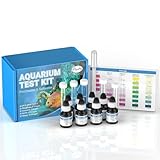
- 5-in-1 Master Test Kit: Monitor all 5 critical water parameters – pH, nitrite, nitrate, ammonia, and phosphate – in one comprehensive aquarium test kit. The rigorous analysis helps you maintain an ideal haven for your aquatic friends
- Freshwater & Saltwater Application: This aquarium water master test kit works perfectly for both freshwater and marine fish tanks. Precise color-matching charts are included – simply compare your water’s hue to the color swatches for instant results
- Enhanced Accuracy: Using professional liquid reagents, the aquarium water test kit delivers high accuracy that far exceeds traditional test strips. Get laboratory-quality results every time, safeguarding a stable and enjoyable fish tank environment
- Regular Testing: Complete with 265 measurements across all parameters – pH (100), nitrite (45), nitrate (50), ammonia (30), phosphate (40). This fish tank water testing kit supports months of consistent monitoring to keep your aquarium perfectly balanced
- Essential Fish Care: Your trusted solution to prevent fish loss from fatal ammonia, nitrite buildup, or pH imbalances! Proper water quality maintenance ensures your aquatic pets stay healthy and your plants thrive in optimal conditions
If pH keeps falling
Look for accumulating organic waste, excessive biological acid production, low alkalinity, inadequate maintenance, or source water with little buffering capacity. Test alkalinity if possible and review the aquarium’s stocking, feeding, filtration, and water-change routine. Correct the underlying cause gradually instead of repeatedly adding a pH-raising product without understanding why the value falls again.
If pH keeps rising
Check the source water, rocks or substrate, decorations, buffers, evaporation and top-off practices, and photosynthesis-related daily swings. In marine aquariums, interpret pH alongside salinity, alkalinity, and carbonate chemistry. Avoid making repeated adjustments based on one isolated measurement.
The practical answer
pH is one of the conditions that makes a habitat suitable—or unsuitable—for fish. Water that is far outside a species’ adapted range can damage gills, disrupt internal ion balance, impair growth and reproduction, alter behavior, and contribute to death. High pH can also turn otherwise unchanged ammonia into a more immediate danger, while low pH can increase the effects of some metals and pollutants.
The best goal is not “pH 7 for every fish.” It is stable, species-appropriate water, tested alongside ammonia, nitrite, temperature, dissolved oxygen, hardness, alkalinity, salinity, and other relevant pollutants.
Frequently Asked Questions
Is pH 7 ideal for all fish?
No. pH 7 is neutral, but fish species are adapted to different natural water conditions. A stable value within the species’ tolerated range is generally more important than forcing the aquarium to exactly 7.
What pH range is safe for fish?
A broad freshwater aquatic-life reference is about pH 6.5–9.0, while a broad saltwater reference is about 6.5–8.5. These are not universal aquarium targets; species-specific requirements may be narrower or different.
Why does high pH make ammonia more dangerous?
High pH increases the proportion of total ammonia present as toxic unionized ammonia, and warmer water increases that fraction as well. Test ammonia, pH, and temperature together rather than interpreting any one result alone.
Recommended Free Tools
Can a sudden pH change kill fish?
Yes. Rapid changes can stress fish even when the final pH appears acceptable. Avoid large, unexplained corrections and make changes gradually using species-specific guidance.
What should I test besides pH in a fish tank?
Test pH along with ammonia, nitrite, nitrate, temperature, and dissolved oxygen. Hardness and alkalinity are also useful when pH is unstable; marine aquariums additionally require attention to salinity and carbonate chemistry.
The Bottom Line
Bottom line: Yes, pH affects the life of fish, but the correct value depends on the species and environment. Avoid sudden changes, do not treat pH as the only water-quality measurement, and do not lower or raise it blindly to correct an ammonia problem.
Quick Recap
Product prices and availability are accurate as of the date/time indicated and are subject to change. Any price and availability information displayed on Amazon at the time of purchase will apply.
What’s actually slowing this PC down?
Pick the symptom - the matching free tool is one click away.




