
Free tools Windows power users keep installed
One-click scans. No signup required.
Some links on this page are affiliate links: if you buy through them we may earn a commission, at no extra cost to you.
Let your dog approach a person at the beach only when the person has agreed and your dog is choosing to come closer with loose, relaxed body language. You remain responsible for stopping jumping, chasing, crowding, licking, or any approach that was not invited. If the person says no, looks uncomfortable, or your dog becomes tense or overexcited, call your dog back, use a leash, create distance, or leave.
A safe greeting is a brief, voluntary interaction with an easy exit for both the person and the dog. Beach rules, reliable control, body-language reading, and basic heat and health precautions matter as much as friendliness.
As an Amazon Associate I earn from qualifying purchases.
Do these 3 things before closing this tab:
1Repair Windows errors before they cause bigger problems2Scan for outdated or missing drivers - takes under a minute3Clear out junk files and repair common Windows errorsCan my dog say hi to people at the dog beach?
Yes, but only after the person agrees and your dog approaches voluntarily and calmly. A dog beach is not blanket permission for dogs to run up to everyone. The owner must manage the approach from start to finish.
The Wisconsin Humane Society puts the principle plainly: “All dogs should always be given the choice to approach or not to approach other humans or animals.” That choice belongs to the dog as well as the person. Someone may be afraid of dogs, allergic, carrying food, supervising a child, wearing medical equipment, or simply not interested in touching an unfamiliar animal.
Popular on Amazon

- Dog Life Jacket: Maximum-buoyancy vest for large dogs (28–32" girth) of all swimming skill levels; supports without restricting movement; ideal for pool, lake, beach, or boat
- Secure, Easy Fit: Instant security with adjustable straps and quick-release buckles for easy on/off; see size chart and fitting video for guidance
- Durable & Lightweight: Ripstop material with thick foam padding and reinforced stitching for long-lasting comfort and strength
- Head Support & Rescue Handle: Front float helps support the head and neck; strong top safety handle for lifting and assisting your dog in an emergency
- High Visibility: Bright color with reflective accents for easily spotting your dog in low light and in all types of water, from pools to lakes
Keep your dog close enough to interrupt immediately. A recall that works in a quiet yard may fail around surf, birds, toys, and other dogs, so use a leash whenever control is uncertain or local rules require one.
Why do both the person and the owner need to give permission?
Owner permission and the other person’s consent are separate checks. Municipal guidance says, “Do not approach a dog without owner permission,” and the same courtesy applies in reverse: do not allow your dog to approach someone who has not agreed.
What’s actually slowing this PC down?
Pick the symptom - the matching free tool is one click away.
Ask before unclipping or releasing
Use a simple question such as, “Would you like to say hello?” Wait for a clear yes. A person who steps back, turns away, keeps their hands close, says “no,” or does not answer has not consented. Do not argue, call the dog closer anyway, or treat hesitation as enthusiasm.
Make refusal easy
Keep your dog beside you while you ask. This prevents the person from having to block a rushing dog and gives them a comfortable way to decline. If they say no, acknowledge it and move away without commentary.
Remember that consent can end
A person can change their mind after the dog arrives. Stop the interaction if they pull their hand back, turn away, or ask you to secure the dog. The dog also gets to end the greeting by retreating, freezing, or looking for an escape route.
How can I tell whether a dog wants to approach?
Read the entire dog, not just the tail. Loose, wiggly or bouncy movement and a voluntary approach can support a short greeting; stiffness, avoidance, or defensive signals call for space.
| What you observe | What it may mean | What to do |
|---|---|---|
| Loose body, wiggly movement, soft muscles, voluntary approach | The dog may be comfortable enough for a brief greeting | Proceed only with the person’s permission; keep the interaction short and supervised |
| Low or stiff posture, tucked tail, cowering, backing away | Fear, uncertainty, or a wish to create distance | Do not invite touch; call the dog back and increase space |
| Growling, teeth baring, whale eye, repeated lip licking | Stress or a warning that contact is unwelcome | End the interaction immediately and leave if the dog cannot settle |
| Frantic jumping, chasing, circling, pawing, or rushing | Overarousal and loss of polite control, even if the dog appears excited | Interrupt, leash up, and move away before trying another interaction |
A wag does not override a stiff body, tucked tail, or avoidance. If you are unsure what the signals mean, choose distance rather than a greeting.
Also popular on Amazon

- Dog Life Jacket: Maximum-buoyancy vest for medium dogs (21–27" girth) of all swimming skill levels; supports without restricting movement; ideal for pool, lake, beach, or boat
- Secure, Easy Fit: Instant security with adjustable straps and quick-release buckles for easy on/off; see size chart and fitting video for guidance
- Durable & Lightweight: Ripstop material with thick foam padding and reinforced stitching for long-lasting comfort and strength
- Head Support & Rescue Handle: Front float helps support the head and neck; strong top safety handle for lifting and assisting your dog in an emergency
- High Visibility: Bright color with reflective accents for easily spotting your dog in low light and in all types of water, from pools to lakes
What is the safest way to introduce a dog to a willing person?
Use a short, reversible process: ask, control, allow a voluntary approach, pause, and stop at the first sign of discomfort.
- Ask the person. Say, “Would you like to say hello?” Accept a no immediately.
- Secure control. Keep the dog close enough to call back. Clip on a standard leash when the person is unsure, the area is crowded, the dog’s recall is unreliable, or a local rule requires a leash.
- Let the dog choose. Do not drag the dog toward the person. Do not allow rushing, jumping, licking, pawing, or circling someone who is backing away.
- Use calm body positions. Ask the person to stand slightly sideways, avoid looming or staring, and let the dog sniff if it approaches with a loose body. Battersea Dogs & Cats Home summarizes the rule as “ALWAYS ASK THE OWNER.”
- Start with brief touch. Chest or side contact is less intrusive than reaching over the head. Wisconsin Humane Society recommends petting for about three seconds, then stopping to see what the dog does.
- Re-check the dog. Continue only if the dog remains loose and stays close or seeks more contact. Stiffening, closing the mouth, backing away, or turning aside means stop.
- End cleanly. Call the dog back, praise the recall, and move on before excitement builds. If the dog cannot disengage, leash it and leave the interaction or the beach.
What should I do if my dog jumps, chases, or will not disengage?
Interrupt immediately rather than waiting for the person to defend themselves. Call the dog in a clear voice, move toward the dog if safe, and attach the leash. Create physical distance from the person and other dogs.
If the dog keeps jumping
Stop all touching and greetings. Hold the leash short enough to prevent another leap, wait for the dog to settle, and leave the crowded area if you cannot regain control. Releasing the dog again while it is still frantic teaches it that jumping keeps the interaction going.
If the dog chases someone
Call the dog back and secure it. Chasing runners, cyclists, children, or dogs can frighten people and can turn into a collision or fight. New York City guidance specifically says owners must prevent dogs from running and jumping on people or dogs without an invitation.
If the dog shows unfriendly behavior
Do not try to “socialize through” growling, teeth baring, or repeated avoidance at the beach. Hawaiian Humane Society advises taking a dog home at the first sign of unfriendly behavior. Sydney guidance likewise recommends leaving when play is incompatible.
What should I do if an off-leash dog approaches me?
Ask the owner to call or leash the dog. Stand calmly, avoid running or shouting, and do not reach over the dog’s head. If the dog looks tense, fearful, or aggressive, give it room and avoid direct staring.
You can turn your body slightly sideways, keep your hands still, and wait for the owner to regain control. If the owner is not responding, continue creating distance without chasing the dog. Ottawa Public Health recommends asking the owner, assessing body language, letting the dog choose, and checking again after a few seconds of petting rather than assuming an approach is friendly.
The Tool Desk
Outbyte PC Repair FREERepair Windows errors before they cause bigger problemsFix Now →Outbyte Driver Updater FREEScan for outdated or missing drivers - takes under a minuteDriver Scan →Also popular on Amazon

- Unrestricted Movement: Designed with a ‘sports’ concept, the VIVAGLORY patented dog life vest opens up more around the neck and front chest. It doesn’t restrict your dog’s movement and avoids contact near the armpits and belly, preventing rubbing against your pup’s skin. Ideal for most breeds, especially those with broader or deeper chests, this dog swimming vest offers unmatched comfort during swimming and boating adventures
- Superior Buoyancy: This dog lifejacket features evenly distributed buoyancy with ultra-buoyant foam covering under the neck, top, and sides. Supporting your dog's entire body, this dog floating vest helps them doggy paddle confidently and easily in any water setting—perfect for both experienced swimmers and beginners, whether in pools, lakes, or at the beach
- Boosted Safety: Equipped with a sturdy handle and D-ring, this puppy life jacket allows for easy restraint and quick rescue if your puppy falls overboard or swims too far. Reflective strips and bright colors increase visibility, ensuring your doggy life jacket is easy to spot even in low-light conditions. The soft mesh belly band dries quickly for comfort, while adjustable straps with weight-bearing buckles guarantee a secure fit
- Built to Last: Made from ripstop Oxford material that passed the CA65 test, this dog lifevest is durable enough for swimming, boating, floating, and paddle boarding. Reinforced stitching and a comfortable lining ensure long-lasting performance. Whether it's your first trip or a frequent outing, this dog flotation vest is designed to handle repeated water adventures. NOTE: Always supervise your dog during water activities, even when wearing the dog lifejacket
- Universal Fit: The secure hook-and-loop fastening and adjustable buckled straps at the neck and belly of the dog swim vest provide a custom fit for your puppy. Putting the dog water vest on takes seconds. For best fit, measure the widest part of your dog’s ribcage and check the VIVAGLORY sizing chart
Which leash and beach rules apply?
Rules are local, and a dog beach designation does not automatically mean every nearby stretch is off leash. Check the destination’s current official page and the signs at the entrance before unclipping a leash.
| Location or guidance | Rule or responsibility described |
|---|---|
| Vancouver | Dogs must be leashed except in designated off-leash areas, and dogs are allowed on beaches only in designated off-leash areas. |
| New York City | Owners must prevent uninvited running and jumping on people or dogs. |
| San Diego | People entering leash-free areas accept responsibility for their dog’s actions. |
| Sydney | Owners should supervise and ensure dogs are fully vaccinated when using parks. |
Common duties include carrying waste bags, picking up waste immediately, supervising continuously, and leashing at entrances and exits where required. A reliable recall is a practical safety requirement even where off-leash running is permitted.
How should I prepare my dog for a beach visit?
Pack for control, cleanup, water, and weather before you leave home.
- Standard leash: Bring one for arrival, departure, crowded areas, or any uncertain interaction.
- Waste bags and a carrier: Municipal rules commonly require immediate cleanup and removal of waste.
- Fresh water and a collapsible bowl: VCA advises bringing both, and dogs should not drink seawater.
- Shade and heat awareness: Hawaiian Humane Society warns that hot surfaces can burn paws. Check sand and pavement before your dog settles or runs.
- Sun protection: Zinc-free dog sunscreen may be appropriate for exposed ears and noses; ask your veterinarian which product and areas are suitable.
- Health status: Leave sick or injured dogs at home. VCA also advises keeping dogs that are in heat at home.
- Vaccination: Sydney says dogs should be fully vaccinated when using parks.
Heat, fatigue, and illness can make a normally sociable dog less tolerant. Shorten the visit or leave before your dog becomes exhausted or irritable.
Does a yellow ribbon mean I should keep away?
A visible yellow ribbon can signal that a nervous dog needs extra space. Kāpiti Coast guidance asks people to keep their distance from dogs wearing one.
Treat the ribbon as useful information, not as a substitute for communication. Do not approach, allow your dog to crowd the dog, or assume the ribbon explains the dog’s exact needs. Give the handler room and follow any request to move away.
Independent reader supportYour contribution helps us test, update, and keep practical guides available for everyone.When should I leave the beach?
Leave when your dog cannot disengage, the interaction becomes rough or intrusive, or your dog shows fear, stiffness, growling, teeth baring, or repeated avoidance. Leave as well when play styles are incompatible, such as one dog repeatedly chasing while the other tries to escape.
Also popular on Amazon
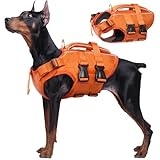
- 【Dog lifejacket Size】XS, S, M, L, XL, XXL fits most breeds furry friend,our size of dog life vest for swimming has been strictly measured. Chest girth is the key measurement, choose the smaller size if between two. Ideal for small dog life jacket, large dog life jacket, medium dog life jacket, and pet life jacket needs
- 【High Flotation Dog Swim Vest】This dog vest for swimming consist of ripstop Oxford & Polyester cloth, and high-density pearl cotton foam, which offers the dog swim vest great flotation support. Dog swimsuit gives dog additional safety and endurance in the water. Perfect as dog life vest for swimming, dog pool float, or dog swim vest for safe water fun
- 【Safe & Protective Dog life Vest】Dog swimming vest has a sturdy handle for quick rescue, which helps keep your pet safer in the water. The biggest role of the life safe vest is assist the dog to swim, reduce the amount of movement of the hind legs, helps reduce strain on the hind legs. Suitable for dog life vests for boating, dog life jackets for large breeds, and small dog life vest for swimming
- 【Adjustable Dog Swimming Vest】The dog life jackets belly and neck are designed with sturdy adjustable nylon straps and double-row quick-release buckles with hook & loop panels to provide double security for your dog. These designs make the dog water vest is easy to put on and take off. Works for dog swim vest, dog water vest, dog life vest with handle, and dog life jacket small or large
- 【Reflective Dog Safety Vest】 Kuoser dog flotation vest with bright colors and reflective strips can help you better notice your dog's position. Ideal for dog beach essentials, dog pool floats for small dogs, dog pool float for large dogs, and other outdoor water activities. Make swimming, boating, and pool time safer and more enjoyable for your furry friend
Secure the dog, collect your belongings and waste, and use the exit route required by local rules. Leaving early is a control decision, not a failure: it prevents a tense interaction from becoming a bite, fight, or complaint.
Recommended Free Tools
How can I make a quick go-or-no-go decision?
Before allowing an approach, run these five checks:
- Control: Can I stop the approach immediately?
- Consent: Has the person clearly agreed, and can both person and dog retreat easily?
- Body language: Are both parties loose and comfortable rather than stiff, fearful, or avoidant?
- Local compliance: Am I following the current leash, access, waste, and supervision rules?
- Heat and health: Do I have water and shade, and is my dog healthy, vaccinated, and fit for the visit?
If any answer is no or uncertain, keep the dog with you and skip the greeting.
Frequently Asked Questions
Is there a published percentage of dog-beach approaches that are appropriate?
No reliable statistic establishes that percentage. Official guidance focuses on consent, control, body language, and local rules instead of assigning a universal success rate.
What vaccinations does my dog need before visiting a beach or park?
The Sydney guidance cited here says dogs should be fully vaccinated, but it does not specify a universal vaccine list. Ask your veterinarian which vaccinations and timing apply to your dog and location.
Can a yellow ribbon replace asking before approaching a dog?
No. A ribbon is only a visual request for space; people should still avoid approaching and respect the handler’s directions. It does not explain every risk or guarantee that the dog is comfortable.
Should I take my dog to the beach if it is recovering from an injury?
No. VCA guidance advises leaving sick or injured dogs at home. A beach’s heat, sand, salt water, and unpredictable play can add demands during recovery.





Leave a Reply