
Quick wins for a faster PC:
Fix the driver behind crashes, sound loss and screen glitchesFind Drivers →Repair Windows errors before they cause bigger problemsFix Now →Scan for outdated or missing drivers - takes under a minuteDriver Scan →Some links on this page are affiliate links: if you buy through them we may earn a commission, at no extra cost to you.
A bonded dog seeks you for comfort but can still relax, explore, and let other people approach. A resource-guarding dog becomes tense or defensive when someone approaches something valuable, which can include food, a toy, a bed, or you. Affection and guarding can occur in the same dog, so following you, sleeping beside you, or cuddling does not by itself prove either secure attachment or possessiveness. Watch the trigger and the dog’s flexibility: does the dog remain loose and able to disengage, or does it block access, freeze, stare, growl, snap, or bite to retain control? This distinction matters because guarding is a safety issue, not proof that a dog is unusually loving or “protective.”
How can I tell whether my dog is bonded to me or resource guarding me?
Look at what happens when another person approaches you, rather than at how often your dog follows or cuddles you. A securely attached dog may greet you enthusiastically, seek contact, settle after receiving it, explore the environment, and return to you. A dog guarding you treats your proximity as a resource to control: it may wedge between you and another person, stiffen, hard-stare, block access, growl, lunge, or snap when someone comes near.
As an Amazon Associate I earn from qualifying purchases.
The Tool Desk
Outbyte PC Repair FREERepair Windows errors before they cause bigger problemsFix Now →Outbyte Driver Updater FREEFix the driver behind crashes, sound loss and screen glitchesFind Drivers →The same dog can show both patterns. Attachment describes a social relationship; resource guarding describes a defensive response in a particular context. A dog can be affectionate with its caregiver and still guard that person from a partner, child, visitor, or another dog.
| Feature | Bonding or secure-attachment pattern | Resource-guarding pattern |
|---|---|---|
| Trigger | Reunion, uncertainty, ordinary social contact, or a need for reassurance | Someone approaches a valued object, place, food, toy, or person |
| Behavioral flexibility | Seeks contact, relaxes, explores, plays, and can return to the caregiver | Behavior narrows around keeping the resource; the dog may hover, block, freeze, stare, or eat faster |
| Body language | Loose posture, relaxed settling, voluntary contact, and a prompt friendly approach | Lip licking, whale eye, facial or body tension, stiff or frozen posture, body blocking, growling, snapping, or biting |
| Exploration | The caregiver functions as a secure base from which the dog can investigate and return | The guarded item or person becomes the focus, and access is defended |
| Meaning | Social attachment, comfort-seeking, or reassurance | Defensive retention of something the dog values |
| Can they coexist? | Yes; affection does not rule out guarding | Yes; guarding does not prove the relationship is insecure |
This comparison organizes recognized behavior patterns; it is not a home diagnostic test. A veterinarian or qualified behavior professional should assess aggression, especially when people are the target.
Popular on Amazon

- Auto-Close Baby Gate: Designed with an intelligent self-closing system, this dog gate automatically swings shut at angle under 90°, providing reliable protection against accidental openings
- Dual-Lock Safety: This baby gate for stairs features a secure dual-lock mechanism, ensuring curious children and pets stay safely contained while allowing adults to open it effortlessly with one hand. Parents can pass through the baby gates for doorways with ease even while carrying groceries or a baby
- Tool-Free Installation: The pressure-mounted dog gate indoor provides a secure hold while protecting your walls or furniture from damage, ideal for renters and hassle-free setups. The dog gates for doorways offer a quick, temporary solution that's both safe and convenient. The attached sticky pads are provided to keep the wall cups in place, so you don't need to drill
- Stroller-Friendly Baby Gate for Stairs: Features an anti-stumble pedal, ensuring a seamless transition between the pet gate and the floor. This design reduces the risk of tripping and allows strollers to roll through the child gate effortlessly, making the pressure mounted baby gate ideal for families with elderly members and young children
- Adjustable Pet Gate Indoor: With an adjustable width from 29 to 40 inches, the baby gate with door fits most standard doorways and stair openings, creating a safety environment for your little ones and furry friends while giving you peace of mind. Please measure the width of the openings you want to place the child gate before installation
What exactly counts as resource guarding?
Resource guarding is the use of avoidance, threatening, or aggressive behavior to retain control of food or non-food items when a person or animal approaches. Cornell describes a dog that “growls, postures, threatens or actually bites” when someone comes near something the dog considers valuable. Merck Veterinary Manual uses the related term possessive aggression for aggression shown while a dog possesses or is near a valued resource.
Resources can be concrete or social:
- Meals, treats, chews, food bowls, or stolen food
- Toys, bones, tissues, clothing, or other objects
- Beds, sofas, crates, doorways, or favorite resting areas
- A preferred person, including a caregiver, partner, child, or visitor
The label “jealous” or “dominant” does not explain the behavior’s function. The useful questions are what the dog values, what approach predicts, what body language appears first, and what the dog does to make the approach stop.
Do these 3 things before closing this tab:
1Scan for outdated or missing drivers - takes under a minute2Clear out junk files and repair common Windows errors3Fix the driver behind crashes, sound loss and screen glitchesWhat does healthy bonding look like in a dog?
Attachment research describes a sequence of behaviors rather than one isolated sign. A dog with a secure pattern may approach promptly at reunion, choose physical contact, settle when contact is achieved, explore or play independently for a while, and return to relaxed proximity. Reviews of dog–human attachment also identify proximity maintenance, separation-related searching or distress, secure-base exploration, and safe-haven effects.
In everyday life, useful observations include:
- Your dog greets you and can then settle instead of remaining frantic or controlling.
- The dog voluntarily seeks touch but can move away, rest elsewhere, or engage with another safe person.
- After checking in with you, the dog can investigate a room, play, sniff outdoors, or return to you.
- When someone approaches, the dog can remain loose and accept guidance without trying to control access.
Following you everywhere is not proof of secure attachment. It can reflect attachment, anxiety, a learned routine, a desire for access to food or activity, or guarding. Sleeping beside you can be affectionate without being defensive.
Is my dog protecting me or guarding me?
If your dog is trying to control who may approach you, the behavior fits resource guarding even when it looks protective. Blocking another person with the body, stiffening, staring, growling, lunging, or snapping when that person comes near the favored individual are the same functional pattern as defending a bowl or toy.
Do not reassure yourself that the dog is “protective because it loves you.” That interpretation can delay management and professional assessment. Note the exact trigger: a partner sitting beside you, a visitor greeting you, a child hugging you, another dog approaching, or someone touching you. A narrow trigger may be manageable with careful planning; escalation or unpredictable reactions require expert help.
Also popular on Amazon

- [Worry-Free Safety]: Our expandable dog gate is great for doorways and blocking off other indoor spaces to keep your pet safe and secure. This durable puppy gate is made of strong, appealing fieldstone gray plastic with adorable paw print accents.
- [Convenient and Portable]: This gate for dogs is 23" tall, fits a variety of openings 26" - 40" wide. Please measure carefully: it will not work in a wider doorway. It is easy to take down and install - which means you can use it anywhere you need it!
- [Perfect for Modern Homes]: Our portable, adjustable pet gate features rubber bumpers that protect your walls and are positioned higher than other gates to accommodate up to 4" molding. It's an ideal indoor dog gate.
- [Easy and Comfortable to Use]: The sturdy, curved handle allows for a firm grip, which makes mounting and disassembling a breeze!
- [Proud USA-Owned Company]: Our rigorously tested gates & yards bring peace of mind to your family. We stand for the highest safety & quality standards while creating the ideal products for your furry friends. This item is proudly made in the USA!
Which body-language signs show guarding before a growl?
Guarding often appears on a continuum. Dogs Trust lists early signs that are easy to miss:
- Lip licking or repeated swallowing
- Whale eye, where the whites of the eyes are visible
- Facial or whole-body tension
- Standing over, lowering the body onto, or blocking the resource
- Hard staring or turning the head while keeping the resource in view
- Eating unusually quickly
- Trying to hide, carry away, or keep possession of the item
Escalation can include freezing, growling, barking, lunging, snapping, and biting. A growl is information that the dog wants distance. Treat it as an early warning and calmly increase space; punishing the growl can suppress the warning without changing the fear or conflict underneath.
Why do dogs develop resource guarding?
Genetics and early experience can contribute, but the behavior is shaped by context and learning. Merck notes the importance of perceived risk and a dog’s history of successfully retaining an item. Dogs Trust also identifies pain, illness, hunger, medication effects, stress, trigger stacking, competition, and scarcity as factors that can lower a dog’s threshold.
Repeatedly taking things away or confronting a dog can teach that a person’s approach predicts loss. The dog may then guard earlier or more intensely. A sudden onset, a sharp change in severity, or guarding that appears alongside irritability or handling sensitivity warrants a veterinary examination for pain or illness.
Resource guarding is not evidence of spite or a simple desire for status. Dogs Trust describes it as “an instinctive, often fear-based, response and not dominance, ‘naughtiness’ or ‘spite.’” Merck likewise explains that a linear dominance hierarchy can be described only among dogs in which one individual consistently defers to another in all contexts; that concept does not diagnose a dog’s response to a person approaching food or a favorite person.
What should I do the moment my dog stiffens or growls?
Prioritize distance and prevent a bite. Use this sequence:
Also popular on Amazon

- ✅ TESTED & TRUSTED BABY SAFETY GATE FOR OVER 30 YEARS: Parent-trusted baby safety product certified by the Baby Safety Alliance. Designed to support everyday baby proofing and help keep babies and toddlers safe at home.
- ❤️AMERICAN DESIGNED & FAMILY OWNED BABY GATE BRAND: Designed in the USA by parents, for parents. Regalo delivers dependable baby gates and baby safety products trusted by families for over 30 years.
- 🔒EXTRA WIDE BABY GATE FOR DOORWAYS & BOTTOM OF STAIRS: Expands to fit openings 29–38.5" wide and stands 30" tall. Ideal for bottom of stairs, hallways, and wide openings. FITS OPENINGS: 29–32" no extension, 35.5–38.5" with 6". DOES NOT FIT OPENINGS: 32–35.5".
- EASY SETUP WITH PRESSURE MOUNT DESIGN: ⚠️Install according to manufacturer’s instructions. ⚠️Wall cups must be used to keep the gate securely in place. ⚠️ To prevent falls, never use at the top of stairs.
- 🐾 CHILD & PET SAFE | PUERTA DE SEGURIDAD PARA BEBÉS Y MASCOTAS: Walk-through safety gate designed for babies ⚠️6–24 months and small to medium pets. Features a secure safety locking system for parent convenience.
- Stop the approach. If the dog stiffens, freezes, stares, shows a whale eye, or growls, have people and other animals move away. Do not lean over, reach, shout, or continue the interaction.
- Do not test the dog. Never deliberately take food, toys, chews, a bed, or your position beside the dog to see whether a reaction occurs.
- Create physical separation. Feed behind a closed door or gate. Use baby gates, pens, crates, or separate rooms when needed. Remove high-risk items before visitors or children enter.
- Do not punish or intimidate. The ASPCA states, “Do not punish or intimidate your dog when he guards food.” Confrontation can increase fear and may make a warning less visible.
- Trade only when the situation is safe. For a non-dangerous item and a dog that is still relaxed, call the dog away or offer a better reward at a distance. Do not reach into the mouth or grab a guarded object.
- Protect children. Children may miss subtle warnings. They must not approach a dog that is eating, chewing, resting, or guarding a person; use active supervision and a physical barrier.
- Arrange professional help when indicated. Contact a veterinarian and a qualified behavior professional after a snap or bite, when people are targets, when the behavior is worsening, or whenever safe management cannot be maintained.
Management is not a cure, but it prevents rehearsal while an assessment and training plan are developed. A gate, pen, or crate is useful only when the dog is comfortable with that space; confinement must not be used as punishment.
How can I exchange an item without provoking a bite?
Trading is appropriate only for a non-dangerous object, a dog that remains under its reaction threshold, and an adult who can maintain a safe distance. Prepare a reward the dog values more than the object. From several feet away, call the dog cheerfully or present the reward, wait for the dog to move away, then collect the object after the dog is separated from it.
Do not put hands near the mouth, chase the dog, corner it, or pull against the item. If the dog freezes, accelerates eating, hard-stares, growls, or refuses to disengage, stop and increase distance. A dangerous object, a bite history, or guarding directed at a person is a reason to seek professional guidance rather than improvising a trade.
Can training change resource guarding?
Behavior plans generally combine management with reward-based counterconditioning. The aim is to change the dog’s prediction from “a person approaches and I lose the resource” to “a person approaches and good things happen while I remain safe.” Exercises begin below the dog’s reaction threshold, at a distance where the dog can stay loose and eat normally, and progress gradually.
Because distance, timing, household members, and resource value matter, a qualified behavior professional should design the progression for moderate or severe cases. High-value treats are training tools, not permission to provoke a response. If the dog is already tense, the exercise is too difficult; end the interaction and return to management.
Never use dominance-based corrections, alpha rolls, intimidation, leash jerks, or forced removal. These methods can increase conflict and may teach the dog that people are dangerous around valued resources.
Also popular on Amazon

- WORRY FREE SAFETY: Our expandable dog gate is great for doorways and blocking off other indoor spaces to keep your pet safe and secure. This durable puppy gate is made of strong, appealing light gray plastic with adorable paw print accents.
- CONVENIENT AND PORTABLE: This gate for dogs is 23" tall, fits a variety of openings 26" - 40" wide. Please measure carefully: it will not work in a wider doorway. It is easy to take down and install - which means you can use it anywhere you need it!
- PERFECT FOR MODERN HOMES: Our portable, adjustable pet gate features rubber bumpers that protect your walls and are positioned higher than other gates to accommodate up to 4" molding. It's an ideal indoor dog gate.
- EASY AND COMFORTABLE TO USE: The sturdy, curved handle allows for a firm grip, which makes mounting and disassembling a breeze!
- PROUDLY MADE IN THE USA: Our rigorously tested gates, yards & pens bring peace of mind to the entire family. We stand for the highest safety, quality and operational standards while creating the ideal collection of products for your furry friends. This item is proudly made in the USA!
When does resource guarding require a veterinarian?
Book a veterinary appointment for sudden onset, a rapid increase in intensity, guarding accompanied by touch sensitivity, or any change in appetite, sleep, mobility, or general behavior. Pain and illness can lower tolerance, and medication effects or other medical factors may contribute.
Seek urgent professional behavior support when there has been a bite, when the dog guards a person from household members, when children are present, when the dog guards multiple locations or objects, or when you cannot reliably separate people and animals. Ask what credentials and experience the behavior professional has with aggression and whether they coordinate with a veterinarian.
Independent reader supportYour contribution helps us test, update, and keep practical guides available for everyone.How should a household manage meals, toys, and resting places?
Meals and chews
Feed the dog in a quiet, separate area behind a closed door or secure gate. Do not remove the bowl while the dog is eating. Pick up bowls and chews only after the dog has left and the area is clear.
Toys and stolen objects
Offer only toys that can be managed safely around the household. Keep laundry, tissues, medication, and other dangerous objects inaccessible. If the dog steals something hazardous, avoid a struggle and contact a veterinarian or emergency service for advice rather than reaching into the mouth.
What’s actually slowing this PC down?
Pick the symptom - the matching free tool is one click away.
Sofas, beds, and people
Give the dog a predictable resting place and keep people from crowding it. If the dog guards your lap or blocks a partner, arrange distance before the person approaches and obtain a behavior plan. Do not allow a child to mediate or “prove” that the dog should share.
What does attachment research actually tell owners?
Structured attachment studies can help professionals describe patterns, but they cannot diagnose a pet from one greeting or cuddle. A 2018 attachment-security study reported 89% classification agreement—16 of 18 cases, with κ = .70—among the study authors’ research classifications. That figure is agreement on a classification procedure, not the prevalence of secure attachment in pet dogs and not a test owners can reproduce at home.
Also popular on Amazon
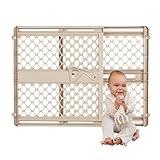
- PROVIDES PEACE OF MIND - The kids gate creates a secure barrier to help prevent access to stairs, bathrooms, kitchens, and other off-limit areas, so your little one can safely explore.
- ADJUSTABLE SAFETY GATE - This plastic child safety gate is adjustable, fits openings 26 to 42 inches wide, and is 26 inches tall. It is designed to be difficult for kids to climb. Our baby gate is perfect for stairs, doorways, hallways, and more.
- EASY TO INSTALL - Two installation options, pressure-mounted baby gate for a quick setup or hardware-mounted for use as a stairway safety gate that swings open. All necessary hardware is included. For stairway use, hardware mounting is required.
- COMFORTABLE HANDLE - Our baby gate for doorways features an ergonomic, easy-press handle that allows smooth opening and secure locking in seconds, even with one hand.
- MADE IN USA - Our JPMA-certified baby gate brings peace of mind to the entire family. We stand for the highest safety, quality, and operational standards while creating the ideal collection of products for babies ages 6-24 months. Proudly made in the USA!
The practical value is the sequence: reunion, contact, settling, exploration, and return. Use those observations to give a veterinarian or behaviorist a clear history, alongside the exact situations that produce tension or aggression.
What is the safest way to record patterns for a professional?
Write down the date, location, resource, who approached, distance, the dog’s first visible signal, what happened next, and how the interaction ended. Note hunger, pain, medication, visitors, exercise, sleep, and other stressors that day. Do not stage a video or repeat an incident for documentation; record only from a safe distance during ordinary events.
Outdated Drivers Are Slowing You Down
One free scan finds every outdated or missing driver and matches the right update for your exact hardware.Free scan · exact hardware matchWindows Errors? Fix Them Before They Spread
Repair common Windows errors and clear accumulated junk for a smoother, more stable PC - no reinstall needed.Free scan · no reinstallA short written log can reveal whether guarding is limited to food, appears around a person, follows stressful events, or is spreading to new contexts. That information helps a professional set management priorities without exposing anyone to another warning or bite.
Is my dog bonded if it follows me everywhere but growls at visitors?
Following may show attachment, anxiety, habit, or an attempt to control access to you. The growl when visitors approach is the more important safety signal because it identifies a defensive trigger. Manage visitor access with distance and barriers and arrange a behavior assessment rather than interpreting the behavior as proof of loyalty.
Could my dog be guarding me and still like the person it threatens?
Yes. A dog can enjoy a person at some times and still guard a caregiver, sofa, doorway, or other resource in a specific context. Guarding is situational, so friendly behavior elsewhere does not make an approach safe during the guarded event.
Frequently Asked Questions
Can resource guarding appear for the first time in an older dog?
Yes. A new or stronger guarding response can follow pain, illness, medication changes, hunger, stress, or a recent experience in which guarding successfully prevented loss. A veterinary check is appropriate when the change is sudden or unusually intense.
Free tools Windows power users keep installed
One-click scans. No signup required.
What should visitors do when a dog guards its owner?
Visitors should avoid approaching the dog or owner when the dog is tense, staring, blocking, or growling. The household should use a closed door, gate, or separate room and follow a behavior professional’s visitor protocol rather than asking guests to offer food from close range.
Does neutering or spaying stop resource guarding?
There is no guarantee that an alteration procedure will resolve guarding, because the behavior involves learning, perceived threat, context, and sometimes medical factors unrelated to sex hormones. Discuss the individual dog’s health and behavior with a veterinarian instead of treating surgery as a behavior plan.
Can a dog guard an empty bowl or a place where food used to be?
Yes. The valued resource may be the location, the expectation of food, or access to a resting area rather than the food itself. Manage the space and describe the exact trigger to a professional so the plan addresses what the dog is defending.





Leave a Reply