
Do these 3 things before closing this tab:
1Clear out junk files and repair common Windows errors2Fix the driver behind crashes, sound loss and screen glitches3Repair Windows errors before they cause bigger problemsSome links on this page are affiliate links: if you buy through them we may earn a commission, at no extra cost to you.
Dog boots provide the broadest winter protection when they fit correctly and stay on. A boot creates a physical barrier between the paw and salted pavement, deicers, snow, ice, dampness and cold. Paw wax is useful for conditioning dry pads and adding a thin moisture or chemical barrier, but it cannot shield against sharp ice and it does not eliminate the need to rinse paws after a treated walk. Choose according to the hazard, outing length and your dog’s willingness to wear footwear; for many dogs, boots on difficult walks plus careful paw cleaning afterward is the most protective plan.
Which protects dog paws better in winter: boots or paw wax?
Boots are the stronger all-around barrier for salt, deicer, snow, ice and cold exposure. Paw wax is a narrower tool: it moisturizes pads, reduces direct contact with moisture and chemicals, and may reduce snow packing, but it is not a shield against sharp ice. No head-to-head clinical trial has established a percentage advantage for either product, so the practical choice is hazard-based rather than a quantified medical ranking.
As an Amazon Associate I earn from qualifying purchases.
Veterinary guidance supports that distinction. Cornell veterinarian Brian Collins, D.V.M., says, “If a dog is picking up its feet or seems reluctant to walk this may be a sign that he/she is too cold.” Cornell also advises boots or a paw wash for dogs walking where salt is used. VCA describes booties as protection from chemical irritation and snow or ice balls, while PetMD calls winter boots the most reliable option when they are lightweight, adjustable, water-resistant or waterproof, breathable, easy to clean and non-slip.
Wax remains valuable when a dog will not accept footwear, when the outing is short and conditions are mild, or when pads are rough and cracked. It should be treated as one part of winter care, not as permission to leave salt or chemicals on the feet.
Popular on Amazon
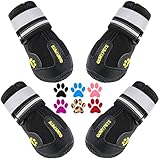
- Please be sure to measure the width of your dog's paws carefully, it is key to choosing the correct size for your dog, weight can only be used as an additional reference; Size 1: 1.8''x2.3''(W*L) for 11-23 lbs; size 2: 1.9''x2.4''(W*L) for 18-27 lbs; size 3: 2.0''x2.5''(W*L) for 23-33 lb; size 4: 2.2''x2.6''(W*L) for 31-40 lbs; size 5: 2.4''x2.8''(W*L) for 40-55 lbs; size 6: 2.6''x3.0''(W*L) for 52-65 lbs; size 7: 2.8''x3.2"(W*L) for 63-75 lbs; size 8: 3.0''x3.3"(W*L) for 74-88 lbs
- SECURE and ADJUSTABLE: Easy to put on / off. These dog shoes expands with a wide split seam opening and two adjustable and reflective straps to ensure a tight fit, also make your dog safe at night
- RUGGED: Tough slip-proof sole of dog boots provides stability and traction, protection from rough terrain
- QUALITY: The dog boots have a rugged sole and high quality fabrics that are then sewn together to ensure they are ready for your adventure
- FASHIONABLE: QUMY dog boots are with cute pet paw embroidery, paws side is the outside, soft and hand washable
How do winter dog boots protect paws?
They create a continuous physical barrier
A correctly fitted boot covers the pad, toes and the spaces between them. That separates skin from treated pavement, damp snow and many small ice fragments. The sole and upper also provide more protection from sharp ice than a topical product can offer. This is why boots are the better choice for salted sidewalks, deep snow, sharp or crusted ice, longer walks and very cold exposure.
They can stop snow and ice balls from forming
VCA notes that booties prevent snow and ice balls from building between the toes. The protection depends on the boot remaining in place and fitting closely enough that snow cannot enter around the opening. A loose boot can twist, expose the paw or collect snow; an overly tight one can rub or create pressure points.
What boots cannot do automatically
A boot is not safe merely because it is labeled for winter. PetMD recommends inspecting feet for pressure sores, cleaning boots daily and removing them indoors. Latex or rubber designs can trap moisture and make paws itchy, so moisture management matters as much as insulation. A dog that is still lifting its feet, shivering or reluctant to walk is cold or uncomfortable even if boots are on; end the outing and warm the dog.
What does paw wax or balm do?
Moisturizing and conditioning
Wax or balm forms a thick pre-walk layer that conditions rough or cracked pads. That is its main advantage over boots: it directly moisturizes the skin instead of covering it. Apply it to clean, dry pads before going outside, following the product label for the amount and frequency.
A limited barrier against dampness and chemicals
VCA describes paw balm as a barrier that can reduce contact with salt and deicers and help prevent snow and ice balls. PetMD similarly says a wax such as Musher’s Secret Paw Protection Natural Dog Wax forms a barrier against dampness and chemicals. The layer is thin, however. It can wear away during a walk, transfer to snow or pavement, and cannot stop a sharp ice edge from contacting the pad.
Why wax does not make salt harmless
A Montreal veterinary clinic guide cautions that barrier wax may reduce snow packing, although that effect has not been demonstrated in a controlled comparison. The same guidance stresses that wax does not make salt harmless and never replaces rinsing. Treat this as cautious clinical advice rather than a measured boots-versus-wax trial result.
Also popular on Amazon

- Size L: The large dog shoes fit dogs with a forelimb circumference of 43.25–49.25", paw width of 2.25–2.5", and paw length of 2.5–3". Forelimb circumference is the most important measurement for choosing the right size. Avoid an uncomfortable fit by measuring your dog's measurement before purchase. Please refer to the size chart and do not choose a size based on weight, breed, or previous shoe size, as every dog's paws are different.
- Keep Paws Dry in Rain & Mud: Made with water-resistant fabric and a high-top design, these dog rain boots keep your dog's paws and lower legs dry and clean in rainy, snowy, and muddy conditions. The dog hiking boots are suitable for wet walks, muddy trails, winter, hiking, running, and outdoor adventures.
- No More Lost Boots on the Trail: Tired of your dog's boots slipping off or getting lost during a walk? Regular dog boots can slip off when dogs run, jump, or walk. These boots for dogs add an extra layer of security to keep all four boots in position.
- All-terrain Dog Boots & Paw Protectors: The rubber soles provide reliable grip on wet, slippery, icy, and uneven surfaces. And your dog stay steady while walking or running with the dog booties waterproof on. The shoes for dogs also shields your dog's paws from rough ground, rocks, sharp debris, and other outdoor hazards.
- Adjustable Elastic Fit: Every dog has a different leg shape and length. The adjustable elastic suspender straps stretch for a flexible, comfortable fit and allow easy size adjustment around the legs. Hook-and-loop closures make fastening and removal simple and convenient.
What is the difference between boots and paw wax?
| Protection question | Dog boots | Paw wax or balm |
|---|---|---|
| Surface barrier | Broad physical covering over the paw | Thin moisture and chemical barrier on the pad |
| Salt and deicers | Strongest separation from treated surfaces when boots stay on | Reduces contact but does not make salt harmless; rinse afterward |
| Snow and ice balls | Prevents contact when correctly fitted | May reduce packing; evidence is practical guidance, not a head-to-head trial |
| Sharp ice or puncture exposure | Better suited because the sole and upper add a physical shield | Does not protect against sharp ice |
| Dry or cracked pads | Not a moisturizer; prolonged wear can trap moisture or rub | Moisturizes and conditions pads |
| Dog acceptance | Requires sizing and gradual indoor training; some dogs refuse | Usually quick to apply and accepted more readily |
| Best use | Salted sidewalks, deep snow, sharp ice, longer walks and very cold exposure | Light snow, short outings, pad conditioning or dogs that reject boots |
How should I choose for a particular winter walk?
Start with the surface and the length of exposure, then factor in your dog’s tolerance and pad condition. The following decisions use the hazards described by veterinary sources rather than a universal temperature chart.
Choose boots for treated sidewalks
Road salt and other deicers can irritate or dry pads and may be toxic if swallowed. VCA reported that more than 730 million pounds of salt was used on roadways in 2021; that figure illustrates how common treated surfaces are, not how many dogs are injured. If your route includes visible salt, brine or gritty deicer, boots provide the most complete separation, provided your dog keeps them on.
Choose boots for deep, crusted or sharp snow and ice
Boot soles and uppers cover the paw where wax cannot. They are especially useful when snow is deep enough to enter between toes, when crusted snow has sharp edges, or when the walk will last long enough for a topical layer to wear away.
Use wax for light conditions or pad care
For a brief trip over clean, lightly snowed ground, wax can reduce moisture contact and help condition dry pads without the training period required for boots. It is also a practical fallback for a dog that repeatedly refuses footwear. Keep the outing short if conditions worsen, and plan to wipe or rinse afterward.
Recommended Free Tools
Consider a trial indoors before committing outside
A dog that freezes, chews at boots or will not walk in them needs a slower introduction. Forcing a first outdoor walk can lead to lost boots and unprotected paws. Wax is simpler to deploy immediately, but it still does not cover every hazard.
How do I fit and train a dog to wear boots?
PetMD and the American Kennel Club both emphasize gradual indoor practice. Use this sequence for each boot set:
Also popular on Amazon

- 1.【Sizes】:Size 3: 1.5" x 1.3" (L*W);Size 5: 1.9" x 1.5" (L*W);Size 7: 2.3" x 1.9" (L*W). Please measure your dog's feet before ordering.Then choose the right size to buy.The size in the page is the length and width of the inside of the shoe.When the parameters come out,please match the size and choose a size measurement that is larger than you.So your cute dog will wear it more comfortably.
- 2.This dog shoe uses a hard non-slip sole to provide stability and adhesion on tiles and sand, and protect the paws from sharp rocks, broken glass, burrs, ice, snow, salt and many other elements that may be harmful to dog paws.
- 3.This winter dog boot, with super soft fleece inside, provides extra comfort, keeps paws warm in cold weather, and keeps the cute dog clean when running outside.
- 4.The dog booties are extended by two adjustable straps and have reflective straps to ensure tight fit and safety during night walking. Elastic fastening strap design is easy to wear, take off and not easy to fall.
- 5.Note: This dog shoe is not waterproof, it is more suitable for indoor shoes and walking in sunny days. Please pay attention to your dog to avoid swallowing the beads on the shoes after wearing.
- Measure and select the correct size. Follow the manufacturer’s measurement method for paw length and width. The boot should stay on without squeezing the toes or leaving a gap large enough for snow to enter.
- Let your dog investigate. Place the boots on the floor and reward calm sniffing. Do not rush to fasten all four.
- Start with one boot indoors. Fasten it securely, allow a few steps on a familiar surface, then remove it. Increase the number of boots and the duration only while your dog remains comfortable.
- Use short, positive sessions. Pair wearing boots with praise or another reward. If your dog resists, return to a shorter session rather than tightening the straps.
- Check movement and skin. Look for twisting, slipping, redness, dampness or pressure marks. A boot that causes rubbing needs a different size or design.
- Test before a real winter walk. Walk indoors long enough to confirm that every boot stays in position. Recheck after the first few minutes outside.
- Remove boots indoors. Take them off when the dog returns, inspect and dry the paws, and clean the boots daily. Do not leave them on for extended indoor wear.
Lightweight, adjustable, breathable, water-resistant or waterproof and non-slip features are the combination PetMD recommends. No feature compensates for a poor fit.
How should I apply paw wax before a walk?
- Clean and dry the pads. Remove visible grit and make sure the skin is dry so the product can form an even layer.
- Spread a thin, complete coat. Cover the pads and the edges that contact snow or pavement. Use the product’s directions rather than adding a thick, slippery layer.
- Allow it to settle. Give the balm a moment to adhere before stepping outside, especially on smooth indoor floors.
- Keep the outing matched to the protection. Wax is suited to light snow, short trips and pad conditioning, not sharp ice or prolonged exposure to salt.
- Clean paws after returning. Wipe or rinse away salt, chemicals and ice even when wax was used. Reapply only as directed after the paws are clean and dry.
What should I do after every winter walk?
After-walk cleaning is necessary with boots, wax or neither. Cornell, Tufts and Zoetis all support checking or wiping paws after walks. Use lukewarm water or a damp cloth to remove salt, deicers and ice. Never pull stuck ice balls off fur; gentle softening and wiping avoids tearing skin or hair.
Inspect between the toes, around the nails and across each pad. Dry the feet and examine boots for trapped moisture, grit or damage before the next outing. If a product used on a sidewalk is unknown, assume it may irritate the paws or be unsafe if licked. Even areas advertised as pet-friendly should be wiped because a dog may cross a road or path treated with something else.
How cold is too cold for a dog’s paws?
There is no single safe temperature for every dog. Tolerance changes with body size, coat, age, health, wind and wetness, so a thermometer reading alone cannot set a universal walk limit.
Use your dog’s behavior as the immediate safety signal. Paw lifting, shivering, reluctance to walk or other signs of cold stress mean the outing should end or be shortened and the dog should be warmed. Boots can reduce contact with cold surfaces, but they do not make unlimited exposure safe.
Independent reader supportYour contribution helps us test, update, and keep practical guides available for everyone.Are pet-safe ice melts enough protection?
Choosing a pet-friendly deicer for areas you control is sensible, but it is not a substitute for paw care. VCA warns that rock salt and other products can irritate or dry pads and may be toxic if eaten. Sidewalks and roads may contain products you did not apply, so wipe or rinse after every treated-surface walk regardless of the label on your own ice melt.
What’s actually slowing this PC down?
Pick the symptom - the matching free tool is one click away.
Also popular on Amazon
- Please be sure to measure the width of your dog's paws carefully, it is key to choosing the correct size for your dog, weight can only be used as an additional reference; Size 1: 1.8''x2.3''(W*L) for 11-23 lbs; size 2: 1.9''x2.4''(W*L) for 18-27 lbs; size 3: 2.0''x2.5''(W*L) for 23-33 lb; size 4: 2.2''x2.6''(W*L) for 31-40 lbs; size 5: 2.4''x2.8''(W*L) for 40-55 lbs; size 6: 2.6''x3.0''(W*L) for 52-65 lbs; size 7: 2.8''x3.2"(W*L) for 63-75 lbs; size 8: 3.0''x3.3"(W*L) for 74-88 lbs
- SECURE and ADJUSTABLE: Easy to put on / off. These dog shoes expands with a wide split seam opening and two adjustable and reflective straps to ensure a tight fit, also make your dog safe at night
- RUGGED: Tough slip-proof sole of dog boots provides stability and traction, protection from rough terrain
- QUALITY: The dog boots have a rugged sole and high quality fabrics that are then sewn together to ensure they are ready for your adventure
- FASHIONABLE: QUMY dog boots are with cute pet paw embroidery, paws side is the outside, soft and hand washable
What winter-paw mistakes cause problems?
- Assuming wax is a complete shield. It cannot stop sharp ice and does not neutralize salt.
- Putting on boots for the first time outdoors. Dogs commonly need indoor acclimation; an untrained dog may refuse to move or lose a boot.
- Ignoring fit. Slipping, twisting, tight straps and trapped moisture can cause rubbing or itching.
- Leaving boots on inside. Remove them indoors, inspect the skin and clean the footwear daily.
- Skipping the rinse. Salt and deicers can remain after either boots or wax are used, particularly if a boot leaked or was removed during the walk.
- Pulling ice balls off dry. Soften and wipe them away instead of tugging on fur or skin.
- Waiting for a dramatic symptom. Foot lifting or reluctance to walk is an early warning that the dog is too cold or uncomfortable.
What should a winter paw-care kit contain?
A practical kit can be small: a properly sized set of boots for difficult routes, a dog paw wax or balm for conditioning or short outings, a damp cloth or paw washer for cleanup, a towel for drying, and a deicer labeled for pet use in areas you maintain. The cleaning tools remain useful even when boots fit perfectly because no boot is guaranteed to stay sealed throughout a walk.
Replace or adjust equipment when you see wear, leaks, persistent slipping, pressure marks or trapped dampness. A fresh layer of wax cannot compensate for a damaged boot, and a premium boot cannot compensate for skipped rinsing.
Can boots and paw wax be used in the same winter?
Yes, they can serve different purposes across conditions: boots for salted, icy or prolonged walks, and wax for pad conditioning or brief trips when footwear is not practical. However, there is no clinical evidence establishing that layering both provides a measurable advantage over a well-fitted boot alone. If you combine them, monitor for moisture and rubbing, remove boots indoors, and still rinse the paws.
What is the practical verdict?
For maximum coverage, start with well-fitted dog boots and train your dog to accept them indoors. Keep paw wax available for moisturizing dry pads, light snow and dogs that cannot tolerate boots, but do not use it as protection from sharp ice or as a replacement for washing. Whichever option you choose, respond to cold signals promptly and clean the paws after every salted or chemically treated walk.
PC Slower Than It Used to Be?
A free scan shows the junk files, broken settings and background clutter dragging Windows down - then fixes them in one click.Free scan · Windows 10 & 11Crashes, No Sound, or Screen Glitches?
Random freezes, missing sound and display glitches usually trace back to one bad driver. Find and replace yours safely.Free scan · under a minuteFrequently Asked Questions
Can a dog wear winter boots on wet pavement as well as snow?
Water-resistant or waterproof boots can help keep paws drier on wet surfaces, but moisture can still enter at the opening or accumulate inside. Remove the boots after the walk, dry the feet and inspect for dampness or rubbing before using them again.
How can I tell whether a boot is too tight?
A tight boot may leave pressure marks, cause redness or make the dog change its gait. Remove it and check the skin after a short indoor session; persistent marks or discomfort indicate that the size or design needs to change.
Does paw wax need to be removed before bedtime?
Follow the product label, but clean off outdoor residue before the dog settles indoors. A lukewarm-water wipe removes salt and grit and lets you check whether the pads remain irritated or cracked.
What should I do if my dog swallows deicer granules?
Prevent further access and contact a veterinarian or an animal poison service promptly, because some deicers can be toxic when eaten. Do not assume a product is safe merely because it was used outdoors or described as gentle on paws.
Free tools Windows power users keep installed
One-click scans. No signup required.





Leave a Reply