
Crashes, No Sound, or Screen Glitches?
Random freezes, missing sound and display glitches usually trace back to one bad driver. Find and replace yours safely.Free scan · under a minuteWindows Errors? Fix Them Before They Spread
Repair common Windows errors and clear accumulated junk for a smoother, more stable PC - no reinstall needed.Free scan · no reinstallSome links on this page are affiliate links: if you buy through them we may earn a commission, at no extra cost to you.
For most dogs, a well-fitted body harness is the safer choice for leash walks because it moves force away from the throat and neck. That matters most for dogs that pull, flat-faced (brachycephalic) breeds, and dogs with airway, neck, eye, or tracheal problems. Keep a flat collar for identification tags and consider using it for a dog that reliably walks on a loose leash. Choose the harness design for the dog in front of you: a non-tightening front clip generally gives the best balance of control and comfort for pullers, while a Y-shaped or chest-strap back clip suits calm walkers and many brachycephalic dogs. Neither device teaches loose-leash walking by itself; reward-based training remains essential.
Is a harness better than a collar for walking a dog?
A harness is usually better for leash walking when a dog pulls or has a vulnerable neck or airway. A flat collar can be appropriate for a calm dog that keeps the leash loose, and it remains the most practical place for identification tags. The correct choice depends on fit, design, health, behavior, and supervision rather than on one universal rule.
As an Amazon Associate I earn from qualifying purchases.
When a dog surges ahead, a collar concentrates leash force on the throat and cervical tissues. A body harness spreads that force across the chest and shoulders. Tufts Cummings School of Veterinary Medicine’s guidance, published November 22, 2022, says well-fitted harnesses are “much preferable to collars for dogs for leash walking or for playing off leash.” The same guidance recommends collars primarily for tags and warns that neck pressure can injure sensitive tissue, impair breathing in brachycephalic dogs, and aggravate collapsing trachea in small dogs.
A harness is not automatically safe. Straps can rub, cross the shoulder joints, restrict a stride, or allow an escape if they are loose. A collar can also be comfortable when correctly fitted and used with a dog that does not pull. Equipment should reduce risk while you teach the walking behavior you want.
Popular on Amazon

- Helps Stop Pulling: Patented Martingale loop design puts gradual pressure on your dog’s shoulders to safely and effectively stop pulling; a front leash attachment helps you guide your dog
- Legacy Of Trust: Created by a veterinary behaviorist in 2004, the Easy Walk harness is loved and trusted by a million pet parents and trainers
- Comfortable Fit: Easy Walk harness has less coverage than other harnesses making it lightweight and very breathable
- No Gagging Or Choking: Rests across your dog’s chest instead of his throat to stop gagging and choking if he pulls
- Easy to Fit: Quick-snap shoulder straps and a different color belly strap make it simple to put the harness on your dog
What does the latest evidence say about collars and harnesses?
A 2025 peer-reviewed review by Camila Cavalli and Alexandra Protopopova in Animals examined 21 full-text articles and two abstracts on canine restraint devices. It concluded that no single device suits every dog. Its practical recommendations match the dog’s pulling behavior and physical needs.
- Dogs that pull: A non-tightening front-clip harness appears to offer the best balance between reducing forward force and limiting discomfort.
- Dogs that do not pull: A flat collar creates the least body restriction. A back-clip harness is an option when the owner prefers a harness.
- Brachycephalic dogs or dogs for whom pulling is not a concern: A chest-strap or Y-shaped back-clip harness is suitable when correctly fitted.
- Use caution with tightening harnesses, martingale collars, and head collars: These devices can create greater discomfort and require careful, individual assessment.
The review also notes that harnesses can alter gait or restrict joints when their shape, padding, strap width, or adjustment concentrates pressure. The authors’ summary is: “For dogs that pull, non-tightening front-clip harnesses appear to offer the best balance between discomfort and reduction in pulling.” That is a selection principle, not a guarantee that every front clip will fit every dog.
How do collars and harnesses differ in everyday use?
| Factor | Flat collar | Non-tightening front-clip harness | Y-shaped or chest-strap back clip |
|---|---|---|---|
| Neck and airway pressure | Leash force reaches the neck; risk rises if the dog pulls or has airway disease. | Moves most leash force to the chest and can reduce direct throat pressure. | Also moves force off the neck when fitted correctly. |
| Pulling control | Offers little mechanical help; a pulling dog can load the neck. | Turns the dog’s body when it advances and gives extra handling control. | Does not reduce the effects of pulling as much as a front clip. |
| Shoulder and gait freedom | Does not cover the shoulders. | Depends on design; across-chest straps may restrict shoulder movement. | Y-shaped designs are intended to leave the shoulders freer, but fit still matters. |
| Escape risk | A loose collar can slip over the head; a tight collar can injure. | A loose harness may let a dog back out; check fit by testing backward movement. | Same escape concern; adjust every strap. |
| Putting it on | Usually fastest. | More straps and adjustment points require practice. | Usually straightforward once adjusted. |
| Identification tags | Best location for tags and contact information. | Not a replacement for a tag collar unless local rules and your veterinarian say otherwise. | Not a replacement for a tag collar. |
| Training need | Loose-leash training is still required. | Redirects force but does not teach leash skills. | Comfortable management for calm walkers, but training remains necessary. |
These are general tendencies, not guarantees. A harness that lies over the shoulder joint can be less comfortable than a properly fitted collar on a quiet, loose-leash dog. Conversely, a flat collar can be a poor choice for a dog that repeatedly hits the end of the leash.
Which harness is best for a dog that pulls?
Start with a non-tightening front-clip harness. The leash attachment sits on the chest, so forward movement redirects the dog’s body rather than placing all the force on the neck. The 2025 review identifies this style as the leading compromise between control and discomfort for pullers.
Choose a shoulder-friendly front clip
Not every front clip has the same geometry. Edmonton Humane Society guidance distinguishes Y- or H-shaped designs that avoid the shoulder joints from across-chest designs that can restrict shoulder movement. Look for a strap path that leaves the front legs able to extend and retract without the webbing digging into the shoulder or armpit.
Understand what the front clip can and cannot do
VCA Animal Hospitals describes a front clip as a way to turn a dog away from a distraction with gentle pressure. That mechanical redirection can make handling safer, but it is not a cure for pulling. If the dog continues to lean into the harness, the owner still needs a training plan based on rewards, distance from distractions, and short successful sessions.
Do these 3 things before closing this tab:
1Repair Windows errors before they cause bigger problems2Fix the driver behind crashes, sound loss and screen glitches3Clear out junk files and repair common Windows errorsAlso popular on Amazon
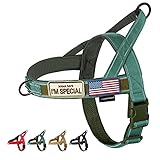
- [Premium No Pull Dog Harness] The wider soft padded inner is comfortable and friendly for dog's neck without dog's fur hurting. The back strap and chest strap inner is made of soft and breathable material that is comfortable for the dogs. And the front strap is better to prevent the dog from rushing forward. This design is maintain a long-time comfortable for walking,jogging,running,training,etc.
- [Reflective Strip] Reflective stitching along polyester webbing is not only add a sense of design to the safe for walking dog harness,but also increase a better visibility at dark under the light that it can keep the dog safe while walking.
- [Two Rings Design] The O-ring and D-ring is convenient and flexible to hang,they not only can connect well with dog leash,but also can hang ID tags,key,poop bag,etc.
- [Choose the Suitable Dog Harness] The no pull dog harness have FIVE sizes,XS is design 1 inch wide / S M L XL are design 1.5 inches wide for the small & medium and large dogs. PLEASE measure the size of the dog and refer the dimension chart to select the right one before buying.
- [Come with TWO Patches] There has a velcro area on the dog walking harness,and come with 2 patches, you can put the patches "MAMA SAY I'M SPECIAL" or the flag on the dog harness velcro area to make your dog unique.
When a front clip is a poor match
Choose another design if the harness restricts the dog’s stride, causes chafing, rotates into the armpit, or produces a tense, abnormal posture. A veterinary professional or qualified force-free trainer can help when a dog’s body shape or behavior makes fitting difficult.
When is a back-clip harness or collar the better option?
A Y-shaped or chest-strap back-clip harness is often suitable for a calm dog, a small dog, or a brachycephalic dog that does not pull. The leash attachment over the back is less likely to tangle around the feet, and a Y-shaped chest design can preserve shoulder movement when correctly adjusted.
The Atlantic Veterinary College at the University of Prince Edward Island explained in an April 2022 handout that back clips are recommended for calm and small dogs. It cautioned that a larger dog that pulls may be able to use its body weight to pull harder with a back clip. Edmonton Humane Society similarly notes that back clips do not reduce the effects of pulling as front clips do.
A flat collar can suit a dog that consistently walks on a loose leash. It leaves the body unrestricted and is the best place for identification tags. If the dog begins coughing, gagging, forging ahead, or repeatedly tightening the leash, reassess the collar and move walking control to a well-fitted harness while training improves.
Recommended Free Tools
What is safest for a dog with a collapsing trachea or other airway problem?
Use a well-fitted body harness rather than relying on a leash attached to a collar. Tufts specifically warns that pulling on a collar can aggravate collapsing trachea in small dogs and that throat pressure may impair breathing in brachycephalic dogs. A harness does not treat the underlying condition, so ask your veterinarian for individualized advice, especially if coughing, noisy breathing, fainting, exercise intolerance, or distress occurs.
For a brachycephalic dog that does not pull, a Y-shaped or chest-strap back-clip harness is the usual design starting point. Keep the neckline clear of the throat, check that the chest piece does not press on the windpipe, and watch breathing during a short, quiet trial. If the dog pants excessively, coughs, gags, or changes gait, stop and have the fit assessed.
Also popular on Amazon

- Helps Stop Pulling: Patented Martingale loop design puts gradual pressure on your dog’s shoulders to safely and effectively stop pulling; a front leash attachment helps you guide your dog
- Legacy Of Trust: Created by a veterinary behaviorist in 2004, the Easy Walk harness is loved and trusted by a million pet parents and trainers
- Comfortable Fit: Easy Walk harness has less coverage than other harnesses making it lightweight and very breathable
- No Gagging Or Choking: Rests across your dog’s chest instead of his throat to stop gagging and choking if he pulls
- Easy to Fit: Quick-snap shoulder straps and a different color belly strap make it simple to put the harness on your dog
Do not interpret a harness as permission for strenuous exercise in a dog with respiratory disease. Heat, humidity, excitement, and exertion can affect breathing independently of the restraint.
How tight should a dog harness or collar be?
Use the two-finger rule: you should be able to slide two fingers beneath each collar or harness strap, while the equipment remains secure and does not rotate excessively. This rule is a starting check, not a substitute for watching movement and skin.
Quick wins for a faster PC:
Fix the driver behind crashes, sound loss and screen glitchesFind Drivers →Clear out junk files and repair common Windows errorsFree Scan →Scan for outdated or missing drivers - takes under a minuteDriver Scan →- Place the collar high enough to stay secure without pressing on the throat; verify that it cannot slip over the head when the dog backs away.
- Set the harness girth strap behind the front legs, not in the armpit crease or directly across the elbow.
- Adjust the chest and neck straps so the harness does not ride onto the shoulder joints or rub the underside of the neck.
- Walk the dog slowly and observe the full stride, turning, sitting, and backing up.
- Recheck the two-finger space after movement because webbing can shift as the dog walks.
- Inspect the skin and coat for red marks, hair loss, damp friction, or swelling after each early use.
VCA advises that a well-fitted body harness should not limit front-leg movement or rub behind the elbow. A loose harness can let a dog back out, while an over-tight harness can concentrate pressure and restrict breathing or gait. Refit after a haircut, weight change, growth spurt, or replacement of a worn strap.
How can I tell whether a harness restricts movement?
Watch the dog from the side and front on a level surface. The forelegs should extend naturally, the shoulders should move freely, and the dog should not shorten its stride, hop, widen its stance, or repeatedly stop to scratch at the equipment.
- Shoulder restriction: A strap crosses the front of the shoulder and limits reach, especially at a trot.
- Armpit rubbing: The girth strap sits too far forward or is too loose and slides during movement.
- Chest pressure: The front panel presses into the throat or causes coughing when the leash tightens.
- Rotation: The harness twists to one side, suggesting uneven adjustment or a shape mismatch.
- Escape opportunity: The dog can reverse out when you apply gentle backward pressure to the leash.
Padding and wider straps do not automatically make a harness safer. They can spread pressure, but excessive material may also increase heat, bulk, or contact with a moving joint. Fit and strap placement matter more than a product label.
How do I introduce a dog to a new collar or harness?
Condition the equipment indoors before attaching a leash. A gradual introduction reduces fear and lets you identify rubbing or movement problems without the added difficulty of an outdoor distraction.
Also popular on Amazon

- Helps Stop Pulling: Patented Martingale loop design puts gradual pressure on your dog’s shoulders to safely and effectively stop pulling; a front leash attachment helps you guide your dog
- Legacy Of Trust: Created by a veterinary behaviorist in 2004, the Easy Walk harness is loved and trusted by a million pet parents and trainers
- Comfortable Fit: Easy Walk harness has less coverage than other harnesses making it lightweight and very breathable
- No Gagging Or Choking: Rests across your dog’s chest instead of his throat to stop gagging and choking if he pulls
- Easy to Fit: Quick-snap shoulder straps and a different color belly strap make it simple to put the harness on your dog
- Place the harness or collar on the floor and feed treats near it until the dog approaches willingly.
- Touch the equipment to the dog’s shoulder or neck, reward calm behavior, and remove it.
- Fasten it for a few seconds in a quiet room, feed several small treats, then take it off.
- Increase wearing time gradually while the dog eats, plays calmly, or follows simple cues.
- Attach a lightweight leash indoors and reward slack, relaxed movement.
- Move to a quiet outdoor area for brief sessions before adding traffic, dogs, or other high-value distractions.
If the dog freezes, bites at the straps, hides, or shows persistent distress, go back to the previous step. Do not force the equipment onto a frightened dog, because that can make future handling and veterinary care harder.
Does a harness stop a dog from pulling?
No. A harness changes where force is applied and can redirect a dog, but loose-leash walking is a learned behavior. Edmonton Humane Society guidance explicitly emphasizes that the skill must be taught.
A practical reward-based plan
- Begin where the dog can pay attention, such as indoors or in a quiet yard.
- Reward the dog beside you whenever the leash hangs in a loose curve.
- When the leash tightens, stop or calmly change direction; resume forward movement when slack returns.
- Increase distance, duration, and distractions one variable at a time.
- Use high-value food, play, or access to sniffing as rewards for checking in and walking without tension.
A front clip can make the stop-and-redirect step easier, but avoid jerking the leash or allowing repeated, forceful lunges into the harness. If pulling is accompanied by lunging, barking, jumping, or escape attempts, seek a qualified force-free trainer. The Australian Veterinary Association’s policy, ratified July 15, 2022, states: “Collars designed to inflict pain, discomfort or fear to achieve behavioural change should not be used on dogs.”
Should I use a collar, harness, or both?
Many dogs can wear both, with different jobs. Use a flat collar for identification tags and a harness for the leash when the dog pulls or has neck or airway vulnerability. Keep the leash attached only to the device intended for walking control, unless a professional has given a specific safety reason for a double-connection system.
What’s actually slowing this PC down?
Pick the symptom - the matching free tool is one click away.
A collar should never be treated as a backup that can tighten against the throat during an escape. Check that tags do not catch in harness straps, and make sure the two pieces do not rub against each other as the dog moves.
Independent reader supportYour contribution helps us test, update, and keep practical guides available for everyone.Can I leave my dog’s harness or collar on all day?
Remove both collars and harnesses when the dog is unsupervised. VCA warns that any harness can become entangled, and a collar can catch on crate bars, fences, furniture, or another dog’s jaw. Entanglement can cause panic, strangulation, limb injury, or skin damage.
Also popular on Amazon
](https://m.media-amazon.com/images/I/41ji4lsxEIL._SL160_.jpg)
- [UPDATED VESION, EASY TO PUT ON & TAKE OFF] This dog harness has 3 buckles( One is on the neck with Lockable, two are on the chest), NO NEED go through dog’s head. This will let your dog loves to wear harness!
- [NO PULL WITH 2 HOOK LOOPS] There are 2 sturdy metal hook loops for leash attachment. If you use the front hook on the chest, it will reduce the pulling a lot and make going for a walk more enjoyable. As usual, most people like to use the back hook.
- [REFLECTIVE MATERIAL] The reflective material will be really nice when it gets dark. Also, your dog will be saw easily. This reflective material can make drivers have long time to react, which ensure your dog’s safety!
- [USEFUL & SOFT HANDLES] You will like this handle on the back,it is helpful in controlling dogs a bit closer to you when they are trying to lunge at something. Also, it is convenient to assist dogs into the car.
- [100% BEST CUSTOMER SERVICE] If any products quality really exits, a refund or replacement will be available.
Take the equipment off for sleep, crate time, and play with other dogs unless your veterinarian has instructed otherwise for a specific medical reason. After walks, inspect buckles and webbing for fraying, cracks, stretched holes, or weakened stitching. Replace damaged equipment before the next outing.
When should a veterinarian or behavior professional help?
Ask your veterinarian to examine a dog that coughs, gags, wheezes, faints, tires unusually, or shows neck pain during walks. A medical issue can look like a training problem, and respiratory or orthopedic conditions change which equipment is tolerable.
Free tools Windows power users keep installed
One-click scans. No signup required.
Use a qualified, force-free trainer for persistent pulling, lunging, jumping, barking, or repeated attempts to escape. The Australian Veterinary Association recommends veterinary assessment when behavior does not improve with correctly applied positive reinforcement. A veterinary behaviorist is appropriate when fear, aggression, compulsive behavior, or a suspected medical contributor complicates training.
What are the common mistakes when choosing walking equipment?
- Choosing by appearance alone: A fashionable shape can still cross the shoulder or rub the armpit.
- Assuming all front clips are alike: Across-chest designs may restrict shoulders; inspect the strap path while the dog walks.
- Leaving a loose harness because it seems comfortable: Comfort does not compensate for an escape opening.
- Using a back clip on a powerful puller without training: The dog may use its weight to increase forward force.
- Relying on tightening or aversive devices as shortcuts: Review and veterinary guidance describe discomfort, stress, or injury risks and favor humane training.
- Skipping rechecks: Growth, weight change, grooming, and worn webbing alter fit.
- Leaving equipment on unattended: Both collars and harnesses can catch and entangle.
Which option fits your dog?
| Your dog’s situation | Starting choice | What to monitor |
|---|---|---|
| Pulls strongly on walks | Non-tightening front-clip harness | Shoulder freedom, armpit rubbing, rotation, and progress with reward-based training |
| Walks calmly on a loose leash | Flat collar, or a Y-shaped back-clip harness if you prefer a harness | Neck comfort, secure fit, and continued loose-leash behavior |
| Brachycephalic or airway-vulnerable | Y-shaped or chest-strap back-clip harness | Breathing, throat clearance, heat tolerance, and gait |
| Small, calm dog | Flat collar or back-clip harness | Leash tangling, fit as the dog grows, and escape risk |
| Persistent lunging or escape behavior | Well-fitted harness plus professional help | Safety plan, medical contributors, and force-free training response |
Whichever option you choose, attach identification to a flat collar, fit every strap with the two-finger rule, watch the dog move, and remove the equipment when you cannot supervise.
Frequently Asked Questions
Can a puppy wear a harness before leash training is finished?
Yes. A puppy can be introduced to a lightweight, correctly fitted harness during indoor reward sessions before outdoor leash work. Recheck the fit frequently because puppies grow quickly, and increase outdoor distractions gradually.
Is a collar or harness better for a dog that slips out of equipment?
A harness with multiple adjustment points can reduce the chance of backing out, but only if you test it with gentle backward pressure and supervise the dog. Dogs that repeatedly escape need a professional safety plan rather than a tighter device.
How often should I replace a dog harness or collar?
Replace it whenever webbing frays, stitching loosens, buckles crack, or adjustment holes stretch. There is no universal replacement interval; inspect the equipment before every walk and after incidents such as a hard lunge or snag.
Can a harness cause a dog to walk differently?
Yes. Research reviewed in 2025 found that design and fit can alter gait or restrict joints. Compare the dog’s stride with and without the harness in a safe setting, and discontinue any model that causes shortening, hopping, rubbing, or persistent scratching.





Leave a Reply