
The Tool Desk
Outbyte Driver Updater FREEFix the driver behind crashes, sound loss and screen glitchesFind Drivers →Outbyte PC Repair FREEClear out junk files and repair common Windows errorsFree Scan →Some links on this page are affiliate links: if you buy through them we may earn a commission, at no extra cost to you.
If your dog keeps winking, blinking, or holding an eye partly closed, assume the eye may be painful or irritated until a veterinarian says otherwise. A scratch, foreign body, corneal ulcer, conjunctivitis, dry eye, eyelid problem, uveitis, allergy, or glaucoma can look similar at home. Check whether one or both eyes are affected, look for cloudiness, redness, discharge, rubbing, light sensitivity, or vision changes, and contact your veterinary practice for advice. An eye held shut, rapidly worsening pain, a cloudy or enlarged eye, severe redness, thick discharge, or a chemical exposure warrants same-day or emergency guidance.
Why does my dog keep winking or squinting?
Repeated winking or squinting is usually a protective response to pain, irritation, or inflammation rather than a harmless habit. Dogs may blink more when the cornea is scratched, a grass seed or grit is trapped, tear production is inadequate, the eyelids or lashes rub the eye, or pressure and inflammation develop inside the eye. Early glaucoma, for example, may begin with only mild redness and squinting.
As an Amazon Associate I earn from qualifying purchases.
Home observations can help a veterinarian triage the problem, but they cannot identify the cause reliably. Eye disease that appears minor can worsen quickly, and a deep ulcer can perforate the eye. PDSA advises contacting a vet as soon as a dog blinks more than usual or seems to have painful eyes.
What should I check before calling the vet?
Observe your dog in good light without forcing the eyelids open. Note what you see and tell the veterinary practice when it started, whether it is changing, and what happened immediately beforehand.
Popular on Amazon

- GREAT PROTECTION FOR YOUR PETS: The dog cone collar is a safe and good method of preventing your pet from aggravating a healing wound or injury. Helps to overcome lick-bite, Itch-scratch cycle. Ending self-Inflicted wound aggravation or mutilation, prevent your pet bite others in the dermatology / Beauty / surgical procedure.
- PERFECT FIT: Suitable for different ages or sizes dogs and cats, Meet your different needs. Please refer to our size chart before ordering, if your pet's measurement is close to the maximum please order the next size up.
- CONVENIENT TO USE: Hook & Loop design easy to tighten or loosen. This soft pet cone with above design can keep the collar secure in place and keep it from being pulled off or from falling off.
- HIGH QUALITY MATERIAL: Made of high quality PVC material, extra soft fabric edge provides your pet additional comfort and protection, durable and healthy, this pet recovery collar is light enough which never make your lovely pets get tired. And it's easy to clean!
- Warm Reminder: Some dogs may initially feel uncomfortable with the dog head cone. To prevent them from licking their wounds, we encourage you to comfort your dog and accompany them through this challenging recovery period. If you have any questions, please contact us.
Is it one eye or both?
One-eye squinting often follows a scratch, foreign body, or other local injury. Both eyes can occur with tear deficiency, immune-related disease, or infection. This pattern is a triage clue, not a diagnosis: a serious problem can still begin in one eye or affect both.
How painful does it look?
A tightly closed eye, repeated blinking, face rubbing, pawing, avoidance of bright light, crying, lethargy, or loss of appetite suggests significant pain. A dog that keeps rubbing can turn a superficial injury into a deeper ulcer, so preventing rubbing while you arrange care matters.
Outdated Drivers Are Slowing You Down
One free scan finds every outdated or missing driver and matches the right update for your exact hardware.Free scan · exact hardware matchPC Slower Than It Used to Be?
A free scan shows the junk files, broken settings and background clutter dragging Windows down - then fixes them in one click.Free scan · Windows 10 & 11What does the eye surface look like?
Look for a white or blue haze, general cloudiness, a changed pupil, marked redness, swelling, or an eye that appears larger or bulges. These findings can accompany corneal disease, uveitis, or glaucoma and should not be watched at home for several days.
What kind of discharge is present?
Watery, cloudy, yellow, or green discharge may occur with conjunctivitis or dry eye. Discharge does not rule out an ulcer, foreign body, or glaucoma, so do not use it to decide that the problem is “only” an infection.
Was there a recent exposure?
Ask whether your dog encountered a stick, claw, grass seed, grit, sand, smoke, dust, wind, shampoo, or a chemical. A sudden one-eye problem after an outdoor activity or bath is useful information for the clinician. Do not pull out an object that appears embedded.
Also popular on Amazon
- GREAT PROTECTION FOR YOUR PETS: The dog cone collar is a safe and good method of preventing your pet from aggravating a healing wound or injury. Helps to overcome lick-bite, Itch-scratch cycle. Ending self-Inflicted wound aggravation or mutilation, prevent your pet bite others in the dermatology / Beauty / surgical procedure.
- PERFECT FIT: Suitable for different ages or sizes dogs and cats, Meet your different needs. Please refer to our size chart before ordering, if your pet's measurement is close to the maximum please order the next size up.
- CONVENIENT TO USE: Hook & Loop design easy to tighten or loosen. This soft pet cone with above design can keep the collar secure in place and keep it from being pulled off or from falling off.
- HIGH QUALITY MATERIAL: Made of high quality PVC material, extra soft fabric edge provides your pet additional comfort and protection, durable and healthy, this pet recovery collar is light enough which never make your lovely pets get tired. And it's easy to clean!
- Warm Reminder: Some dogs may initially feel uncomfortable with the dog head cone. To prevent them from licking their wounds, we encourage you to comfort your dog and accompany them through this challenging recovery period. If you have any questions, please contact us. Size for L: Depth: 9.8 in, Neck Girth: 14.0-17.0in
Does breed or history raise the risk?
Short-nosed dogs have more exposed eyes and a higher risk of corneal ulcers. Previous ulcers, recurrent episodes, or known dry eye increase the value of a prompt examination because the same problem may recur or complications may develop faster.
When is a squinting dog an emergency?
Call your veterinarian as soon as possible for any persistent increase in blinking or a painful-looking eye. Seek same-day or emergency guidance if you notice any of the following:
- The eye is held shut or pain is severe, escalating, or accompanied by crying.
- The cornea looks cloudy, white, blue, or suddenly different.
- There is marked redness, swelling, a visibly enlarged or bulging eye, or a changed pupil.
- Your dog avoids light, rubs the face, seems unable to see, or repeatedly paws at the eye.
- Discharge is thick, yellow, or green, especially with lethargy or poor appetite.
- A stick, claw, grass seed, grit, or other object may have injured the eye.
- Shampoo, cleaning product, or another chemical splashed into the eye.
A suspected corneal ulcer deserves urgency because ulcers can appear suddenly, deepen rapidly, and in severe cases rupture the eye or result in removal of the eye. Glaucoma is also time-sensitive: Cornell’s veterinary guidance notes that rapid treatment may save a dog’s sight.
Is my dog’s squinting an eye infection?
It might be conjunctivitis, but squinting and discharge are not specific enough to diagnose an infection. Conjunctivitis causes a red or swollen conjunctiva, excessive blinking, and sometimes cloudy, yellow, or green discharge. It can be infectious, allergic, immune-related, associated with dry eye, or secondary to an eyelid, eyelash, corneal, or internal-eye problem.
An eye that is very painful, held tightly shut, cloudy, or sensitive to light needs evaluation for an ulcer or deeper inflammation even when discharge is present. Using leftover medication based on a previous “eye infection” can delay the correct treatment.
Also popular on Amazon
- GREAT PROTECTION FOR YOUR PETS: The dog cone collar is a safe and good method of preventing your pet from aggravating a healing wound or injury. Helps to overcome lick-bite, Itch-scratch cycle. Ending self-Inflicted wound aggravation or mutilation, prevent your pet bite others in the dermatology / Beauty / surgical procedure.
- PERFECT FIT: Suitable for different ages or sizes dogs and cats, Meet your different needs. Please refer to our size chart before ordering, if your pet's measurement is close to the maximum please order the next size up.
- CONVENIENT TO USE: Hook & Loop design easy to tighten or loosen. This soft pet cone with above design can keep the collar secure in place and keep it from being pulled off or from falling off.
- HIGH QUALITY MATERIAL: Made of high quality PVC material, extra soft fabric edge provides your pet additional comfort and protection, durable and healthy, this pet recovery collar is light enough which never make your lovely pets get tired. And it's easy to clean!
- Warm Reminder: Some dogs may initially feel uncomfortable with the dog head cone. To prevent them from licking their wounds, we encourage you to comfort your dog and accompany them through this challenging recovery period. If you have any questions, please contact us.
How do I know if my dog has a corneal ulcer?
You cannot confirm an ulcer by looking at home. Typical clues include sudden squinting, tearing, rubbing, cloudiness, and light sensitivity, often after a scratch or irritant. Some ulcers are small and difficult to see without a stain, while others worsen rapidly.
At the clinic, fluorescein dye is placed on the eye; it adheres to damaged corneal tissue and helps reveal an abrasion or ulcer. VCA explains that corneal ulcers are detected with special stains such as fluorescein. Because an ulcer can deepen or perforate, arrange veterinary care rather than waiting to see whether blinking stops.
What other conditions can cause winking or squinting?
Corneal scratch or ulcer
A scratch or ulcer commonly causes pain, tearing, repeated blinking, rubbing, cloudiness, and light avoidance. Trauma from a branch, claw, or rough play is a frequent clue, but an ulcer can also arise from dry eye or eyelid and eyelash abnormalities. Severity cannot be judged reliably from the amount of visible damage.
Foreign body or surface irritant
Grass seeds, grit, sand, dust, smoke, wind, and shampoo can irritate the surface or become trapped under an eyelid. Sudden onset in one eye after exposure supports this possibility. A gentle saline rinse may remove loose surface material, but it will not treat an ulcer, infection, glaucoma, or dry eye.
What’s actually slowing this PC down?
Pick the symptom - the matching free tool is one click away.
Dry eye (keratoconjunctivitis sicca)
Insufficient tear production causes irritation, redness, thick discharge, and squinting, and it increases the risk of secondary corneal ulcers. Dry eye often requires long-term management rather than a short course of drops. Recurring episodes or sticky discharge in both eyes should prompt a tear-production test.
Glaucoma
Glaucoma is increased pressure inside the eye. Early signs may be mild redness and squinting; progression can bring a cloudy cornea, dilated pupil, enlarged or bulging eye, pain, reduced vision, lethargy, and appetite loss. Untreated glaucoma can blind a dog, so a suspected case needs urgent assessment.
Also popular on Amazon
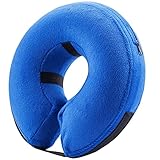
- PROTECTIVE AND GENTLE CARING - Bencmate dog cone collar is a perfect dog cone alternative after surgery. Inflated dog donut collar works like a plump barrier around your canine's neck, The dog cone collar after surgery is designed to protect your pets from injuries, rashes, and post-surgery wounds, it prevents your pets from biting and licking their injured area or surgical site and promote recovery from surgery or wounds. The soft material also provides gentle caring for your pets.
- UPGRADED FABRICS &COMFORTABLE — We offer two fabric options to choose from. One is a plush, soft-touch fabric for extra comfort (solid colors option), and the other is an anti-stick, scratch-resistant, and stretchy fabric (colorful option). Cleaning is also very convenient and simply unzip to remove the outer cover. After surgery, dogs can wear this soft dog cone for a comfortable fit, and it also doubles as a neck pillow to help them fall asleep quickly and relieve wound pain.
- FREEDOM FROM RESTRAINT — Pets wearing traditional Elizabethan collars often stumble and trip because their vision is blocked. With the Bencmate dog donut collar with inner air bag provides full neck support, and the soft outer material keeps your pet supremely comfortable without obstructing their sight. Unlike conventional E-collars that block a dog's vision, this collar allows them to eat, drink, sleep, and play with ease while staying fully protected.
- ADJUSTABLE AND EASY STORING - Designed fixation straps on the inside of the dog cone collar. Simply thread your dog collar through the strap to secure it in place. The dog cone collar features scratch & bite-resistant non-stick fabric and a clean hook-and-loop closure, making it slightly easier to put on and take off., allowing you to easily adjust the tightness for a perfect, please put the closure at the back of dog’s neck to prevent biting. Deflating and storing is also handy, store it in a small space for space-saving, and there is a zipper opening on one side.
- BENCMATE sincerely recommends you measure your pet’s neck circumference before purchasing to get a perfect size. ②If the collar is a bit large for your dog and easily falls off, please try to loop the daily collar with the recovery collar, it would be helpful to prevent the collar from falling off.
Eyelid, eyelash, or internal-eye disease
Entropion (an eyelid rolling inward), ectopic or misdirected lashes, and inflammation inside the eye (uveitis) can all make a dog blink, squint, or avoid light. These problems may not produce dramatic discharge, and they require an examination of the eyelids, lashes, third eyelid, cornea, and deeper structures.
What will the veterinarian do?
The examination is designed to distinguish surface injury from tear deficiency, infection, pressure problems, and internal inflammation. Depending on the findings, the veterinarian may:
Quick wins for a faster PC:
Repair Windows errors before they cause bigger problemsFix Now →Fix the driver behind crashes, sound loss and screen glitchesFind Drivers →- Inspect the eyelids, lashes, third eyelid, conjunctiva, and cornea under suitable lighting.
- Perform a Schirmer tear test to measure tear production.
- Apply fluorescein stain to identify an abrasion or corneal ulcer.
- Measure intraocular pressure when glaucoma or uveitis is possible.
- Assess pupil responses, vision, pain, and the appearance of the deeper eye.
Tell the clinician about every drop, rinse, or medication used, the timing of the exposure, and whether the dog has had previous ulcers, dry eye, or similar episodes.
What can I safely do before the appointment?
- Stop rubbing. Fit a properly sized recovery cone (Elizabethan or buster collar) if your dog is pawing at the eye or rubbing the face. The cone is protective support while an injury heals; it does not treat the cause.
- Rinse only for a suspected loose irritant. If dust, sand, smoke, or a chemical may be on the surface, gently flush with sterile saline while contacting the veterinary practice for instructions. A rinse is a temporary first-aid measure, not a substitute for examination.
- Keep the dog calm and out of bright light. Avoid outdoor debris, vigorous play, and attempts to inspect the eye repeatedly.
- Arrange professional advice promptly. Follow the clinic’s instructions about whether to come immediately, use an emergency service, or attend the next available appointment.
What should I avoid doing?
- Do not pry open a painful eye; forcing the lids can increase damage and distress.
- Do not pull out a deeply embedded stick, seed, or other object.
- Do not use steroid eye drops unless a veterinarian has specifically prescribed them for this episode. Corticosteroids can slow or stop corneal healing and cause serious complications when an ulcer is present.
- Do not assume a red eye will resolve on its own or continue using leftover antibiotics, human eye drops, or medication from a previous episode.
- Do not delay because your dog is still eating or because the discharge is clear. Painful, sight-threatening disease can look mild at first.
How should I describe the problem to the veterinary practice?
Have a short timeline ready: the first time you noticed blinking, whether one or both eyes are involved, any change in severity, and the exact exposure or injury you suspect. Mention rubbing, light avoidance, cloudiness, discharge color, pupil changes, vision problems, lethargy, appetite loss, and previous eye disease.
A photograph taken in ordinary light can document a change, but do not delay care to obtain one. If a chemical contacted the eye, identify the product and bring its label or a photograph of the ingredients if it is safe to do so.
Also popular on Amazon

- Innovative Double-Layer Design: The Vithael Dog Cone boasts an advanced two-tier construction. The Inner Layer is crafted with a soft breathable mesh material, ensuring your pet's comfort and protection without any added burden. The Outer Layer is made with durable, waterproof PVC, ensuring a sturdy structure that won't easily tear or damage, giving your furry friend the ultimate protection.
- Choose the Right Size: L (Neck Circumference: 15.4"-17.3") (Depth: 11.6"). Always measure your dog's Neck Girth and the Length between the tip of your dog's nose and the base of the neck (neck-to-nose) before buying. The cone should extend beyond the tip of the nose to prevent your pet from reaching the affected area and ensure effective recovery. If your dog's size is near the upper limit of a size range, it's best to order the next size up to provide extra comfort.
- Adjustable & Secure Fit: Featuring an wide-range adjustable hook&loop, this dog cone alternative ensures a snug, comfortable fit. In addition, this dog cone collar is equipped with an adjustable drawstring stopper that can be tightened and loosened to fit the dog's neck better, no need to worry about the pet will choke after putting on this soft cone, and make sure the cone will not slip down or take off even the dog tries to take it off. For added security, a collar can be threaded through for extra hold. Supervise your dog while they adjust to the cone to prevent them from finding ways to remove it.
- Soft Protective Edge & Waterproof: This soft dog cone for dogs has a soft protective fabric around the neck to protect your dog's cervical spine, ensuring they have a pleasant experience. The waterproof surface of this dog cone is incredibly easy to clean. You simply need a paper towel to wipe it clean, unlike other dog cones that are difficult to wash. Just get it for your lovely pet.
- Furniture-Friendly Protection: Unlike rigid plastic dog cones, Vithael dog cone minimizes noise when bumping into objects, protecting your furniture and surfaces. It also reduces friction on your dog's skin, keeping them calm and comfortable throughout recovery.
What is the practical decision?
Persistent winking or squinting is a reason to contact a veterinarian, not a symptom to diagnose from appearance alone. Protect the eye from rubbing, use only a gentle sterile-saline rinse for a suspected surface irritant while seeking instructions, and escalate immediately for severe pain, cloudiness, marked redness, vision change, a changed or enlarged eye, thick discharge, or chemical injury.
Free tools Windows power users keep installed
One-click scans. No signup required.
Frequently Asked Questions
Can allergies alone make a dog squint?
Allergies can inflame the conjunctiva and cause blinking, watering, and rubbing, but a painful or tightly closed eye still needs veterinary assessment. Allergic signs do not exclude a scratch, ulcer, dry eye, or glaucoma.
Should I cover my dog’s eye with a patch?
No. A home patch can trap moisture and debris, prevent you from seeing worsening cloudiness or discharge, and may not protect against rubbing. A properly fitted recovery cone is the safer temporary barrier.
Can a dog lose vision from a short episode of squinting?
Vision loss depends on the underlying cause, not simply how long the dog has blinked. Pressure from glaucoma and a deepening ulcer can damage sight quickly, which is why urgent examination is recommended when warning signs appear.
Why does my dog squint after a bath?
Shampoo or contaminated rinse water can irritate the surface, and a splash may also cause a chemical injury. Flush suspected residue with sterile saline while contacting a veterinary practice, and seek emergency guidance if pain or squinting persists.
Do these 3 things before closing this tab:
1Repair Windows errors before they cause bigger problems2Fix the driver behind crashes, sound loss and screen glitches3Clear out junk files and repair common Windows errors




Leave a Reply