
The Tool Desk
Outbyte PC Repair FREERepair Windows errors before they cause bigger problemsFix Now →Outbyte Driver Updater FREEScan for outdated or missing drivers - takes under a minuteDriver Scan →Some links on this page are affiliate links: if you buy through them we may earn a commission, at no extra cost to you.
A properly fitted dog life jacket is generally safer than a harness for swimming, boating and deep or moving water. A life jacket adds buoyancy, visibility and a handle for retrieval; a harness provides restraint and leash control but does not keep a dog afloat. Use a harness on shore, docks and controlled entry or exit, and use a life jacket as the primary safety device in the water. Even dogs that swim well can tire, panic, encounter currents, fall overboard or fail to climb out of a pool. The safest setup combines the right flotation device, a correctly fitted harness when needed, constant supervision and a dependable way out of the water.
Is a dog life jacket safer than a harness in water?
Yes, when the main hazard is drowning or difficulty staying at the surface, a life jacket is the safer primary device. It is built with flotation panels, usually has bright or reflective material for visibility and includes a top handle that lets you lift or guide a dog in an emergency. A harness is designed to hold and control a dog when attached to a leash. It can help you manage a dog at the water’s edge, but it is not flotation equipment.
As an Amazon Associate I earn from qualifying purchases.
What’s actually slowing this PC down?
Pick the symptom - the matching free tool is one click away.
This is a practical safety conclusion, not a measured percentage advantage. No controlled head-to-head study establishing a drowning-risk reduction for life jackets versus harnesses was identified. Veterinary and boating guidance consistently treats flotation and restraint as separate functions, so many water outings call for both: a life jacket on the dog and a comfortable harness for leash control on land.
What is the difference between a life jacket and a harness?
The equipment solves different problems. The table below shows where each item helps and where it can fail.
Popular on Amazon

- Dog Life Jacket: Maximum-buoyancy vest for medium dogs (21–27" girth) of all swimming skill levels; supports without restricting movement; ideal for pool, lake, beach, or boat
- Secure, Easy Fit: Instant security with adjustable straps and quick-release buckles for easy on/off; see size chart and fitting video for guidance
- Durable & Lightweight: Ripstop material with thick foam padding and reinforced stitching for long-lasting comfort and strength
- Head Support & Rescue Handle: Front float helps support the head and neck; strong top safety handle for lifting and assisting your dog in an emergency
- High Visibility: Bright color with reflective accents for easily spotting your dog in low light and in all types of water, from pools to lakes
| Safety need | Dog life jacket | Dog harness |
|---|---|---|
| Flotation | Designed to add buoyancy and help keep the dog’s body at the surface. | Provides no dependable buoyancy, even when snugly fitted. |
| Retrieval | A sturdy top handle can help lift or guide a dog back into a boat or toward shore. | May provide a leash attachment point, but is not a lifting device unless the manufacturer specifically says so. |
| Leash control | Some jackets include a D-ring, but the jacket should not automatically replace a walking harness. | Its primary purpose is controlled handling when connected to a leash. |
| Fit and movement | Should be snug while allowing normal breathing, swimming, sitting and lying down. | Should allow unrestricted front-leg movement and avoid rubbing or pressure points. |
| Visibility | Bright or reflective fabric makes a dog easier to see in waves, low light or a crowded pool. | Visibility varies and is not a flotation feature. |
| Best use | Boats, deep water, currents, swimming practice and any situation where remaining afloat matters. | Shorelines, docks, ramps, controlled entry and exit, and walking before or after swimming. |
| Main failure mode | A loose, poorly sized or damaged jacket can slip, rotate or fail to support the dog correctly. | A poor fit can permit escape, restrict movement or catch on vegetation, rails or other objects. |
| Dog experience | Especially valuable for puppies, inexperienced swimmers, seniors, short-legged or flat-faced dogs and dogs that fatigue quickly. | Useful for handling any dog, but it does not compensate for weak swimming ability. |
Why can a strong swimmer still need a life jacket?
Swimming skill does not remove the hazards of an uncontrolled water environment. A dog may swim confidently in a calm, shallow area and still struggle when conditions change.
- Fatigue: Paddling consumes energy, and a tired dog may no longer keep its nose and mouth clear of the water.
- Currents and waves: Rivers, surf and boat wakes can push a dog away from shore or turn an easy swim into a sustained effort.
- Panic: A fall, loud engine, slippery dock or sudden splash can cause frantic movement and disorientation.
- Cold: Cold water can reduce stamina and contribute to hypothermia. Bonnie Bishop of the Ontario SPCA and Humane Society says life jackets can help protect against hypothermia in cold water as well as keep a pet afloat and make it easier to pull the dog aboard.
- Unexpected entry: A dog that falls overboard may enter at an awkward angle, hit the hull or be separated from the person who would normally guide it into the water.
- Exit problems: A dog may be able to swim but unable to climb a steep pool wall, slippery bank or boat ladder.
The American Veterinary Medical Association advises that a pet on a boat should wear a properly fitting personal flotation device at all times around water, even if it knows how to swim. That advice addresses the moment when normal swimming ability is not enough.
Quick wins for a faster PC:
Scan for outdated or missing drivers - takes under a minuteDriver Scan →Clear out junk files and repair common Windows errorsFree Scan →Fix the driver behind crashes, sound loss and screen glitchesFind Drivers →When should a dog wear a life jacket?
Boats and open water
Use a life jacket for every dog on a boat, including a confident swimmer. The AVMA’s guidance is to keep the flotation device on at all times around water and to provide a ramp or carry the pet on and off the boat. A handle gives a person a practical grip if the dog falls in, while bright or reflective sections improve visibility against waves and glare.
Acclimate the dog to the boat before a long outing. The Royal Yachting Association recommends short initial trips and gradual familiarization with the movement, sounds and surfaces. Keep the dog in the jacket while on deck, not only after an accident occurs; a fall can happen before anyone has time to put equipment on.
Pools
A life jacket is particularly useful for a dog that is new to swimming, has short legs, tires quickly or cannot reliably find the steps. Never assume a dog can exit because it can cross the pool. Provide a visible ramp or steps and teach the dog where they are. The American Animal Hospital Association recommends pool ramps or steps as part of pet water safety.
Supervise even when the dog wears flotation. A jacket cannot prevent a dog from becoming trapped, climbing onto an unsafe surface or ingesting water. Keep the dog away from pool covers that can look like solid ground but may not support its weight.
Lakes and rivers
Wear flotation in deep or moving water, especially where banks are steep, muddy or obstructed. River current can carry a dog downstream faster than a person can run along the bank. A harness may help you maintain control before entry, but do not rely on a leash attached to a harness to stop a dog in strong current; the leash itself can snag on branches or rocks.
Ocean and surf
Waves, rip currents, undertow and changing depth make the ocean less predictable than a calm training area. A bright jacket helps you locate the dog, and a handle can assist with a controlled recovery. Keep sessions short and stay close enough to intervene without entering dangerous surf yourself.
Docks, shorelines and ramps
On shore, a harness is often the better handling tool because it lets you guide the dog without pulling directly on the neck. The jacket can remain on for the transition to water. Inspect the area for gaps, cleats, ropes, fishing line, weeds and other places where a harness or leash could catch.
How should a dog life jacket fit?
Fit is as important as the presence of flotation. Use the manufacturer’s current chest, neck, length and weight measurements rather than choosing by breed name or a generic small, medium or large label. Check the fit on land before approaching the water, then recheck it after the material is wet.
Crashes, No Sound, or Screen Glitches?
Random freezes, missing sound and display glitches usually trace back to one bad driver. Find and replace yours safely.Free scan · under a minutePC Slower Than It Used to Be?
A free scan shows the junk files, broken settings and background clutter dragging Windows down - then fixes them in one click.Free scan · Windows 10 & 11- Measure the dog: Follow the maker’s instructions for girth, neck, back length and weight. Record the measurements periodically because body condition can change.
- Put the jacket on calmly: Fasten every closure specified by the manufacturer. Straps should be secure without digging into the skin or compressing the rib cage.
- Check breathing: The dog should be able to breathe normally, open its mouth, turn its head and swallow without the neck panel pressing on the throat.
- Check movement: Ask the dog to walk, sit, lie down and turn. The jacket should not block the front legs, rub the armpits or force the body into an unnatural position.
- Check coverage and buoyancy: Flotation should sit under the torso as designed, with the dog’s head supported according to the product’s design. A jacket that rotates to one side is not fitted correctly.
- Test in calm, shallow water: Stay within arm’s reach, support the dog yourself and observe whether the jacket remains in place when the dog paddles, turns and pauses.
- Recheck after activity: Wet fabric, movement and repeated entry can loosen straps. Adjust before continuing, and inspect closures and seams when you return.
Look for bright or reflective material, adjustable straps, durable water-resistant construction and a sturdy handle. The American Kennel Club identifies those features, along with secure fit and useful attachment points, as important considerations. A D-ring can be convenient for brief controlled handling, but the jacket’s handle is intended for retrieval, not for tying the dog to a fixed object.
Also popular on Amazon

- Unrestricted Movement: Designed with a ‘sports’ concept, the VIVAGLORY patented dog life vest opens up more around the neck and front chest. It doesn’t restrict your dog’s movement and avoids contact near the armpits and belly, preventing rubbing against your pup’s skin. Ideal for most breeds, especially those with broader or deeper chests, this dog swimming vest offers unmatched comfort during swimming and boating adventures
- Superior Buoyancy: This dog lifejacket features evenly distributed buoyancy with ultra-buoyant foam covering under the neck, top, and sides. Supporting your dog's entire body, this dog floating vest helps them doggy paddle confidently and easily in any water setting—perfect for both experienced swimmers and beginners, whether in pools, lakes, or at the beach
- Boosted Safety: Equipped with a sturdy handle and D-ring, this puppy life jacket allows for easy restraint and quick rescue if your puppy falls overboard or swims too far. Reflective strips and bright colors increase visibility, ensuring your doggy life jacket is easy to spot even in low-light conditions. The soft mesh belly band dries quickly for comfort, while adjustable straps with weight-bearing buckles guarantee a secure fit
- Built to Last: Made from ripstop Oxford material that passed the CA65 test, this dog lifevest is durable enough for swimming, boating, floating, and paddle boarding. Reinforced stitching and a comfortable lining ensure long-lasting performance. Whether it's your first trip or a frequent outing, this dog flotation vest is designed to handle repeated water adventures. NOTE: Always supervise your dog during water activities, even when wearing the dog lifejacket
- Universal Fit: The secure hook-and-loop fastening and adjustable buckled straps at the neck and belly of the dog swim vest provide a custom fit for your puppy. Putting the dog water vest on takes seconds. For best fit, measure the widest part of your dog’s ribcage and check the VIVAGLORY sizing chart
Can a dog swim with a harness?
A dog can physically swim while wearing some harnesses, but a harness does not keep the dog afloat and should not be treated as a substitute for a life jacket. Extra straps may alter the dog’s stroke, become heavy when wet or catch on underwater objects. Whether a particular harness is suitable for water depends on its design and the manufacturer’s instructions.
Use a harness for controlled movement on land, at the water’s edge and during entry or exit. It should fit comfortably and leave the front legs free. The Veterinary Centers of America describes a body harness as equipment that holds and controls a dog when attached to a leash, and emphasizes gradual introduction, supervision and attention to entanglement risks.
Harness checks before water access
- Confirm that you can slide the recommended amount of space under the straps without the dog backing out.
- Watch for rubbing behind the elbows, restricted shoulder movement or a strap pressing across the throat.
- Use a leash only where you can release it quickly if the line snags.
- Do not leave a harness and leash unattended on a dog near a pool, dock, fence or vegetation.
- Remove or adjust the harness if the dog can reverse out of it or if any part catches on rails, branches or underwater obstacles.
How do you introduce a dog to a life jacket?
Introducing the jacket before the first swim reduces the chance that the dog will panic when flotation is most needed. Proceed in short sessions and stop if the dog shows sustained distress.
- Place the unfastened jacket near the dog’s bed or feeding area so its smell and appearance become familiar.
- Reward the dog for looking at or touching the jacket. Do not force its head through an opening.
- Fasten it for a few seconds indoors, then remove it. Gradually extend the wearing time while the dog walks normally.
- Practice sitting, lying down and turning while wearing it. Adjust any strap that shifts or rubs.
- Move to a calm, shallow area with a second person present. Support the dog’s body as it enters; never push or drop it into the water.
- Keep the first swim brief. Remove the jacket after returning to dry land, inspect the dog’s skin and end the session while the experience is still calm.
Continuous supervision remains necessary throughout introduction and normal use. A person should stay close enough to lift or guide the dog, not watch from a distant chair or rely on the handle as a substitute for intervention.
What is the safest setup for a dog on a boat?
Use layered controls rather than a single item. The jacket handles flotation and recovery; a well-fitted harness can help with controlled movement when the dog is on deck or being transferred; and the boat should have a practical exit method.
- Keep the life jacket fastened whenever the dog is around the boat or water.
- Acclimate the dog to the boat on short trips before attempting longer passages, as advised by the Royal Yachting Association.
- Provide a ramp or lift the dog on and off instead of asking it to jump from a high or slippery surface.
- Identify a shaded, secure place where the dog can rest without blocking walkways or access to emergency equipment.
- Carry pet first-aid supplies; the American Animal Hospital Association includes them in boat-preparedness advice.
- Keep an adult assigned to watch the dog rather than assuming everyone else is monitoring it.
Do not clip a leash to a fixed point as a way to prevent a fall unless a qualified professional has assessed that arrangement. A tether can create a strangulation or entanglement hazard if the dog goes overboard or moves around rails.
Which equipment is best for different water situations?
| Situation | Primary equipment | Additional precautions |
|---|---|---|
| First swimming lesson | Life jacket; harness only for controlled approach. | Calm, shallow water; support the dog; keep the session short. |
| Confident swimmer in a pool | Life jacket when depth or exit is uncertain. | Visible steps or ramp and active supervision. |
| Dog on a boat | Life jacket at all times around the water. | Short acclimation trips, ramp or assisted transfer, first-aid supplies. |
| Lake with a gentle shoreline | Life jacket for swimming; harness for the walk to and from the water. | Check for current, drop-offs, submerged obstacles and snagging hazards. |
| River or surf | Life jacket with high visibility and a retrieval handle. | Stay close, avoid hazardous current and do not rely on a tethered leash. |
| Dock or pool deck | Harness for leash control; keep the jacket on if entry is possible. | Inspect gaps, ropes, slick surfaces and escape routes. |
What mistakes make water equipment less safe?
Choosing by appearance instead of measurements
A colorful jacket can still be unsafe if it is loose at the chest or too tight at the neck. Measure the dog and follow the maker’s weight range, then test movement and flotation under supervision.
Assuming a handle means the dog can be lifted by it at any time
The handle is for controlled retrieval, not rough swinging or routine lifting of a heavy dog. Support the dog’s body when bringing it aboard and follow the product’s instructions.
Using a harness as flotation
A harness controls a leash; it does not replace buoyancy. If the dog must remain on the surface, add a properly fitted life jacket.
Skipping acclimation
Putting unfamiliar equipment on a frightened dog at the dock can trigger struggling or escape. Introduce the jacket and boat gradually on land first.
Leaving a dog unattended
Flotation reduces risk but does not remove it. A dog can become trapped, overheat, ingest water or move into a hazard while wearing a jacket.
Do these 3 things before closing this tab:
1Repair Windows errors before they cause bigger problems2Scan for outdated or missing drivers - takes under a minute3Clear out junk files and repair common Windows errorsAlso popular on Amazon
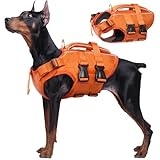
- 【Dog lifejacket Size】XS, S, M, L, XL, XXL fits most breeds furry friend,our size of dog life vest for swimming has been strictly measured. Chest girth is the key measurement, choose the smaller size if between two. Ideal for small dog life jacket, large dog life jacket, medium dog life jacket, and pet life jacket needs
- 【High Flotation Dog Swim Vest】This dog vest for swimming consist of ripstop Oxford & Polyester cloth, and high-density pearl cotton foam, which offers the dog swim vest great flotation support. Dog swimsuit gives dog additional safety and endurance in the water. Perfect as dog life vest for swimming, dog pool float, or dog swim vest for safe water fun
- 【Safe & Protective Dog life Vest】Dog swimming vest has a sturdy handle for quick rescue, which helps keep your pet safer in the water. The biggest role of the life safe vest is assist the dog to swim, reduce the amount of movement of the hind legs, helps reduce strain on the hind legs. Suitable for dog life vests for boating, dog life jackets for large breeds, and small dog life vest for swimming
- 【Adjustable Dog Swimming Vest】The dog life jackets belly and neck are designed with sturdy adjustable nylon straps and double-row quick-release buckles with hook & loop panels to provide double security for your dog. These designs make the dog water vest is easy to put on and take off. Works for dog swim vest, dog water vest, dog life vest with handle, and dog life jacket small or large
- 【Reflective Dog Safety Vest】 Kuoser dog flotation vest with bright colors and reflective strips can help you better notice your dog's position. Ideal for dog beach essentials, dog pool floats for small dogs, dog pool float for large dogs, and other outdoor water activities. Make swimming, boating, and pool time safer and more enjoyable for your furry friend
Forgetting the exit
Swimming ability does not guarantee that a dog can climb out. Install or identify a ramp, steps or a safe carrying route before the dog enters.
Ignoring wear and damage
Check buoyancy panels, seams, buckles, straps and the handle before each outing. Replace or stop using equipment if closures no longer hold or the material no longer stays in its intended position.
What does veterinary and professional guidance say?
The AVMA recommends a proper-fitting personal flotation device for pets on boats at all times around water, even for dogs that know how to swim, and advises using a ramp or carrying the pet on and off. The AAHA describes life jackets as buoyancy equipment that should fit snugly without restricting movement and should be bright or reflective with a handle. It also recommends pool ramps or steps and carrying pet first-aid supplies on boats.
The AKC highlights handles, D-rings, bright or reflective material, adjustable straps, durable water-resistant materials and proper fit. It notes that strong swimmers can fatigue or encounter difficult currents. VCA’s guidance on body harnesses focuses on comfortable fit, unrestricted front-leg movement, gradual introduction, supervision and entanglement prevention. The Royal Yachting Association recommends boat acclimation, short initial trips and lifejackets or buoyancy aids while boating. Canine Hydrotherapy Association standards list flotation devices and restraint harnesses as separate equipment categories.
Together, these sources support a layered approach: flotation for staying afloat and being recovered, restraint for controlled handling, and environmental safeguards for entry, exit and supervision. They do not establish a numerical drowning-risk difference between the two products.
How should you choose between a life jacket and a harness?
Start with the consequence you are trying to prevent. If the dog could end up in water beyond its standing depth, choose a life jacket. If the dog is walking beside you on a dock or being guided to a ramp, choose a harness. If both situations are possible, use both, each for its intended purpose.
- Choose a life jacket first for boats, deep water, current, surf, unfamiliar swimming areas, puppies, seniors, short-legged or brachycephalic dogs, dogs that tire quickly and dogs with limited swimming experience.
- Add a harness for leash control on the approach, on shore, on a dock and during an assisted entry or exit.
- Prioritize fit over branding or color: Measurements, secure closures, breathing room, free movement and stable flotation matter more than a label.
- Plan the exit before the entry: A ramp, steps or a person prepared to carry the dog can be as important as the jacket.
Frequently Asked Questions
Can a life jacket replace constant supervision?
No. Flotation buys time and improves visibility, but it cannot prevent entanglement, overheating, panic or an unsafe exit. Stay close enough to intervene and keep a reliable route out of the water available.
Should a dog wear a harness under a life jacket?
Only if the two pieces fit together without compressing the neck or chest, blocking the front legs or changing the jacket’s position. Follow the jacket maker’s instructions and test the combination on land before water use.
Where should I attach a leash near water?
Use the harness attachment intended for walking when you need leash control on shore or a dock. Avoid using a leash as a fixed tether around rails, branches or other structures, where a dog can become trapped or strangled.
What should I do if my dog refuses to wear a life jacket?
Return to short, reward-based sessions on dry land: let the dog investigate the jacket, fasten it briefly and gradually build duration. Do not force the dog into water while it is frightened; seek guidance from a qualified trainer if distress continues.





Leave a Reply