
Some links on this page are affiliate links: if you buy through them we may earn a commission, at no extra cost to you.
The best option depends on how long your dog is alone, whether they enjoy groups, and how much their routine must stay unchanged. Choose a dog walker for a targeted toilet break and exercise while your dog remains at home; choose daycare for a social, healthy dog that needs supervised coverage for most of the day; choose a pet sitter for travel, overnight care, medication, puppies, seniors, or dogs that become distressed in group settings.
Temperament and welfare come before convenience. A busy daycare is not a treatment for separation anxiety, and a large group walk is not automatically better exercise. Match the setting, supervision and schedule to the individual dog, then verify the caregiver’s safety procedures before booking.
As an Amazon Associate I earn from qualifying purchases.
The Tool Desk
Outbyte Driver Updater FREEScan for outdated or missing drivers - takes under a minuteDriver Scan →Outbyte PC Repair FREERepair Windows errors before they cause bigger problemsFix Now →Which service should you start with?
Use this table as a first decision, then confirm that the provider can meet your dog’s specific behavioural and medical needs.
| Your priority | Best starting option | Why it fits | Important checks |
|---|---|---|---|
| Midday toilet break and exercise | Dog walker | A short visit keeps the dog at home and targets the part of the day they need help with. | Ask whether walks are solo or grouped, how dogs are transported, what happens in extreme weather, how keys are secured, and whether the provider is insured and referenced. |
| Supervision for most of a working day | Daycare | Supervised activity, enrichment and human contact can cover a longer period for a suitable social dog. | Confirm intake screening, compatible groups, staffing, rest space, vaccination and parasite-control rules, records, and an emergency veterinary plan. |
| Travel, overnight care, medication or a familiar routine | Pet sitter | Individual attention in the dog’s home, or another home setting, usually causes the least routine disruption. | Check experience, first-aid knowledge, references, a meet-and-greet, emergency arrangements and whether the sitter has conflicting visits. |
| Separation anxiety or crate panic | In-home sitter or carefully matched home daycare | The dog is not left alone while a veterinary or behaviour plan addresses the underlying problem. | Use a veterinarian or qualified behaviour professional. Do not assume a stimulating group will reduce panic. |
Battersea advises that a dog regularly left alone for more than four hours may need a walker or daycare. PDSA’s 2024 guidance also says dogs should not be left alone for more than four hours. These are welfare benchmarks, not a guarantee that every dog will cope for that long; puppies, older dogs, dogs with medical conditions and anxious dogs may need company sooner.
Popular on Amazon

- [Treat Distribution] Our food dispenser has differently sized spheres at both ends. As dogs push the toy, it moves within a fixed area, allowing dogs to continuously chase and play with it. During movement, food is dispensed from the food holes on both sides of the toy.
- [Adjustable Switch] Each of the two spheres with a food dispensing switch, making it suitable for various sizes and types of pet dry food or snack. The switch can be adjusted according to the different sizes of dog food. It also allows control over the amount of food dispensed, extending or shortening the time it takes for pets to obtain food. It is more conducive to a healthy dog diet.
- [Increase Pet Intelligence] This dog treat puzzle toy combines intellectual training with food rewards. When pets push this toy, it will not only be to get delicious food, but it will also stimulate their intelligence and hunting instinct. This design not only meets the needs of pets but also encourages them to learn and grow in the game.
- [Prolonged Play] The dog enrichment toy is designed to limit the amount of treats your dog gets while encouraging more extended playtime. This is intended for effective playtime for dogs and is NOT a chewed toy. It is also dog boredom buster toys and best dog gift to keep them busy when dogs are left home alone, relief anxiety.
- [Attract Dogs' Attention] With barbell shaped design and bright color, the dog puzzle toy ball can attract your dog's attention, stimulate their curiosity and drive them crazy to roll it. Size: 6.1*3.44*3.44in/15.5*8.7*8.7cm.
What does a dog walker actually provide?
A dog walker normally comes to your home, takes your dog out, and returns them home afterward. It is a focused service rather than all-day supervision.
When a walker is the best fit
- Your dog can settle alone for part of the day but needs a toilet opportunity or exercise before you return.
- Your dog is comfortable with the walker and does not need continuous human company.
- Your dog benefits from a predictable route and home-based rest afterward.
- You need a regular weekday visit rather than overnight or holiday care.
Solo and group walks are different services
A solo walk gives the caregiver more control over pace, recall practice and triggers. A group walk may add social contact but also introduces unfamiliar dogs, transport time and competition for attention. Ask exactly how many dogs are walked together, whether your dog is familiarised gradually, and whether the walk is genuinely off-lead or takes place on a secure enclosed route.
Recommended Free Tools
UK statutory guidance says a dog walker may walk no more than six dogs at one time, with owner consent and prior familiarisation. That is a UK benchmark; local licensing, insurance and animal-welfare rules can differ elsewhere. Even where six is permitted, your dog may need a smaller group or a solo booking.
What happens between visits?
A walk does not necessarily mean your dog has received a full day of care. Ask when the visit starts and ends, whether travel time is included, and what the caregiver does if your dog refuses to walk, becomes ill or is frightened by weather. A written update should record the visit, toileting, unusual behaviour and any incident that needs your attention.
Is daycare suitable for every dog?
No. Daycare can be excellent for a social dog that enjoys controlled interaction, but it is unsuitable for dogs that are fearful, reactive, medically restricted, chronically stressed by groups or unable to settle without individual rest.
What a responsible daycare should provide
- An assessment before admission, including behaviour history, handling tolerance, vaccination status and medical information.
- Groups formed by compatible size, play style, confidence and energy rather than placing every dog together.
- Active supervision, humane handling and a clear process for interrupting unsafe play.
- A quiet rest area where dogs can sleep or decompress away from the main group.
- Separation of incompatible dogs, with alternative enrichment for a dog that must be apart.
- Daily records covering attendance, meals, medication, toileting, incidents and notable behaviour.
- Written feeding and medication instructions, secure storage and confirmation of who may authorise changes.
- Vaccination and parasite-control requirements that are explained before the first booking.
- A plan for illness, injury, evacuation and emergency veterinary treatment, including the clinic that will be contacted.
UK guidance emphasises behaviour monitoring, supervision, humane handling, the ability to isolate dogs and continued enrichment while separated. Australian Veterinary Association guidance similarly states that boarding establishments must provide for the health and welfare of animals in their care. Treat these as useful safety benchmarks, not universal law: licensing and vaccination requirements vary by jurisdiction.
Free tools Windows power users keep installed
One-click scans. No signup required.
Signs your dog is coping poorly
Watch for repeated hiding, freezing, frantic pacing, persistent avoidance, tucked posture, excessive panting unrelated to heat, diarrhoea, repeated mounting, escalating conflict or an inability to sleep. One excited greeting does not prove that daycare is comfortable, and a tired dog is not automatically a happy dog. The facility should tell you when behaviour changes, move a stressed dog to a quiet area and offer an alternative activity rather than simply increasing stimulation.
Also popular on Amazon

- RUBBER MATERIAL: HIPPIH treat dispensing dog ball is made of extra-tough rubber with good elasticity, good for your sweet dog grinding and fresh their teeth. ( Blue color-2.75 in, Green color-3.14 in, suitable for medium and large dogs. Not suitable for miniature small dogs, such as Yorkshire Maltese, etc) NOTE: The dog puzzle ball must be wider than your dog's mouth
- STRONG TOOTH: HIPPIH blue dog ball can effectively help strong their teeth and won't hurt pets gums. The green one can put the food in to improve the interest of your cute dogs.
- IMPROVE INTELLIGENCE & IQ TRAINING: HIPPIH dog toy ball can easily attract your pet's attention, help pets intelligence improving and is convenient to train dogs. HIPPIH dog ball toys are perfect for interaction with your dog, promoting the bond between you and your dog.
- FOR AMUSEMENT: Perfect for fetch and interaction with your dog. You can add food or treats into the grooves and this keeps your dog entertained and active. HIPPIH IQ treat ball allow you have more interactive fun with your pets.
- BEST GIFT FOR PETS: HIPPIH dog toys ball can reduce the dog's destructive behavior, protect the home shoes, socks, sheets, sofa are not afraid of dog bite. Your naughty active dogs will be love it to kill the boring time. This dog rubber ball is best gift for your sweet dog.
When is a pet sitter better than daycare?
A pet sitter is usually the least disruptive option when your dog needs individual attention, a familiar home or care outside normal daytime hours.
Situations that favour a sitter
- Travel or overnight absence, especially when the dog sleeps more calmly at home.
- Medication, post-operative restrictions, mobility problems or a prescribed feeding schedule.
- Puppies that need frequent toilet breaks and close supervision.
- Senior dogs that tire easily, become confused in new environments or need quiet handling.
- Dogs that are fearful, reactive, noise-sensitive or uncomfortable in groups.
- Separation anxiety, when the dog must not experience the full-intensity trigger during treatment.
Clarify whether the sitter stays continuously, makes scheduled visits, or cares for the dog in the sitter’s own home. A drop-in sitter may still leave a dog alone for long intervals; an overnight stay may not provide daytime company unless that is written into the agreement.
Home care can still be structured
Give the sitter a written routine: meal quantities, walk length, permitted play, medication times, toilet cues, sleeping arrangements, trigger warnings and your veterinarian’s details. Keep food, leads, cleaning supplies and medication in labelled locations. Arrange a meet-and-greet and observe whether your dog can relax, accept handling and disengage from the caregiver when asked.
What is best for separation anxiety or crate panic?
Management and treatment must work together. The ASPCA says treatment requires preventing the dog from experiencing the full-intensity separation trigger; options can include an in-home sitter, care in a sitter’s home or daycare. AAHA case guidance also suggests a pet sitter, home daycare or supervised boarding when a dog panics in a crate or may injure itself.
These arrangements prevent rehearsal of panic; they do not cure the anxiety. Ask your veterinarian for a medical assessment and referral to a qualified behaviour professional. Follow the treatment plan’s instructions about absences, gradual departures and medication. Never use daycare as an unplanned exposure exercise, and never force a dog into a crate or group because they appear quiet after shutting down.
How do health, age and temperament change the decision?
Puppies
Puppies need frequent toilet opportunities, sleep and carefully controlled socialisation. A sitter or a very small, well-run home daycare may be safer than a high-energy open playroom. Confirm vaccination rules with your veterinarian and the facility, since requirements differ by location and some settings restrict attendance until a puppy has completed a primary vaccine course.
Older or medically restricted dogs
Ask whether the caregiver can manage ramps, mobility limits, heat sensitivity, diet restrictions and medication. A walker should be able to shorten or cancel a route safely; a daycare should provide quiet rest and prevent rough play; a sitter should record appetite, drinking, toileting and mobility changes.
Also popular on Amazon

- 【For Treat Dispensing Play】Made of ABS and nylon, this puzzle toy is designed for rolling, nudging, and treat-reward play. It is not intended as a chew toy and is best for dogs with gentle to moderate play styles.
- 【Mental Enrichment Through Movement】Dogs learn to roll and chase the toy to release rewards, adding interactive feeding and mental engagement to indoor play. A good fit for small to medium dogs that enjoy treat puzzles and food-motivated games.
- 【Adjustable Openings for Different Reward Speeds】The dispensing opening can be adjusted to change how quickly treats come out. Works best with small dry kibble, freeze-dried treats, or similar-sized dry rewards; oversized, sticky, or irregular treats may affect flow.
- 【Best Used Under Supervision】This toy is made for guided enrichment sessions, especially while your dog is learning how it works. Supervise early use, and remove the toy after treats are finished, especially for dogs that may switch from rolling to chewing.
- 【Detachable Design for Cleaning】Twist open the toy to fill and clean the inner parts more easily. Hand wash or dishwasher cleaning can be used after play; cleaning promptly after use helps reduce food residue buildup.
Fearful or reactive dogs
Individual care generally offers more control over distance from triggers. A provider who claims every dog must socialise, or who cannot explain how dogs are separated, is a poor match. Share bite history, handling sensitivities and trigger information honestly so the caregiver can make a safe decision.
High-energy, social dogs
Daycare may provide useful activity, but exercise quality matters more than hours of arousal. Ask how much time is spent resting, sniffing and learning, not only chasing. A combination of a shorter solo walk and home enrichment may meet the dog’s needs with less overstimulation.
What should you ask every caregiver before booking?
Use the following checklist in a phone call and at the meet-and-greet. Ask for documents rather than relying on a reassuring description.
- Can you show proof of current liability insurance and relevant references?
- What experience do you have with this breed, age, size, medical condition and behaviour profile?
- What first-aid training do you hold, and who covers if you are ill?
- What is the written emergency plan, and which veterinarian or emergency clinic will you use?
- How are keys, access codes and personal information secured?
- How are dogs transported, and what is the plan for heat, cold, storms, smoke or poor air quality?
- Who else handles my dog, and will I be notified before a substitute attends?
- How do you record meals, medication, toileting, incidents and arrival or departure times?
- What is your cancellation policy, minimum notice, holiday surcharge and refund process?
Extra questions for daycare
- Is the facility licensed or inspected where local law requires it?
- What is the staff-to-dog ratio during play, meals and rest?
- How are new dogs assessed, introduced and moved between groups?
- Where can a dog rest alone, and what enrichment is available if separation is necessary?
- What vaccination, parasite-control and illness-exclusion rules apply?
- How are food allergies, resource guarding and medication handled?
- What happens after a scuffle, escape attempt, injury or suspected infectious disease?
Extra questions for walkers and sitters
- Is the walk solo or grouped, and how many dogs are present at the maximum?
- How long is the dog physically walking versus travelling or waiting?
- Will you use a lead, long line or secure enclosure, and who supplies each item?
- Can you stay with my dog continuously, if that is required, or are there other visits during the booking?
- How will you give medication and what evidence of administration will you provide?
How should you compare quotes and contracts?
Published prices were not established for this comparison, so there is no reliable universal claim that one care type is cheaper. Request local quotes for equivalent visit length and service level. Compare transport, extra dogs, medication, overnight hours, holiday dates, last-minute changes and cancellation terms rather than comparing a headline hourly rate with an all-day package.
Outdated Drivers Are Slowing You Down
One free scan finds every outdated or missing driver and matches the right update for your exact hardware.Free scan · exact hardware matchWindows Errors? Fix Them Before They Spread
Repair common Windows errors and clear accumulated junk for a smoother, more stable PC - no reinstall needed.Free scan · no reinstallPut the agreed details in writing: dates, arrival windows, services, access instructions, emergency authority, veterinary contact, feeding and medication, insurance, payment schedule, cancellation rules and what happens if the caregiver cannot attend. Ask whether the provider will notify you immediately about illness, injury, lost keys or a missed visit.
Independent reader supportYour contribution helps us test, update, and keep practical guides available for everyone.How can you introduce a new care arrangement safely?
- Start with records. Write down your dog’s routine, triggers, medical information, food, equipment and emergency contacts.
- Hold a meet-and-greet. Let the dog approach at their own pace. Check whether the caregiver can read stress signals and handle equipment calmly.
- Run a short trial. Book a brief walk, short sitter visit or limited daycare assessment before committing to a full day or trip.
- Review the report. Look for appetite, toileting, rest, behaviour and any incident, not just whether the dog seemed tired.
- Increase duration gradually. Extend care only when the dog is eating, resting and recovering normally afterward.
- Keep a backup. Have a second vetted caregiver and written emergency authorisation in case the primary provider cancels.
Stop and reassess if your dog returns repeatedly distressed, injured, ill, unusually withdrawn or unable to settle. Contact your veterinarian for unexplained physical signs or a behaviour professional for persistent fear, aggression or separation distress.
What can you do between visits?
Enrichment can make a short absence more predictable, but it does not replace supervision when a dog cannot safely be alone. PDSA recommends interactive toys such as treat-dispensing toys and puzzles. Choose a durable, pet-safe, size-appropriate item, introduce it while you are present and supervise initial use. Remove it if pieces break or your dog guards it intensely.
Also popular on Amazon
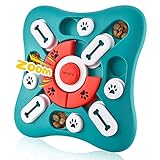
- 【PRODUCT SIZE】10 inch*10 inch*1.3 inch.
- 【3 WAYS TO PLAY, UPGRADE SLOW FEEDER】Our dog mental stimulation toys have a unique squeak button in the middle, which make it easier to attract the attention of dogs and cats. Three different difficulty designs and the 16-hole dog treat dispenser design maximize slow feeding time, even beyond 20 minutes.
- 【FUNNY STIMULATING TOYS】All kinds of dogs and cats love the puzzle game of Spin & Slide and the Seek & Hide with their smell sense and paw skills to find food. Combining circular orbit sliding game and linear orbit sliding game, smart dog and cat must move the slider correctly to get the food reward hidden in the maze.
- 【NON-REMOVABLE PARTS DOG PUZZLE】Our dog treat puzzle is made of non-toxic materials, very durable and suitable for pets to play for a long time. This dog toy has no removable parts because the design has built-in play parts that fold tightly and won't fall off easily.
- 【ANTI-SLIP & EASY TO CLEAN】: The four corners of the bottom are equipped with four anti-skid pads, which can be well fixed during the dog's slow food process; It is easy to clean, also dishwasher safe.
Rotate safe sniffing games, food puzzles, chew options and brief training sessions so the dog has variety without becoming overstimulated. Leave water in a stable container, remove hazards and keep the dog in the area where they normally rest. A camera can help you and your veterinarian observe patterns, but it does not provide intervention when a dog is panicking, injured or ill.
Quick wins for a faster PC:
Clear out junk files and repair common Windows errorsFree Scan →Fix the driver behind crashes, sound loss and screen glitchesFind Drivers →Repair Windows errors before they cause bigger problemsFix Now →What is the practical verdict?
Choose the smallest, calmest arrangement that fully covers your dog’s needs. A walker is usually the right first step for a dog that is comfortable at home and needs a midday break. Daycare is appropriate only after screening confirms that the dog enjoys groups and the facility provides supervision, rest and emergency controls. A sitter is the strongest choice when routine, individual attention, medication, overnight care or anxiety management matters most.
Frequently Asked Questions
How long can a dog be left alone before I need paid care?
There is no single safe limit for every dog. PDSA’s 2024 guidance uses four hours as a maximum benchmark, while puppies, seniors, dogs with medical needs and anxious dogs may require a shorter interval; judge by toileting, distress and ability to rest, and ask your veterinarian when unsure.
Can daycare help cure my dog’s separation anxiety?
Daycare can prevent a dog from being left alone during a treatment plan, but it is not a cure. The ASPCA and AAHA describe sitters, home daycare and supervised care as management options while a veterinarian or qualified behaviour professional addresses the anxiety.
Should my dog attend daycare every weekday?
Not necessarily. Some dogs benefit from occasional social care but need quiet days to sleep and recover; monitor rest, appetite, stress signals and behaviour at home, and reduce frequency if your dog cannot settle or shows repeated distress.
Do these 3 things before closing this tab:
1Clear out junk files and repair common Windows errors2Fix the driver behind crashes, sound loss and screen glitches3Repair Windows errors before they cause bigger problemsWhat should I do if my dog dislikes the caregiver after the meet-and-greet?
Do not force the relationship or rely on the provider to win the dog over during a long booking. Try a slower introduction with treats and distance, or choose another caregiver whose handling style allows your dog to relax.
Is a home sitter always safer than a professional daycare?
Home care reduces group exposure but still depends on the sitter’s competence, supervision and emergency preparation. Verify insurance, references, first-aid knowledge, medication procedures and backup coverage before assuming a familiar setting is safe.





Leave a Reply