
Some links on this page are affiliate links: if you buy through them we may earn a commission, at no extra cost to you.
If your dog has sensitive or itchy skin, choose a whitening shampoo made specifically for dogs that is free of household bleach and peroxide, and scrutinize the rest of the label for unnecessary irritants. Fragrance, essential oils, dyes, preservatives, and strong detergent systems are not automatically dangerous to every dog, but they deserve extra caution when a dog has reacted to topical products before. Benzoyl peroxide should generally be reserved for a veterinarian’s treatment plan, not routine cosmetic whitening. Optical brighteners are cosmetic light-reflecting agents; current veterinary guidance does not establish that they are universally harmful or beneficial. The safest approach is a simple, fully disclosed formula, careful bathing with lukewarm water, thorough rinsing, and prompt discontinuation if redness or itching appears.
Which dog whitening shampoo ingredients should I avoid first?
Start by eliminating household bleach, improvised peroxide products, and non-prescribed benzoyl peroxide. Then screen for fragrance, essential oils, dyes, preservatives, and highly detergent-heavy formulas. These ingredients occur on commercial labels, but a label listing is a reason to assess risk—not proof that every dog will react.
As an Amazon Associate I earn from qualifying purchases.
Do these 3 things before closing this tab:
1Clear out junk files and repair common Windows errors2Scan for outdated or missing drivers - takes under a minute3Repair Windows errors before they cause bigger problems| Label item | What to do for sensitive skin | Why it matters |
|---|---|---|
| Household bleach or concentrated sodium hypochlorite | Avoid as a do-it-yourself whitening treatment. | Household products commonly contain 3%–8% sodium hypochlorite. The International Society for Companion Animal Infectious Diseases (ISCAID, 2025) says those concentrations are not safe on skin, and dilution introduces mixing-error risk. |
| Hydrogen peroxide | Prefer a peroxide-free product; never improvise a concentration. | Peroxide is not needed for cosmetic whitening, and the cited veterinary product example is specifically marketed as peroxide-free. |
| Benzoyl peroxide | Use only when a veterinarian has prescribed it for a medical indication. | ICADA and University of Melbourne guidance describe a drying and potentially irritating effect, particularly concerning for atopic dogs. |
| Fragrance and essential oils | Treat them as caution flags when the dog has a history of topical reactions; choose fragrance-free when practical. | Several whitening labels include fragrance or fragrance oils, and scented ingredients can complicate investigation of a new flare. |
| Dyes and optical brighteners | Identify their cosmetic role and judge the entire formula rather than assuming toxicity. | Violet or blue colorants can counter yellow tones, while optical brighteners alter reflected light. Veterinary sources reviewed here do not establish a universal harm or benefit for optical brighteners alone. |
| Preservatives such as DMDM hydantoin or isothiazolinones | Do not label them universally toxic. Consider a simpler formula if the dog has reacted to topical products, and stop if signs develop. | Preservatives are needed for product stability, but individual contact reactions are possible. |
| Sulfate-type and other surfactants | They are not automatic disqualifiers; rinse especially thoroughly and avoid formulas that leave the coat squeaky-dry. | Detergent load, sensitive skin, and residue can combine to increase irritation. |
Is household bleach safe for whitening a dog’s fur?
No. Household bleach is not a safe do-it-yourself whitening shampoo. ISCAID’s 2025 guidance notes that common household bleach contains about 3%–8% sodium hypochlorite, concentrations considered unsafe for skin. Trying to dilute it at home creates a serious measurement and mixing-error risk, and a solution that looks weak can still injure skin, eyes, or mucous membranes.
Veterinary bathing protocols sometimes use hypochlorite at concentrations below 0.05%, but that is a very different situation: the formulation, dilution, indication, and application are selected and explained by a veterinarian. Do not convert the household product into a “dog-safe” recipe yourself. If a veterinarian recommends a hypochlorite bath for a diagnosed skin problem, follow the exact product and dilution instructions they provide, keep the solution away from the eyes and mouth, and prevent licking during treatment.
Popular on Amazon

- Deep Clean - Dog shampoo gently removes dirt while hydrating and moisturizing pet’s skin
- Brightens Coats - Proven to make all coats whiter and brighter while conditioning with Vitamin E
- Refreshing Scent - Long-lasting, tropical scent of awapuhi and coconut eliminates unwanted odors
- 5X Cleaning Power - Easy lather, longer-lasting suds, and max value in every wash !
- Naturally Derived Formula - Human grade, pH balanced, free from parabens, dye and cruelty-free
Why is hydrogen peroxide a poor choice for routine whitening?
Hydrogen peroxide can lighten organic material, but that does not make it an appropriate cosmetic wash for a dog. Peroxide can irritate tissue and is especially risky when the concentration, contact time, or rinsing procedure is improvised. A dog can also lick residue from the coat.
Choose a product whose current label explicitly states that it is peroxide-free. The label, not a retailer’s short description, is the authority because formulas and names can change by market. If a whitening product does not provide a complete ingredient list and dog-specific directions, select a different product rather than trying to judge its safety from the word “natural” or from a color-enhancing claim.
Recommended Free Tools
When is benzoyl peroxide appropriate?
Benzoyl peroxide is a therapeutic active, not a general-purpose whitening ingredient. Veterinary dermatology uses it in selected conditions such as follicular plugging, but its degreasing and drying action can worsen discomfort in an atopic or already-inflamed dog. ICADA and University of Melbourne guidance caution about this drying effect.
Do not add a human benzoyl-peroxide wash to a whitening routine, and do not increase contact time to obtain a brighter coat. If your veterinarian prescribes a benzoyl-peroxide product, ask which strength to use, how often to bathe, how long it should remain on the coat, and what moisturizer or follow-up is appropriate. A dog using it for a medical condition may need a different schedule from a dog being bathed only for appearance.
Are fragrance and essential oils a problem for allergic dogs?
They can be. Fragrance blends and essential oils are common sources of avoidable complexity in whitening shampoos, particularly for a dog that has developed redness, itch, or a rash after topical products. “Essential oil” does not mean risk-free: concentrated plant oils can irritate skin, and some are unsafe if swallowed.
Also popular on Amazon
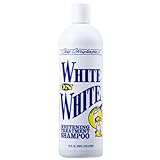
- DOG WHITENING SHAMPOO – Chris Christensen White on White Dog Shampoo gets the yellow out! This product is an optic intensifying treatment within a shampoo, removing all yellow stains, and will also enhance darker colors, leaving a luscious sheen. It brightens and whitens the coat while maintaining the coat’s texture. The result is a stain-free, brilliant, dazzling coat that’s soft to the touch. Available in two sizes; 16 fl. oz for at-home use and a gallon for professional use.
- PERFECT FOR PUPPIES – use from 8-weeks upwards. Chris Christensen’s Whitening Shampoo for dogs is ideal for removing urine stains from potty training, marks from doggy daycare, and dirt from the dog park. Using White on White neutralizes unwanted stains that cleansing does not remove such as grass, saliva, clay, food, and blood.
- SAFE TO USE – White on White Shampoo does not contain bleaching agents, harsh chemicals, or softening agents to irritate you or your pup’s skin, and while a purple shampoo in color it will not stain hands, towels, or tubs. For best results, follow with Chris Christensen After U Bathe to rinse out any shampoo residue, condition the coat, and add moisture. White on White Shampoo lasts up to 4 weeks and will not rub off on hands, clothing, or furniture. A strand test is recommended on porous coats.
- ENHANCE COLORED COATS – not just for white dogs! Chris Christensen White on White Shampoo can be used on mixed coat colors. Blacks, browns, and reds will be enhanced, adding vibrancy and sheen. Perfect for Border Collies, Rough Collies, Beagles, Cavalier King Charles Spaniels, and more, along with any white-only breeds such as Maltese, Bichon Frise, Samoyeds etc.
- BEST IN SHOW RESULTS – made in the USA. White on White is the first ‘true’ coloring correcting shampoo created initially for show dogs by Chris Christensen in 1996. Regarded highly in and out of the show ring, Chris Christensen dog grooming products have a reputation for performance and perfection. Trusted by professional groomers, show exhibitors, and caring dog owners.
For a dog with a reaction history, choose an unscented or fragrance-free formula when one is available and avoid products that list multiple fragrance oils without specifying their components. Fragrance-free does not guarantee that a shampoo will suit every dog, because surfactants, preservatives, or the underlying skin disease may still cause trouble. It does, however, remove one common variable when you are trying to identify a trigger.
PC Slower Than It Used to Be?
A free scan shows the junk files, broken settings and background clutter dragging Windows down - then fixes them in one click.Free scan · Windows 10 & 11Crashes, No Sound, or Screen Glitches?
Random freezes, missing sound and display glitches usually trace back to one bad driver. Find and replace yours safely.Free scan · under a minuteAre dyes and optical brighteners harmful to dogs?
Optical brighteners are cosmetic agents that make fibers or hair appear whiter by changing how light is reflected. Violet or blue dyes can visually offset yellow tones. They do not bleach the hair shaft in the way household chemicals do, and their presence alone does not establish that a product is dangerous.
The veterinary sources reviewed for this topic do not provide a controlled canine safety study proving that optical brighteners as a class are harmful or beneficial for sensitive skin. Treat them as one part of the complete formula. If your dog has a known dye or contact-reaction history, a colorant-free product may be a reasonable trial; otherwise, focus first on avoiding bleach, peroxide, unnecessary medication, heavy fragrance, and poor rinsability.
Read the current package rather than relying on a product’s color or marketing name. A shampoo can look purple, blue, or clear while using different combinations of dyes, brighteners, cleansers, and conditioners in different regions.
Which preservatives and cleansers deserve extra scrutiny?
Preservatives keep water-based shampoos from growing microbes, so their presence is not evidence of poor quality. Ingredients such as DMDM hydantoin and isothiazolinones should not be described as universally toxic. For a dog with repeated contact reactions, however, a shorter ingredient list and a clearly disclosed preservative system make troubleshooting easier.
Quick wins for a faster PC:
Clear out junk files and repair common Windows errorsFree Scan →Fix the driver behind crashes, sound loss and screen glitchesFind Drivers →Also popular on Amazon
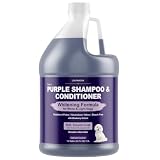
- DOG WHITENING SHAMPOO FOR WHITE DOGS: Designed for white dogs and light-colored coats, this dog whitening shampoo for white dogs brightens dull, gray or yellow-looking fur on paws, chest, belly and legs, leaving the coat cleaner, brighter and fresher-looking after bathing. Also suitable for darker coats to help enhance their natural color and shine.
- BLEACH-FREE PURPLE SHAMPOO FOR DOGS: This purple shampoo for dogs brightens white and light-colored coats without relying on bleach. The pH-balanced, sulfate-free, vegan and cruelty-free whitening shampoo for dogs gently cleans and neutralizes unwanted yellow tones during routine coat care.
- BLUEBERRY FACIAL FOR WHITE DOGS: With blueberry and oat extracts, this white dog shampoo gently cleans the beard, muzzle and facial fur, washing away saliva residue, everyday dirt and buildup that can leave light-colored fur looking dull. Avoid direct eye contact and rinse thoroughly.
- 2-IN-1 DOG SHAMPOO AND CONDITIONER: This dog shampoo and conditioner cleans and conditions in one easy bath step, leaving the coat soft, smooth and easier to brush. No separate conditioner is needed, making this 2-in-1 whitening dog shampoo convenient for regular grooming.
- 64 OZ ODOR CONTROL DOG SHAMPOO: This odor control dog shampoo washes away everyday dirt and unwanted doggy odor while leaving the coat clean and fresh. The 64 oz value size is ideal for frequent grooming, regular white-coat care and multi-dog homes.
Sulfate-type surfactants and other cleansers remove soil and oils but can be drying when the detergent load is high or when residue remains on the skin. A cleanser is not automatically unsafe; the practical questions are whether the dog tolerates it, whether the formula can be rinsed completely, and whether the coat remains comfortable afterward. Avoid aggressive scrubbing, which adds mechanical irritation to any chemical irritation.
How should I compare two whitening shampoos?
Compare the labels and directions, not just the whitening promise. The following checklist keeps cosmetic claims from overshadowing skin safety:
- Verify a current, explicit bleach-free and peroxide-free claim.
- Check whether fragrance or essential oils are listed, and favor a simpler or fragrance-free option after prior topical reactions.
- Look for benzoyl peroxide or another medicated active that is unnecessary for cosmetic whitening.
- Note dyes and optical brighteners without assuming that either category is automatically harmful.
- Review preservatives when the dog has a contact-reaction history, but do not treat normal preservation as proof of toxicity.
- Assess whether the surfactant system appears easy to rinse from a dense or long coat.
- Choose a product with a complete ingredient list, dog-only directions, contact time, and clear instructions for dilution if required.
- For repeated reactions, ask a veterinarian whether a veterinary dermatology referral is appropriate.
Veterinary Formula Snow White Shampoo is one example marketed as “bleach- and peroxide-free.” Its listed ingredients include proprietary surfactants, fragrance, optical brighteners, green tea extract, a preservative, EDTA, and vitamin E. Verify the current package label and seller information before purchase; a bleach-free claim does not mean fragrance-free or suitable for every itchy dog.
What is the safest way to bathe a sensitive dog with whitening shampoo?
Technique matters as much as the ingredient list. Warm to hot water can worsen irritation and dryness in allergic or inflamed skin, while incomplete rinsing can leave enough residue to provoke a reaction.
- Check the dog first. Do not start a cosmetic bath over open sores, severe redness, facial swelling, hives, or obvious pain. Contact a veterinarian when those signs are present.
- Use dog-formulated shampoo. Human shampoo is designed for the more acidic human skin surface and can disrupt a dog’s acid mantle.
- Prepare the water. Use lukewarm or cool-to-body-temperature water. Avoid hot water and strong spray pressure on inflamed areas.
- Wet the coat completely. Work through the hair to the skin without vigorous rubbing. A dense coat may require extra time to become uniformly wet.
- Predilute only when directed. Some veterinary shampoos are intended to be diluted immediately before use; follow that product’s label rather than inventing a ratio.
- Apply gently and observe contact time. Keep shampoo away from eyes, ear canals, mouth, and genital tissue. Follow the stated contact time; longer is not automatically better.
- Rinse until no residue remains. Pay special attention to the armpits, groin, paws, collar area, and skin folds. Residual surfactant can irritate even when the original formula was tolerated.
- Dry without heat. Towel-dry and, if needed, use cool air. Hot air can increase dryness and itching.
- Monitor afterward. Watch the skin and behavior over the next several hours for scratching, redness, discomfort, or other changes.
When should I stop the shampoo and call a veterinarian?
Rinse the product off and discontinue it if your dog develops redness, worsening itch, hives, facial swelling, pain, or obvious discomfort. Facial swelling, breathing difficulty, collapse, or rapidly spreading hives is an emergency; seek immediate veterinary care rather than waiting for the skin to settle.
Also popular on Amazon

- Unrivaled Brightening Formula: Say goodbye to dull fur with our Berry Blue pet shampoo. Perfect for short to long coats, its unique formula produces a rich lather that rinses off effortlessly, brightening whites and enhancing coat colors. Unlike other whitening shampoos, Lillian Ruff Berry Blue Brightening Shampoo is suitable for all coat colors, ensuring a vibrant and refreshed look every time.
- Luxurious Spa Treatment: Treat your dog to the pampering they deserve with our Berry Blue Brightening Face and Body Wash enriched with natural blueberry extracts. Transform any bath into a relaxing spa session, offering more than just a facial – it's an overall body shampoo that cleanses and brightens every coat color, leaving behind an invigorating aroma.
- Less is More: With its concentrated violet pigments, a little goes a long way with Lillian Ruff Berry Blue Shampoo. Experience nourishing softness and ultimate whitening with minimal product usage, saving you time and money while ensuring your pet receives the best care.
- Made in the USA: Proudly manufactured in the USA to the highest standards, Our formula is pH-balanced, gluten-free, sulfate-free, paraben-free, cruelty-free, and vegan.
- A Brand Used by Professionals – Lillian Ruff serves professional vets and groomers all over the world thanks to our gentle formula and quality ingredients. Everything at Lillian Ruff is produced to human standards and formulated for Pets.
Arrange a veterinary examination if signs persist after rinsing, recur with more than one product, or occur with ear disease, odor, pustules, hair loss, or open sores. Those findings can indicate an underlying allergy, yeast or bacterial infection, parasites, or another condition that cosmetic shampoo cannot treat. A veterinarian or veterinary dermatologist may recommend a different cleansing plan, testing for contact reactions, or treatment aimed at the underlying disease.
Independent reader supportYour contribution helps us test, update, and keep practical guides available for everyone.What does “whitening” actually do?
Current commercial formulas use several different mechanisms. Cleansing surfactants remove dirt and oily buildup that make a coat look dull. Violet or blue dyes counter yellow tones visually, optical brighteners change reflected light, and conditioning or botanical ingredients affect feel and appearance. None of these mechanisms makes household bleach appropriate for a dog.
Because formulas and ingredient names vary by brand and market, the complete current label is more reliable than a retailer’s headline or a before-and-after photograph. A whiter appearance is cosmetic; persistent discoloration around the mouth, paws, eyes, or skin folds may reflect saliva, porphyrins, inflammation, infection, or moisture and deserves medical assessment if it is new or worsening.
Can a whitening shampoo be safe and still make itching worse?
Yes. A product can be free of bleach and peroxide yet still irritate an individual dog through fragrance, preservatives, surfactants, dye, residue, or simply the mechanical and drying effects of bathing. ISCAID notes that shampoos may be drying, irritating, or capable of provoking contact reactions in individual patients.
That is why the safest selection is a process rather than a single “best” ingredient: remove the highest-risk DIY chemicals, simplify the formula where possible, use correct water temperature and contact time, rinse completely, and stop at the first sign of a reaction.
Also popular on Amazon

- PROFESSIONALLY FORMULATED FOR BRIGHTER COATS: This whitening dog shampoo is professionally formulated to help remove stains and discoloration while enhancing the brightness of white and light fur. Designed to deliver salon-quality grooming results at home, it deeply cleans without stripping essential moisture
- DEEP CLEAN AND STAIN REMOVAL: Rich lather penetrates deep through dirt, dander and buildup to lift away stubborn discoloration and restore a bright, vibrant coat
- GENTLE, NON-IRRITATING FORMULA: Made with gentle, natural ingredients and free from sulfates, parabens, alcohol, formaldehyde and synthetic dyes, this sensitive skinfriendly shampoo is safe for routine grooming
- CLEAN SHAMPOO FORMULA: Safe, effective, and clean. All the good stuff and none of the bad. No parabens, sulfates, formaldehyde, alcohol, or synthetic dyes
- PROUDLY MADE IN THE USA: Crafted in the USA using quality standards to deliver consistent, brightening results for dogs of all breeds and light coat colors
Frequently Asked Questions
Can I patch-test a whitening shampoo before bathing my whole dog?
Ask your veterinarian whether a small, hidden-area trial is appropriate for your dog’s history. A patch test cannot predict every reaction, especially when a product will contact a much larger area or remain in a dense coat, so it does not replace supervision and thorough rinsing.
Is purple shampoo safe around a dog’s eyes?
Color-enhancing shampoo should never be allowed into the eyes, regardless of whether its dye is considered mild. Keep the face out of the lather, use a damp cloth for facial cleaning if your veterinarian agrees, and flush promptly with clean water if accidental contact causes squinting or redness.
The Tool Desk
Outbyte Driver Updater FREEScan for outdated or missing drivers - takes under a minuteDriver Scan →Outbyte PC Repair FREEClear out junk files and repair common Windows errorsFree Scan →How often can I use whitening shampoo on an itchy dog?
There is no universal safe interval because frequency depends on the formula, coat, skin barrier, and the cause of the itch. Follow the label or your veterinarian’s schedule; increasing baths to chase a cosmetic result can worsen dryness and obscure an underlying disease.
Why is my dog’s white coat turning brown or rusty despite bathing?
Saliva, tears, yeast, chronic moisture, environmental staining, and porphyrin pigments can all change hair color, and shampoo may not correct the cause. New staining accompanied by odor, discharge, paw licking, or skin redness warrants a veterinary examination instead of stronger whitening chemicals.





Leave a Reply