
Some links on this page are affiliate links: if you buy through them we may earn a commission, at no extra cost to you.
A dog that carries a toy to an ottoman and retrieves it again is most likely turning the furniture into part of a game. Dogs may run off with a favorite toy to invite a chase or a round of keep-away; for many dogs, the interaction itself is the reward. The clip’s title does not identify the dog, breed, owner, creator, platform, date, or a proven reason for choosing that ottoman, so those details cannot be confirmed.
Why does a dog hide his toy in the ottoman?
Hiding a toy can combine carrying, searching and social play. A dog may push or drop the toy beneath furniture, then return to work out how to reach it. If a person follows, talks to him or tries to take the toy, the sequence can become a repeatable game of chase or keep-away.
As an Amazon Associate I earn from qualifying purchases.
Free tools Windows power users keep installed
One-click scans. No signup required.
Cathy M. Rosenthal describes this pattern as a dog grabbing a favorite toy and running away in hopes that family members will chase him or join the game. As she puts it, “For many dogs, the game itself is the reward.” That means the ottoman may be less important than the predictable challenge and the attention that follows.
How does he know how to get a toy out of furniture?
Dogs can solve a simple furniture puzzle by using smell, sight, pawing and trial and error. Once a dog has succeeded at reaching a toy from one gap, he can remember the route and repeat the actions that worked. The behavior looks deliberate because it is a learned routine, not because the video proves that the dog understands the ottoman in human terms.
Popular on Amazon
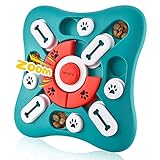
- 【PRODUCT SIZE】10 inch*10 inch*1.3 inch.
- 【3 WAYS TO PLAY, UPGRADE SLOW FEEDER】Our dog mental stimulation toys have a unique squeak button in the middle, which make it easier to attract the attention of dogs and cats. Three different difficulty designs and the 16-hole dog treat dispenser design maximize slow feeding time, even beyond 20 minutes.
- 【FUNNY STIMULATING TOYS】All kinds of dogs and cats love the puzzle game of Spin & Slide and the Seek & Hide with their smell sense and paw skills to find food. Combining circular orbit sliding game and linear orbit sliding game, smart dog and cat must move the slider correctly to get the food reward hidden in the maze.
- 【NON-REMOVABLE PARTS DOG PUZZLE】Our dog treat puzzle is made of non-toxic materials, very durable and suitable for pets to play for a long time. This dog toy has no removable parts because the design has built-in play parts that fold tightly and won't fall off easily.
- 【ANTI-SLIP & EASY TO CLEAN】: The four corners of the bottom are equipped with four anti-skid pads, which can be well fixed during the dog's slow food process; It is easy to clean, also dishwasher safe.
What the behavior may involve
- Scent: A familiar toy remains detectable even when it is partly hidden.
- Motor experimentation: The dog may nose, paw or reposition his body until the toy moves within reach.
- Social feedback: Laughter, attention or an attempted chase can reinforce the routine.
- Memory: A successful route can become a favored indoor activity.
Those explanations fit the described scene, but they do not establish the individual dog’s motive. A short clip cannot show the full context, what happened before filming or whether the behavior occurs outside play.
Is the dog playing or anxious when he grabs a toy and runs?
Read the whole body, not just the fact that the dog runs away. A loose, wiggly body and repeated invitations to interact point more toward play. Stiffness combined with stress signals should be interpreted differently and may mean the dog wants distance rather than a chase.
Outdated Drivers Are Slowing You Down
One free scan finds every outdated or missing driver and matches the right update for your exact hardware.Free scan · exact hardware matchPC Slower Than It Used to Be?
A free scan shows the junk files, broken settings and background clutter dragging Windows down - then fixes them in one click.Free scan · Windows 10 & 11Signs that support a playful interpretation
- Relaxed, springy movement rather than a rigid posture.
- Repeated approaches, turn-backs or other invitations for a person to engage.
- Willingness to release or re-present the toy during the interaction.
- Normal breathing and an expression that stays relaxed after the toy is recovered.
When to pause the game
- The dog becomes stiff, freezes, growls or guards the toy.
- He repeatedly hides without inviting anyone back into the interaction.
- He shows other stress signs or cannot disengage when called.
- The furniture creates a pinch, fall or swallowing hazard.
This is a behavior-reading framework, not a diagnosis. If guarding, fear or sudden behavior changes persist, a qualified veterinary behavior professional can assess the dog in person.
How can you redirect the ottoman game into safe indoor enrichment?
Give the searching impulse a controlled outlet instead of repeatedly reaching into unstable furniture. Food and scent activities can preserve the satisfying part of the game while making the rules clearer.
- Start with a short sniffing activity. Scatter a small portion of the dog’s normal kibble in an easy-to-search area or use a snuffle mat.
- Increase the puzzle gradually. Try a food puzzle or a cardboard box containing kibble, using only materials the dog cannot tear off and swallow.
- Add movement breaks. A sniff walk can provide scent exploration when indoor searching is becoming repetitive.
- Reward a release. Praise the dog for dropping the toy on cue, then return it or offer a different activity.
- Keep sessions short. End while the dog is still relaxed and interested, rather than waiting for frantic behavior.
Short, praise-based training can teach “drop,” “come” and “leave it,” giving the dog a way to end the game without a tug-of-war.
Which interactive toy fits a dog who searches under furniture?
Choose by the behavior you want to encourage: scent work, food problem-solving, fetching or carrying. Retail listings include interactive, fetch, plush, rope, squeaky and treat-dispensing categories. The following options illustrate different engagement mechanisms; none is established as the toy shown in the ottoman scene.
Do these 3 things before closing this tab:
1Repair Windows errors before they cause bigger problems2Scan for outdated or missing drivers - takes under a minute3Clear out junk files and repair common Windows errors| Option | Primary engagement | Best match | Important checks |
|---|---|---|---|
| KONG Rewards Tinker Treat Dispensing Puzzle Dog Toy | Food puzzle | Dogs motivated by kibble and problem-solving | Use an appropriate fill size; inspect for wear and supervise if pieces can loosen |
| Planet Dog Orbee Tuff Snoop Interactive Dog Toy | Treat dispensing and manipulation | Dogs that enjoy pushing and nudging | Match the toy’s size to the dog and remove it if damaged |
| KONG Jungle Toughz Duck Squeaky Plush Dog Toy | Squeak, carrying and fetch | Dogs drawn to soft toys and sound | Plush and squeaky toys may require supervision, especially with dogs that dissect toys |
For a dog that loves the ottoman challenge, a treat-dispensing puzzle toy can replace the hidden-object search with a defined task. A snuffle mat or another food puzzle offers a quieter scent-based alternative. Select the size carefully, remove loose parts and stop use if the dog begins swallowing fabric, stuffing or fragments.
Also popular on Amazon
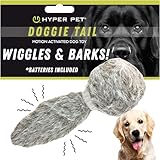
- PLUSH SQUEAKY DOG TOY THAT WIGGLES, VIBRATES, & BARKS – Entice your dog to run, chase, play, and exercise. This interactive dog toy encourages fun stimulation for dogs of all ages. Fun dog toys for small dogs, dog toys for medium dogs, and large dog toys.
- REDUCE ANXIETY AND BOREDOM – With funny sounds and erratic movements, these funny dog toys & plush dog toy will capture your puppy or adult dog’s interest and keep them engaged with its interactive dog toy movements. The wobble and wiggle will keep them busy and is a great alternative to dog puzzle toys and classic dog enrichment toys.
- TIPS TO ACTIVATE: Pull out tab and give hard shake. If toy does not turn on, feel around for ON/OFF switch located underneath cover, hold button for 2 seconds, and give hard shake. The ball will activate, vibrating and making noise for approximately 10 seconds. Once this stops, the ball will reactive when rolled, thown, or played with. When playtime is over, simply press button down to turn dog ball off and preserve battery life. PLEASE SEE VIDEOS FOR HELP.
- BATTERY OPERATED PROLONGED PLAY – To change batteries, remove the plastic ball from plush toy cover. Use tab to open the giggle dog toy ball. Remove the battery compartment and insert 3 AAA batteries. This interactive dog toy has an automatic stop feature after a period without use to extend battery life. (Batteries are included with the Hyper Pet Doggie Tail)
- NEW COVERS AVAILABLE – Additional Hyper Doggie Tail covers are available for your pet. Hyper Pet is a Cosmic Pet Brand. Color of Doggie Tail Plush May Vary. Please always supervise your pet while in use.
What is actually known about the viral-looking scene?
Only the title’s basic description is established: a dog gets a toy from inside or beneath an ottoman and appears to know how to retrieve it. The originating post or video was not identified, so any claim about the dog’s name, breed, creator, platform, publication date or exact motivation would be speculation. The safest conclusion is that the scene is consistent with learned, playful toy-carrying, while the dog’s body language determines whether that interpretation fits him.
What should an owner check before allowing this game?
- Make sure the ottoman cannot tip, collapse or trap a paw, muzzle or collar.
- Block gaps that are too narrow for the dog to turn around safely.
- Keep children from pulling the toy or reaching into the dog’s space.
- Use toys without detachable parts and inspect them after each session.
- Trade for food or another toy instead of forcibly taking a guarded item.
With those limits in place, the furniture can be replaced by a purpose-built search game whenever the dog starts treating the ottoman as his personal toy box.
Frequently Asked Questions
Why does my dog bring me a toy and then run away?
Many dogs are inviting a chase or keep-away game rather than refusing to share. Watch for relaxed, wiggly movement and repeated returns; a stiff body or guarding signals calls for more distance and a calm trade.
Can hiding toys be a sign of separation anxiety?
Toy hiding by itself does not establish separation anxiety. Concern is greater when hiding occurs with distress when alone, destruction, vocalizing or other persistent anxiety signs, which require an individual assessment.
How do I teach my dog to stop taking toys under the sofa?
Teach a rewarded “drop” or “come” cue, then offer a legal search activity such as a snuffle mat or food puzzle. Prevent access to unsafe gaps while practicing so the dog is not repeatedly rewarded for the unwanted route.
Are squeaky toys safe for dogs that chew hard?
They can be used during supervised play, but dogs that tear plush toys may remove and swallow squeakers or fabric. Inspect frequently, take the toy away when damaged and choose a sturdier, correctly sized alternative.





Leave a Reply