Edge effects are ecological changes in the zone where habitat meets its surroundings. Near a forest boundary, for example, light, temperature, humidity, vegetation, and species composition may differ from conditions farther inside. These changes can benefit some species and harm others, depending on the habitat, surrounding land use, and response being measured.
The conservation concern is not that every habitat edge is bad. Natural transitions can be valuable, while human land conversion can create abrupt boundaries and fragmented patches. The effects of those boundaries vary with local conditions, including edge age, orientation, nearby edges, patch size, season, and weather.
What is an ecological edge?
An ecological edge is a transition between a habitat patch and its surroundings, often called the matrix. Its influence is better understood as a zone than as a fixed line on a map. Examples include:
- forest and grassland;
- upland forest and wetland;
- shrubland and desert;
- a riparian corridor and farmland; and
- forest and a road, housing development, field, or utility corridor.
An edge effect occurs when ecological conditions or outcomes near a boundary differ from those farther inside the habitat. Researchers may examine changes in microclimate, vegetation, species composition, abundance, or other responses. The boundary itself is not automatically a problem: natural transitions can support distinctive communities, while human land use can make other edges abrupt and disturbed.
What’s actually slowing this PC down?
Pick the symptom - the matching free tool is one click away.
#1 Best Overall

- 𝐍𝐎𝐓𝐄: 𝐢𝐭 𝐢𝐬 𝐍𝐎𝐓 𝐜𝐨𝐦𝐩𝐚𝐭𝐢𝐛𝐥𝐞 𝐰𝐢𝐭𝐡 𝐡𝐨𝐦𝐞 𝐖𝐢𝐅𝐢, 𝐝𝐨𝐞𝐬 𝐍𝐎𝐓 𝐬𝐮𝐩𝐩𝐨𝐫𝐭 𝐜𝐞𝐥𝐥𝐮𝐥𝐚𝐫/𝟒𝐆/𝟓𝐆 𝐧𝐞𝐭𝐰𝐨𝐫𝐤𝐬, and 𝐝𝐨𝐞𝐬 𝐍𝐎𝐓 capable of real-time motion alerts or push notifications. The camera creates its own short-range Wi-Fi hotspot (𝐍𝐨𝐧-𝐂𝐞𝐥𝐥𝐮𝐥𝐚𝐫) for setup, and downloading files only. Wi-Fi range is up to 33–50 ft in open areas. The camera records automatically even when your phone is not connected. No subscription or monthly fees
- Upgraded Split Solar Panel Design: This trail camera features a Allows flexible placement design. Its angle can be manually adjusted to efficiently face the sun, regardless of seasonal changes or terrain. This greatly improves charging efficiency and minimizes sunlight blockage, making it suitable for all kinds of outdoor environments (32GB SD card included (pre-installed). No extra charge)
- Non-Stop Solar Power: Equipped with a high-capacity 6000mAh rechargeable power, this trail camera supports three charging modes: solar charging, Type-C charging, and rechargeable power. It allows for long-term continuous use. No more wasting money or climbing. It is the truly energy saving, and long-lasting solution for 24/7 backyard, farm, and deep-woods surveillance
- Easy & Smart App Control : This wifi trail camera pairs instantly via WiFi + Bluetooth with the user friendly “TrailCamGO” app, with a maximum connection range of 55FT (recommended within 10FT). Photos and videos can be send directly to your phone without removing the SD card. (As the wireless trail camera creates its own hotspot to connect with the phone, it does not support home Wi-Fi networks.)
- 4K & 64MP Ultra-Clear Imaging: With a high-resolution sensor and excellent low-light performance, this solar trail camera minimizes image and video blur or noise, enabling quick wildlife recognition and capturing every detail clearly.Ideal for birdwatching, spotting wildlife, and keeping an eye on your garden/home
Edge effects are not the same as habitat loss or fragmentation
These terms are connected, but describe different processes:
| Process | What changes | Why it matters |
|---|---|---|
| Habitat loss | The total amount of suitable habitat declines. | Less habitat may be available for feeding, shelter, or breeding. |
| Subdivision | Continuous habitat is divided into smaller patches. | Patch size and shape can affect the amount of interior habitat. |
| Isolation | Patches become harder for organisms to reach from one another. | Movement and exchange between patches may be affected. |
| Edge effects | Conditions and species communities change near patch boundaries. | The surrounding land and boundary conditions can influence habitat within and around a patch. |
These processes can occur together, so it is important not to attribute every change in a fragmented landscape to edge effects alone.
How edges change physical conditions
Edges can differ from habitat interiors in light, temperature, humidity, wind exposure, vegetation structure, and species composition. The surrounding land cover matters. In a study of northern Amazon forest fragments, forests next to pasture had higher temperatures and lower humidity than forests next to rubber plantations; plant composition and abundance also varied across the studied edge conditions. Those findings apply to that region and study, not to every landscape.
Edge influence tends to weaken farther into a forest, but its depth and intensity vary. Edge age and orientation, multiple nearby edges, patch size, season, weather, and the response being measured can all matter. There is no universal distance at which an edge effect ends.
How edges can affect species and ecological interactions
Edges may change which species occur in a place and how abundant they are. They can also affect movement and interactions between species. A boundary may make resources easier to reach for some organisms, while creating a less suitable or more exposed area for others. The particular result depends on the species, the adjacent land cover, and local conditions.
Rank #2
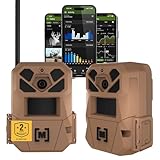
- HARVEST MORE BUCKS THIS SEASON - EDGE 3 delivers real-time deer activity, movement patterns, and location intelligence—so you know when and where mature bucks are moving instead of hunting on hope.
- AI BUCK DETECTION + INSTANT ALERTS - Moultrie AI identifies bucks and immediately delivers high-resolution photos or HD video—reducing false alerts and helping you act fast when it matters most.
- NATIONWIDE 4-CARRIER AUTO-CONNECT - Automatically connects to the strongest of four major U.S. networks. No SIM cards. No manual setup. Reliable photo and video delivery—even in remote hunting properties.
- 40MP PHOTOS + 1080p HD VIDEO - Capture crisp, detailed images and lifelike HD video. Low-glow infrared flash keeps nighttime shots clear without spooking deer.
- 0.5-SECOND TRIGGER + 100FT RANGE - Fast trigger speed and long detection range ensure moving deer are captured cleanly—no blur, no missed opportunities.
Edge responses are not uniformly positive or negative. A 2022 global meta-analysis of 674 forest edge–interior comparisons found context-dependent richness patterns: tropical communities predominantly had fewer species at edges, while temperate communities predominantly had more. Distance from the edge and regional and local factors influenced the results. A higher local species count does not by itself show that sensitive interior species or habitat quality have been preserved.
Human land conversion and fragmentation can alter the amount of edge, the size and shape of habitat patches, and the surrounding matrix. A review of Amazonian forest fragments summarizes effects on microclimate, tree mortality, carbon storage, and fauna, while emphasizing that effects vary with edge age, nearby edges, and surrounding vegetation. The review covers 32 years of investigation; that period describes the work summarized, not the age of every fragment or the duration of every measurement.
What the evidence says about edge distance
Edge influence is not a fixed-width strip. A review proposed expected altered-condition ranges of 10–20 metres below ground and 25–50 metres above ground, with larger maxima also discussed. These are review estimates, not universal biological thresholds. Different species and ecological responses may be affected over different distances.
The Tool Desk
Outbyte Driver Updater FREEScan for outdated or missing drivers - takes under a minuteDriver Scan →Outbyte PC Repair FREERepair Windows errors before they cause bigger problemsFix Now →When interpreting any distance estimate, identify the ecosystem and geography, the adjacent land-cover type, the response measured, and relevant factors such as edge age, orientation, nearby edges, patch size, season, and weather. A distance reported for one study should not be treated as a rule for all species or habitats.
Natural edges and human interference
Human interference matters because land conversion and fragmentation change both boundaries and the matrix around habitat patches. Roads, agriculture, development, and other land uses can produce edges with different characteristics. In the northern Amazon study, for example, conditions differed between forest edges next to pasture and those next to rubber plantations. The result underscores that the adjacent land cover matters; it does not establish a universal ranking of land uses.
Rank #3
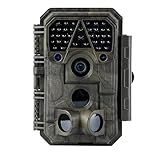
- Crystal-Clear 64MP Photos & 1296p HD Video – Stunning detail day or night, thanks to advanced image tech and a high-performance f/1.6 aperture lens.
- Lightning-Fast 0.1s Trigger Speed – Never miss a moment! Side sensors detect motion instantly, even for fast-moving wildlife, deer.
- Bright 100ft No-Glow Night Vision – Invisible 940nm LEDs and enhanced light capture deliver sharp nighttime footage without spooking animals.
- Smaller Files, Faster Playback – H.264 tech compresses videos (MP4/MOV) for quick downloads and seamless viewing on any device.
- 2.4" Color Display + User-Friendly Controls – Review footage on the spot with an intuitive menu and easy-access buttons.
Natural ecotones can be valuable habitats. Conservation should not treat every visible boundary as damage that needs to be eliminated. Useful questions include:
- What habitat types meet at the boundary?
- What land cover surrounds the habitat patch?
- How old and pronounced is the edge?
- Are there multiple nearby edges?
- Which ecological response or species is being assessed?
Why patch shape and interior habitat matter
Patch size and shape influence how much habitat is near an edge and how much interior habitat remains. Long or irregular patches can have more boundary relative to their area than compact patches. Multiple nearby edges can also affect conditions within a patch. These geometric considerations do not determine biological outcomes by themselves; the edge, surrounding land cover, and species response matter too.
Windows Errors? Fix Them Before They Spread
Repair common Windows errors and clear accumulated junk for a smoother, more stable PC - no reinstall needed.Free scan · no reinstallCrashes, No Sound, or Screen Glitches?
Random freezes, missing sound and display glitches usually trace back to one bad driver. Find and replace yours safely.Free scan · under a minuteHow scientists measure edge effects
A useful study compares conditions along a distance gradient and identifies the edge and surrounding land cover. It should also account for factors that can influence the results, such as edge age and orientation, patch size, multiple nearby edges, season, weather, and disturbance history.
Environmental and biological measurements
Researchers can measure microclimate, vegetation structure, and species composition, then specify the response they are investigating. Richness, for example, is a count of species; it does not alone establish whether sensitive species or habitat conditions have been maintained.
Choosing distances
Distances should suit the ecosystem and the response being studied. A review’s proposed ranges are estimates, not universal thresholds. A reproducible study should explain how it selected its sampling distances and what those distances represent.
Rank #4

- 【Ultra-clear Photos and Videos】36MP Still Images & 2.7K Videos. Thanks to premium optical lens and an advanced image sensor, and built-in 22Pcs 850nm low glow LEDs, this trail camera provides crystal clear images and amazing smooth 2.7K videos with sound in the daytime, low light or nighttime, combined with noise reduction speaker and 2.0” HD TFT Color Screen, which takes you into the world of wildlife.(This camera does not include an SD card.)
- 【Super Night Vision & Low Glow Infrared LEDs】The trail camera is equipped with powerful low glow infrared LEDs, features upgraded 850nm infrared technology, makes this game camera more stealth, which can show the night behavior of animals without disturbing them, encompasses adaptive illumination technology to avoid overexposure or over-dimmed, which can provide clear night images and videos in total darkness, delivers brilliant night vision up to 75ft.
- 【Fast 0.1s Trigger Time &130°Wide Angle】Once movements are detected, the lightning-fast trigger speed of less than 0.1s with 1 to 3 shots choice guarantees fast and accurate capture of each detected motion exposed to the field, never miss any animals that wander by this camera. 130° detection range to give you an expansive field view, indispensable for hunting, wildlife observation, farm monitoring, home backyard, plant growth observation, property security and surveillance.
- 【Easier Setup Than Ever】This hunting camera features a built-in 2.0-inch color screen and TV remote-style control buttons. No Wi-Fi or app is needed; the intuitive and easy-to-use interface allows for quick setup and instant playback, making it suitable for users of all ages. The included mounting strap and stand allow you to stabilize the camera in various scenes and at any angle. A comprehensive user guide helps you quickly get started using this hunting camera.
- 【IP66 Waterproof】KJK201 is designed to withstand extreme environments, thanks to the tightly integrated design of the camera body and high-quality rubber ring, ensuring that works normally from -22 °F to 158 °F, excellent quality can be used in deserts, rainforests, etc. The efficient PIR design works to reduce false triggers, boasting an impressive 17,000-image battery life! The smaller size makes them easier to conceal from theft/vandalism, and also much easier to carry out into the field.
Readers who want to move from maps to a spatial workflow may find GIS habitat fragmentation mapping training useful for examining land cover and patch structure. Mapping can help describe a landscape, but it cannot replace evidence about how particular species and ecological processes respond.
A practical edge-to-interior study design
- Define the edge. Specify the habitat types and adjacent land cover being studied.
- Record its context. Note edge age and orientation, nearby edges, patch size, season, and weather where relevant.
- Measure a distance gradient. Sample at multiple distances rather than comparing only one edge site with one interior site.
- Choose the response. State whether the study concerns microclimate, vegetation, richness, species composition, abundance, or another outcome.
- Describe the surrounding matrix. Record the land cover next to the patch and relevant disturbance history.
- Interpret results in context. Avoid treating one study’s distances or results as universal rules.
Conservation: account for context
Retaining interior habitat and limiting abrupt habitat conversion can help preserve conditions associated with less disturbed interiors. The appropriate management approach depends on the ecosystem and local circumstances; the evidence does not establish one intervention as best in every case.
Consider patch interiors and land conversion
When assessing development or land-use change, consider how it could affect patch size, shape, edge conditions, and the surrounding matrix. Avoid assuming that the same boundary will have the same effects in every landscape.
Assess connectivity and the surrounding matrix
Consider how the land around habitat patches may shape ecological conditions and movement. The best approach depends on the species, habitat, and landscape context.
Monitor the response that matters
Assess the ecological outcomes relevant to the site, such as microclimate, vegetation, or species composition. Monitoring should account for variation over time and local conditions rather than relying on one universal edge-distance threshold.
Best Value

- VALUE WITHOUT COMPROMISE – The FLEX-M2 cellular trail camera proves you don’t have to pay top dollar to get top performance. It’s easy to use, customizable, reliable and comes with features that punch well above its price tag.
- HIGH-QUALITY PHOTOS AND VIDEOS – Receive 32MP pictures and 1080p videos with sound directly to your cell phone via the free SPYPOINT app. Request full-HD files anytime from your cellular trail camera.
- EASY SET UP AND REMOTE MANAGEMENT – Leave your hunting area undisturbed by activating, managing, and updating your cellular trail camera remotely via over-the-air updates with the SPYPOINT app. Plus, locate your trail cam anytime using the GPS locator on the SPYPOINT app.
- UNINTERRUPTED SCOUTING: Pair the FLEX-M2 with the LIT-22 rechargeable battery pack (not included) that replaces up to 1,000 AA batteries, to enable up to 12 months of uninterrupted performance that reduces battery waste, saves money and extends time in the field
- CROSS-CARRIER COVERAGE – Dual-SIM technology automatically connects your cellular trail camera to all major carriers and the strongest signal in the area, so you can count on reliable coverage. No Wi-Fi needed.
What edge effects mean for pet owners
Edge effects are primarily a landscape and habitat issue, but pet owners near natural areas can avoid adding unnecessary disturbance. Follow local guidance, keep pets from chasing wildlife, and do not release exotic pets or plants into the environment. The appropriate precautions depend on the local habitat and wildlife.
Further reading and study
For a fuller academic treatment of fragmentation, edge effects, and landscape structure, Sharon K. Collinge’s Ecology of Fragmented Landscapes is an optional advanced resource. It includes a chapter on “Fragment Context and Edge Effects.” Johns Hopkins University Press book page.
FAQ
Are all habitat edges harmful to biodiversity?
No. Richness responses vary by region and local conditions. Natural transitions can be valuable, and higher or lower species counts at an edge do not by themselves establish habitat quality.
How far does an edge effect extend?
There is no universal distance. Edge influence varies with the habitat, response measured, adjacent land cover, edge age and orientation, nearby edges, patch size, season, and weather.
Quick wins for a faster PC:
Fix the driver behind crashes, sound loss and screen glitchesFind Drivers →Repair Windows errors before they cause bigger problemsFix Now →Scan for outdated or missing drivers - takes under a minuteDriver Scan →Does higher species richness at an edge mean the habitat is healthier?
Not by itself. Species identity and the conditions being assessed matter; a species count alone does not show whether sensitive interior species or habitat quality have been preserved.
Why does the land next to a habitat patch matter?
Different surrounding land covers can create different edge conditions. A northern Amazon study found differences between forests next to pasture and forests next to rubber plantations, but those findings are specific to that study and region.
The Bottom Line
Edge effects are changes across a zone where habitat meets its surroundings, not a universal-width strip. Edges can alter microclimate, vegetation, and species communities, but outcomes vary with region, land cover, edge characteristics, and the response measured. Retaining interior habitat and limiting abrupt conversion can help, while conservation decisions should be based on local evidence rather than a one-size-fits-all distance or intervention.
Quick Recap
Product prices and availability are accurate as of the date/time indicated and are subject to change. Any price and availability information displayed on Amazon at the time of purchase will apply.




