Crashes, No Sound, or Screen Glitches?
Random freezes, missing sound and display glitches usually trace back to one bad driver. Find and replace yours safely.Free scan · under a minutePC Slower Than It Used to Be?
A free scan shows the junk files, broken settings and background clutter dragging Windows down - then fixes them in one click.Free scan · Windows 10 & 11If your cat has been exposed to a flea or tick product, whether that is a dog product applied to the cat’s coat, a treated dog’s fur the cat licked, or a collar or medication the cat chewed or swallowed, contact a veterinarian or an animal poison-control service now. Many of these products contain pyrethrins or synthetic pyrethroids, insecticides that act on the nervous system, and the steps below explain what to have ready for that call.
What to do right now
- Call a veterinarian, an emergency veterinary clinic, or an animal poison-control service immediately. Pet Poison Helpline advises contacting a veterinarian or its service for any suspected exposure. ASPCA Poison Control lists a 24/7 line at (888) 426-4435 and notes that a consultation fee may apply. Confirm current details on the service’s website if you can do so quickly, but do not hold the call while you look them up.
- Keep the package or label. Be ready to give the cat’s approximate weight, the product name and active ingredient, the amount applied or swallowed, the route of exposure, and the time it happened. Route matters: skin contact, licking a treated dog, chewing a collar, and swallowing a tablet or liquid each carry different concerns. Do not delay the call to collect every detail.
- Go to emergency veterinary care now if the cat has tremors, seizures, weakness, collapse, or difficulty breathing. Call ahead or call from the car so the team can prepare when you arrive.
- For product on the skin, ask the expert before washing. Veterinary sources describe gentle washing with mild detergent and cool water for product on the skin, but the right action depends on the product, the route, and the cat’s condition. If the cat is symptomatic or unstable, transport and expert direction take priority over washing.
How cats get exposed
Most topical flea and tick medicines contain either pyrethrins, insecticides derived from chrysanthemum plants, or synthetic pyrethroids. Pyrethrins are plant-derived, but they are still insecticides. Permethrin is a pyrethroid common in dog products, and using a dog-only product on a cat can be dangerous. How toxic any product is depends on its ingredient, concentration, amount, route of exposure, and the animal’s condition.
| Exposure route | How it happens | Added concern |
|---|---|---|
| Direct application | A dog product is put on the cat’s skin or coat, often by mistake | Ingredient in direct contact with skin and coat; amount absorbed not stated |
| Licking a treated dog | The cat grooms product transferred from a recently treated dog’s coat or grooming product | Amount transferred not stated |
| Chewing a flea collar | The cat bites or chews a collar | Foreign-body obstruction risk and stomach upset, in addition to chemical exposure; ingredient-specific neurologic effects are possible |
| Swallowing medication | The cat chews or swallows a tablet or liquid flea or tick product | Toxicity depends on ingredient, concentration, and amount |
Why cats are especially vulnerable
Pyrethrins and pyrethroids act on nerve signaling. Merck Veterinary Manual describes them as slowing the opening and closing of sodium channels in nerve cells, which can produce hyperexcitation of those cells. Merck’s entry on plant-derived insecticide toxicosis notes that cats appear more sensitive to pyrethroid toxicity than other pets in general, which is why even a small suspected exposure justifies a call.
Symptoms and when they appear
Signs of pyrethrin or pyrethroid poisoning in cats can include:
#1 Best Overall

- Advantage II Large Cat is a leading brand in cat flea treatment and prevention for large cats over 9 lbs., at least 8 weeks of age
- Vet-recommended, easy-to-apply monthly topical treatment – no hard-to-swallow pills, no prescription needed
- Delivers total flea protection – kills adult fleas, flea larvae and flea eggs through contact
- Same-day effectiveness – kills fleas within 12 hours of application and keeps working for 30 days
- Fragrance-free formula, waterproof after 24 hours of application
- Profuse drooling
- Vomiting
- Tremors
- Hyperexcitability and agitation
- Incoordination
- Weakness
- Seizures
- Difficulty breathing
Merck says signs may begin within a few hours after exposure, so a cat that looks normal shortly after contact has not been cleared. Severe cases can progress to respiratory failure and death. Tremors, seizures, weakness, collapse, and breathing difficulty are the signs that call for emergency care under step 3 above.
What the veterinary team does
Diagnosis rests mainly on the exposure history and the cat’s clinical signs, and residue analysis may be used. There is no specific antidote for these insecticides. Merck Veterinary Manual states: “There is no specific antidote for pyrethrin or pyrethroid poisoning in animals.” Treatment therefore focuses on:
Rank #2

- EFFECTIVE, WATERPROOF FLEA TREATMENT FOR CATS: PetArmor Plus is a waterproof, flea & tick topical prevention for cats that kills fleas, flea eggs, flea larvae, ticks, and chewing lice for up to 30 days after application.
- TRUSTED, VET QUALITY FORMULA: Containing fipronil and (S)-methoprene, the same active ingredients as FRONTLINE Plus for Cats. PetArmor Plus for Cats has a powerful formula that starts to kill fleas within 24 hours.
- BREAK THE FLEA CYCLE: Unlike other flea and tick treatments that may temporarily suppress flea activity, PETARMOR Plus Cat Flea Treatment works by effectively breaking the flea life cycle Kill flea eggs and larvae to prevent re-infestation.
- FLEA AND TICK PROTECTION: PetArmor Plus for Cats flea drops protects your furry family members from brown dog ticks, American dog ticks, Lone Star ticks, and deer ticks (which may transmit Lyme disease).
- EASY-TO-USE, LONG-LASTING: PetArmor Plus flea and tick treatment comes with three (3) waterproof topical applications that provides your pet flea protection and control for three (3) months.
- Removing any remaining topical product
- Assessing respiratory and cardiovascular status
- Providing supportive care
- Treating seizures or other complications
The course depends on the specific formulation, the amount, the route, the time since exposure, and the cat’s signs. Treatment decisions belong to the veterinary team.
What not to do at home
- Do not induce vomiting. Merck notes that emesis is generally not recommended for pyrethrin and pyrethroid exposure.
- Do not give oils, fats, milk, food, medication, or home remedies unless a veterinarian instructs you to. Merck notes that vegetable oils and fats may increase absorption of these compounds.
- Do not use an insecticide shampoo.
- Do not assume a bath alone is enough. A gentle wash may be part of the plan, but it does not replace a veterinary assessment.
Preventing exposure in homes with dogs and cats
- Use only a product specifically labeled for cats, and follow the label and your veterinarian’s directions.
- Store dog flea and tick products where cats cannot reach them.
- Keep the cat away from a treated dog’s wet application site for as long as the product label and your veterinarian advise.
- Secure flea collars and product packaging so cats cannot chew them.
- Consult your veterinarian before choosing a product or dose for a cat, especially if the cat has health conditions or takes other medicines.
Sources and dates
This guide draws on Pet Poison Helpline’s flea and tick toxicity pages, Merck Veterinary Manual entries on insecticide poisoning, plant-derived insecticide toxicosis, and principles of toxicosis treatment (last updated June 2024), and ASPCA Poison Control’s service information. Product formulas and contact details change over time, so verify current information with your clinic or the service you contact.
Recommended Free Tools
Quick Recap
Best Value
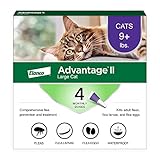
- Advantage II Large Cat is a leading brand in cat flea treatment and prevention for large cats over 9 lbs., at least 8 weeks of age
- Vet-recommended, easy-to-apply monthly topical treatment – no hard-to-swallow pills, no prescription needed
- Delivers total flea protection – kills adult fleas, flea larvae and flea eggs through contact
- Same-day effectiveness – kills fleas within 12 hours of application and keeps working for 30 days
- Fragrance-free formula, waterproof after 24 hours of application
Rank #4

- SHIPMENT CONTAINS: One 6-dose pack of Amazon Basics Flea Topical for Large Cats (over 9 pounds)
- FAST ACTING: Eliminates fleas in just 12 hours, providing your cat with swift relief from discomfort with our effective flea medication
- DUAL INGREDIENT FORMULA: Formulated with Imidacloprid and Pyriproxyfen to kill adult fleas and prevent flea infestations
- LONG-LASTING PROTECTION: Protect your cat from infestations for up to 4 weeks with each application, killing reinfesting fleas within 2 hours and efficiently halting the flea lifecycle
- EASY APPLICATION: Designed for monthly use, apply directly to dry skin between the shoulder blades for best results
Rank #3
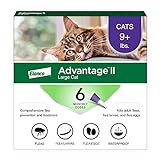
- Advantage II Large Cat is a leading brand in cat flea treatment and prevention for large cats over 9 lbs., at least 8 weeks of age
- Vet-recommended, easy-to-apply monthly topical treatment – no hard-to-swallow pills, no prescription needed
- Delivers total flea protection – kills adult fleas, flea larvae and flea eggs through contact
- Same-day effectiveness – kills fleas within 12 hours of application and keeps working for 30 days
- Fragrance-free formula, waterproof after 24 hours of application
Product prices and availability are accurate as of the date/time indicated and are subject to change. Any price and availability information displayed on Amazon at the time of purchase will apply.




