Riding schools can make horse-welfare principles part of ordinary lessons and stable routines, and they are well placed to influence what equestrians treat as normal. The evidence, however, supports potential and early steps rather than a measured change in welfare culture. A 2026 Swedish study found that welfare-related teaching is not consistently built into riding education, and that teachers and pupils describe it differently. Frameworks from the British Horse Society and Equestrian Canada show how welfare can be written into structured learning, but neither has published outcome data showing that it changes how horses are treated.
What the 2026 Swedish study shows
Nyberg, Blokhuis, McLean and Hartmann’s article “Rider education at Swedish riding schools: Comparing teachers’ and pupils’ perspectives” appeared in PLOS ONE on 27 February 2026. It asks how horse behaviour and welfare, learning, and rider–horse communication are taught and perceived. The authors start from the point that riding schools reach riders of many ages and experience levels, and that teachers there can challenge traditional views.
The authors are clear that traditional lessons tend to focus on technical riding, such as posture and how a horse responds to aids, while less time goes to interpreting behavioural and emotional responses. They also cite earlier survey data in which 36% of Swedish and Finnish pupils said their riding schools offered non-riding instruction in horse behaviour, welfare, learning, and human–horse communication. That figure comes from the earlier survey as discussed by Nyberg et al.; it is not a result of the 2026 study’s own questionnaire.
Teachers and pupils describe different lessons
In the 2026 study, teachers more often said they offered separate non-riding lessons than pupils said they attended them. The authors read this as a mismatch: teachers sometimes assumed pupils were not interested, while pupils reported that such lessons were often not offered. Their conclusion is that welfare teaching needs better structure and clearer links between lesson content and intended learning outcomes.
Do these 3 things before closing this tab:
1Scan for outdated or missing drivers - takes under a minute2Repair Windows errors before they cause bigger problems3Fix the driver behind crashes, sound loss and screen glitches#1 Best Overall

- Equestrian Comfort Helmet: Troxel’s redesigned horseback riding helmet provides a deeper, full-coverage fit for superior comfort and security; with maximum protection equestrian riding helmet, perform all your horse riding activities with ease
- Low-Profile Design: This sleek, modern style equestrian helmet is built to effortlessly adapt to a variety of head shapes; the adjustable horse helmet includes a DialFit system soft touch dial that allows precise adjustment for the perfect fit
- Stylish Accessory: Available in a wide range of fun, fashionable graphics and colors, our equestrian helmets come in matte and glossy designs that make a bold statement; ideal for matching your horse's gear or expressing your unique sense of style
- Maximum Ventilation: The strategically placed airflow vents in this horse back riding helmet keep you cool and comfortable during long rides; also includes a removable washable headliner with Air-Channel technology for a fresh, breathable experience
- Versatile Use: Recommended for riders of all types, our equestrian gear include sizes suitable for men, women and children; use this horse riding equipment for your riding lessons, leisure riding, equestrian competitions and more
Why the findings have limits
Participation was voluntary, and the data came from online questionnaires answered by Swedish teachers and pupils. The findings describe that surveyed group and its perceptions. They do not measure how common welfare teaching is across riding schools elsewhere, and they do not show that any particular curriculum improves horse outcomes. The authors themselves call for intervention and longitudinal studies to establish how this education should be structured and whether it produces meaningful learning.
The article also gives Swedish context of about 450 riding schools and roughly five million lessons a year. These figures come from sources the article cites. They describe the Swedish setting; they are not numbers that have been independently verified.
Rank #2

- Full coverage design for optimal comfort
- Tough pc outer shell,fully ventilated with ventilation holes
- Removable washable headliner with Air-Channel technology
- High quality material
Defining welfare in terms a stable can act on
The British Horse Society’s “Horses in Society” guidance, last reviewed on 27 February 2025, is built on the 2020 Five Domains Model. The model requires attention to both physical and emotional or mental wellbeing, and the guidance turns that into five practical headings. It states the principle plainly: “Good welfare and equestrianism must, and do, go together.” The table below shows how each heading can appear in a riding school’s daily work. These are British Horse Society recommendations, not statutory requirements in every country.
| BHS heading | What it looks like in a riding school |
|---|---|
| Suitable nutrition | Clean water, suitable feed, and no prolonged periods without forage |
| Suitable and safe environment | Safe shelter and turnout, appropriate ventilation, and safe handling areas |
| Protection from pain, injury and disease | Routine and emergency veterinary care, a veterinary health plan, well-fitting tack, and noticing signs of pain |
| Behavioural needs | Training based on evidence of how horses learn, and allowing for interactions with the environment, other horses and people |
| Mental state and subjective experience | Emotional wellbeing and positive experiences, not just the prevention of harm, and noticing signs of stress or fear |
A structured curriculum example: Equestrian Canada’s LearnTo
Equestrian Canada’s LearnTo page describes LearnTo as its national learning framework for equestrian sport. It serves participants, coaches and facilities through progressive pathways and horse-centred practices. The page states that the new framework launched in July 2026.
Recommended Free Tools
Rank #3
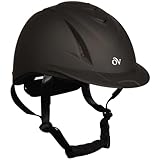
- LIGHTWEIGHT LOW-PROFILE DESIGN - The Ovation Unisex Deluxe Schooler Riding Helmet features a streamlined helmet construction that provides a lightweight feel while supporting dependable protection and is suitable for arena training, schooling sessions, and regular horseback riding
- HIGH-FLOW AIR VENTILATION - Multiple high-flow vents promote steady airflow through the helmet interior to support rider comfort and help reduce heat buildup; This breathable safety gear for men and women is designed to help maintain ventilation during extended riding sessions
- ADJUSTABLE DIAL FIT SYSTEM - This protective horseback riding equipment features an easy-adjust rear dial system that allows riders to fine-tune helmet sizing for a secure fit; Extra-strong adjustment teeth support long-term durability and consistent helmet positioning
- REMOVABLE WASHABLE LINER - Soft interior liner provides cushioning while helping manage interior moisture; The removable and machine-washable liner of this unisex equestrian helmet helps riders maintain lasting freshness, comfort, and simple care between rides
- DURABLE OUTER SHELL - The Ovation Unisex Deluxe Schooler Riding Helmet features an easy-to-clean rubberized outer shell that supports everyday riding durability; Removable breakaway visors and an exclusive YKK adjuster clip and buckle help create a secure and comfortable riding setup
LearnToCare
LearnToCare covers safe handling, daily care, health, welfare and stable management. The organization puts its position this way: “The foundation of all equestrian sport is understanding how to handle and care for horses.” LearnToRide runs alongside it and develops riding skills through progressive levels, so welfare content sits next to riding progression rather than apart from it.
What the framework does and does not show
The LearnTo page describes the framework’s design and aims. It is not an independent evaluation, and nothing on the page shows that riders who complete the pathways handle horses differently. It is also a Canadian framework, so its reach and adoption depend on Canadian clubs and facilities. Electronic manuals are available free through a MyEC account, and printed manuals can be bought from the Equestrian Canada store.
Rank #4

- LIGHTWEIGHT LOW-PROFILE DESIGN - The Ovation Unisex Deluxe Schooler Riding Helmet features a streamlined helmet construction that provides a lightweight feel while supporting dependable protection and is suitable for arena training, schooling sessions, and regular horseback riding
- HIGH-FLOW AIR VENTILATION - Multiple high-flow vents promote steady airflow through the helmet interior to support rider comfort and help reduce heat buildup; This breathable safety gear for men and women is designed to help maintain ventilation during extended riding sessions
- ADJUSTABLE DIAL FIT SYSTEM - This protective horseback riding equipment features an easy-adjust rear dial system that allows riders to fine-tune helmet sizing for a secure fit; Extra-strong adjustment teeth support long-term durability and consistent helmet positioning
- REMOVABLE WASHABLE LINER - Soft interior liner provides cushioning while helping manage interior moisture; The removable and machine-washable liner of this unisex equestrian helmet helps riders maintain lasting freshness, comfort, and simple care between rides
- DURABLE OUTER SHELL - The Ovation Unisex Deluxe Schooler Riding Helmet features an easy-to-clean rubberized outer shell that supports everyday riding durability; Removable breakaway visors and an exclusive YKK adjuster clip and buckle help create a secure and comfortable riding setup
A welfare study still in progress: Denmark
The QATO Foundation’s project page describes a study by the Danish Equestrian Federation, launched in 2023, that set out to assess training-horse welfare at riding academies. The planned work combined a questionnaire with visits to ten selected academies. It covered training horses’ health, stable and enclosure conditions, equipment, instruction, and interactions with instructors, riders and other horses. The page anticipated sub-results in 2024 and the project running through 2025.
The page reports no findings, so nothing can be said about what the visits found. Anne Silfwander, identified there as Head of DRF’s Club and Sport Activities, described the expected purpose: “Altogether, this comprehensive study will provide knowledge on how training horses are doing at the riding academies and whether any areas of the horses’ well-being need improvement.” That is a statement of intent, not a result. Readers who want the current status should check the Danish Equestrian Federation directly.
Free tools Windows power users keep installed
One-click scans. No signup required.
Best Value

- Equestrian Comfort Helmet: Troxel’s upgraded horseback riding helmet features a sturdy injection molded shell with an integrated visor for durability and precise fit; with a sports equestrian riding helmet, perform horse riding activities with ease
- Improved Fit: This full coverage equestrian helmet is built to effortlessly adapt to a variety of head shapes; this horse helmet comes with a lightweight build that offers comfort and protection for tackling all your horse riding endeavors
- Matte-Finish Accessory: Available in a wide range of solid colors, our matte equestrian helmets are designed to make a bold statement; ideal for matching your horse's gear or expressing your unique sense of style while riding
- Maximum Ventilation: The seven large vents in this horse back riding helmet maximizes airflow keeping you cool and comfortable during long rides; also includes a removable washable headliner for easy effortless care and a fresh, breathable experience
- Versatile Use: Recommended for riders of all types, our equestrian gear include sizes suitable for men, women and children; use this all-purpose horse riding equipment for your riding lessons, leisure riding, equestrian competitions and more
Turning principles into a lesson plan
The evidence points to a practical sequence. None of these steps has been tested as a package, but each follows from the frameworks above and from the gaps the Swedish study identified.
- Write welfare learning outcomes for each level. Use the five BHS headings as a checklist of what a rider should be able to explain at each stage, such as feed and water needs, signs of pain and stress, and the fit of tack.
- Teach handling and daily care before mounted work. Groundwork, grooming and stable routines are where riders first learn to read a horse, so schedule them as lessons rather than chores.
- Build behaviour and mental state into riding lessons. Ask pupils what a horse’s ears, tail or breathing indicate while aids are being applied, not only whether the aid worked.
- Check attendance and understanding. Compare the timetable with the lessons pupils actually attend and can explain. The Swedish mismatch shows that an instructor’s intention is not proof of delivery.
- Measure horse-centred outcomes. Track veterinary visits, body condition and recorded stress behaviour over time, not only how many riders completed a course.
How the three sources compare
These sources describe different things: a survey study, a set of guidance principles, an education framework, and a planned study. They should be read as different kinds of evidence rather than as equivalent interventions.
| Source | Type | Geography | What it covers | Evidence status |
|---|---|---|---|---|
| Nyberg et al., PLOS ONE, 27 February 2026 | Peer-reviewed survey study of teachers and pupils | Sweden, with earlier Swedish and Finnish survey data cited | How welfare, learning and rider–horse communication are taught and perceived | Descriptive; voluntary online questionnaires; not causal |
| British Horse Society, “Horses in Society,” last reviewed 27 February 2025 | Welfare guidance | United Kingdom | Five welfare domains translated into operational questions | Guidance; no outcome evaluation cited |
| Equestrian Canada, LearnTo, launched July 2026 | National education framework | Canada | Handling, daily care, health, welfare, stable management and riding progression | Programme design and aims; no published outcome evaluation |
| QATO Foundation description of the Danish Equestrian Federation study | Welfare study of riding academies | Denmark | Training-horse health, facilities, equipment, instruction and interactions | Planned; project page reports no results |
The practical question for a riding school is therefore not which source is best, but which of these elements it can actually deliver and verify in its own lessons and stable.
Quick Recap
Product prices and availability are accurate as of the date/time indicated and are subject to change. Any price and availability information displayed on Amazon at the time of purchase will apply.




