
Some links on this page are affiliate links: if you buy through them we may earn a commission, at no extra cost to you.
For a bulldog cross that has breathing problems, use a well-fitted body harness for leash walking. Veterinary guidance warns that pressure from a neck collar can further restrict an already vulnerable airway, while a harness spreads leash force across the torso. Keep a collar loose enough to carry identification tags if your veterinarian agrees, but attach the leash to the harness. Fit and monitoring matter: a harness that rubs, restricts the front legs, allows escape, or pulls upward into the throat is not a safe solution.
Is a harness safer than a collar for a bulldog cross with breathing problems?
Yes, a properly fitted body harness is the safer default for walking. The Royal Kennel Club recommends a harness instead of a collar for dogs with brachycephalic obstructive airway syndrome (BOAS), specifically to avoid pressure on the airway. Tufts veterinary guidance likewise says well-fitted harnesses are much preferable to collars for leash walking and warns that leash pressure on the throat can dangerously impair breathing in brachycephalic dogs.
As an Amazon Associate I earn from qualifying purchases.
Quick wins for a faster PC:
Clear out junk files and repair common Windows errorsFree Scan →Fix the driver behind crashes, sound loss and screen glitchesFind Drivers →This is risk management, not a guarantee that every harness is suitable. A bulldog cross can inherit airway anatomy from either side of its family, and the severity of breathing disease varies widely. Your veterinarian should assess your individual dog, especially if breathing is noisy at rest, exercise tolerance is declining, or recovery after activity is slow.
Why can a collar make breathing harder?
A leash attached to a neck collar concentrates force around the throat. Pulling, sudden stops, or a dog lunging can compress delicate tissues and increase the effort needed to move air. Tufts notes that this pressure may aggravate a collapsing trachea and can be particularly dangerous for brachycephalic dogs whose airways are already narrowed.
Popular on Amazon
](https://m.media-amazon.com/images/I/41ji4lsxEIL._SL160_.jpg)
- [UPDATED VESION, EASY TO PUT ON & TAKE OFF] This dog harness has 3 buckles( One is on the neck with Lockable, two are on the chest), NO NEED go through dog’s head. This will let your dog loves to wear harness!
- [NO PULL WITH 2 HOOK LOOPS] There are 2 sturdy metal hook loops for leash attachment. If you use the front hook on the chest, it will reduce the pulling a lot and make going for a walk more enjoyable. As usual, most people like to use the back hook.
- [REFLECTIVE MATERIAL] The reflective material will be really nice when it gets dark. Also, your dog will be saw easily. This reflective material can make drivers have long time to react, which ensure your dog’s safety!
- [USEFUL & SOFT HANDLES] You will like this handle on the back,it is helpful in controlling dogs a bit closer to you when they are trying to lunge at something. Also, it is convenient to assist dogs into the car.
- [100% BEST CUSTOMER SERVICE] If any products quality really exits, a refund or replacement will be available.
Choke collars, prong collars, and other aversive devices create even more focused pressure. VCA cautions that choke collars can reduce a dog’s ability to breathe. They are inappropriate for a bulldog cross with respiratory vulnerability, regardless of whether the dog pulls.
A collar may still be useful for identification. It should be loose enough for comfortable swallowing and breathing, and it should not be the point where the leash is clipped during walks. Check local identification requirements and ask your veterinarian about the safest everyday setup for your dog.
What breathing problems can a bulldog cross inherit?
“Bulldog cross” describes ancestry, not a diagnosis. Some crosses have a relatively open airway; others inherit the same conformational problems seen in bulldogs and other short-muzzled dogs. Possible contributors include narrowed nostrils, an elongated soft palate, obstructive airway tissue, and a narrow trachea.
These changes can combine with heat, humidity, excitement, exertion, excess weight, or stress. A dog that appears comfortable in cool weather may struggle on a warm, humid day. Conversely, a dog with severe disease may show signs during gentle activity or even while resting.
Do not assume that loud snoring, snorting, or “normal bulldog breathing” is harmless. The pattern, effort, and recovery time are more informative than the sound alone. Record a short video of concerning episodes for your veterinarian, but do not delay emergency care when your dog is in obvious distress.
Also popular on Amazon

- BUILT FOR DOGS ON THE GO. Lightweight, minimalist design helps your dog move freely on walks, hikes, or runs. Great for small, medium, and large dogs who crave comfort, mobility, and off-leash-like freedom.
- FIND THE RIGHT FIT WITH EASE. Not sure which size to choose? Check out our sizing chart image and how-to-fit video to help you measure your dog correctly. A proper fit means more comfort, control, and confidence on every adventure.
- LIFT & SUPPORT WITH CONFIDENCE. Padded top handle and belly panel provide secure lift assist. Perfect for helping dogs into cars, over rocks, or up stairs without strain or discomfort.
- TOTAL CONTROL, YOUR WAY. 3 leash points with a V-ring on the back, reinforced loops on the chest and rear. Ideal for training, no-pull guidance, or switching up your walking style.
- CUSTOM FIT FOR EVERY DOG BREED. 6 adjustment points create a snug, stay-put fit for dogs of all shapes. No chafing, slipping, or loosening, even on deep-chested breeds or fast-growing pups.
What should I look for in a body harness?
Choose a harness that supports the torso without directing tension into the neck. VCA describes a body harness as placing minimal pressure on delicate tissue and being less likely to cause injury. The most important features are fit, stability, and freedom of movement rather than a marketing label such as “no-pull.”
What’s actually slowing this PC down?
Pick the symptom - the matching free tool is one click away.
| Check | What a safe fit looks like | Why it matters |
|---|---|---|
| Neck area | Leash tension stays on the harness body; straps do not ride up or tug at the throat. | Reduces direct pressure on vulnerable airway structures. |
| Front legs | The dog can extend and retract both legs without the harness crossing the shoulder joint or limiting stride. | Restricted movement can cause discomfort, altered gait, and resistance. |
| Elbows and armpits | There is no rubbing, pinching, or chafing behind either elbow. | Repeated friction can create skin injury and make the dog avoid the harness. |
| Adjustment | Straps are snug and even, with enough adjustment for a secure fit as the dog changes condition. | A loose harness can shift or be backed out; an over-tight one can restrict movement and breathing. |
| Escape resistance | The dog cannot reverse out when gently backing up. | Bulldog crosses can panic or slip free if a harness is poorly adjusted. |
| Construction | Stitching, buckles, and attachment points remain intact and are appropriate for the dog’s strength. | Equipment failure can lead to a runaway dog or a sudden chase. |
No controlled head-to-head trial has established that one specific harness model is safest for all bulldog crosses. Treat the veterinary recommendation as a principle—keep force off the neck—and judge every design on your dog’s anatomy, movement, and breathing.
How do I fit and test the harness safely?
Fit the harness indoors, when your dog is calm, before attempting a walk. Use the following sequence and stop if your dog becomes frightened or breathes harder.
- Inspect the harness. Confirm that buckles close securely, seams are smooth, and the leash attachment is firmly anchored to the torso section.
- Let your dog investigate. Place the harness on the floor and reward calm sniffing. Do not force the dog’s head or legs through an unfamiliar opening.
- Put it on in stages. Follow the manufacturer’s orientation, fastening one section at a time. Keep the room cool and quiet.
- Set the straps. Adjust both sides evenly so the harness does not rotate or slide toward the neck. It should be secure without compressing the chest.
- Check movement. Ask for a few steps, a sit, and a turn. Watch for shortened strides, reluctance, repeated scratching, or rubbing behind the elbows.
- Check breathing. Observe the dog at rest and during a few calm minutes of movement. Remove the harness if breathing becomes noisier or more effortful.
- Test for backing out. With the leash attached, apply only gentle backward guidance while standing close. If the dog can slip free, readjust or choose a different size or design.
- Recheck after activity. Examine the skin under the straps and confirm that the harness has not shifted. Refit as your dog’s weight, coat, or muscle changes.
Supervise your dog while the harness is being worn. VCA advises removing it when the dog is unsupervised because equipment can snag, entangle, or become an escape route.
How should I introduce leash walking?
Start with short, controlled sessions rather than a long first walk. Reward the dog for standing calmly, taking a few steps, and returning attention to you. Increase activity gradually only when breathing remains comfortable during the walk and returns to the usual baseline promptly afterward.
Crashes, No Sound, or Screen Glitches?
Random freezes, missing sound and display glitches usually trace back to one bad driver. Find and replace yours safely.Free scan · under a minutePC Slower Than It Used to Be?
A free scan shows the junk files, broken settings and background clutter dragging Windows down - then fixes them in one click.Free scan · Windows 10 & 11Also popular on Amazon
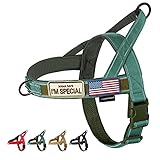
- [Premium No Pull Dog Harness] The wider soft padded inner is comfortable and friendly for dog's neck without dog's fur hurting. The back strap and chest strap inner is made of soft and breathable material that is comfortable for the dogs. And the front strap is better to prevent the dog from rushing forward. This design is maintain a long-time comfortable for walking,jogging,running,training,etc.
- [Reflective Strip] Reflective stitching along polyester webbing is not only add a sense of design to the safe for walking dog harness,but also increase a better visibility at dark under the light that it can keep the dog safe while walking.
- [Two Rings Design] The O-ring and D-ring is convenient and flexible to hang,they not only can connect well with dog leash,but also can hang ID tags,key,poop bag,etc.
- [Choose the Suitable Dog Harness] The no pull dog harness have FIVE sizes,XS is design 1 inch wide / S M L XL are design 1.5 inches wide for the small & medium and large dogs. PLEASE measure the size of the dog and refer the dimension chart to select the right one before buying.
- [Come with TWO Patches] There has a velcro area on the dog walking harness,and come with 2 patches, you can put the patches "MAMA SAY I'M SPECIAL" or the flag on the dog harness velcro area to make your dog unique.
Use calm handling
Keep the leash slack whenever possible and avoid sudden jerks. A harness reduces neck pressure, but a hard lunge can still strain the chest, shoulders, or back and can trigger panic. Choose quiet routes while your dog learns the equipment.
Watch effort, not just distance
Two dogs may tolerate very different distances. Slow down or turn home if your dog begins breathing faster than expected, repeatedly stops, stretches the neck to breathe, or cannot recover during a rest. Do not push through respiratory signs to meet a step target.
Remove the harness after the outing
Once the walk is over, take the harness off, inspect the skin, and allow the dog to rest in a cool, well-ventilated area. This also gives you a chance to notice delayed fatigue or irritation before the next session.
How do heat, humidity, weight, and fitness affect risk?
Heat and humidity are major hazards for short-muzzled dogs because they cool themselves less efficiently by panting. The Royal Kennel Club, Tufts, and PDSA all emphasize controlling exercise and avoiding hot or humid conditions. Walk during the coolest practical part of the day, provide access to water, and choose shade and ventilation over exposed pavement.
Do these 3 things before closing this tab:
1Clear out junk files and repair common Windows errors2Scan for outdated or missing drivers - takes under a minute3Repair Windows errors before they cause bigger problemsKeep your dog at a lean body condition. Excess weight increases respiratory workload and can turn moderate exertion into a crisis. Ask your veterinarian to assess body condition rather than relying on a target weight copied from another bulldog or crossbreed.
Also popular on Amazon

- No Pull, 2 Clips - With 2 sturdy metal hook loops for leash attachment. Use the front clip to create gentle redirection force, to reduce tugging during walks and training. While back clip is great for casual walks, jogging for well-behaved dogs
- Comfort, No Choke - Made from durable fabric with breathable mesh, this vest keeps them comfortable and cool during extended walks or active play. The pulling pressure is distributed evenly with soft padded —no rubbing, no irritation, just happy tails
- Easy to Wear & Adjust - Simply slip the harness over dog's head, snap the two quick-release buckles, and ready to go. 4 fully adjustable straps to create a perfect fit for your dog with room of growth. No worries about slipping out
- Built for Safety - Bright reflective strips ensure a safe walk both early morning walks or late night runs. The top handle helps to hold dog pulling immediatly, also can be used for car riding with safety
- X-Large Dog Harness - Chest: 21-38in. Recommended to Large Dogs, such as Golden Retriever, Anatolian Shepherd, Newfoundland, Labrador, Alaska, German Shepherd, etc. Please measure your dog's neck and check girth carefully before purchasing
Build fitness in small increments. A dog that has been sedentary, recently ill, or recovering from surgery may need a slower progression than a healthy adult. Your veterinarian can set limits based on airway anatomy, heart and lung findings, and the dog’s current conditioning.
What should I do if my dog becomes short of breath on a walk?
Stop the activity immediately. Move to a cool, quiet environment, keep the dog upright and calm, and allow rest. PDSA gives similar practical advice for breathing difficulty. Do not force the dog to continue walking, climb stairs, or lie in a position that seems to increase effort.
- Remove or loosen equipment only if doing so does not create an escape risk; never leave a struggling dog tethered.
- Observe gum and tongue color, chest and abdominal effort, alertness, and whether breathing improves with rest.
- Call your veterinarian for advice after any unusual episode, even if the dog appears better, because exertional distress can signal worsening airway disease.
Do not give human medication or attempt to cool a distressed dog with ice water. If breathing does not rapidly return to normal, treat the situation as urgent.
The Tool Desk
Outbyte PC Repair FREEClear out junk files and repair common Windows errorsFree Scan →Outbyte Driver Updater FREEFix the driver behind crashes, sound loss and screen glitchesFind Drivers →Which signs mean a bulldog cross needs emergency care?
Seek immediate veterinary care or go to an emergency hospital for laboured breathing, marked chest or abdominal effort, open-mouth distress, blue or grey gums or tongue, collapse, or rapidly worsening signs. These can indicate serious airway compromise. A respiratory crisis requires immediate transport rather than waiting to see whether a rest period solves it.
During transport, keep the vehicle cool and the dog as calm and upright as possible. Phone the clinic while travelling so staff can prepare. If your dog has repeated episodes, ask your veterinarian for a written emergency plan and the nearest suitable hospital before the next walk.
Also popular on Amazon

- No Pull, 2 Clips - With 2 sturdy metal hook loops for leash attachment. Use the front clip to create gentle redirection force, to reduce tugging during walks and training. While back clip is great for casual walks, jogging for well-behaved dogs
- Comfort, No Choke - Made from durable fabric with breathable mesh, this vest keeps them comfortable and cool during extended walks or active play. The pulling pressure is distributed evenly with soft padded —no rubbing, no irritation, just happy tails
- Easy to Wear & Adjust - Simply slip the harness over dog's head, snap the two quick-release buckles, and ready to go. 4 fully adjustable straps to create a perfect fit for your dog with room of growth. No worries about slipping out
- Built for Safety - Bright reflective strips ensure a safe walk both early morning walks or late night runs. The top handle helps to hold dog pulling immediatly, also can be used for car riding with safety
- Large Dog Harness - Chest: 17-33.4in. Recommended to Large Dogs, such as Labrador, German Shepherd, Siberian Husky, Schnauzer Giant, etc. Please measure your dog's neck and check girth carefully before purchasing
Does a bulldog cross still need a veterinary airway assessment?
Yes. A crossbreed can inherit clinically important airway anatomy, and appearance alone cannot show how severe the obstruction is. Arrange an examination if your dog snores loudly while awake, tires quickly, gags with leash pressure, struggles in warmth, or takes a long time to recover after mild exercise.
Your veterinarian can distinguish ordinary exercise intolerance from airway disease and identify other contributors to breathlessness. Bring details about weather, pace, distance, harness position, noises, recovery time, and any color change. That information helps the clinician decide whether management, testing, weight reduction, or specialist treatment is appropriate.
Free tools Windows power users keep installed
One-click scans. No signup required.
What is the practical collar-versus-harness choice?
| Consideration | Neck collar as leash attachment | Well-fitted body harness as leash attachment |
|---|---|---|
| Airway pressure | Force is concentrated at the neck and may worsen airway compromise. | Force is distributed across the torso and avoids direct throat pressure when correctly adjusted. |
| Movement | Does not restrict the legs, but may provoke coughing or distress when the dog pulls. | Should permit full front-leg movement; poor designs can rub or alter gait. |
| Escape risk | Usually difficult to back out of, but a slipping collar can injure the neck. | Can be escaped if loose or incorrectly oriented; test and supervise the fit. |
| Best use for this dog | Identification only, if comfortable and approved by your veterinarian. | Primary leash attachment for ordinary walks. |
| Evidence | Veterinary sources warn about airway pressure. | Veterinary sources consistently prefer a well-fitted harness, but no trial proves one model safe for every dog. |
Can a harness cure a breathing disorder?
No. A harness changes where leash force is applied; it does not widen narrowed nostrils, shorten an elongated soft palate, remove obstructive tissue, or correct a narrow trachea. It is one part of a broader plan that may include weight management, environmental control, fitness limits, and veterinary treatment.
What is the safest routine to follow?
- Use a torso-supporting harness for walks and keep all tension away from the throat.
- Check neck clearance, elbow comfort, front-leg movement, adjustment, and escape resistance before every outing.
- Introduce equipment gradually and supervise the dog whenever it is worn.
- Choose cool, low-humidity conditions, keep the dog lean, and increase activity slowly.
- Stop at the first sign of unusual breathing effort and seek urgent care for distress, blue or grey tissues, collapse, or rapid deterioration.
- Have a veterinarian assess any bulldog cross with recurring breathing or exercise problems.
Frequently Asked Questions
Can my bulldog cross wear a collar at home?
A comfortable collar may be acceptable for identification when it does not cause coughing, gagging, rubbing, or breathing changes. Remove it if it catches on furniture or if your veterinarian recommends a collar-free setup; never leave a dog wearing equipment that can snag when unsupervised.
How can I tell whether noisy breathing is an emergency?
Look at effort and color as well as sound. Increasing chest or abdominal effort, open-mouth distress, blue or grey gums or tongue, collapse, or rapid worsening requires emergency care rather than observation at home.
Are short walks better than one long walk for a dog with airway disease?
Short, controlled outings usually make it easier to stop before fatigue and to monitor recovery. The appropriate duration is individual, so use breathing quality and recovery—not a fixed distance—as your limit.
Recommended Free Tools
What if my dog refuses the harness?
Return to calm indoor exposure and reward brief contact before fastening it. Persistent fear, rubbing, altered movement, or breathing changes means the design or fit needs professional review; forcing the dog can create panic and unsafe pulling.





Leave a Reply