Windows Errors? Fix Them Before They Spread
Repair common Windows errors and clear accumulated junk for a smoother, more stable PC - no reinstall needed.Free scan · no reinstallOutdated Drivers Are Slowing You Down
One free scan finds every outdated or missing driver and matches the right update for your exact hardware.Free scan · exact hardware matchNo—not in the sense that the extinct dire-wolf species has been restored. Colossal Biosciences says it used ancient dire-wolf DNA to guide edits to gray-wolf cells and produced living animals through reproductive technology. The IUCN SSC Canid Specialist Group says those animals are not dire wolves; UCLA evolutionary biologist Bradley Shaffer likewise said, “Is it the dire wolf? Probably not,” while recognizing the gene-editing achievement.
The clearest description is gene-edited gray wolves intended to resemble dire wolves. Colossal calls the work “functional de-extinction,” but that is the company’s framing, not an independently settled biological conclusion.
What did Colossal say it created?
Colossal reports that it analyzed ancient dire-wolf DNA, identified traits it associated with the extinct animal, and made edits to gray-wolf cells. The company says it introduced 20 edits across 14 genes and used the edited cells to produce pups through reproductive technology. These are company-reported methods and figures, not independently verified conclusions in the sources reviewed for this article.
Colossal defines “functional de-extinction” as producing an organism that resembles and is genetically similar to an extinct species. That definition helps explain why the company describes its animals as dire wolves. It does not resolve whether they are the extinct species.
Quick wins for a faster PC:
Scan for outdated or missing drivers - takes under a minuteDriver Scan →Clear out junk files and repair common Windows errorsFree Scan →#1 Best Overall

- Material: The product is made of high-quality resin material, has a realistic shape, realistic scale, standard craftsmanship, light weight and strong. Is the welfare of animal lovers, can be used as specimens or decoration, but will become the most important focal point in your home.
- Wolf skull model: The cat skull is designed to provide you with tools for wolf research, so you can do in-depth research and learning to effectively combine the theory of theory with practice and improve learning efficiency.
- Size: A realistic cat skull, Size: size 26cm long, 13cm wide, 10.7cm high net weight: 450 grams, with the increasing popularity of modern handmade decoration, this statue will be the perfect choice for any room.
- Wolf Skull Statue: It is lightweight, tooth parts, small design, easy to recognise, easy to carry. Is useful equipment for student learning and ideal for treating treatment planning. Applicable to educational programs, demonstrations and student learning in schools and universities.
- Application: Photography Props Teaching Tool Home Ornament etc, Simulation, lifelike and vivid, approximating the weight and feel of real bone. Offers the natural environment feeling.
| Claim or evidence | What it establishes |
|---|---|
| Colossal says it analyzed ancient dire-wolf DNA. | According to the company, ancient genetic information informed its selection of edits. |
| Colossal reports 20 edits across 14 genes. | The company says it altered gray-wolf cells at selected locations; the number is not an independently verified result in the reviewed sources. |
| The edited cells were used to produce pups. | Colossal and the UC Santa Cruz Genomics Institute describe the animals as altered gray wolves. |
| Colossal calls the project “functional de-extinction.” | This is the company’s definition and interpretation, which the IUCN SSC Canid Specialist Group does not accept as proof that dire wolves have been restored. |
Why do experts dispute the word “resurrected”?
The animals have a gray-wolf genetic background
The IUCN SSC Canid Specialist Group says dire wolves and gray wolves are genetically distinct by thousands of genes, while Colossal targeted a small number of genes associated with traits. The group concludes: “The three animals produced by Colossal are not dire wolves.”
Bradley Shaffer, a UCLA professor and director of the La Kretz Center for California Conservation Science, gave a qualified assessment: “Is it the dire wolf? Probably not.” He also said the animals have some of the species’ features and described the work as a major gene-editing accomplishment.
The UC Santa Cruz Genomics Institute similarly describes the pups as altered gray wolves, not exact replicas, with traits associated with their extinct relative. The distinctions matter: an animal can carry selected edits or resemble an extinct species in some respects without being that species.
Selected traits do not settle species identity
Colossal says its edits were intended to bring back traits associated with dire wolves. But the IUCN SSC Canid Specialist Group’s assessment is that the work targeted only a small number of genes compared with the differences between the lineages. Appearance or selected traits alone do not establish that an extinct species has returned.
What’s actually slowing this PC down?
Pick the symptom - the matching free tool is one click away.
The sources reviewed for this article do not include a peer-reviewed primary paper detailing the complete project or independent genomic validation. That is a limitation of this research review, not proof that no such publication exists.
Three pups do not establish a restored population
The project’s reported production of pups does not itself demonstrate that a genetically diverse, self-sustaining population of dire wolves exists. The reviewed sources do not establish such a population or show that the extinct lineage has been restored.
Rank #2
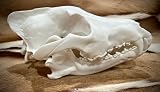
- Realistic, made from strong PLA filiment, light weight, built to last, Aproximate Dimensions 13Lx8Wx7H
What should we call the animals?
Use terms that make the source and claim clear. Colossal’s description and the IUCN SSC Canid Specialist Group’s assessment are different frames, not equivalent independent findings.
| Term | How to use it accurately |
|---|---|
| Gene-edited gray wolves intended to resemble dire wolves | A clear description that identifies the starting animals and the project’s aim. |
| Colossal’s so-called dire wolves | Useful when discussing the animals while signaling that the label is contested. |
| Colossal’s “functional de-extinction” project | Attribute this framing to the company; do not present it as an independently settled conclusion. |
| Resurrected dire wolves | Avoid as an unqualified statement. Explain that this is Colossal’s claim and is disputed by the IUCN SSC Canid Specialist Group. |
Does the project demonstrate a conservation benefit?
The IUCN SSC Canid Specialist Group says producing these pups does not contribute to conservation and cannot restore the extinct dire wolf’s former ecosystem role. It points to the loss of the animal’s ecological context and prey species, including mammoths and giant ground sloths.
Recommended Free Tools
Related biotechnology may have possible future applications, but those are distinct from a demonstrated benefit of these animals. The UC Santa Cruz Genomics Institute describes addressing genetic bottlenecks in threatened populations as a possible application. That proposal is not evidence that the dire-wolf project has helped a living population.
The IUCN SSC Canid Specialist Group emphasizes protecting living species, viable habitat, and functioning ecosystems. The conservation case for any future use of gene-editing tools should be judged separately from the claim that an extinct species has been brought back.
Independent reader supportYour contribution helps us test, update, and keep practical guides available for everyone.What do the experts agree on?
The sources support a narrower conclusion than the headline claim: Colossal reports using ancient-DNA analysis and gene editing on gray-wolf cells to produce pups with selected traits associated with dire wolves. The IUCN SSC Canid Specialist Group says those animals are not dire wolves and that their production does not contribute to conservation. Shaffer recognizes the technical achievement while saying they probably are not dire wolves.
Colossal’s “functional de-extinction” terminology should therefore be attributed to the company. The available sources reviewed here do not establish that the extinct species, a viable population, or its ecological role has been restored.
Do these 3 things before closing this tab:
1Repair Windows errors before they cause bigger problems2Scan for outdated or missing drivers - takes under a minute3Clear out junk files and repair common Windows errorsRank #3

- Designed for educational use in classrooms, laboratories, and biological study. Ideal for hands-on learning, teaching demonstrations, and comparative anatomy.
- Prompt fulfillment with careful packaging to ensure product integrity. Your order is handled with efficiency and attention to preservation.
- Crafted from durable, high-quality resin to replicate the anatomical features of real specimens. Each piece is molded to reflect natural bone structure, making it ideal for instructional or reference use.
- Hand-finished to ensure accuracy and consistency across educational collections. These replicas provide a reliable alternative to real bone while maintaining scientific value and visual detail.
- Suitable for display in classrooms, museums, or personal collections, providing a professional and accessible educational specimen.
Frequently Asked Questions
Did scientists bring back the dire wolf?
Colossal says it produced dire wolves through “functional de-extinction.” The IUCN SSC Canid Specialist Group says the animals are not dire wolves. A cautious description is gene-edited gray wolves intended to resemble dire wolves.
What did Colossal change in the wolves’ DNA?
Colossal reports making 20 edits across 14 genes in gray-wolf cells, using ancient dire-wolf DNA to inform its work. The figure and method are company-reported; independent validation was not included in the sources reviewed for this article.
Are Colossal’s animals real dire wolves?
The IUCN SSC Canid Specialist Group says they are not. UCLA’s Bradley Shaffer said, “Is it the dire wolf? Probably not,” while recognizing that the animals have some features associated with the species.
Could this gene-editing work help endangered species?
Possibly, but that is a proposed future application, not a demonstrated conservation benefit from these animals. The UC Santa Cruz Genomics Institute describes addressing genetic bottlenecks in threatened populations as one possible use of related biotechnology.
The Tool Desk
Outbyte PC Repair FREEClear out junk files and repair common Windows errorsFree Scan →Outbyte Driver Updater FREEScan for outdated or missing drivers - takes under a minuteDriver Scan →Does the project restore the dire wolf’s former ecosystem role?
No evidence in the reviewed sources shows that it does. The IUCN SSC Canid Specialist Group says the pups cannot restore the extinct animal’s former ecosystem role, noting that its ecological context and prey species are gone.
Sources behind this assessment
This assessment draws on Colossal Biosciences’ science page for the company’s methods and claims; the IUCN SSC Canid Specialist Group statement hosted by the International Wolf Center for its species-status and conservation assessment; UCLA’s commentary quoting Bradley Shaffer; and the UC Santa Cruz Genomics Institute’s account. Colossal is an interested party, and the reviewed sources do not include a peer-reviewed primary paper detailing the complete project or independent genomic validation.
Bottom line: Colossal reports producing gene-edited gray wolves with selected traits associated with dire wolves. The IUCN SSC Canid Specialist Group says they are not dire wolves, and the reviewed evidence does not establish that the extinct species or its ecological role has been restored.
Quick Recap
Product prices and availability are accurate as of the date/time indicated and are subject to change. Any price and availability information displayed on Amazon at the time of purchase will apply.




