Quick wins for a faster PC:
Fix the driver behind crashes, sound loss and screen glitchesFind Drivers →Repair Windows errors before they cause bigger problemsFix Now →Scan for outdated or missing drivers - takes under a minuteDriver Scan →Heleocola piceanus was a metatherian mammal described from fossils in Colorado’s Williams Fork Formation. The 2024 study identifies it as the oldest known member of the extinct family Glasbiidae. Its name refers to marshy depositional conditions, but the fossils do not establish that the animal lived in water.
What was Heleocola piceanus?
It was a newly named Late Cretaceous metatherian—a member of the broader mammal group that includes marsupials and their extinct relatives. Jaelyn Eberle and colleagues formally described the species in a paper published October 23, 2024, using fossils from the Williams Fork Formation in northwestern Colorado. Read the study in PLOS ONE.
The described material consists of a jaw fragment bearing lower molars and three isolated teeth collected at separate localities in the formation. It is not a complete skeleton. The jaw helped researchers clarify the animal’s identity after some isolated teeth had previously been assigned to other taxa.
When did it live?
The fossils come from late Campanian–early Maastrichtian strata of the Late Cretaceous. The study gives that geological interval; the available evidence here does not warrant converting it into a more precise age in millions of years.
#1 Best Overall
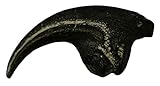
- The allosaurus was a large, theropod predator that lived roughly 156 to 130 million years ago and may have grown up to 39 feet (12 m) long
- Cast of the large toe ungual from the towering bipedal carnivorous dinosaur of the Jurassic
- The original claw was unearthed in the Morrison formation at the Cleveland-Lloyd Quarry in central Utah
- Detailed cast replica. 7 inches. Museum quality resin cast made in the USA
Why is it called swamp-dwelling?
The genus name Heleocola refers to a marsh or swamp, reflecting the depositional environment associated with the Williams Fork Formation. That name is not evidence that the mammal swam, was semi-aquatic, or depended on wetlands in life. The fossil description does not establish those behaviors.
How big was it, and what did it eat?
Estimated size
Using a regression based on lower molar length, the study authors estimated a body mass of 855–1,170 grams. They compared that tooth-based estimate with the mass of a modern muskrat. It is an estimate from dental measurements, not a body-mass measurement from a complete skeleton.
Rank #2
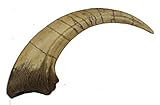
- Museum quality cast replica of a very large megaraptor claw (nearly a foot long)
- Original was found at the Rio Nequen Formation in Patagonia, Argentina
- Megaraptors (megaraptor namunhuaquii) were a large theropod of the Late Cretaceous period
Likely diet
The authors interpreted the relatively low, rounded molar cusps and other dental features as evidence of an omnivorous diet dominated by plants. Teeth provide indirect evidence of diet; they do not show exactly what an individual ate or how often.
Independent reader supportYour contribution helps us test, update, and keep practical guides available for everyone.What does the discovery add to mammal evolution?
The authors’ phylogenetic analysis places Heleocola piceanus as the sister taxon to Glasbius, meaning the two are inferred to be each other’s closest relatives among the taxa included in that analysis. They identify Heleocola as the oldest known member of Glasbiidae. The paper also describes it as relatively large among Late Cretaceous pediomyoids, a group of metatherians.
Quick Recap
Best Value

- Cast Replica Deinonychus Dinosaur Claw - 4 inches long
- Bonus Genuine Fossil Spinosaurus Dinosaur Tooth
- Claw Made In USA
Rank #4

- Replica Chirostenotes dinosaur claw – approx. 4.5 inches (11.43cm)
- Species: Chirostenotes pergracilis, Late Cretaceous (~76.5 million years ago), Alberta, Canada
- Realistic texture and anatomical accuracy – great for collectors, educators, and fossil enthusiasts
- Useful in paleontology education, museum displays, or as a unique prehistoric gift
- Display-ready fossil replica (stand not included)
Rank #3

- Utahraptor was a large theropod dinosaur that lived during the Early Cretaceous period, known for its sharp claws and hunting abilities
- This replica is based on a real Utahraptor fossil discovered in Utah, accurately capturing the shape and detail of the original claw
- The Utahraptor’s curved claw was used for gripping and slashing, making it a key tool for hunting prey
- Cast in durable resin, this 5.5-inch replica offers museum-quality detail and texture
- Made in the USA, this fossil reproduction is perfect for collectors, educators, and dinosaur enthusiasts
Product prices and availability are accurate as of the date/time indicated and are subject to change. Any price and availability information displayed on Amazon at the time of purchase will apply.




