Fish processing follows different routes rather than one universal factory line. After harvest, fish are handled carefully and chilled or frozen to limit deterioration; they may then be sold whole, prepared as fillets, preserved, or made into other products. The species, condition, intended product, and facility determine which steps apply.
Processing leftovers such as heads, bones, skin, and trimmings may also be recovered for products including fishmeal, fish oil, silage, or fertilizer. Not every fish passes through every step, and preservation methods are not interchangeable recipes.
The fish-processing journey from catch to consumer
Processing can begin aboard a vessel or at a farm and continue at a receiving facility. Fish are perishable, so careful handling, prompt chilling or freezing, clean equipment, and controlled transport matter throughout the supply chain.
- Harvest and handling: Fish are handled carefully and chilled or frozen as appropriate for the catch and intended product.
- Receiving: A facility receives and evaluates the fish and manages chilled or frozen storage.
- Sorting and preparation: Depending on the product, fish may be washed, gutted, headed, scaled, cut, or kept whole.
- Product-making: Fish may be sold fresh or frozen, or preserved through canning, drying, salting, smoking, or other methods.
- Packaging and storage: The product is packed and stored according to its processing route and intended market.
Some fish need only basic handling and packing; others are filleted, portioned, or further processed.
#1 Best Overall

- 【Premium High Carbon Steel】This professional fish fillet knife is made from high-quality Japanese stainless steel 10Cr15CoMoV, which makes the HOSHANHO fillet knife more durable, harder, and sharper than other meat knives. With a hand polished edge at 15 degrees per side, the boning knife can achieves ultimate sharpness.
- 【Excellent Cutting Results】With a 7 inch long, thin blade, the fillet knife makes it easy to slice, bone, trim, skin and butterfly different types of meat and fish. The slender blade helps to cut through fish bones and flesh with more precision and less waste, resulting in a neat and beautifully cut fillet.
- 【Ergonomic Design】The ergonomic shape of the fish knife's handle provides a more comfortable grip and reduces user fatigue. The handle of the boning knife is made of durable pakkawood, these materials have good resistance to corrosion and abrasion, which ensures a long service life of the fillet knife.
- 【Mutifunctional Use】In addition to easily cutting fish bones and removing fish scales, this fish knife can also be used to cut other types of meat. It is a practical and multifunctional kitchen tool, the frosted texture will be the most unique knife among all your knives and a perfect gift for your family and friends.
- 【Flexible and Lightweight】The blade of the fish knife is relatively soft and can better adapt to the shape of the fish ingredients, making it easier to operate and control. Its portability allows chefs to switch between different kitchen utensils more freely, improving work efficiency.
What does processed fish mean?
Processed fish does not necessarily mean canned or heavily altered. Washing, gutting, cutting, filleting, freezing, and packing are all steps used to prepare or preserve fish.
- Preparation: Fish may be washed, gutted, headed, scaled, cut, filleted, skinned, or trimmed.
- Preservation: Chilling, freezing, heat treatment, drying, salting, smoking, or changes to the package atmosphere may be used.
- Further use: Fish or processing by-products may be made into minced products, fishmeal, fish oil, silage, fertilizer, or other products.
The Codex sequence for fresh, frozen, and minced fish includes receiving, chilled or frozen storage, thawing where needed, washing and gutting, and then possible filleting, skinning, trimming, and inspection. These are options, not a mandatory checklist. See the FAO reference on preliminary fish processing.
What happens immediately after a fish is caught?
Fish can deteriorate quickly, so careful handling and prompt chilling or freezing are important. The exact approach depends on the fishery, catch, and product. Codex guidance covers catch handling, chilling or freezing, transport, and controls for fish susceptible to histamine formation.
Fish may be kept whole or prepared before transport. They may be chilled, frozen, or held under controlled conditions until they reach a processing facility. There is no single temperature or time that applies to every species and process.
What happens at a fish-processing plant?
Receiving and evaluation
At a facility, fish are received and evaluated before preparation. Handling, storage, and checks depend on the species and product. Sanitation and suitable temperature control are important throughout processing.
Rank #2
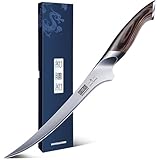
- 【Premium High Carbon Steel】This professional fish fillet knife is made from high-quality Japanese stainless steel 10Cr15CoMoV, which makes the HOSHANHO fillet knife more durable, harder, and sharper than other meat knives. With a hand polished edge at 15 degrees per side, the boning knife can achieves ultimate sharpness.
- 【Excellent Cutting Results】With a 9 inch long, thin blade, the fillet knife makes it easy to slice, bone, trim, skin and butterfly different types of meat and fish. The slender blade helps to cut through fish bones and flesh with more precision and less waste, resulting in a neat and beautifully cut fillet.
- 【Ergonomic Design】The ergonomic shape of the fish knife's handle provides a more comfortable grip and reduces user fatigue. The handle of the boning knife is made of durable pakkawood, these materials have good resistance to corrosion and abrasion, which ensures a long service life of the fillet knife.
- 【Mutifunctional Use】In addition to easily cutting fish bones and removing fish scales, this fish knife can also be used to cut other types of meat. It is a practical and multifunctional kitchen tool, the frosted texture will be the most unique knife among all your knives and a perfect gift for your family and friends.
- 【Flexible and Lightweight】The blade of the fish knife is relatively soft and can better adapt to the shape of the fish ingredients, making it easier to operate and control. Its portability allows chefs to switch between different kitchen utensils more freely, improving work efficiency.
Sorting and preparation
Fish may be sorted for their intended product. Depending on the species and route, preparation may include washing, gutting, heading, scaling, cutting, or keeping the fish whole.
Filleting and trimming
To make fillets, workers or equipment cut the fish and may skin, trim, and inspect the pieces. The steps vary by species and product. Inspection and suitable tools can help identify bones or other concerns; candling can help inspect certain fresh-fish species for parasites.
Preservation and packaging
Prepared fish may be chilled, frozen, canned, dried, salted, smoked, or otherwise packed. Each product needs handling and storage appropriate to its processing method. Packaging methods such as vacuum or modified-atmosphere packaging change the storage environment, but they are not substitutes for suitable process and storage controls.
Outdated Drivers Are Slowing You Down
One free scan finds every outdated or missing driver and matches the right update for your exact hardware.Free scan · exact hardware matchWindows Errors? Fix Them Before They Spread
Repair common Windows errors and clear accumulated junk for a smoother, more stable PC - no reinstall needed.Free scan · no reinstallCommon market forms and processing routes
| Product or route | Typical processing | Preservation or use |
|---|---|---|
| Whole fish | May be sorted, washed, and packed whole | Fresh or frozen sale |
| Fillet | Prepared by cutting; may be skinned, trimmed, and inspected | Fresh or frozen sale |
| Minced fish | Edible material is separated and processed | Further-processed products |
| Canned fish | Prepared, packed, sealed, and given a controlled heat process | Shelf-stable product |
| Dried, salted, or smoked fish | Uses one or more preservation treatments | Product-specific storage and use |
| Fishmeal and fish oil | Fish or fish parts are processed; a common route cooks, presses, separates, dries, and mills material | Feed and other uses |
These routes differ in intended product, preservation mechanism, handling and storage needs, and how fish or by-products are used. There is no universal ranking of their cost, quality, or sustainability.
How fresh and frozen fish are processed
Fish for fresh sale is chilled, packed, and held under refrigeration. Fish intended for frozen sale is frozen and kept in frozen storage. Some products may be glazed or packaged after freezing. The product and process determine the appropriate handling and storage requirements.
Rank #3
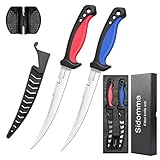
- 【Premium German Stainless Blades】Outstanding craftsmanship and convenient design combine with high-carbon stainless materials, Sidomma fishing knives incredibly sharp and durable
- 【Easy to Use】Non-slip handle, safe and comfort to grip. Serrated top edge bait knife makes cutting frozen bait and boning meat like butter. Sharp for fish cleaning, cutting meat, fruit and vegetable etc
- 【Easy to Carry】Light weight and come with protective knife sheath, easy and safe to carry with your fishing gear. 6.5” knife blade meets your needs easily, suitable for freshwater or saltwater
- 【What You Get】6.5 inch fishing knives x 2, protective sheath x 2, pocket knife sharpener x 1, elegant box x 1. It is a great fishing knives set for fisherman
- 【Clever Feature Design】Serrated structure on the back of blade can be used to remove fish scales. A clever bottle opener on the back of blade can be used to uncap bottles such as beer. Comes with a sharpener to keep your blade sharp
Freezing preserves the condition of the fish when it is frozen; it does not restore quality already lost through poor handling. Modified-atmosphere and vacuum packaging change the storage environment and have their own requirements.
How canned fish is processed
Canning involves preparing and packing fish into containers, sealing them, and applying a controlled heat process. The objective is commercial sterility and a shelf-stable product.
Do these 3 things before closing this tab:
1Scan for outdated or missing drivers - takes under a minute2Clear out junk files and repair common Windows errors3Fix the driver behind crashes, sound loss and screen glitches- Prepare the fish and container for the product.
- Pack the fish into the container.
- Seal the container.
- Apply the validated heat process for that product and container.
- Cool and handle the finished product according to the process.
There is no universal canning schedule. Codex guidance says the schedule must be established for the specific product and container, taking relevant factors into account, and checked and validated by a competent expert. Do not improvise a safe canning schedule.
Other ways fish are preserved
Preservation methods work in different ways, and may be combined. Common approaches include:
- Temperature reduction: Chilling or freezing.
- Heat treatment: Including canning, boiling, or smoking.
- Reducing available water: Drying, salting, or smoking.
- Changing the storage environment: Vacuum or modified-atmosphere packaging, often alongside refrigeration.
These methods extend shelf life or create different products, but they are not interchangeable recipes. Fish susceptible to histamine formation need appropriate controls from harvest through processing; cooking or canning should not be relied on to remove histamine already formed.
Rank #4
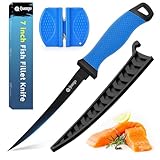
- Sharp G4116 German Stainless Steel Blade —— Queego fillet knife is crafted from G4116 Stainless Steel. The blade has ultra-sharp edge for easily filleting and cutting fish.
- Teflon Coating —— Teflon coating is more corrosion resistant and will maintain its edge longer to make the job of filleting and steaking fish quicker and more efficient than ever before.
- Non-Slip Polymer Handle —— Non-slip polymer handle is ergonomically designed for labor-saving and comfortable grip. The scaly textured polymer grip relieves wrist fatigue and prevents slipping in wet or dry condition, and ensures optimal maneuverability.
- Portable Knife Sharpener —— Easy-to-use knife sharpener for optimal fish filleting results. This double-sided safety sharpener features an angled ceramic plate to ensure your fillet knife maintains a sharp edge every time you use it.
- Protective Nylon Sheath – Each fillet knife includes a lightweight and durable nylon sheath that protects the blade and keeps you safe between jobs. The sheath is vented to allow for air circulation while allowing water to drain away which also improves corrosion resistance.
How fishmeal and fish oil are made
Heads, bones, viscera, skin, and trimmings may be recovered rather than discarded. Possible uses include fishmeal, fish oil, silage, fertilizer, animal-feed ingredients, and other products. Not every facility recovers every fraction, and by-products also need prompt collection and suitable handling because they are perishable.
FAO describes a common wet-pressing route for fishmeal and fish oil:
- Cook: Heat raw material to coagulate protein and release oil and water.
- Press: Separate much of the solid material from the liquid.
- Separate: Recover oil from the liquid and concentrate the remaining soluble material.
- Combine and dry: Combine the concentrate with the pressed solids and dry the material.
- Mill: Grind the dried material into meal.
Plants may use variations on this process. Whole small fish, trimmings, and other fish parts may be used as raw material.
How processing affects safety
Handling, sanitation, storage, and suitable process controls matter from harvest through distribution. Fish can involve microbial hazards, parasites, biotoxins, or bones, depending on the species and product. Inspection and appropriate tools are part of preparation, but requirements vary by product and jurisdiction.
Fish susceptible to histamine formation need careful handling and temperature control. Once histamine has formed, cooking or canning should not be relied on to remove it. For raw or undercooked fish, parasite controls may apply. Canned fish requires a validated heat schedule for its particular product and container.
The Tool Desk
Outbyte Driver Updater FREEScan for outdated or missing drivers - takes under a minuteDriver Scan →Outbyte PC Repair FREEClear out junk files and repair common Windows errorsFree Scan →Best Value

- PREMIUM PERFORMANCE – Perfectly engineered fish fillet knife tapered to a razor-sharp edge for effortless filleting, de-boning, trimming, skinning and butterflying of different types of fish & meat.
- RAZOR-SHARP BLADE EDGE – Hand sharpened edge at 14-16 degrees per side for maximum sharpness & edge retention ensuring precision slicing every time.
- COMFORT GRIP HANDLE - Luxury pakkawood handle that is triple-riveted for absolute stability that ensures comfort and maneuverability. Laminated and polished for a sanitary build, perfect for kitchens.
- PREMIUM GERMAN STEEL – Precisely forged of high-carbon German steel engineered to perfection at 56+ Rockwell hardness for long lasting performance, rust and stain resistant.
- LIFETIME WARRANTY - We’re proud to say we believe in our blades. Your Cutluxe fillet knife for fish comes with lifetime warranty against material or workmanship defects, purchase without risk
This article is an international overview, not a jurisdiction-specific regulatory guide. Codex guidance and national rules may differ. See the FAO processing reference for preparation guidance and FAO seafood quality assurance material for additional technical context.
FAQ
How do fish become fillets?
Fish are prepared and cut to separate the fillets. Depending on the product, the fillets may then be skinned, trimmed, and inspected. Not every species or process uses the same steps.
Is every fish gutted before processing?
No. Fish may be kept whole or gutted and prepared according to species, product, and intended market.
How is canned fish made?
Fish is prepared, packed into a container, sealed, and given a controlled heat process. The schedule must be validated for the particular product and container.
What’s actually slowing this PC down?
Pick the symptom - the matching free tool is one click away.
What happens to fish heads and bones?
They may be recovered along with skin, viscera, and trimmings for uses such as fishmeal, fish oil, silage, fertilizer, or animal-feed ingredients. Recovery varies by facility.
Does freezing make fish safe?
Freezing is one preservation method, but it does not address every hazard or restore quality lost before freezing. Controls depend on the product and intended use.
The Bottom Line
Fish processing is a set of product-specific routes, not one factory recipe. Careful handling and chilling or freezing begin soon after harvest; fish may then be prepared whole or as fillets, preserved, canned, or made into fishmeal and oil. The route depends on the fish and intended product, and its safety depends on suitable handling, processing, and storage controls.
Quick Recap
Product prices and availability are accurate as of the date/time indicated and are subject to change. Any price and availability information displayed on Amazon at the time of purchase will apply.
Free tools Windows power users keep installed
One-click scans. No signup required.




