Quick wins for a faster PC:
Repair Windows errors before they cause bigger problemsFix Now →Fix the driver behind crashes, sound loss and screen glitchesFind Drivers →Fish feed in different ways depending on their anatomy, food, and habitat: some suck in prey, while others bite, shear, crush, graze, pick food from surfaces, filter particles from water, or feed parasitically. Most fish swallow rather than chew like mammals, and a fish’s diet and feeding strategy can change as it grows.
Teeth, protrusible mouths, pharyngeal teeth, barbels, and gill rakers each serve different roles. Gills primarily exchange gases; in some species, associated structures such as gill rakers also help collect food.
How do fish feed themselves?
Fish use specialized combinations of movements and structures to capture and process food. Suction is one common method, but it is not universal: a fish may also bite, shear, crush, graze, pick small animals from a surface, filter organisms from water, or attach to a host and feed parasitically.
FishBase’s ecology reference groups diets broadly as herbivorous, carnivorous, or omnivorous. These categories are useful starting points, not a complete description of every species’ feeding behavior.
#1 Best Overall

- Easily Setup & 3 Kinds Smart Interval Feeding Modes: The Aoyar automatic fish feeder has 3 fixed feeding modes,just press the button on the settings page,it will automatically rotates feeding every 8/12/24 hours.Easily operation.You also can feed fish at any time via manaual modes ,enjoy the fun of feeding fish in your leisure time.(Small fish are recommended feeds every 24 hours).
- Adjustable Feeding Volume & 200ML Large Capacity: The aquarium fish feeder through adjusting the slider,easily control food amounts prevent overfeeding.Auto fish feeder capacity is 200ml, perfect fit your holiday.Auto fish feeder can feeding the fish at specified times when you're traveling or outing,Never worry about your fish is hungry.
- Upgraded Moisture Proof Lid: The fish food dispenser adopts the latest "moisture-proof" design, which can reduce more than 90% of water vapor entering the feed cylinder,effectively reducing moisture and clumping of fish food.Ensuring fish food keep dry and fresh status.
- Two Installation Methods: Our automatic fish feeding timer fit various types of fish tanks.You can fix it on the fish tank cover with thickness of 0 to 1 inch through adjustable clamp base,or using specially designed double-sided sticker to fix fish feeders on the cover of the tanks.360°rotating design makes you can adjust the fish feeder to the perfect place.
- Suitable for Variety of Fish Food:Auto fish food dispenser are suitable for variety of fish food, such as flakes, granules, powder and strips. No matter what type of fish food you prefer,our feeders are perfectly compatible.
What happens when a fish captures food?
Fish feeding can involve finding food, capturing it, moving it toward the throat, and swallowing or otherwise processing it. The details vary by species and by the type of food.
- Find food: The fish locates suitable food and positions itself to approach, graze, pick, or filter.
- Capture food: It may draw prey in with suction, bite or shear it, crush it, pick it from a surface, or retain particles from water.
- Move and process food: Depending on the species, food may be swallowed whole or processed with teeth or other structures.
- Digest food: Swallowed material passes into the digestive tract.
How does suction feeding work?
In suction feeding, a fish expands its mouth cavity, drawing water and nearby prey inward. A protrusible mouth can help create this flow and bring food within reach. Suction is a capture method, not a behavior used by every fish, and it may be combined with forward movement.
Nassau grouper use a protruding mouth to create suction and swallow prey whole. Sturgeon also suck food in with a protrusible mouth despite lacking teeth; their barbels help them sense prey. These examples show that suction feeding does not require one particular set of teeth.
How do fish use teeth if they usually swallow rather than chew?
Fish teeth can seize or shear prey, crush hard food, or help process food in the throat. Some fish have no teeth. Tooth shape and position vary with feeding strategy, so teeth do not all serve the same purpose.
What’s actually slowing this PC down?
Pick the symptom - the matching free tool is one click away.
| Feeding challenge | Structure or strategy | Example |
|---|---|---|
| Seizing or cutting animal prey | Sharp teeth and shearing jaws | Bluefish eat fish and squid. |
| Crushing shellfish | Broad, flat teeth | Rays can crush shellfish. |
| Grinding food | Pharyngeal teeth in the throat | Many grazing fish use them like grinding mills. |
| Sucking up bottom-dwelling food | Protrusible mouth and sensory barbels | Sturgeon suck up worms, mollusks, and crustaceans. |
The NOAA fishery leaflet on fish feeding anatomy describes how feeding structures vary. A fish may swallow food whole or process it mechanically, but that is not the same as mammal-like chewing.
Rank #2

- Accurate Food Amount :Compared with ordinary fish feeders with only one compartment, Petbank updated automatic fish feeder contains 16 grids in total, which is able to provide 15 individual meals, convenient to store a variety of food. Each grid holds up to 2g, ensuring high food accuracy. Note: Please don't store fish food at the outlet compartment
- 2 Setup Methods :Petbank aquarium feeder provides two different installation ways to fit different types of aquariums. You can either mount it to the tank by adjustable clamp base, or stick it on the tank cover with suction cup. Both methods are easy to operate, so you can choose any way to meet your needs
- Moisture-resistant Design: Unlike other auto fish feeder with one opening that is always on, making food inside wet or jammed easily, Petbank auto food dispenser is fully sealed against moisture, whose opening will close automatically after each feeding. This thoughtful design effectively keeps fish food dry. Petbank accommodates most types of food, such as particle feed, pellets, powders and small strips. Note: It’s not for shrimps and flakes
- Customized Feeding Time :With the help of intelligent LCD display and timer function, Our automatic fish feeder can be programmed up to 3 feedings per day, with maximum 3 grids per feeding. You can also set it to feed at any time of the day and have it deliver every single or two or three or four day. If you want to experience the fun of feeding, you can also choose manual feeding
- USB Rechargeable: Petbank rechargeable timer feeder features 700mAh built-in battery, which can be fully charged in 3 hours and then last up to 1 to 2 month. (type-C charging cable included). No need to buy batteries repeatedly, which is energy and cost saving
Do fish chew their food?
Most fish swallow rather than chew their food back and forth like mammals. NOAA Fisheries says, “Fish would suffocate if they tried to chew their food.” Its explanation is that chewing would interfere with water passing over the gills.
Fish can still bite, shear, crush, or grind food before swallowing. What they do depends on the species and its feeding anatomy.
How do filter-feeding fish eat?
Filter feeders take in water containing food and retain some of its organisms or particles with specialized structures. Whale sharks, for example, feed on plankton, small fish, larvae, fish eggs, and small shrimp-like organisms. Their gill rakers retain food while water exits; their teeth are not their main eating equipment.
Free tools Windows power users keep installed
One-click scans. No signup required.
Gill rakers are associated with the gill arches, but their food-collecting role should not be confused with the primary respiratory role of gills. Gills exchange gases as water passes over them. Filtering arrangements vary among fish, and not all fish feed by filtering water through gill-associated structures.
For more on how filtering and respiration work in fish, see NOAA Fisheries’ fish facts.
Rank #3

- Keep Your Pets Well-Fed: Don't let feeding time distract you from more important tasks! Our fish feeder automatic dispenser is here to help you not let your pets go hungry when you're busy, on vacation, or simply out of the house for the day.
- Programmable Up to 9 Feedings a Day: Set your pets to a routine with the help of our auto fish feeder! Even if you can't make it on time, it can be calibrated up to 3 feeding times a day with 3 rounds of the cup each.
- So Easy, Even Kids Can Do It: Our package includes clear and thorough directions for operating the vacation fish feeder. Once it's set, you can refill the food without removing it and simply reset the timer.
- Suitable for Big & Small Tanks: These FISHNOSH automatic fish feeders are ideal for different types of fishes, fish food, aquariums, and even ponds!
- A Gift for On-The-Go Fish Owners: Click 'Add to Cart' now and wrap our fish automatic feeder as an excellent gift for pet owners who have an active lifestyle, love traveling, and more!
What other ways do fish feed?
Fish also graze on plants, pick small animals from crevices or plant stems, and feed parasitically. Sea lampreys attach to host fish with a suction-cup mouth ringed with horny teeth and rasp flesh with a rough tongue. Bluefish use sharp teeth and shearing jaws to eat fish and squid.
These examples are not a complete list of feeding modes. Mouth shape and orientation, teeth, gill rakers, and digestive anatomy can offer clues to how a fish feeds, but no single feature is a universal guide.
Recommended Free Tools
What do fish eat in the wild?
Wild fish may eat aquatic plants, detritus, plankton, invertebrates, or other fish. Diet varies by species and can also change with life stage. NOAA’s fish classroom material gives examples of food categories found in aquatic ecosystems.
| Diet or feeding pattern | Possible foods | Possible feeding method |
|---|---|---|
| Plant-eating or grazing | Plants and plant material | Grazing, picking, or grinding |
| Animal-eating | Invertebrates, fish, or other animals | Suction, biting, shearing, or crushing |
| Filter feeding | Plankton and small organisms in water | Retaining food with filtering structures such as gill rakers |
| Parasitic feeding | Tissue or fluids from a host | Attaching to a host and feeding with specialized mouthparts |
Diet can change as fish grow. Nassau grouper adults eat fish, while juveniles also eat shrimp and crabs. Young black grouper primarily eat crustaceans, while adults mainly eat fish and squid.
Independent reader supportYour contribution helps us test, update, and keep practical guides available for everyone.How do gills help fish eat?
Gills primarily help fish exchange gases: water passes across delicate, blood-rich gill surfaces. In some fish, structures associated with the gill arches also help collect food. For example, whale shark gill rakers retain small organisms from water, and NOAA describes anchovy gill rakers as filtering microscopic particles.
Rank #4
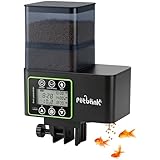
- Friendly Reminder Before Purchasing: INSTALL THE FEEDER ON THE AQUARIUM FIRST, THEN ADD DRY FISH FOOD. (Do not add food before installation, or the portion size may not be accurate.)
- Precise Portion Control for Healthier Feeding: This automatic fish feeder features a built-in high-precision weighing component, allowing you to set each feeding portion from 0.1 g to 2 g with an accuracy of about +/-0.1-0.2 g. Whether you keep small tropical fish or other aquarium fish with different feeding needs, you can better control daily portions, help reduce overfeeding, and make feeding routines more consistent and reliable
- Programmable Timer with Flexible Daily Feeding Plans: Schedule up to 5 feeding periods per day, with 1 to 3 feedings in each period for a more customized feeding routine. This is especially useful for fish that do better with smaller, more frequent meals. It also includes a manual feeding function, so you can feed anytime based on your preset amount without affecting the next scheduled automatic feeding
- Detachable 230/510 ML Hopper with Low-Food Reminder: The removable food container offers 230 ml and 510 ml capacity options, giving you more flexibility based on your tank setup and feeding schedule. This design gives you more choice for everyday use or short trips away from home. When food runs low, the screen will display "EPY" and flash alternately with the time as a reminder to refill, helping you avoid missed feedings caused by an empty hopper
- Moisture-Resistant Design Helps Keep Food Dry: This fish feeder automatic dispenser is designed with an auto-opening and auto-closing food door. After feeding is finished, the opening closes automatically to reduce long exposure to humid air, helping keep fish food drier inside the hopper. It works with most pellets, granules, and powder food. For strip food, grinding before use is recommended
This does not mean gills generally eat or digest food. The respiratory and food-collecting roles are distinct, and filtering structures vary among species.
FAQ
Do all fish use suction to eat?
No. Suction is one common capture method, but fish may also bite, shear, crush, graze, pick food from surfaces, filter particles, or feed parasitically.
Do fish have to have teeth to eat?
No. Sturgeon lack teeth but use a protrusible mouth to suck up food. Other fish use teeth to seize prey, shear it, crush shellfish, or grind food in the throat.
Do fish chew their food?
Most fish swallow rather than chew like mammals. They may still bite, shear, crush, or grind food before swallowing, depending on their anatomy and diet.
Do gills filter food?
Gills primarily exchange gases. In some fish, gill-associated structures such as gill rakers help retain food particles, but this is not a universal feeding method.
Does a fish’s diet change as it grows?
It can. For example, juvenile Nassau grouper also eat shrimp and crabs, while adults eat fish. Young black grouper primarily eat crustaceans, while adults mainly eat fish and squid.
The Bottom Line
Fish feed in varied ways: they may use suction, bite or shear prey, crush or grind food, graze, filter organisms from water, or feed parasitically. Teeth and gill-associated structures have different functions, and most fish swallow rather than chew like mammals. Diet and feeding strategy depend on the species and can change with age.
Quick Recap
Product prices and availability are accurate as of the date/time indicated and are subject to change. Any price and availability information displayed on Amazon at the time of purchase will apply.




