Recommended Free Tools
There is no dependable mileage limit for a lost dog. Start searching at the last confirmed sighting and use a roughly 1–2-mile radius as an initial working area—not a boundary. Expand or redirect the search based on how the dog escaped, whether it is likely to approach people or hide, local terrain, credible sightings, and the possibility that someone has picked it up.
How far should you search for a lost dog?
Begin at the place the dog was last definitely seen, even if that is not home. Search the nearby area thoroughly, then work outward. Pet FBI suggests a 1–2-mile target for several categories of lost dogs, and Montgomery County, Maryland, says most dogs are recovered within a two-mile circle. Those are practical starting points, not predictions for an individual dog or guarantees that it stayed nearby.
Expand beyond the initial area if the dog bolted in panic, the surroundings are open or sparsely populated, a road or trail offers an easy route, or a reliable sighting places it farther away. Dense development, fences, brush, slopes and busy roads can redirect movement; search likely corridors and safe, accessible hiding places rather than relying on a perfect circle. A dog may also have been transported by a finder, so distance from the last sighting does not always reflect how far it traveled on its own.
What changes where a lost dog is likely to be?
Temperament and fear
A sociable dog may approach someone and be taken in. A wary or frightened dog may avoid people, hide, or behave differently than it does at home—even around its owner. If you see a dog that seems fearful, do not chase it. Ask witnesses to report the time, exact location and direction of travel, then follow guidance from experienced local responders.
Free tools Windows power users keep installed
One-click scans. No signup required.
#1 Best Overall

- REAL-TIME GPS TRACKING WITH UNLIMITED RANGE: Track your dog’s live location nationwide with updates every 2-3 seconds—up to 30x faster than competitors who only update once per minute. Perfect for keeping an eye on your dog no matter where they roam.
- VIRTUAL FENCES & LOCATION HISTORY: Set up safe zones and receive alerts when your dog leaves the area. Activate live tracking immediately to recover your dog, and review their location history to see where they've been.
- HEALTH & ACTIVITY MONITORING: Monitor your dog’s daily health, sleep patterns, and activity levels through the Tractive app, available on iOS and Android, so you can keep them in optimal shape.
- LIGHTWEIGHT, WATERPROOF DESIGN & LONG-LASTING BATTERY: This lightweight tracker is waterproof and rugged enough for outdoor adventures. The battery lasts up to 10 days, with extended life using Power Saving Zones.
- RISK-FREE TRIAL: This bundle includes 6 months of free premium service to cover all the costs of the integrated SIM card and data. No additional activation fee is required to start tracking your pet!
How the dog got loose
A dog that wandered while following a scent may move differently from one that bolted after a loud noise or another frightening event. Panic can lead a dog to run several miles, so do not assume a short elapsed time means it is still near the escape point.
Terrain, weather and time
Barriers and cover shape where a dog can travel and hide. Severe weather may change how far it moves or where it seeks shelter. If few people were outside when it escaped, it may have traveled without being seen. Treat these as clues for prioritizing routes and places to check, not as inputs to a precise mileage formula.
Rank #2
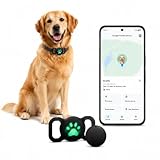
- 【📱 Works with Google Find Hub – Android Only】This dog tracker connects exclusively to Google Find Hub. Unlike tractive gps dog tracker, no monthly fee. Your pet tracker for dogs updates location when near any active Android device (phone/tablet/Wear OS). Not for iOS.
- 【🔋 1-Year Replaceable Battery – No Charging】Forget weekly charging like other dog gps tracker collar devices. This gps tracker for dogs runs 12 months on one CR2032 battery. Simple replacement – perfect for tracking collar for dogs.
- 【💧 IP67 Waterproof & Durable】Rain, mud, puddles, lake splashes – no problem. This gps dog collar is fully sealed. Your dog collar tracker stays protected during outdoor adventures. Rinseable after dirty exploration.
- 【🌐 How Location Works – Google Find Hub Network】This dog gps does NOT have standalone satellite GPS. Your pet tracking device appears in Google Find Hub when your dog passes near any Android phone or tablet. Best for areas with good pet gps tracker network density (suburbs/cities).
- 【🐾 Lightweight Breakaway Safety Collar】This dog collar with tracker includes a breakaway buckle for safety. The dog tracking collar weighs under 1.5 oz – comfortable for daily wear. A reliable pet gps for indoor/outdoor dogs. Gps para perros designed for comfort.
People who may have found the dog
In a busy area, a dog may be noticed, stopped, taken home or brought to an animal agency. That can make the location where it is eventually found a poor measure of its own travel. Search both the physical area and the reporting network: shelters, animal services, rescue groups and nearby veterinary practices.
What to do immediately
- Search from the last confirmed location. Check nearby hiding places, including small or covered spaces, and listen as well as look. Ask neighbors for permission before entering private property. Fairfax County Animal Services advises starting immediately and checking the area thoroughly.
- Use familiar cues and prepare to secure the dog. Try familiar food, a favorite toy or recognizable noises. Keep a leash or another safe means of containment ready. A bright flashlight can help at night or when checking dark places during the day. A sighting is useful even if the dog does not come when called.
- Give witnesses clear instructions. Share a current photo, description, last-seen location and time, and a reliable way to contact you. Ask people to report sightings without chasing or frightening the dog. Put up visible notices nearby; Fairfax County recommends distributing flyers within one to two miles.
- Contact animal agencies and shelters early. File a lost-pet report, ask about each agency’s reporting and identification procedures, and check neighboring jurisdictions. Call and, where useful, visit. A study of owners in Montgomery County, Ohio, found that contacting and visiting animal agencies and posting neighborhood signs were associated with a higher likelihood of recovery.
- Check with rescue groups and veterinary practices. A finder may take the dog to a clinic or transfer it through a rescue organization. Ask nearby organizations how they record found animals and handle identification.
If a dog is found, identification can speed reunification. For England and Wales, DEFRA guidance directs local authorities to check tags and scan for a microchip as soon as it is safe to do so. Procedures differ by jurisdiction, so follow local instructions.
Rank #3

- REAL-TIME GPS TRACKING WITH UNLIMITED RANGE: Track your dog with live location updates every 2–3 seconds. Unlike others that update once a minute, Tractive lets you follow every step with no distance limits, anywhere in the world.
- VITAL SIGNS MONITORING: The Tractive smart tracker monitors changes in your dog’s heart and respiratory rates, helping detect potential issues before they become visible.
- HEALTH & BARKING ALERTS: The tracker learns your dog’s normal behavior and detects changes. If it notices unusual sleep, activity, or barking patterns, you’ll receive an alert so you can take action early.
- ESCAPE ALERTS & LOCATION HISTORY: Create custom virtual fences around your yard, dog park, or neighborhood. Get instant alerts if your dog leaves and review location history to retrace their steps.
- LONG-LASTING BATTERY, LIGHTWEIGHT & WATERPROOF: Tough yet light enough for any dog over 8 pounds. Fully waterproof, with up to 14 days’ battery life. Now featuring a brighter LED and louder sound for easier tracking.
How to interpret the published recovery numbers
Published recovery rates and distance figures describe particular samples and methods. They cannot tell you how far your dog will travel or guarantee an outcome.
| Source and figure | What it describes | How to use it |
|---|---|---|
| Lord et al., Journal of the American Veterinary Medical Association (2007): 71% recovered; median recovery time two days | Owners of 187 dogs lost in Montgomery County, Ohio, between June and September 2005 were surveyed; 132 dogs were reported recovered. Reported recovery time ranged from 0.5 to 21 days. Recovery routes included calls or visits to animal agencies, license tags and neighborhood signs. | A local owner survey, not a national distance estimate. It supports using agency contact and visible neighborhood notices as part of a search. |
| Weiss et al., Animals (2012): 93% of lost dogs recovered | A national telephone survey based on retrospective household interviews and landline sampling. | The sample and method differ from the Ohio study; the percentage is not a guarantee for an individual dog. |
| Human Animal Support Services (2025): 95% traveled at most 1.8 miles beyond safe zones | Fi GPS-collar company data about dogs wandering outside designated safe zones. | Useful context, but company-derived data about safe-zone wandering are not equivalent to a representative sample of missing dogs. |
| Saint Mary’s University of Minnesota graduate thesis | Geographic analysis of lost-and-found records from three municipalities in southeastern Minnesota. | Local records and methods can inform geographic analysis, but the results should not be generalized to all dogs or settings. |
The evidence above does not provide a broadly applicable, nationally representative mileage forecast for an individual lost dog. Avoid treating a single distance, recovery percentage or breed-based rule as decisive.
Quick Recap
Product prices and availability are accurate as of the date/time indicated and are subject to change. Any price and availability information displayed on Amazon at the time of purchase will apply.




