
The Tool Desk
Outbyte PC Repair FREERepair Windows errors before they cause bigger problemsFix Now →Outbyte Driver Updater FREEScan for outdated or missing drivers - takes under a minuteDriver Scan →Some links on this page are affiliate links: if you buy through them we may earn a commission, at no extra cost to you.
For most dogs, plan a human break at about four hours rather than leaving them alone for an entire work shift. The RSPCA, PDSA and the UK DEFRA code of practice use roughly four hours as a routine maximum, while stressing that age, toilet control, training, health, previous experience and temperament can shorten it. An eight-hour absence may be physically manageable for some well-trained adult dogs, but it is not a welfare target. Puppies may need a toilet opportunity every one to two hours, and older or unwell dogs may need more frequent care. If you work a standard eight-hour day, arrange a midday walker, sitter, trusted neighbor or daycare visit and check the dog on video rather than assuming a quiet house means a comfortable dog.
How long can I leave my dog alone while I am at work?
The practical answer is to organize a break around the four-hour mark for an otherwise healthy, trained adult dog. The UK DEFRA Code of Practice says experts recommend four hours as the maximum period, and both the RSPCA and PDSA give similar routine guidance. These are welfare-oriented planning limits, not a guarantee that every dog will be comfortable for that long.
As an Amazon Associate I earn from qualifying purchases.
Age, bladder capacity, medical needs, prior experience and emotional response can move the limit in either direction. A dog that has never learned to be alone may become distressed within minutes, while a settled adult with a history of calm absences may cope better. The relevant question is not simply whether the dog can physically hold urine; it is whether the dog can remain relaxed, safe and appropriately exercised until a person returns.
Dr. Vint Virga, a board-certified veterinary behaviorist quoted by the American Kennel Club, puts the issue plainly: “For a dog to spend all of their day alone is too much.” A full workday therefore normally needs a planned interruption, even when the dog is house-trained.
Popular on Amazon

- [Treat Distribution] Our food dispenser has differently sized spheres at both ends. As dogs push the toy, it moves within a fixed area, allowing dogs to continuously chase and play with it. During movement, food is dispensed from the food holes on both sides of the toy.
- [Adjustable Switch] Each of the two spheres with a food dispensing switch, making it suitable for various sizes and types of pet dry food or snack. The switch can be adjusted according to the different sizes of dog food. It also allows control over the amount of food dispensed, extending or shortening the time it takes for pets to obtain food. It is more conducive to a healthy dog diet.
- [Increase Pet Intelligence] This dog treat puzzle toy combines intellectual training with food rewards. When pets push this toy, it will not only be to get delicious food, but it will also stimulate their intelligence and hunting instinct. This design not only meets the needs of pets but also encourages them to learn and grow in the game.
- [Prolonged Play] The dog enrichment toy is designed to limit the amount of treats your dog gets while encouraging more extended playtime. This is intended for effective playtime for dogs and is NOT a chewed toy. It is also dog boredom buster toys and best dog gift to keep them busy when dogs are left home alone, relief anxiety.
- [Attract Dogs' Attention] With barbell shaped design and bright color, the dog puzzle toy ball can attract your dog's attention, stimulate their curiosity and drive them crazy to roll it. Size: 6.1*3.44*3.44in/15.5*8.7*8.7cm.
A planning guide by life stage
| Dog or situation | What the evidence supports | Workday implication |
|---|---|---|
| Healthy, trained adult | About four hours is the routine maximum cited by RSPCA, PDSA and UK DEFRA guidance. | Schedule a person to visit during an eight-hour shift. |
| Well-adjusted adult with exceptional tolerance | AKC’s cited veterinary behaviorist describes six to eight hours only as a maximum without a chance to relieve itself, not as a daily recommendation. | Do not treat the upper limit as permission to skip a break; watch for distress and provide toilet access. |
| Puppy | Bethany Hsia, DVM, says puppies may need to relieve themselves every one to two hours. | Use much shorter absences and arrange several visits or daytime care. |
| Senior or dog with illness or medication needs | Health and age can increase bathroom and supervision needs. | Set the interval with your veterinarian and the dog’s observed comfort, not an adult-dog rule. |
| Dog showing separation-related distress | There may be no dependable fixed interval; some dogs react almost immediately. | Reduce absences, begin behavior work and seek veterinary or clinical behavior support. |
The figures in the table are guidance from the named organizations and clinicians, not a substitute for observing an individual dog. A dog that remains relaxed for two hours but panics at three needs the shorter interval.
What factors decide a dog’s safe alone time?
There is no universal stopwatch because several interacting factors determine whether an absence is tolerable.
What’s actually slowing this PC down?
Pick the symptom - the matching free tool is one click away.
Age and bladder control
Puppies have limited bladder capacity, incomplete house-training and a strong need for frequent sleep, meals and social contact. Four hours may already be excessive for a very active young puppy, even if an adult dog in the same home manages it. Senior dogs can lose bladder control or develop pain, cognitive changes or other conditions that make long gaps harder. A medical diagnosis, medication schedule or increased thirst can also change bathroom timing.
Training and previous experience
Alone time should be built up in small increments. A dog that has always had company, moved house, been rehomed or experienced a frightening routine change may struggle sooner than its age would suggest. RSPCA guidance is explicit: never extend the interval until the dog is distressed. The dog’s calm behavior during practice is the criterion for progressing, not a calendar target.
Temperament and health
Some dogs settle readily; others develop separation-related distress quickly. Pain, gastrointestinal disease, urinary problems or medication effects can mimic or intensify anxiety. When a previously comfortable dog suddenly vocalizes, toilets indoors or destroys objects, arrange a veterinary assessment rather than assuming disobedience.
Also popular on Amazon

- 【For Treat Dispensing Play】Made of ABS and nylon, this puzzle toy is designed for rolling, nudging, and treat-reward play. It is not intended as a chew toy and is best for dogs with gentle to moderate play styles.
- 【Mental Enrichment Through Movement】Dogs learn to roll and chase the toy to release rewards, adding interactive feeding and mental engagement to indoor play. A good fit for small to medium dogs that enjoy treat puzzles and food-motivated games.
- 【Adjustable Openings for Different Reward Speeds】The dispensing opening can be adjusted to change how quickly treats come out. Works best with small dry kibble, freeze-dried treats, or similar-sized dry rewards; oversized, sticky, or irregular treats may affect flow.
- 【Best Used Under Supervision】This toy is made for guided enrichment sessions, especially while your dog is learning how it works. Supervise early use, and remove the toy after treats are finished, especially for dogs that may switch from rolling to chewing.
- 【Detachable Design for Cleaning】Twist open the toy to fill and clean the inner parts more easily. Hand wash or dishwasher cleaning can be used after play; cleaning promptly after use helps reduce food residue buildup.
Exercise, food and the home routine
A suitable walk or exercise session, a toilet opportunity and a predictable departure routine can make settling easier. RSPCA advice suggests returning home about half an hour before leaving when possible, so the dog can calm down rather than transitioning directly from vigorous activity to isolation. Exercise is preparation, not a way to justify an otherwise excessive absence.
Do these 3 things before closing this tab:
1Clear out junk files and repair common Windows errors2Scan for outdated or missing drivers - takes under a minute3Repair Windows errors before they cause bigger problemsCan my dog stay home alone for eight hours?
An uninterrupted eight hours can be physically possible for some trained adult dogs, but it conflicts with the routine four-hour welfare guidance and should not be assumed safe. The AKC’s cited six-to-eight-hour figure is a ceiling without a chance to relieve itself, not an endorsement of an eight-hour daily work shift. Even a dog that does not soil the house may be pacing, trembling or silently distressed.
If your shift lasts eight or nine hours, divide it with a reliable human visit. The visitor should allow a toilet break and appropriate movement, and should provide social contact suited to the dog. For dogs that need more interaction, a longer sitter visit or daycare may be more suitable than a quick door opening. If no person can visit, reconsider the schedule, workplace arrangement or care plan rather than expecting the dog to adapt to an unsuitable interval.
How long can a puppy be left alone?
Puppies need substantially shorter absences than adult dogs. Bethany Hsia, DVM, says they may need to relieve themselves every one to two hours; young, active puppies may need the shorter end of that range. Their training, feeding, sleep and socialization needs also make a full workday inappropriate.
Start with separations brief enough that the puppy remains relaxed and returns to normal immediately. Increase duration only after repeated calm successes, and arrange visits that match the puppy’s current toilet interval. A puppy should not be expected to jump from a few minutes of practice to an eight-hour absence simply because it slept through the night; nighttime sleep and daytime confinement are different situations.
Also popular on Amazon

- RUBBER MATERIAL: HIPPIH treat dispensing dog ball is made of extra-tough rubber with good elasticity, good for your sweet dog grinding and fresh their teeth. ( Blue color-2.75 in, Green color-3.14 in, suitable for medium and large dogs. Not suitable for miniature small dogs, such as Yorkshire Maltese, etc) NOTE: The dog puzzle ball must be wider than your dog's mouth
- STRONG TOOTH: HIPPIH blue dog ball can effectively help strong their teeth and won't hurt pets gums. The green one can put the food in to improve the interest of your cute dogs.
- IMPROVE INTELLIGENCE & IQ TRAINING: HIPPIH dog toy ball can easily attract your pet's attention, help pets intelligence improving and is convenient to train dogs. HIPPIH dog ball toys are perfect for interaction with your dog, promoting the bond between you and your dog.
- FOR AMUSEMENT: Perfect for fetch and interaction with your dog. You can add food or treats into the grooves and this keeps your dog entertained and active. HIPPIH IQ treat ball allow you have more interactive fun with your pets.
- BEST GIFT FOR PETS: HIPPIH dog toys ball can reduce the dog's destructive behavior, protect the home shoes, socks, sheets, sofa are not afraid of dog bite. Your naughty active dogs will be love it to kill the boring time. This dog rubber ball is best gift for your sweet dog.
Is it okay to leave a dog in a crate while I work?
Crating does not make a long absence safe. RSPCA crate guidance says it is never acceptable to shut a dog in a crate all day while working; successfully crate-trained adults are normally left for about three hours, with puppies for less time.
A crate can be a voluntary resting place when introduced positively, but it cannot provide a toilet break, exercise or human contact. Never use it to contain a dog that is barking, panting, trembling, trying to escape or repeatedly soiling itself. Arrange a visit or a larger, dog-proof area instead, and shorten the next absence if the dog shows distress.
What should a workable workday schedule include?
Build the day around the dog’s demonstrated comfortable interval, then add human care before that interval expires.
- Prepare before departure. Provide an age-appropriate walk or exercise session, allow the dog to toilet, and feed a small meal if that fits its normal routine. When possible, return home about 30 minutes before leaving so the dog has time to settle.
- Leave a safe activity. RSPCA examples include a special toy, a food-stuffed Kong toy or a treat ball or cube. Remove the treats from the dog’s daily food allowance and inspect every item for suitability and damage risk.
- Schedule the break. Book a midday dog walker, pet sitter, trusted neighbor or daycare visit before the dog reaches its comfortable limit. Confirm what the visitor will do: toilet access, movement, water, medication and any feeding instructions.
- Monitor the absence. Use an indoor pet camera or occasional video checks to look for pacing, trembling, whining, barking or inability to settle. A camera is an observation tool, not a replacement for a person’s visit.
- Adjust from evidence. If the dog reacts, shorten the next separation and revise the care plan. Do not punish destruction or accidents after returning; scolding can worsen fear and separation-related behavior.
What are the signs that a workday absence is too long?
Obvious signs include barking, howling, indoor toileting, destruction, pacing, trembling, whining, inability to settle and extreme excitement when the owner returns. These behaviors can reflect distress rather than boredom or spite.
Recommended Free Tools
Quiet dogs can still be struggling. RSPCA information cites research suggesting eight out of 10 dogs find it hard to cope when left alone, while half show no obvious signs. Periodic video can reveal frozen posture, repetitive pacing, panting or prolonged watching of the exit that would otherwise be missed. Look at what happens throughout the absence, not only the greeting at the door.
Also popular on Amazon

- Mealtime, Playtime, and Exercise in One Dog Puzzle Toy: Most dogs don’t get enough daily activity, leaving them restless and understimulated. The Walkabout slow feeder turns mealtime and playtime into a full-body workout, rolling and wobbling unpredictably so your pup can exercise while eating or playing. Adjustable for all treat and kibble sizes, including Woof Puzzle Treats, it challenges your pup’s mind, burns energy, and makes every meal a fun, engaging adventure.
- Enrichment Made Easy: More than a mealtime tool, the Walkabout stimulates your dog’s natural instincts to sniff, chase, and problem-solve. Its rolling, wobbling design keeps pups curious and engaged, turning everyday feeding into a rewarding enrichment activity.
- How to Use: The Walkabout is fully adjustable, so you can customize the challenge for your pet. The treat dispenser lets you set both the size of the treats and how quickly they come out. The rotator has five different hole sizes to match your pet’s skill level, plus a lock-out zone you can use when traveling or storing food.
- Fits Treats of Any Size: The adjustable dial allows you to control difficulty and fill the dog treat dispenser toy with kibble, treats of any size, or Woof Puzzle Treats. This flexibility ensures your dog stays entertained and challenged no matter their size or diet.
- Durable and Easy to Clean: Made with scuff-resistant, quiet rubber, this easy-to-clean puzzle dog toy is built for energetic play indoors or outdoors. Its dishwasher-safe design makes cleanup simple, so you can keep your dog moving and happy with minimal effort.
If behavior changes suddenly, have a veterinarian check for pain or another medical cause. If health problems are excluded and the dog remains distressed, a clinical behaviorist may be needed. Do not keep lengthening absences in the hope that the dog will “get used to it”; repeated panic can make future departures harder.
Which midday care option fits a full-time job?
Choose the arrangement that covers the dog’s actual needs, not merely the owner’s calendar. Availability, supervision quality, local cost and the dog’s tolerance for other people or dogs vary, so confirm details with each provider.
| Option | Toilet and exercise coverage | Social contact and supervision | Best match |
|---|---|---|---|
| Dog walker | Usually provides a scheduled outing and toilet opportunity; duration depends on the service. | One professional visit; ask whether walks are solo or grouped. | Dogs that settle at home but need a break during a shift. |
| Pet sitter or drop-in visit | Can be tailored to toileting, feeding, medication and gentle activity. | In-home contact with less environmental change. | Puppies, seniors, dogs needing medication or dogs uncomfortable in groups. |
| Trusted neighbor or friend | Can provide a basic toilet and movement break if reliably scheduled. | Familiar person may reduce stress; clarify backup arrangements. | Dogs comfortable with that person and households with dependable support. |
| Daycare | Offers extended daytime care rather than a single break. | More continuous human and canine contact, subject to the facility’s supervision and group setup. | Dogs that genuinely enjoy group environments and need more than a short visit. |
Use the comparison factors emphasized by veterinary and welfare guidance: age and bladder needs, proven comfort alone, toilet and exercise coverage, social contact, enrichment, medication, supervision quality, cost and local availability. A cheap or convenient option is not suitable if it leaves the dog beyond its safe interval.
Free tools Windows power users keep installed
One-click scans. No signup required.
How do I teach a dog to stay alone calmly?
Training works by preventing panic and increasing duration only while the dog remains relaxed.
- Establish a baseline. Use a camera or direct observation to find the longest interval during which the dog lies down, eats normally and shows no distress.
- Begin below that point. Leave for a very short period, return calmly and repeat until the dog consistently copes.
- Increase in small increments. Add time only after relaxed repetitions. Vary departures so the dog does not learn that one exact duration predicts a frightening event.
- Step back at the first reaction. If barking, pacing, trembling or frantic greeting appears, make the next separation shorter. RSPCA guidance says never extend the interval until the dog is distressed.
- Pair practice with normal care. Provide exercise, a toilet opportunity and safe enrichment, while keeping food portions within the daily allowance.
Training cannot remove biological toilet needs or replace a midday visit. It teaches the dog that brief, predictable absences are safe; it does not turn every dog into an eight-hour-alone dog.
Also popular on Amazon
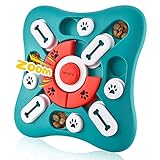
- 【PRODUCT SIZE】10 inch*10 inch*1.3 inch.
- 【3 WAYS TO PLAY, UPGRADE SLOW FEEDER】Our dog mental stimulation toys have a unique squeak button in the middle, which make it easier to attract the attention of dogs and cats. Three different difficulty designs and the 16-hole dog treat dispenser design maximize slow feeding time, even beyond 20 minutes.
- 【FUNNY STIMULATING TOYS】All kinds of dogs and cats love the puzzle game of Spin & Slide and the Seek & Hide with their smell sense and paw skills to find food. Combining circular orbit sliding game and linear orbit sliding game, smart dog and cat must move the slider correctly to get the food reward hidden in the maze.
- 【NON-REMOVABLE PARTS DOG PUZZLE】Our dog treat puzzle is made of non-toxic materials, very durable and suitable for pets to play for a long time. This dog toy has no removable parts because the design has built-in play parts that fold tightly and won't fall off easily.
- 【ANTI-SLIP & EASY TO CLEAN】: The four corners of the bottom are equipped with four anti-skid pads, which can be well fixed during the dog's slow food process; It is easy to clean, also dishwasher safe.
What should I do if my dog has an accident or destroys something?
Clean the area without confrontation and review the timing of the absence. An accident may indicate that the interval exceeded bladder control, while destruction or vocalization can signal anxiety, boredom or an untreated medical problem. Punishment after the fact is ineffective because the dog cannot connect a delayed reprimand with the earlier behavior, and RSPCA and veterinary guidance warn that scolding can intensify fear.
Shorten future absences, add a human break and use video to identify when the behavior begins. If the dog cannot remain calm even for brief separations, involve a veterinarian and, where appropriate, a clinical behaviorist rather than relying on confinement or repeated exposure.
Quick wins for a faster PC:
Scan for outdated or missing drivers - takes under a minuteDriver Scan →Repair Windows errors before they cause bigger problemsFix Now →Fix the driver behind crashes, sound loss and screen glitchesFind Drivers →How should I monitor a dog that appears quiet?
Place a camera where it shows the dog’s resting area and exit route, and review different parts of the absence rather than only the first few minutes. Check for repeated pacing, trembling, whining, fixed attention at the door, inability to settle or frantic activity before the owner returns. A calm greeting alone does not prove that the preceding hours were comfortable.
Use what you see to set the next departure length and to brief a walker, sitter or veterinarian. Monitoring should lead to a shorter interval or better support when distress appears; it should not be used to justify leaving the dog longer because no noise was heard.
Frequently Asked Questions
Does every dog need a walker during a nine-to-five job?
Not every dog needs the same service, but a full shift usually requires a person to break up the absence. A walker may suit a settled adult, while a puppy, senior or medicated dog may need a sitter with a tailored visit; dogs needing sustained company may be better candidates for daycare.
How can I tell whether my quiet dog is actually coping?
Silence is not proof of comfort. Video different portions of the absence and look for stillness, pacing, trembling, panting, exit-watching or an inability to settle, then shorten the interval if any pattern appears.
What if my dog suddenly stops coping with time alone?
Arrange a veterinary assessment because pain, illness, urinary problems or medication effects can cause a sudden behavior change. After medical causes are addressed, reduce separations and seek a qualified clinical behaviorist if distress continues.
Can enrichment toys replace a midday toilet break?
No. Food-stuffed toys and treat balls can support calm settling, but they do not provide bathroom access, exercise or a welfare check. Treats also need to come out of the dog’s daily food allowance, and toys should be inspected for suitability.





Leave a Reply