Quick wins for a faster PC:
Clear out junk files and repair common Windows errorsFree Scan →Scan for outdated or missing drivers - takes under a minuteDriver Scan →A filled, dechlorinated freshwater tank may need just 24–48 hours to settle while you check its temperature and equipment. That does not mean its biological filter is ready: wait until ammonia and nitrite have fallen to zero and stay there before adding fish. Fishless cycling takes several weeks, so use water tests—not a fixed number of days—to decide when to stock.
“Sitting” and cycling are different. The first lets you check the setup; cycling matures the filter so beneficial bacteria can process fish waste. Once the filter is mature, add fish gradually and keep monitoring water quality.
Key takeaways
- OATA recommends running a filled, dechlorinated tank for 24–48 hours to check equipment and, in a tropical setup, allow the temperature to stabilize. This is not a cycling period.
- Fishless filter maturation takes several weeks; there is no universal calendar date for adding fish.
- Wait until ammonia and nitrite have fallen to zero and remain at zero.
- Fishless cycling avoids exposing fish to ammonia and nitrite peaks. OATA advises that fish-in cycling requires great care and retailer guidance.
- Stock gradually and continue testing because the filter needs time to accommodate a larger waste load.
- Dechlorinating tap water is a setup requirement, not a replacement for biological cycling.
How long should a freshwater tank sit before adding fish?
Let a filled, dechlorinated tank run for 24–48 hours to check that its equipment works and its temperature is suitable and stable. Then wait for the biological filter to mature. OATA describes fishless maturation with calculated ammonia dosing over several weeks, but the calendar alone cannot establish readiness.
Add fish only after tests show that ammonia and nitrite have fallen to zero and stay at zero. Once those readings remain stable, begin stocking slowly rather than adding the planned population all at once.
Do these 3 things before closing this tab:
1Clear out junk files and repair common Windows errors2Fix the driver behind crashes, sound loss and screen glitches3Repair Windows errors before they cause bigger problems#1 Best Overall

- Professional Quality Testing Kit: The AAwipes Aquarium test kit (50 strips) is developed by experts for fish enthusiasts. It offers 8-in-1 testing capabilities, made with high-quality fiber paper and non-bleeding colors. The kit measures key parameters like Free Chlorine, Nitrate, Nitrite, Hardness, Sodium Chloride, Total Alkalinity, pH and Ammonia nitrogen. By identifying potential issues, our fish tank testing kit helps prevent hidden water problems and ensures the safety and well-being of your fish.
- Versatile Use for Freshwater and Ponds: This aquarium water test kit is versatile and suitable for both freshwater and saltwater environments. It can be used in various aquariums, fish tanks, ponds, pools, and shrimp tanks, making it easy to monitor water quality and ensure your filter functions properly. Experts recommend testing your aquarium water at least twice a week to maintain optimal water quality.
- Fast and Accurate Results: Get accurate results in minutes with just 3 steps: 1) Dip the test strip into water for 2 seconds for pads 1-7; dip pad 8 (Ammonia nitrogen) separately for 5 seconds. 2) Remove the strip without shaking off excess water. Hold horizontally for 30 seconds for pads 1-7, wait 180 seconds to read Pad 8 (Ammonia nitrogen). 3) Compare the colors to the chart for up to 99% accuracy and take necessary action.
- Extended Shelf Life: The test strips are packaged in a well-sealed bottle to ensure they remain effective over time. This protects the strips from moisture and other environmental factors, ensuring you have reliable testing materials on hand when needed.
- Convenient Use: With this kit, you can test your aquarium water at home without the need to send samples to a lab, saving you both time and money. Enjoy peace of mind knowing your aquarium water is balanced and safe without the stress or extra expense.
What does letting a new aquarium sit accomplish?
The initial settling period lets you check that the filter and other equipment operate correctly and that the water reaches a suitable temperature. OATA assigns 24–48 hours to this setup check; it does not say that this period completes biological cycling.
A clear tank or a running filter is not evidence that the aquarium can process fish waste. The filter still needs to mature, and water-test results are the practical way to assess readiness.
What does a cycled freshwater tank do?
Beneficial nitrifying bacteria grow in the filter media and convert ammonia from fish waste and uneaten food into nitrite, then convert nitrite into nitrate. Ammonia and nitrite are toxic to fish; nitrate is less toxic and still needs ongoing management through appropriate care and partial water changes.
During filter maturation, ammonia and nitrite can rise before falling, while nitrate commonly rises as the process advances. Keep the filter running and test the water rather than relying on elapsed time, clear water, or a bacterial product.
The Tool Desk
Outbyte PC Repair FREEClear out junk files and repair common Windows errorsFree Scan →Outbyte Driver Updater FREEScan for outdated or missing drivers - takes under a minuteDriver Scan →Can I add fish after 24 hours?
No. A 24–48-hour settling period is for checking the setup, equipment, and temperature. It does not show that the biological filter has matured. Wait until ammonia and nitrite have fallen to zero and remain there.
Rank #2
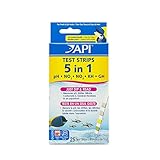
- Contains one (1) API 5-IN-1 TEST STRIPS Freshwater and Saltwater Aquarium Test Strips 25-Count Box
- Monitors levels of pH, nitrite, nitrate carbonate and general water hardness in freshwater and saltwater aquariums
- Dip test strips into aquarium water and check colors for fast and accurate results
- Helps prevent invisible water problems that can be harmful to fish and cause fish loss
- Use for weekly monitoring and when water or fish problems appear
| Milestone | What it tells you | What it does not tell you |
|---|---|---|
| 24–48 hours of operation | The filled, dechlorinated setup has had time for equipment checks and temperature settling. | That the biological filter is mature or ready for fish. |
| Several weeks of fishless cycling | The filter is being matured using a calculated ammonia dose over time. | That a particular date guarantees readiness. |
| Ammonia and nitrite at zero and staying at zero | OATA’s stated criterion for a mature filter; stocking can continue slowly. | That the aquarium can accept a full population at once. |
How do I know when a freshwater tank is ready for fish?
Use water tests and the aquarium’s suitability for the intended species—not the tank’s age—to judge readiness. Before adding fish:
- Test the water: Check ammonia, nitrite, nitrate, and pH with a freshwater test kit.
- Confirm the key readings: Ammonia and nitrite should be zero and remain at zero. A single reading is not proof that the filter can handle an ongoing waste load.
- Check the setup: Confirm that the equipment works and the aquarium’s size, temperature, water conditions, and habitat suit the species.
- Treat tap water: Dechlorinate it as appropriate before use. This does not cycle the filter.
- Plan compatible stocking: Consider fish compatibility, schooling needs, and territorial behavior.
Nitrate levels and management depend on the species and local water conditions. Follow appropriate species-specific advice rather than relying on one universal nitrate threshold.
How long does a fishless cycle take?
OATA describes fishless cycling with calculated ammonia dosing over several weeks. That is a general process, not a guaranteed finish date for every aquarium. Test the water during maturation and wait for ammonia and nitrite to fall to zero and stay there.
What’s actually slowing this PC down?
Pick the symptom - the matching free tool is one click away.
Fishless cycling matures the filter without exposing live fish to ammonia and nitrite peaks. Follow the instructions for any aquarium maturation product or ammonia source you use, and do not add fish while deliberately dosing ammonia.
- Set up and dechlorinate the aquarium, then run it for the initial equipment and temperature check.
- Use a calculated ammonia dose as directed for fishless maturation.
- Test ammonia, nitrite, nitrate, and pH as the filter matures.
- Wait until ammonia and nitrite have fallen to zero and remain at zero.
- Begin stocking gradually and continue monitoring water quality.
Is fish-in cycling safe?
Fish-in cycling means fish are present while the biological filter is maturing, so water quality needs particularly careful attention. OATA advises undertaking it only with great care and retailer guidance to protect fish welfare. It is not a shortcut that makes an uncycled tank safe.
Rank #3
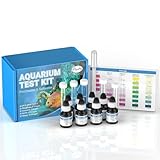
- 5-in-1 Master Test Kit: Monitor all 5 critical water parameters – pH, nitrite, nitrate, ammonia, and phosphate – in one comprehensive aquarium test kit. The rigorous analysis helps you maintain an ideal haven for your aquatic friends
- Freshwater & Saltwater Application: This aquarium water master test kit works perfectly for both freshwater and marine fish tanks. Precise color-matching charts are included – simply compare your water’s hue to the color swatches for instant results
- Enhanced Accuracy: Using professional liquid reagents, the aquarium water test kit delivers high accuracy that far exceeds traditional test strips. Get laboratory-quality results every time, safeguarding a stable and enjoyable fish tank environment
- Regular Testing: Complete with 265 measurements across all parameters – pH (100), nitrite (45), nitrate (50), ammonia (30), phosphate (40). This fish tank water testing kit supports months of consistent monitoring to keep your aquarium perfectly balanced
- Essential Fish Care: Your trusted solution to prevent fish loss from fatal ammonia, nitrite buildup, or pH imbalances! Proper water quality maintenance ensures your aquatic pets stay healthy and your plants thrive in optimal conditions
If fish are already in the aquarium, monitor water quality and seek qualified, species-specific help. Do not add more fish until the aquarium is ready.
| Approach | What to know | Guidance |
|---|---|---|
| Fishless cycling | Matures the filter without exposing fish to ammonia and nitrite peaks. | Use a calculated ammonia dose and follow product instructions; verify readiness with tests. |
| Fish-in cycling | Fish are present while the filter matures, so water quality requires particular care. | OATA advises great care and retailer guidance; seek qualified help and monitor water quality. |
| Starter bacteria or maturation products | Proprietary bacterial cultures may help kick-start filter maturation. | Use as directed, but confirm readiness with water tests. |
| Gradual stocking | More fish and feeding increase the waste load the filter must process. | Add fish slowly and keep testing as the filter adjusts. |
Do starter bacteria make a tank safe immediately?
Proprietary bacterial cultures may help kick-start filter maturation when used as directed, but a product is not proof that a particular aquarium is ready for fish. Continue testing and wait until ammonia and nitrite have fallen to zero and stay there.
What is the difference between dechlorinating water and biological cycling?
Dechlorinating tap water and cycling a filter address different needs. Treat tap water as appropriate before adding it to the aquarium; biological cycling establishes the bacteria that process ammonia and nitrite from fish waste. Dechlorinated water can still be in an aquarium with an immature biological filter.
Independent reader supportYour contribution helps us test, update, and keep practical guides available for everyone.How should I add the first fish after cycling?
Once ammonia and nitrite remain at zero, begin with a small, compatible group suited to the aquarium. The filter’s bacterial population needs to accommodate the increased waste load, so adding fish too quickly can cause water-quality problems.
- Check that the aquarium’s size, temperature, water conditions, and habitat suit the chosen fish.
- Choose a compatible initial group and consider schooling and territorial needs.
- Acclimate fish according to species-appropriate or retailer guidance.
- Feed appropriately and avoid rapid increases in fish numbers or feeding.
- Test water regularly after stocking, including for ammonia and nitrite.
- Add more fish gradually, monitoring water quality as the filter adjusts.
What should I do if ammonia or nitrite is above zero?
Do not add fish while ammonia or nitrite is above zero. If fish are already present, monitor water quality closely and seek qualified, species-specific advice or retailer guidance. Treat tap water as appropriate and continue testing rather than assuming a short period of clear water means the filter is mature.
Rank #4
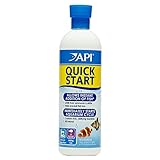
- API QUICK START – Allows instant addition of fish when starting a new aquarium or adding fish.
- Fast and Effective – Reduces compounds harmful to fish when used routinely.
- Safe for Fish – Helps prevent fish loss in freshwater and saltwater aquariums or fish tanks.
- How to Use – Use when starting a new aquarium, when adding new live fish, and when changing water and filter media.
- Why API Products? – For over 60 years, we've been a leader in the aquatics industry, developing and perfecting products and solutions for indoor aquariums and outdoor ponds. Today, our family of products includes treatments, testing, and nutrition.
Can clear water prove that an aquarium is cycled?
No. Clear water does not measure ammonia or nitrite and cannot prove that the biological filter is mature. Use water tests and stock gradually.
Bottom line
A freshwater tank may need 24–48 hours to settle while you check equipment and temperature, but it needs longer for the biological filter to mature. Fishless cycling takes several weeks, and fish should be added only when ammonia and nitrite have fallen to zero and stay there. Stock gradually, monitor water quality, and seek species-specific guidance where needed.
FAQ
Can I add fish after 24 hours?
No. Twenty-four to 48 hours is an equipment and temperature settling period, not proof that the biological filter is mature. Wait until ammonia and nitrite are zero and stay at zero.
How long does a new freshwater tank take to cycle?
OATA describes fishless ammonia dosing over several weeks. The time varies, so test the water and use stable zero ammonia and nitrite—not a calendar date—to determine readiness.
How do I know when my aquarium is cycled?
Test the water. OATA’s criterion is that ammonia and nitrite have fallen to zero and stay at zero. Then stock gradually and keep monitoring.
Recommended Free Tools
Do starter bacteria make a new aquarium safe immediately?
They may help kick-start filter maturation when used as directed, but they do not prove the aquarium is ready. Verify readiness with water tests.
Quick Recap
Product prices and availability are accurate as of the date/time indicated and are subject to change. Any price and availability information displayed on Amazon at the time of purchase will apply.




