
Some links on this page are affiliate links: if you buy through them we may earn a commission, at no extra cost to you.
For a U.S. dog or cat adopted from a shelter or rescue, plan on a low-thousands first-year budget rather than only the adoption fee. The ASPCA’s illustrative 2021 budget comes to $3,221 for a dog and $1,904 for a cat, before adding a separately stated adoption fee. Your actual total depends on location, age, size, health, coat, supplies, licensing and which veterinary services the shelter has already paid for. Ontario figures from the Ontario Veterinary Medical Association are higher, showing why geography matters.
How much does it cost to adopt a dog or cat in the first year?
The first-year cost is the adoption fee plus setup purchases, routine care and a reserve for less predictable needs. In the ASPCA’s illustrative U.S. budget, the listed annual, one-time and special expenses total the following amounts; the table does not contain a separate adoption-fee line.
As an Amazon Associate I earn from qualifying purchases.
Quick wins for a faster PC:
Fix the driver behind crashes, sound loss and screen glitchesFind Drivers →Clear out junk files and repair common Windows errorsFree Scan →Scan for outdated or missing drivers - takes under a minuteDriver Scan →| Pet | ASPCA illustrative first-year costs | What the total combines |
|---|---|---|
| Dog | $3,221 | $1,030 in one-time costs, $1,391 in annual costs and $800 in special costs ($300 professional grooming and $500 dental care) |
| Cat | $1,904 | $455 in one-time costs, $1,149 in annual costs and $300 in special dental care |
These are planning examples, not national price quotes. Add your local fee and check the shelter’s written inclusions before buying services yourself. A pet whose adoption fee includes sterilization, vaccines and a microchip may cost less at the point of adoption than a pet that needs those procedures after you take it home.
What does an adoption fee include?
Shelter and rescue fees often pay for substantial veterinary work, but every organization sets its own package. Zoetis says fees commonly include a veterinary examination, spay or neuter surgery, initial vaccinations, deworming, diagnostic tests, flea and tick treatment and a microchip. Registration of the microchip, however, may still require an owner step.
Popular on Amazon
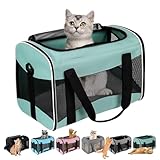
- [PRODUCT DIMENSIONS] Pet travel carrier size : 17x11x11 inches, recommended up to 15 lb pets, it is suitable for large, medium cats and small dogs. Please don't choose your airline cat carrying case based on weight, please refer to your pet's length and height when choosing a pet carrier size.
- [AIRLINE APPROVED] This cat carrier is designed with airline approved, it can fit comfortably under most flight seats, we can take our pets wherever we want. Dog travel carrier offers two attachment loop handles that can be used as a dual harness or as a luggage strap for balanced carry and secure transport.
- [EXCELLENT MATERIAL] Collapsible cat carrier is made of polyester fabric, supported by a steel ring, washable, wear-resistant and durable. The three sides and the top of this pet carrier are nylon mesh, scratch-resistant and not easy to damage, it can not only check your pet in real time, but also ensure enough air circulation.
- [SAFE AND COMFORTABLE] Dog travel bag has metal zippers on the top and side entrances, durable and not easy to deform, it allows your pets to enter and exit easily. The cat carrying case is equipped with an anti-escape safety buckle, which can effectively prevent pets from accidentally falling. It is suitable for car rides and vet rides.
- [PORTABLE AND FOLDABLE] Pet travel carrier comes with a detachable and hand washable wool pet bed, it can provide a comfortable sleeping space for your traveling pet. The cat travel case comes with an adjustable shoulder strap and handle for easy portability. When not in use, you can fold it up for storage.
Questions to ask before signing
- Has the pet been spayed or neutered, and is the surgery already included?
- Which vaccines were given, on what dates, and when are boosters due?
- Was the pet tested or treated for worms, fleas, ticks or other parasites?
- Is the microchip implanted and registered to me, or do I need to complete registration?
- Does the fee include a health certificate, starter food, license, follow-up examination or post-adoption medical support?
A fee waiver does not necessarily mean a free pet. If a waived fee also removes sterilization, vaccines or parasite treatment, those obligations become your first veterinary bills.
Why local prices vary
Tacoma Humane’s published schedule illustrates how age changes the fee: puppies are $305, adolescent dogs $205, adult dogs $180 and senior dogs $85; kittens are $140, adult cats $80 and senior cats $35. Tacoma says its adoption package includes a wellness examination, spay or neuter, initial vaccines, a microchip, counseling and post-adoption support. ASPCA New York City suggests a $150 adoption fee and lists an additional $8.50 license fee for spayed or neutered dogs. These schedules are local examples, not a national standard.
What one-time costs should I expect after adoption?
Setup expenses are concentrated in the first weeks. The ASPCA’s illustrative one-time budget separates medical work from equipment, while Zoetis provides broader ranges for common procedures and supplies.
| One-time item | Dog (ASPCA example) | Cat (ASPCA example) |
|---|---|---|
| Spay or neuter | $300 | $150 |
| Initial medical costs | $300 | $175 |
| Collar, leash or harnesses | $60 | $15 |
| Microchip | $20 | $20 |
| Carrier | $50 | $40 |
| Crate or litter equipment | $60 crate | $20 litter box |
| Training or scratching equipment | $200 training assets | $15 scratching post |
| Grooming tools | $40 | $20 |
| Total | $1,030 | $455 |
Zoetis gives wider starting ranges: dog vaccines $75–$200, spay or neuter $100–$300, microchip $25–$50 and supplies $100–$200. For cats, vaccines are $50–$100, spay or neuter $50–$150, microchip $25–$50 and supplies $50–$100. Use these only for services not already included by the shelter; otherwise you will count the same treatment twice.
Also popular on Amazon
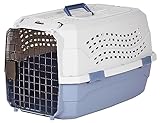
- Hard sided pet carrier with 2 doors for front and top entry; suitable for cat or medium size dog weighing 12 - 20 pounds
- Durable plastic construction with steel wire doors; screws keep the top and bottom sections securely connected
- Spring load latches ensure easy one-handed door opening and closing; top door swings open to the left or right and includes a top carry handle
- Plenty of air ventilation on the sides, top, and back of the carrier
- Note: Be sure to measure the size of the pet when choosing carrier size
What recurring costs belong in a first-year budget?
Food, preventive care and consumables continue after the adoption appointment. The ASPCA’s 2021 illustrative annual lines are itemized below.
| Annual item | Dog | Cat |
|---|---|---|
| Food | $300 | $225 |
| Routine medical care | $225 | $160 |
| Parasite prevention | $185 | $140 |
| Toys | $37 | $22 |
| Treats | $60 | $36 |
| Health insurance | $516 | $348 |
| License | $15 | $15 |
| Grooming supplies | $28 | $28 |
| Total annual lines | $1,391 | $1,149 |
Zoetis shows the possible spread more clearly. Dog food is typically $250–$800 per year, veterinary care $200–$500, grooming $150–$500 and insurance $200–$700. Cat food is $120–$500, veterinary care $150–$400, grooming $0–$100 and insurance $150–$600. Breed, body size, age, coat, health, region and the care choices you make explain much of that variation. Litter is a separate recurring cat expense; the ASPCA example assigns $150 per year.
Free tools Windows power users keep installed
One-click scans. No signup required.
Which special or emergency costs should I plan for?
Routine totals cannot predict every bill. The ASPCA example adds $300 for professional dog grooming and $500 for dog dental care, plus $300 for cat dental care. Those are illustrative allowances, not universal charges, but they demonstrate why a contingency fund matters.
Build a reserve before you need it
Keep money available for an illness, injury, diagnostic test or urgent treatment that falls outside routine care. The right reserve depends on your income, access to low-cost clinics and the pet’s age and medical history. Ask the shelter for records so you can identify ongoing medications, prior injuries or recommended follow-ups before setting the amount.
Also popular on Amazon

- High Quality Design:Sturdy steel cage structure and wooden support board maintain good spatial stability and shape. Breathable mesh windows on four sides,which can ensure good air circulation and views,make pets have a comfortable and safe travel.It can also be easy for you to check on your pets.There is a front pocket to store pet toys,treats,etc.
- Dimension and Weight:Made of durable tear-resistant fabric.Four easy entrances for pets. Dimensions: 17 inch x 11 inch x 11 inch (L*W*H), suitable for pets up to 16 lbs.Please don't choose your carrier based on weight only,consider your pet's length and height when choosing a carrier.
- Airline Approved & Safty:Can be placed under the seats of most airplanes(Four non-slip feet on the bottom to prevent movement), and comfortably on the seat next to you in a car or bus.It has a adjustable shoulder strap.Can also be fastened to the car seat with a safety belt or shoulder strap to keep your pet safe.
- Easy to Clean :You can clean the stains and dirt on the surface with a soft cloth.Soft mat inside the pet carrier is removable and washable.You can take it out and wash it easily to solve all stains.
- Easy to Collapsible & Lightweight:When not in use,fold it into a flat,space saving and easy to store.Only 2.2lbs,it's easier to carry around.It can also used as a toy of pet house,allowing pets to play in a safe space to relax and rest.
Evaluate insurance by the policy details
Insurance is optional and the ASPCA line is not a quote. Compare the deductible, reimbursement percentage, annual or per-condition limits, exclusions for pre-existing conditions and waiting periods. Obtain the policy wording for your state and pet rather than assuming that preventive visits, dental treatment or hereditary conditions are covered.
How do Ontario costs compare with U.S. examples?
Ontario provides a useful geographic warning, but its figures should not be blended into a U.S. average. The Ontario SPCA, citing the Ontario Veterinary Medical Association, reports these annual-care estimates:
| Pet in Ontario | Reported annual cost |
|---|---|
| Puppy | $4,589–$4,666 |
| Dog | About $3,724 |
| Kitten | $3,091–$3,231 |
| Cat | About $2,542 |
The puppy and kitten ranges likely reflect the heavier first-year schedule for young animals, while adult estimates are lower. Currency, provincial pricing, clinic fees, taxes and what each estimate includes differ from the ASPCA’s U.S. table, so use the Ontario figures as a local planning reference only.
How can I create a realistic personal budget?
Start with the pet in front of you, not a generic national average. A written estimate from the shelter and one local veterinary clinic will usually be more useful than an online calculator.
Also popular on Amazon

- Pet Carrier: 17.5” L x 11” W x 11” H, Recommended max load of 16 lbs cats small dogs. Please do not choose your carrier based on weight--please reference your pet's length and height in selecting a pet carrier size.
- Fits for under-seat dimensions of most airlines. Every airline has a specific set of rules and regulations, please contact with airline before flying with your cats small dogs.
- Mesh windows for ventilation, top and side entry with locking zippers for safety. Carrying handles, adjustable shoulder strap which can also be used as seatbelt, and back strap can fasten the pet carrier to your luggage.
- Pet carrier comes with a removable base insert, which creates a solid surface for your pet to stand on, along with a removable & hand washable cozy fleece pet bed, which offers a cozy sleeping space for your traveling cats small dogs.
- "Toys for pets, of textile materials". Mostly used as a Toy of Fabric Pet Home for pets playing and relaxing.
- Record the adoption package. List every included vaccine, surgery, test, parasite treatment, microchip service and follow-up visit, including due dates for boosters.
- Add the local fee and licensing. Confirm whether the license is purchased through the shelter, your municipality or a separate government office.
- Price the first veterinary visit. Ask the clinic for an examination fee, likely tests and medication costs based on the animal’s records and age.
- List essential equipment. Dogs generally need a collar, leash or harness, secure crate, food and water bowls, identification and grooming tools. Cats need a secure carrier, litter box and litter, scratching post, bowls and grooming tools.
- Estimate consumables for twelve months. Use the pet’s current food, expected adult size, parasite schedule and litter use rather than the cheapest shelf price.
- Set aside a contingency amount. Keep it separate from routine spending so a dental procedure or urgent visit does not force you to skip preventive care.
- Review the plan after the first month. Replace estimates with actual food use, grooming frequency, medication and clinic prices once you know the pet’s routine.
Are shelter pets cheaper than pets from other sources?
They can be less expensive at the point of adoption because shelters often absorb sterilization, vaccines, identification and parasite care. “Cheaper,” however, depends on the animal’s age, size, health history and what the fee covers; a low-fee pet needing immediate treatment may cost more during the first month than a higher-fee pet with a complete medical package.
| Comparison point | What to verify |
|---|---|
| Total fee | Published price, taxes, licensing and any required deposits |
| Veterinary inclusions | Exam, sterilization, vaccines, tests, parasite treatment, microchip and follow-up |
| Pet profile | Age, adult size, breed traits, coat, medications and known conditions |
| Ongoing care | Food quantity, grooming frequency, litter use and exercise or training needs |
| Local support | Low-cost clinics, licensing rules and post-adoption counseling |
| Insurance terms | Deductible, reimbursement, exclusions, waiting periods and limits |
Comparing these fields gives a fairer answer than comparing adoption-fee stickers alone.
What supplies do I need before adoption day?
Buy only the essentials that match the shelter’s instructions and the animal’s current size. Overspending before you know the pet’s habits can leave you with unusable equipment.
Dog essentials
- Adjustable collar with identification and a properly fitted leash or harness
- Secure crate sized for the dog’s current body and sleeping position
- Food and water bowls, the current diet and measured treats
- Waste bags, safe toys and basic grooming tools
- Car restraint or another secure way to travel home
Cat essentials
- Secure carrier for the adoption trip and future veterinary visits
- Litter box, litter and a scoop placed in a quiet, accessible area
- Food and water bowls, the current diet and modest toys
- Scratching post or pad and basic grooming tools
- Identification and a plan for microchip registration
Ask whether the shelter requires a carrier or particular restraint for release. Bringing the correct equipment prevents a last-minute purchase and makes the first trip safer.
Also popular on Amazon

- AIRLINE APPROVED CARRIER - With airline-approved design, you can take your pet to go to everywhere. This pet carrier provides two connecting loop handles for balanced carrying as a dual seat belt or luggage strap to secure transport
- SAFETY DESIGN - The adjustable shoulder strap help you hands-free carrying and makes it more safe and convenient pet carrier bag for your travel
- DURABLE - This cat carrier is made of durable and lightweight polyester fabric. The four-side mesh will not only give a safe and comfortable travel for your pet, but also easy for you to check on your pet
- PORTABLE & FOLDABLE - This dog carrier is easy to carry and store, which has a padded shoulder strap and handles
- BOTH SIZES AND WEIGHTS - The mediun cat carrier is designed for small and medium pets within 15" x 9" x 9"(smaller than product) and 15 lbs. Please do not choose your carrier only based on weight. Reference your pets' length and height in selecting a carrier size.If carried on board, the maximum dimensions should not exceed 18IN*11IN*11IN.
What is the most important budgeting mistake to avoid?
The common mistake is treating the adoption fee as the first-year price. Separate one-time setup, recurring care, optional insurance and an emergency reserve, then remove any line the shelter confirms it has already covered. Keep records of invoices and vaccine dates so you do not pay twice for a procedure or miss a booster.
As Dr. Heather Berst of Zoetis puts it, “Before you start your adoption journey, it’s helpful to know the costs involved so you can feel confident and prepared as you open your home to a new family member.” A realistic budget protects both your finances and the continuity of the pet’s care.
Do these 3 things before closing this tab:
1Repair Windows errors before they cause bigger problems2Scan for outdated or missing drivers - takes under a minute3Clear out junk files and repair common Windows errorsHow much should I budget for a new cat or dog each month?
There is no reliable single monthly figure because first-year costs are uneven: adoption, sterilization and equipment arrive early, while food, prevention and litter recur. Convert the annual estimate for your own pet into a monthly transfer only after confirming what the shelter included and setting aside a separate emergency reserve.
Frequently Asked Questions
Can I ask a shelter to reduce or waive an adoption fee?
Some organizations offer senior-pet promotions, bonded-pair discounts or hardship programs, but policies differ. Ask what medical services remain included if the fee changes, and get the arrangement in writing so a discount does not create an unexpected veterinary obligation.
When should I schedule my first veterinarian appointment after adoption?
Follow the shelter’s discharge instructions and book promptly, especially if records show medication, symptoms or a vaccine due date. Bring every document from the shelter; the clinic can then avoid repeating tests and create a preventive-care schedule.
Does pet insurance cover a condition found after adoption?
Coverage depends on the policy’s definition of pre-existing conditions, waiting periods and exclusions. A symptom documented before enrollment may be excluded even if the diagnosis is made later, so read the policy and ask the insurer for a written explanation before relying on reimbursement.
PC Slower Than It Used to Be?
A free scan shows the junk files, broken settings and background clutter dragging Windows down - then fixes them in one click.Free scan · Windows 10 & 11Crashes, No Sound, or Screen Glitches?
Random freezes, missing sound and display glitches usually trace back to one bad driver. Find and replace yours safely.Free scan · under a minuteWhat if I cannot afford an unexpected veterinary bill?
Before adoption, identify local low-cost clinics, nonprofit assistance programs and the veterinary practice’s payment policies. Discuss preventive care priorities with the clinic rather than delaying urgent treatment; assistance availability and eligibility vary by location.





Leave a Reply