
The Tool Desk
Outbyte Driver Updater FREEScan for outdated or missing drivers - takes under a minuteDriver Scan →Outbyte PC Repair FREERepair Windows errors before they cause bigger problemsFix Now →Some links on this page are affiliate links: if you buy through them we may earn a commission, at no extra cost to you.
A healthy adult Pomchi generally needs about 30 minutes of activity each day. Start with two short leash walks of roughly 10–15 minutes, then add sniffing, gentle play, brief reward-based training and food-puzzle work. Some Pomchis are comfortable with closer to 20 minutes, while others need a little more than half an hour. Age, medical conditions, fitness, weather and your dog’s willingness to continue matter more than a rigid mileage target. The goal is a Pomchi that finishes content and pleasantly tired, not exhausted.
How much exercise does a Pomchi need every day?
For most healthy adult Pomchis, about half an hour of daily activity is a sensible starting point. That total can include walks, indoor games and mentally engaging activities rather than one continuous outing. Chewy’s Pomchi guidance describes walks of about 20 minutes, while PDSA’s Chihuahua and Pomeranian guidance centers on roughly 30 minutes a day. The Royal Kennel Club lists Chihuahua exercise as up to 30 minutes daily.
As an Amazon Associate I earn from qualifying purchases.
Windows Errors? Fix Them Before They Spread
Repair common Windows errors and clear accumulated junk for a smoother, more stable PC - no reinstall needed.Free scan · no reinstallOutdated Drivers Are Slowing You Down
One free scan finds every outdated or missing driver and matches the right update for your exact hardware.Free scan · exact hardware matchThese figures are practical guidelines, not a medically validated prescription. A 2017 peer-reviewed survey from University of Liverpool researchers found that evidence-based, breed-specific exercise rules do not exist and noted that Kennel Club recommendations for many small breeds, including Chihuahuas and Pomeranians, are over 30 minutes per day. No controlled study establishes one universal Pomchi target. Use 30 minutes as a starting point, then adjust to the individual dog’s recovery, behavior and health.
What does “30 minutes” include?
The total is best viewed as purposeful activity across the day. Two walks might provide 20–30 minutes of movement, while sniffing, short training, fetch, tug, hide-and-seek or a treat-dispensing toy add enrichment without forcing a small dog into a long, strenuous session. A slow walk with time to investigate scents can be more useful than covering extra distance quickly.
Popular on Amazon

- Extra-Small 24-inch exercise play pen (single door) for dogs up to 16 inches tall or for other small pets
- 8 connected panels with thumb clips for connecting the ends together; 2 locking slide-bolt door latches; 8 ground anchors for secure placement outdoors; made of durable iron wire with a rustproof finish
- Can be easily configured into multiple stand-alone shapes (round, square, rectangle) for playtime or be used to block off a room
- Sets up in seconds; simply unfold, shape, and connect (no tools needed); folds flat for easy transport and storage
- Note: Do not leave pets unattended outdoors
Is 30 minutes enough for a Pomchi?
It is enough for many healthy adults when the dog remains comfortable, engaged and settled afterward. It may be too little for a particularly energetic Pomchi or too much for a puppy, senior or dog with a medical problem. Instead of treating the number as a pass-or-fail test, watch how your dog responds during the activity and in the hours afterward.
Signs the amount is working
- Your Pomchi participates willingly and can keep a comfortable pace.
- The dog can sniff, explore and respond to simple cues without becoming distressed.
- Afterward, the dog settles normally rather than remaining frantic or becoming unusually tired.
- There is no persistent limping, repeated stopping, breathing difficulty or reluctance to move later in the day.
When the routine may need adjustment
Increase activity only gradually if your dog consistently finishes with energy and remains comfortable. Reduce duration or intensity when recovery is poor, the weather is taxing or your Pomchi shows warning signs. A veterinarian should guide changes for dogs with diagnosed illness, pain, breathing problems or significant weight concerns.
Free tools Windows power users keep installed
One-click scans. No signup required.
How should I structure a Pomchi’s daily exercise?
Several short opportunities usually suit a Pomchi better than one forced endurance session. The following plan adapts the half-hour starting point while leaving room for your dog’s age and tolerance.
- Begin with two short walks. For a healthy adult, try approximately 10–15 minutes in the morning and another 10–15 minutes later in the day. PDSA advises splitting a Chihuahua’s daily minimum into two walks, and Chewy describes walks of about 20 minutes for Pomchis.
- Allow deliberate sniffing. Slow down at safe places so your dog can investigate scents. Walks provide mental stimulation as well as physical movement, so a route is not only a distance challenge.
- Add brief indoor activities. Use gentle fetch, tug, hide-and-seek or scent games for a few minutes at a time. Stop while the dog is still coordinated and interested.
- Use food-based enrichment. Puzzle toys and treat-dispensing toys turn part of a meal into a problem-solving activity. Select a design appropriate for a small dog and supervise its first uses.
- Finish with calm training. Short, reward-based sessions for cues such as touch, wait or recall provide concentration without demanding sustained running.
- Review the response. Note whether your Pomchi recovers normally, remains willing to move and settles comfortably. Change one part of the routine at a time rather than making a large jump.
What kinds of exercise are best for a Pomchi?
A balanced routine combines low-impact movement, exploration and mental work. Pomchis are small, so quality and pacing matter more than trying to achieve a long route or high speed.
Leash walks and exploration
Walking supplies controlled movement and opportunities to sniff. Keep the pace comfortable and choose a secure environment. A Pomchi’s small size makes escape and predator risks relevant, so outdoor activity should be on a leash or inside a genuinely secure area.
Also popular on Amazon

- 【Durable 600D Oxford Fabric】The bottom pad was made of 600D thick oxford, which is durable and with high strength.
- 【Safe & Foldable Pet Playpen】Exercise dog pen has 8 connected panels (each panel 24H and 24W Inches) easy to set up puppy pet folding playpen and take it down,folds flat for easy storage and transport. No need tools for installing.
- 【Happy Floor Time】 Stressing out when your pet knocks over the food bowl or little piggies relieve themselves everywhere? The floor mat saves your day—Oxford fabric with a water-resistant coating is easy to wipe clean while protecting your piggy’s sensitive feet or your floor.
- 【Great for Small Animals】8 panels exercise pen works great as a dog fence or as an exercise area for non-climbing small to medium animals including rabbits, ducks, turtles & guinea pigs and some other small animals.
- 【Perfect for Indoor & Outdoor Use】The rust-preventive and water-proof,protects the dog playpen from the elements & included ground stakes fix to ground not to move,allow to configure into multiple shapes, great for indoor or outdoor use.
Play at home
Gentle fetch, tug and hide-and-seek can fill short gaps between walks. Keep play on a surface where the dog can move without repeatedly slipping, and avoid turning a small indoor space into a high-speed chase. The aim is varied movement, not exhaustion.
Do these 3 things before closing this tab:
1Fix the driver behind crashes, sound loss and screen glitches2Repair Windows errors before they cause bigger problems3Scan for outdated or missing drivers - takes under a minuteTraining and scent work
Reward-based training and simple scent games engage a Pomchi’s brain. Hiding a familiar toy, scattering part of a meal for supervised searching or asking for a known cue before a reward can add challenge without extending the walk. These activities complement, rather than automatically replace, regular outdoor movement.
Puzzle and treat-dispensing toys
Chewy’s Pomchi guidance specifically recommends puzzle toys, games and training. Use the dog’s normal food allowance where possible so enrichment does not quietly add excessive calories. Observe the first sessions to make sure the Pomchi does not chew or swallow pieces.
How much exercise does a Pomchi puppy need?
Puppies should have short, self-paced bursts of play and exploration rather than a forced long walk. Woodgreen advises shorter, more frequent activity for puppies. Let a puppy pause, investigate or sleep; do not keep going simply to reach an adult target.
A puppy-friendly pattern
- Offer several brief play or exploration periods spread through the day.
- Use gentle games and reward-based training instead of repetitive, strenuous exercise.
- End sessions when coordination, attention or enthusiasm drops.
- Increase opportunities as the puppy matures, but ask your veterinarian when a planned change is appropriate.
Growing dogs can appear eager while still lacking the stamina and coordination of an adult. Avoid using an adult Pomchi’s 30-minute routine as a requirement for a puppy.
Recommended Free Tools
Also popular on Amazon
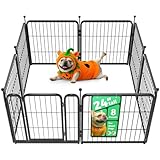
- A win-win solution: The FXW Dog Playpen is designed to bring a win-win solution to you and your lovely dog. Different from a narrow enclosure cage or kennel, the FXW dog pen provides a spacious semi-open activity area specifically for your dog. Your dog will have fun in its safe and sturdy kingdom. Meanwhile, you can take a real break and be truly relaxed without worrying about your beloved pet. Fun, Relaxation and Well-being is the orientation of the FXW team.
- Unlock your freedom, savor the moment: The stakes are designed with rounded ball tops to protect the dog's claws from injury. The rods are easily inserted into the ground for greater stability and rigidity, which won't collapse when the dog leans against them. Also, the automatic gravity-actioned locking mechanism will ensure you can open and close the door smoothly and reduces the chance of dogs unlocking by themselves. All of this is designed for absolute safety, so you can really relax.
- Super easy to assemble: It won’t take you more than 5 minutes to assemble these portable dog fences as well as pack them away due to the rod-connected design. Meanwhile, panels can be added or removed freely to give you a fully flexible area and arrange the dog pen in any shape you need.
- Multi-scenario use: The FXW dog playpen features a powder coating that will help protect against rust and extend its life, which makes it ideal for RV camping, traveling, or for use in the yard. When used indoors, we recommend placing it on a dog pad or carpet to prevent the rods from scratching the floor, or please try our new floor protectors or dog pee pad for the same purpose.
How should exercise change for senior Pomchis or dogs with health problems?
Older Pomchis and dogs with medical conditions often benefit from shorter, gentler sessions, but the correct amount depends on the condition. PDSA notes that exercise needs change with age and health. Ask your veterinarian for an individualized plan before increasing activity or beginning a new game if your dog has pain, breathing difficulty, heart disease, mobility limits or another diagnosed problem.
Adapting the session
- Split activity into smaller outings rather than insisting on one continuous walk.
- Choose a comfortable pace and allow more pauses for sniffing.
- Prefer gentle play over jumping, sharp turns or repeated high-speed bursts.
- Track recovery between sessions; worsening fatigue or reluctance is a reason to call the veterinary practice.
How do heat, cold and surfaces affect a Pomchi’s exercise?
Weather can make an otherwise reasonable routine unsafe. In hot conditions, exercise during cooler hours, provide water and breaks, and stop at the first sign of overheating or distress. Small dogs can become overwhelmed quickly, so do not wait for the planned time to finish.
When conditions outside are unsuitable, replace some outdoor time with supervised indoor sniffing, training, gentle play or a puzzle toy. Indoor enrichment keeps the day active, but it should not be used to push a dog through discomfort outdoors. Choose stable, non-slip surfaces for games and inspect the route for hazards before allowing off-leash activity.
What warning signs mean I should stop exercising?
Stop the session and seek veterinary advice if your Pomchi lags, repeatedly stops, pants heavily, has breathing difficulty, becomes unsteady, limps, appears unusually tired or refuses to continue. These signs are not a challenge to work through. Move the dog to a safe, comfortable place, offer access to water and contact a veterinarian, particularly if signs persist or are severe.
Even without an emergency, a new reluctance to walk, a change in gait or a markedly longer recovery deserves professional attention. Exercise should leave a healthy dog pleasantly tired, not distressed.
Also popular on Amazon
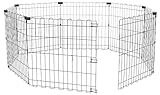
- Extra-Small 24-inch exercise play pen (no door) for dogs up to 16 inches tall or for other small pets
- 8 connected panels with thumb clips for connecting the ends together; 8 ground anchors for secure placement outdoors; made of durable iron wire with a rustproof finish
- Can be easily configured into multiple stand-alone shapes (round, square, rectangle) for playtime or be used to block off a room
- Sets up in seconds; simply unfold, shape, and connect (no tools needed); folds flat for easy transport and storage
- Note: Do not leave pets unattended outdoors
How do different Pomchi routines compare?
The table shows how to think about options without treating any single schedule as mandatory. “Total” refers to planned activity, and the suitable choice depends on age, health, weather and observed recovery.
| Routine | Total daily activity | Sessions | Best use | What to monitor |
|---|---|---|---|---|
| Two short walks | About 20–30 minutes | Two outings of roughly 10–15 minutes | Healthy adult starting point | Pace, willingness, breathing and recovery |
| Walks plus enrichment | About 30 minutes of movement, with extra brief mental sessions | Two walks plus training, sniffing or puzzle work | Adult that needs variety without longer walks | Whether added play causes fatigue or overstimulation |
| Puppy pattern | Short, self-paced bursts; no fixed adult total | Several brief periods | Growing puppies | Coordination, attention and desire to rest |
| Gentle senior or medical plan | Individualized by a veterinarian | Shorter sessions with pauses | Older or medically affected dogs | Pain, gait, breathing and recovery |
| Hot-weather adjustment | Reduced or rescheduled as conditions require | Cooler-hour outings plus indoor enrichment | Warm or humid days | Heavy panting, distress or overheating |
Should I use a harness for Pomchi walks?
Chewy’s Pomchi guide recommends a harness rather than a collar for short leash walks. Fit and comfort still matter: the dog should be able to move and breathe normally, and the harness should be checked regularly as the Pomchi grows or changes body condition. Keep the leash attached whenever the area is not fully secure.
How can I tell whether my Pomchi is bored rather than under-exercised?
Exercise is only one part of a Pomchi’s daily needs. If your dog has had a comfortable amount of movement but still seeks activity, add a supervised sniffing game, a short training session or a puzzle toy instead of automatically lengthening the walk. Mental challenge can make the day more satisfying without increasing physical strain.
Conversely, a dog that refuses an activity is not necessarily being stubborn. Pain, heat, illness or fear can look like a lack of motivation. Treat a sudden change from normal behavior as information and consider veterinary advice.
Independent reader supportYour contribution helps us test, update, and keep practical guides available for everyone.What is the safest way to increase a Pomchi’s exercise?
Change duration, intensity or frequency gradually, and alter only one variable at a time. For example, keep the familiar route and pace while adding a small amount of sniffing time, then observe recovery before changing anything else. If the dog shows any warning sign, return to the last comfortable routine and consult a veterinarian rather than continuing to increase the load.
Also popular on Amazon

- 🐶【 ANTI-RUST METAL PET PLAYPEN】: The epoxy coating finish protects the pet playpen from rust, corrosion, fading and making it perfect for all weather conditions. The dog fence’s durable design extends the life of the fence, ensuring long-term use with minimal maintenance and doesn't take up much time to clean.
- 🐶【 STURDY AND CUSTOMIZABLE SHAPES】:The dog playpen is constructed from high-strength solid wire and securely fastened to the ground when outdoor. Our 8-Panel pet pen design allows for multiple shape configurations, including square, rectangle and octagon, to suit your space and pet's needs.
- 🐶【CONVENIENCE ENTRY FOR PETS】: The puppy pet playpen comes in sizes of 24in, 30in, and 36in with a doorless design.The larger sizes of 42in and 48in feature step door makes it easy for your pet to walk through and fence doors will not injure them,and equipped with 2 secure latches, this playpen ensures double security, preventing even the most energetic pets from escaping.
- 🐶【EASY TO ASSEMBLE AND STORE】: This dog playpen does not require any tool assembly and can be set up right away in just a few minutes. Simply position the fence upright and secure it with the included metal buckles. When not in use, the dog pen folds flat for convenient storage and transport.
- 🐶【VERSATILE USAGE】: Perfect for various kind of pets such as puppies, rabbits, guinea pigs, ducks, turtle and other small animals, this indoor and outdoor playpen offers a safe play area indoors or outdoors. Pet playpen provides ample space for your pets to exercise, explore, and relax while giving you peace of mind.
There is no evidence-based Pomchi formula that converts body weight or age into an exact number of minutes. A flexible routine, careful observation and professional guidance for special cases are more reliable than chasing a precise target.
Frequently Asked Questions
Can a Pomchi get all of its exercise indoors?
Indoor play, scent games, training and puzzle toys can provide useful movement and mental work when weather or health prevents a normal outing. They are best treated as supplements or temporary alternatives; when conditions are safe, controlled outdoor exploration also provides varied smells and environments.
Should I walk my Pomchi before or after feeding?
The supplied breed guidance does not establish a universal feeding-to-walk timetable. Keep activity calm and observe your dog’s comfort; ask your veterinarian for specific timing if your Pomchi has digestive, metabolic or other medical concerns.
What should I do if my Pomchi suddenly refuses a familiar walk?
Do not force the dog to continue or assume it needs more motivation. Check for heat, a hazardous surface, pain or breathing difficulty, stop if any warning sign appears, and contact a veterinarian when the refusal is sudden, repeated or accompanied by other changes.
Are long weekend walks a good way to make up for missed exercise?
A single strenuous outing is not a substitute for a consistent routine, especially for puppies, seniors or dogs with health conditions. Resume comfortable, shorter sessions and build gradually rather than trying to compensate with an exhausting walk.





Leave a Reply