Windows Errors? Fix Them Before They Spread
Repair common Windows errors and clear accumulated junk for a smoother, more stable PC - no reinstall needed.Free scan · no reinstallOutdated Drivers Are Slowing You Down
One free scan finds every outdated or missing driver and matches the right update for your exact hardware.Free scan · exact hardware matchShelter medicine saves lives by treating the shelter as a whole as the patient, not just the dog or cat in front of the veterinarian. It keeps animals healthy while they wait for adoption. It does this by preventing disease, reducing stress, matching the number of animals to the care a shelter can really provide, and designing housing that supports health. The UC Davis Koret Shelter Medicine Program puts it this way on its “We Make Shelter Medicine Happen” page: “Shelter Medicine doesn’t only treat sick dogs or heal injured cats; it protects and strengthens health and well-being so animals can thrive.”
Shelter medicine works on two levels at once
A conventional clinic mostly asks what is wrong with this animal and how to fix it. Shelter medicine still asks that, but it adds a second question: what in this building, this staffing pattern and this community is helping or harming the health of every animal here?
The Koret Shelter Medicine Program describes its role as bridging veterinary research and real-world shelter practice. Its scope covers individual care and the conditions that shape physical and mental well-being across a population. Those conditions include housing, staffing, disease exposure, shelter capacity and how easily the surrounding community can reach veterinary care.
Why shelters need this approach
Many animals arrive stressed, underfed or unvaccinated. Some are already shedding pathogens without visible signs of illness. Put many such animals together, and one unnoticed infection can become an outbreak. Stress can also weaken an animal’s resilience and make it harder to handle in the shelter. Individual treatment alone cannot keep up with that. The shelter has to be managed so fewer animals get sick in the first place.
Do these 3 things before closing this tab:
1Scan for outdated or missing drivers - takes under a minute2Clear out junk files and repair common Windows errors3Fix the driver behind crashes, sound loss and screen glitches#1 Best Overall
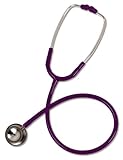
- Classic dual head stethoscope that is acoustically and aesthetically enhanced by its all stainless steel construction
- Features 2" longer tubing to enable easier auscultation of larger animals
- Incorporates a snap-on diaphragm retaining ring and a non-chill bell ring which contributes to the ease of use and maintenance
- Overall Length: Appx. 33"
- Weight: Appx. 6.7 oz
Disease prevention comes in layers
The Koret program notes that infection control in a shelter is rarely perfect. Even so, several basic measures still protect animals and support their well-being:
- Vaccination to build protection against common infectious diseases.
- Daily monitoring so that problems are caught early, before they spread.
- Stress reduction, because a calmer animal copes better.
- Wholesome food and clean water as basic physical support.
- Sanitation, housing and indoor air quality, each of which has its own resources in the program’s index.
No single layer is enough. The strength comes from the combination, and each layer covers weaknesses in the others.
The program’s resource index also includes information sheets on canine influenza, canine infectious respiratory disease complex, feline calicivirus and feline upper respiratory infection. Its comprehensive guidebooks cover canine parvovirus, feline panleukopenia and ringworm. The index lists those guidebooks as last updated in August 2023. Shelter staff should check for newer versions before relying on them, and should follow their own veterinarian’s current protocols.
Rank #2

- Monitor and assess a wide range of patients and detect normal and abnormal sounds and rhythms
- Useful in non-critical care environments such as a medical office, general ward, OB/GYN, ambulatory clinic or urgent care
- More than twice as loud* as the next leading stethoscope. *Based on tests against globally-available comparable stethoscopes in an equivalent class using recorded heart sounds with diaphragm.
- Allows you to more reliably and consistently hear heart sounds at lower frequencies (below 120Hz*) like Korotkoff sounds, Mitral Stenosis and S3 and S4 Gallops when compared to other leading stethoscopes. *Based on tests against globally-available comparable stethoscopes in an equivalent class using recorded heart sounds with diaphragm.
- Weighs less** than other stethoscopes. ** Based on published weights of globally-available comparable stethoscopes in an equivalent class.
Capacity for care: how many animals a shelter can truly help
“Capacity” in shelter medicine does not mean how many kennels fit in a building. The Koret program defines capacity for care holistically: meeting the needs of every animal admitted, whatever its circumstances, age, health status or personality.
What’s actually slowing this PC down?
Pick the symptom - the matching free tool is one click away.
That definition makes capacity an operational responsibility. Admissions, length of stay, staffing, housing and medical resources all have to line up. When they don’t, welfare slips and disease risk rises. Animals get less attention and sit longer in conditions that are hard on them. The program’s resources include capacity calculation and adoption-driven capacity, which treat it as something to plan and manage rather than a number to guess at.
Housing and facility design are health interventions
The Koret program links the physical facility to animal health and welfare, operating costs, staffing efficiency, public perception and the number of animals a shelter can serve. A well-designed space protects animals and can also make daily work easier for staff.
Rank #3

- ADVANCED ALLOY CHEST PIECE with Anti-Cooling Ring | Zinc alloy chest piece includes an integrated anti-cooling ring to help reduce patient discomfort during animal examinations.
- ERGONOMIC FIT for Extended Clinical Use | Embedded connecting spring and anatomically shaped ear tips adapt naturally to the ear for stable, comfortable wear during long shifts.
- CLEAR HEART AND LUNG SOUND Transmission | Chrome-plated zinc alloy chest piece provides consistent acoustic response for reliable cardiac and pulmonary auscultation.
- INCLUDES ATTACHABLE NAME TAG | Comes with a clip-on identification tag that attaches directly to the tubing, helping prevent mix-ups in shared clinical or educational environments.
- SOFT EAR TIPS with Noise Isolation | Secure, soft ear tips help block ambient noise and maintain comfort for focused listening in busy veterinary environments.
Cat portals are one example. They can connect housing units into double-sided condos, which gives a cat separate areas for eating and sleeping and for using the litter box. That is a specific fix for a specific problem. It does not suit every building or every population. The program offers a housing assessment tool and uses the question “How’s your housing?” to prompt shelters to look at what they have before changing anything.
Humane care and lifesaving are not opposites
The Koret program’s guiding principles state: “We reject the idea that there must be a trade-off between humane care and life-saving.” The statement appears as an institutional principle, not as a quote from one person.
The Tool Desk
Outbyte PC Repair FREERepair Windows errors before they cause bigger problemsFix Now →Outbyte Driver Updater FREEScan for outdated or missing drivers - takes under a minuteDriver Scan →In practice, this means a shelter should not have to choose between keeping animals comfortable and getting them out alive. Good welfare practice keeps animals healthier. Healthier animals are more likely to be adoptable, so they leave the shelter sooner and free up space and attention for others.
Rank #4

- TRUSTED by Medical Providers since 1971 | Backed by our Full Lifetime Warranty & Replacement-Parts-For-Life Program Included| Latex-Free
- ALL-PURPOSE LIGHTWEIGHT diagnostic stethoscope that delivers accurate auscultation of heart, lung, and stomach (gastrointestinal, bowel, etc.), blood pressure flow (Korotkoff) sounds with acoustic integrity and clarity in doctor, nurse, student, etc. clinical settings or home settings.
- DUAL HEAD CHESTPIECE designed with a turnable, fully rotating stem and a true bell and true diaphragm to capture high or low frequency sounds as needed. Handcrafted from premium aluminum to deliver the ultimate value in auditory diagnostics with unmatched performance and durability in its lightweight class.
- PATENTS, HEADSET, TUBING & EARTIPS: longer, thicker and non-stick tube and ErgonoMax headset that includes a patented dual-leaf spring construction, patented Acoustic Pyramid Chamber and a patented SafetyLock Eartip adapters to maximize sound performance, durability, comfort, and extended use.
- INCLUDES: 3 pairs of Small, Regular and Large MDF ComfortSeal clear eartips, an extra diaphragm, ID name tag, Lifetime Warranty and Replacement Parts for Life program included. Makes a great gift with over 20 color variations to choose from.
Evidence-based does not mean one-size-fits-all
The Koret sources stress context-specific, evidence-based practice. They do not rank interventions or offer a single universal protocol. A rural shelter with a small staff faces different choices from a large urban one with an older building. When comparing approaches, three questions help:
| Question | What it asks | Example from shelter practice |
|---|---|---|
| What health risk is addressed? | How are prevention or monitoring actually carried out? | Daily monitoring to catch respiratory illness early |
| Can the shelter meet the care needs? | Do staffing, housing and care fit within capacity for care? | Matching admissions and length of stay to what the team can handle |
| What are the effects on welfare and operations? | How does the change affect animals and day-to-day work? | Cat portals that give cats separate living areas, if the building allows |
What the results can look like
The Koret biography of program director Kate Hurley reports that more than 1,500 shelters taking part in the Million Cat Challenge saved over three million cats compared with their own baselines. The biography gives no year for that result, so treat it as a cumulative claim from the program rather than a dated annual figure. It also does not isolate which practices produced which share of the outcome, so it should not be read as proof that any single measure saves a set number of lives.
What this means if you adopt, volunteer or support a shelter
- A shelter that limits admissions, holds animals for health checks or closes an area during an outbreak is often applying capacity-for-care thinking, not being unhelpful.
- Daily routines such as cleaning, feeding and observing animals are part of the medical program.
- Questions about housing, vaccination practice and how the shelter decides how many animals it can care for are reasonable to ask. Good shelters can usually explain their reasoning.
- Donations and volunteer time can support the basics the program names: food, clean water, sanitation, enrichment and housing improvements.
Where to learn more
The Koret Shelter Medicine Program’s resource center collects guidebooks, self-paced courses, estimators and calculators, webinars, events, information sheets and practical articles. Its conference materials also address everyday questions such as the ideal age to spay, neuter or adopt out kittens.
Free tools Windows power users keep installed
One-click scans. No signup required.
Best Value
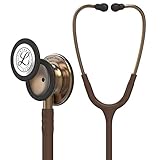
- Monitor and assess a wide range of patients and detect normal and abnormal sounds and rhythms
- Useful in non-critical care environments such as a medical office, general ward, OB/GYN, ambulatory clinic or urgent care
- More than twice as loud* as the next leading stethoscope. *Based on tests against globally-available comparable stethoscopes in an equivalent class using recorded heart sounds with diaphragm.
- Allows you to more reliably and consistently hear heart sounds at lower frequencies (below 120Hz*) like Korotkoff sounds, Mitral Stenosis and S3 and S4 Gallops when compared to other leading stethoscopes. *Based on tests against globally-available comparable stethoscopes in an equivalent class using recorded heart sounds with diaphragm.
- Weighs less** than other stethoscopes. ** Based on published weights of globally-available comparable stethoscopes in an equivalent class.
For a professional-level text, Hurley is a co-editor of Infectious Disease Management in Animal Shelters (Wiley-Blackwell, 2009). It predates newer guidance, so pair it with current program resources.
This article is an overview. It gives no clinical instructions or dosing, and shelters should take protocols from their own veterinarians and from current primary guidance.
Quick Recap
Product prices and availability are accurate as of the date/time indicated and are subject to change. Any price and availability information displayed on Amazon at the time of purchase will apply.




