
Some links on this page are affiliate links: if you buy through them we may earn a commission, at no extra cost to you.
Do not stop an older pet from moving solely because it is stiff. After a veterinarian checks new or worsening stiffness, lameness, reluctance to walk, trouble rising, or behavior changes, replace impact with controlled, low-impact activity. Short, frequent sessions are often easier than one long outing, but the right amount depends on the pet’s joints, disease stage, pain control, fitness, and response afterward. Running, jumping, sharp turns and slippery-floor scrambling should be reduced; regular gentle movement, a lean body condition, rehabilitation when appropriate, and safer access around the home can preserve mobility and quality of life.
Why does a stiff older pet need a veterinary assessment first?
Osteoarthritis (OA) is common, but stiffness is not a diagnosis. The same change in movement can result from an injury, spinal disease, neurologic disease, another painful joint problem, or a systemic illness. A veterinarian can examine the pet, identify which joints or body systems are involved, and decide whether imaging or additional tests are needed before an exercise plan is changed.
As an Amazon Associate I earn from qualifying purchases.
American Animal Hospital Association (AAHA) senior-care guidance notes that senior dogs and cats make up about 44% of the pet population (2022). Age-related changes therefore affect many households, but “slowing down” should not automatically be written off as normal ageing. Earlier assessment can uncover treatable pain and provides a baseline against which mobility changes can be judged.
Signs in dogs that warrant an appointment
- Stiffness after rest, a changed gait, limping, or reluctance to walk.
- Difficulty getting up, climbing stairs, jumping into a car, or turning around.
- Reduced activity, muscle loss, slipping, or tiring sooner than before.
- Sensitivity when touched, a new reluctance to be handled, or sudden irritability.
- A rapid or progressive drop in activity, especially when accompanied by obvious pain.
Cornell and the British Small Animal Veterinary Association (BSAVA) describe these patterns as possible indicators of canine OA or chronic pain. They can also occur with other disease, so they are reasons for examination rather than proof of OA.
Popular on Amazon

- MULTI-SCENE USAGE - EHEYCIGA foam dog stair is designed to fit against the edge of a bed, sofa, or other furniture, allowing your pet to climb up and down comfortably. It's a portable dog step suitable for small and medium dogs.
- MULTIPLE STEP SIZES – With a sturdy construction supporting up to 35 lbs, this dog stair comes in 3, 4, and 5‑step options. Our 3‑step pet stair is ideal for sofas and low beds (up to 18 inches high), while the 5‑step version is better suited for higher beds (up to 27 inches). If your bed is of medium height (up to 23 inches), please select the 4‑step one.
- STEADY & FOLDABLE: With a 30D high density foam and eco-friendly support board, this dog stair offers enhanced stability. It can also be folded into a basic dog bed for your furry puppy to sleep.
- EASY TO CLEAN - The dog step features a removable and washable cover, which can be cleaned by hand or in the washing machine. This saves you time and makes cleaning incredibly convenient.
- CARE INSTRUCTION - After removing the foam from the compression bag, please allow 24-48 hours for the foam to fully expand before use. Please note that the inner foam is not washable.
Why cat pain is easy to miss
Cats often hide pain instead of limping dramatically. AAHA reports that more than 60% of cats have OA in at least one joint despite no crepitus (a grating sensation) being found on examination. A cat that jumps less, grooms less, hides, becomes irritable, changes litter-box habits, or simply moves around less may be painful even when it does not cry out.
Discuss these changes with a veterinarian instead of trying to “exercise the stiffness away.” Cat-specific OA treatment consensus guidance is less developed than canine guidance, so the activity plan should be tailored to the individual cat.
Recommended Free Tools
What exercise is safe for an older dog with stiff joints?
Controlled, low-impact movement is the usual starting point once a veterinarian has assessed the dog. Leash walking on a predictable, reasonably level surface allows the dog to move joints and maintain muscle without the acceleration, landing forces, and twisting associated with sprinting or jumping.
The American College of Veterinary Surgeons (ACVS) advises limiting high-impact activities because running and jumping can increase inflammation and pain. OA-COAST consensus guidance similarly recommends regular exercise while limiting high impact and torsion, with the type and frequency adjusted to disease stage and the joints affected.
Activities to reduce
- Ball or frisbee games that involve sprinting, abrupt stops, or repeated jumping.
- Off-leash chasing, racing with other dogs, and sharp changes of direction.
- Jumping on or off furniture, beds, vehicles, retaining walls, or decks.
- Repeated stair runs, slippery-floor zoomies, and rough play that causes twisting.
“Low impact” does not mean that every dog should walk the same distance. A dog with mild disease may tolerate a longer, steady walk; a dog with advanced OA may need several very short outings. The useful target is a calm, repeatable amount that does not produce a later setback.
Activities that can replace impact
- Slow, controlled leash walks with time to sniff rather than a pace that forces the dog to hurry.
- Gentle therapeutic exercises prescribed by a veterinarian or rehabilitation professional.
- Hydrotherapy, an underwater treadmill, or swimming when a qualified professional confirms that the dog can use them safely.
- Short food-puzzle or scent activities that provide mental stimulation without chasing and jumping.
ACVS lists range-of-motion work, therapeutic exercise, an underwater treadmill, and swimming as possible components of care. Evidence for some additional physical modalities is limited, so they should be selected by the clinical team rather than purchased or attempted as a substitute for diagnosis and pain management.
Crashes, No Sound, or Screen Glitches?
Random freezes, missing sound and display glitches usually trace back to one bad driver. Find and replace yours safely.Free scan · under a minuteWindows Errors? Fix Them Before They Spread
Repair common Windows errors and clear accumulated junk for a smoother, more stable PC - no reinstall needed.Free scan · no reinstallAlso popular on Amazon
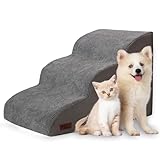
- PET STAIRS:The sturdy and stable stairs and ramps are designed so that your pet can walk steadily on them to the bed or couch for a close encounter with you. Perfect for small dogs, senior dogs or pets with limited mobility.We recommend it for pets weighing less than 50 pounds
- STABLE AND NON-SLIP:The pet ramp has a corduroy fabric outer cover to increase the friction between your pet's paws and the steps. Climbing ladder has a non-slip bottom surface, stable structure to bring enough security to the little ones
- EASY TO PUT:By placing the pet stairs in your living room or bedroom, you can watch your furry friend play with confidence that the silicone footprints on the bottom won't let him slip and slide around, whether on the carpet or the floor
- EASY TO ASSEMBLE:For easy transportation, the dog ramp is packed in vacuum compression. Normally, it can be fully popped up and unfolded into the shape of a staircase after 48-72 hours
- SUITABLE HEIGHT: 3 steps are suitable for sofas and chairs. 4 steps are suitable for sofas and beds.5 steps are suitable for beds and high beds
Are short walks better than one long walk?
For a dog whose tolerance is limited, several short, frequent sessions are generally more manageable than one long outing. OA-COAST guidance specifically supports regular, short, frequent, low-impact exercise for advanced canine OA, always within the patient’s tolerance. Dividing a former long walk into smaller controlled sessions is a practical way to start; increase only when the dog remains comfortable during the activity and afterward.
There is no universally validated number of minutes per day for every dog. Joint involvement, disease stage, body condition, pain control, terrain, age-related weakness, and the dog’s response all change the appropriate amount. A veterinarian or rehabilitation professional can help define a starting duration and review it over time.
A cautious progression
- Record the baseline. Note how long the dog currently walks comfortably, how it rises afterward, and whether gait or behavior changes later that day or the next morning.
- Choose a conservative session. Use a level route and a pace that permits sniffing. Stop before the dog is dragging behind, repeatedly sitting, or showing worsening gait.
- Repeat consistently. Keep sessions regular rather than alternating an exhausting outing with a day of inactivity.
- Change one variable at a time. If the dog remains comfortable during and after exercise for several sessions, add a small amount of time or an additional short outing, not both at once.
- Step back after a flare. Reduce duration and contact the veterinary team if lameness, reluctance to rise, or marked soreness appears. A flare is not a reason for indefinite crate rest unless a veterinarian specifically prescribes it.
Should I stop walking my senior dog when it is stiff?
Usually, no—not automatically. The OA-COAST consensus states that severe activity restriction or rest is generally not recommended; regular low-impact exercise supports mobility, physical health, and mental health. However, a sudden painful change, inability to rise, or rapidly worsening lameness needs veterinary review before the normal routine continues.
On a bad day, replace a planned long walk with a brief, slow toilet-and-sniff outing on safe footing, then ask the veterinary team whether pain treatment or the exercise plan needs adjustment. Do not force a dog to keep walking through obvious pain, and do not use human pain medicines unless a veterinarian has prescribed a product and dose specifically for that pet.
What’s actually slowing this PC down?
Pick the symptom - the matching free tool is one click away.
How can rehabilitation help an ageing pet?
AAHA describes rehabilitation as an excellent option for pain management and improving mobility and balance. A rehabilitation professional can evaluate strength, joint range, gait, footing, and the way the pet performs daily tasks, then build exercises that are safer than generic online routines.
What a programme may include
- Therapeutic strengthening and balance exercises at an intensity the pet can control.
- Gentle range-of-motion work when appropriate for the affected joints.
- Hydrotherapy or an underwater treadmill to reduce weight-bearing while exercising muscles.
- Manual therapy or other physical modalities selected as an adjunct to a broader plan.
- Owner instruction on handling, harness use, home footing, and progression criteria.
BSAVA characterizes effective canine OA care as a combined approach involving pain relief, weight control, and physical rehabilitation such as walking exercise, hydrotherapy, or physiotherapy, coordinated and reviewed by a veterinarian. For cats, professional guidance is especially important because published cat-specific OA consensus treatment guidelines are not comparable to the canine framework.
Also popular on Amazon

- Dogs & cats stairs - This pet stairs is designed to be placed right up against the edge of your bed, couch, or other furniture. It allows your furry friend to easily hop onto the bed or sofa and enjoy a comfy rest
- Safe and stable -This dog ramp is designed with wider steps and a gentle slope to help reduce joint pressure for your pet. It's perfect for puppies, short-legged pets, those with injured feet, or even cats who may have trouble jumping. It provides a safer and more secure experience, ensuring that your furry friend can use it with ease
- Non-slip bottom -Pet steps are covered with durable, friction-resistant fabric, providing a soft and stable surface for your pet to walk on. Additionally, the non-slip bottom design ensures that the dog steps stay in place at all times
- High-Rebound Foam Support - For easy transport, the dog ramp comes packaged in a vacuum-sealed compression. Typically, within 24-48 hours, it fully pops out and unfolds into a stair-like structure. The dog stairs are equipped with high-rebound foam inside, providing ample support for your pet
- Washable cover-The outer cover of the pet ramp is enclosed with a zipper, making it easy to detach and allowing for convenient hand or machine washing of the cover - a simple and hygienic solution. Please note that the inner foam cannot be washed with water
How much should an ageing cat with arthritis exercise?
There is no reliable universal minute target for cats. Encourage gentle, voluntary movement and make essential resources easy to reach; have a veterinarian or qualified rehabilitation professional tailor any therapeutic exercise to the cat’s joints, pain control, strength, and willingness to participate.
Many cats exercise in brief bursts rather than on a leash. Several short opportunities to walk between resting places, follow a low toy along the floor, or reach a treat placed at an easy height can be preferable to forcing a long session. Keep play low to the ground and stop if the cat crouches tensely, avoids weight on a limb, pants, hides, or shows a clear decline in movement afterward.
Do these 3 things before closing this tab:
1Clear out junk files and repair common Windows errors2Scan for outdated or missing drivers - takes under a minute3Repair Windows errors before they cause bigger problemsMake movement inviting without demanding jumps
- Place food, water, beds, and litter boxes on the same floor when stairs are difficult.
- Use low platforms, ramps, or closely spaced steps to reach a favourite resting place.
- Choose toys that can be dragged or rolled along the floor instead of tossed into the air.
- Offer several brief play periods and allow the cat to end each one.
- Keep nails appropriately trimmed by a professional or under veterinary instruction if overgrown nails impair footing.
A reduction in jumping, grooming, or litter-box access can be a pain signal rather than a motivation problem. Report changes in mobility or behavior even if the cat still eats and purrs.
How do I know whether exercise helped or caused a flare?
Look at the whole 24-hour response, not just the pet’s enthusiasm during the activity. A dog may appear eager outside and then struggle to rise that evening; a cat may play briefly and hide later. OA-COAST recommends serial monitoring and adapting treatment to the patient’s response.
Keep a simple mobility log
- Willingness to start and continue a walk or play session.
- Gait quality, limping, slipping, and ability to turn.
- Ease of rising, sitting, lying down, using stairs, or reaching furniture.
- For cats: jumping, grooming, litter-box entry, hiding, and interaction with people.
- Comfort later that day and the next morning.
Use the same brief observations each day rather than relying on memory. Short owner videos of walking, rising, stairs, or jumping attempts can help a veterinarian assess mobility; AAHA specifically identifies client videos as useful assessment tools. Film from the side and behind on a safe, non-slip surface, without provoking a painful movement.
How important is body weight?
Keeping a dog lean is one of the most important modifiable parts of OA management. ACVS calls slender body weight the most critical aspect of canine OA care because excess mass increases force on joints and contributes to inflammatory signalling. Weight reduction, when needed, should be planned with a veterinarian so food portions, treats, and any medical condition are considered together.
Free tools Windows power users keep installed
One-click scans. No signup required.
Also popular on Amazon

- Premium Solid Wood Material for Safe Weight Support: This dog ramp is made of durable solid wood with a sturdy structure that ensures stability and safety. Our adjustable dog ramp for couch is perfect for small dogs, short legged dogs, and elderly pets. The safe metal buckle can prevent collapse and sliding during use, always ensuring the safety of your pet.
- 5 Adjustable Height: Pawaboo dog ramp for couch has 5 adjustable heights: 9.8", 13.8", 16.5", 18.5" and 20.5", you can choose the appropriate height according to your needs, helping pets get up and down sofa, and step with ease. As a reliable pet step for dogs to get on sofa, Pawaboo dog ramps for small dogs work for multiple scenarios, easily fitting couch, sofas, windowsills, low bed and chairs to meet your pet’s daily climbing needs.
- Gentle Stairs for Short-legged & Small dogs: Our dog stair helps short-legged dogs and small breed dogs safely climb up and down sofas and steps, protect their spine and joints, and avoid joint pressure caused by dogs jumping. For short legged or small breed puppies, this dog step is the safest alternative that can turn every climb into a comfortable and safe experience.
- Foldable & Portable Design: Featuring a folding design, this lightweight dog ramp measures 16.5" x 12.6" x 5.5" when folded for easy storage. When not in use, the dog stair for couch can be placed under the sofa or bed, stood upright in a closet or leaned against the wall to save space. Its light weight and side handles also make it convenient to carry.
- High Traction & Slip Resistance: The pet dog step ladder is covered with wear-resistant striped fabric carpet. Excellent traction prevents furry friends from slipping or falling while walking on the ramp. It also comes with 5 crossbars to boost slip resistance during climbing for safe ascent.
Merck identifies weight optimization as the primary preventive method for slowing canine OA development and recommends a lean body condition for cats with OA and other health risks. Do not judge by a scale number alone: body-condition scoring and muscle assessment are more useful because two pets of the same weight may have very different body composition.
What can I put on slippery floors for an ageing dog or cat?
Use secure, washable non-slip surfaces where the pet starts, turns, eats, sleeps, and reaches the toilet area. AAHA lists rugs or yoga mats as examples of footing aids, along with ramps, appropriate beds, suitable litter-box placement and design, and fitted padded harnesses for assisting larger pets.
Practical home changes
- Lay non-slip runners or mats over the main routes, anchoring edges so they cannot bunch or slide.
- Cover polished floors near food and water bowls, doorways, and beds.
- Use a ramp rather than asking the pet to jump into a car or onto a high surface; secure it and introduce it gradually.
- Provide a supportive, easily accessible bed away from draughts and high-traffic areas.
- For cats, choose a litter box with a low entry and place one on each level the cat uses.
- Use a properly fitted padded harness for assisted movement; never lift a large or painful pet by the collar or limbs.
These changes reduce slips and unnecessary jumps, but they do not treat the underlying pain. A pet that continues to fall, cannot reach food or the litter box, or refuses movement needs prompt veterinary help.
When is a change in activity an emergency?
Seek prompt veterinary advice for worsening or new lameness, inability or marked reluctance to rise, severe pain, repeated slipping, a sudden behavior change, or a rapid drop in activity. OA signs overlap with other disorders, and a sudden deterioration should not be assumed to be an ordinary flare.
Until advice is available, keep the pet quiet but comfortably mobile on safe footing, prevent stairs and jumping, and provide food, water, and toileting close by. Do not give leftover prescriptions or over-the-counter human medicines. If the pet cannot stand, has severe distress, or has sustained an obvious injury, contact an emergency veterinary service.
Independent reader supportYour contribution helps us test, update, and keep practical guides available for everyone.Dog and cat exercise adjustments at a glance
| Decision | Older dog with suspected OA | Older cat with suspected OA |
|---|---|---|
| Evidence and planning | Canine OA-COAST staging and ACVS activity guidance support individualized, regular low-impact exercise. | Comparable cat-specific OA consensus treatment guidelines have not been published; veterinary tailoring is particularly important. |
| Starting movement | Controlled leash walks on predictable footing; avoid high impact and torsion. | Encourage voluntary, gentle floor-level movement and easy access between resources. |
| When tolerance is low | Use short, frequent walks or prescribed therapeutic exercises rather than one exhausting outing. | Offer several brief play or walking opportunities and let the cat stop. |
| Home access | Ramps, non-slip routes, a supportive bed, and an assisted-handling harness can reduce jumping and slipping. | Low-entry litter boxes, ramps, non-slip footing, and resources on accessible levels are especially useful. |
| What to monitor | Gait, willingness to walk, rising, stairs, and comfort later that day and the next morning. | Jumping, grooming, litter use, hiding, interaction, and subtle behavior changes; absence of crepitus does not rule out OA. |
How should the plan be reviewed over time?
Exercise is one part of a continuing OA plan, not a one-time prescription. Recheck when mobility changes, after a flare, or when the pet’s weight, medication, or home environment changes. A veterinarian may adjust pain relief, recommend imaging, refer to rehabilitation, or change the exercise type and frequency.
Also popular on Amazon
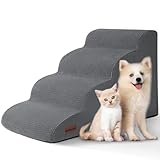
- Dogs & Cats Stairs - This pet stairs is designed to be placed right up against the edge of your bed, couch, or other furniture. It allows your furry friend to easily hop onto the bed or sofa and enjoy a comfy rest
- Safe and stable -This dog ramp is designed with wider steps and a gentle slope to help reduce joint pressure for your pet. It's perfect for puppies, short-legged pets, those with injured feet, or even cats who may have trouble jumping. It provides a safer and more secure experience, ensuring that your furry friend can use it with ease
- Non-slip bottom -Pet steps are covered with durable, friction-resistant fabric, providing a soft and stable surface for your pet to walk on. Additionally, the non-slip bottom design ensures that the dog steps stay in place at all times
- High-Rebound Foam Support - For easy transport, the dog ramp comes packaged in a vacuum-sealed compression. Typically, within 24-48 hours, it fully pops out and unfolds into a stair-like structure. The dog stairs are equipped with high-rebound foam inside, providing ample support for your pet
- Washable cover-The outer cover of the pet ramp is enclosed with a zipper, making it easy to detach and allowing for convenient hand or machine washing of the cover - a simple and hygienic solution. Please note that the inner foam cannot be washed with water
Bring the mobility log and videos to appointments. Report both improvements and setbacks, including small changes such as taking longer to stand, avoiding a particular floor, or using only one side of a ramp. Serial observations allow the plan to be adapted before a minor limitation becomes a major loss of function.
What is the practical bottom line for daily exercise?
Have new or worsening stiffness assessed, then keep the pet moving in a controlled way that it can repeat comfortably. Replace running, jumping, sharp turns, and slippery scrambling with steady low-impact activity; choose short, frequent sessions when tolerance is limited; maintain a lean body condition; and make floors, ramps, beds, harnesses, and litter access safer. Escalate to veterinary pain management and rehabilitation when ordinary walks or gentle movement no longer maintain comfort.
Frequently Asked Questions
Can an older dog with arthritis still play fetch?
Fetch is safest when it is redesigned as a slow, floor-level retrieve on non-slip footing, with no sprinting, jumping, abrupt stops, or tight turns. If the dog becomes sore later that day or the next morning, replace it with sniffing, food puzzles, or a prescribed therapeutic exercise and discuss the response with the veterinary team.
Should I use a collar or harness for a dog with painful joints?
A properly fitted padded harness can make assisted movement safer, particularly for a larger dog that needs help rising or negotiating a ramp. Fit and handling should be demonstrated by a veterinary professional; pulling upward or twisting a painful body can worsen discomfort.
How can I encourage an overweight cat with arthritis to move?
Ask the veterinarian for a gradual nutrition plan before increasing activity, because rapid weight loss can be dangerous in cats. Place small food portions or puzzle feeders at easy, nearby locations and invite brief floor-level movement rather than making the cat jump for food.
Does a cat need to limp before arthritis is suspected?
No. Cats commonly conceal pain, and reduced jumping, grooming, exploration, or litter-box use may be the first clues. A normal-looking walk and the absence of crepitus do not exclude OA, so a pattern of subtle changes deserves a veterinary discussion.
The Tool Desk
Outbyte Driver Updater FREEScan for outdated or missing drivers - takes under a minuteDriver Scan →Outbyte PC Repair FREERepair Windows errors before they cause bigger problemsFix Now →




Leave a Reply