
The Tool Desk
Outbyte PC Repair FREERepair Windows errors before they cause bigger problemsFix Now →Outbyte Driver Updater FREEScan for outdated or missing drivers - takes under a minuteDriver Scan →Some links on this page are affiliate links: if you buy through them we may earn a commission, at no extra cost to you.
Adopting a cat goes best when you treat it as a fit-and-preparation decision, not an impulse purchase. Before you commit, ask the shelter for medical and identification records, observed temperament, handling preferences, diet and litter routine, experience with children and other animals, and any known health or behavior concerns. Confirm exactly what the adoption fee covers, what care remains, and what support or return policy applies. Before pickup, choose a veterinarian, obtain a secure carrier, and prepare a quiet safe room stocked with familiar food, water, litter, bedding, scratching material, and enrichment. Cat-proof the area, keep early access limited, and allow the newcomer to set the pace of contact.
What should I ask the shelter before adopting a cat?
Ask questions in six areas: health, temperament, other animals, daily routine, adoption terms, and household fit. Write the answers down and request copies of every record; memories from a busy adoption visit are easy to confuse.
As an Amazon Associate I earn from qualifying purchases.
Recommended Free Tools
Which medical and identification records will I receive?
Ask for the cat’s estimated age and all available history. Confirm which core vaccines and parasite treatments were given, the dates they were administered, and when boosters or repeat treatments are due. Find out whether the cat is spayed or neutered and microchipped, and ask for the microchip number and registration instructions.
Have the shelter list diagnosed illnesses, current medications, dental or urinary problems, allergies, prior surgeries, and any special-diet requirement. Ask whether the cat has had FeLV (feline leukemia virus) or FIV (feline immunodeficiency virus) testing, what type of test was used, and how the result should be interpreted by your veterinarian. A shelter result is important history, but your veterinarian can explain whether a repeat or confirmatory test is appropriate.
Popular on Amazon

- Pet Carrier: 17.5” L x 11” W x 11” H, Recommended max load of 16 lbs cats small dogs. Please do not choose your carrier based on weight--please reference your pet's length and height in selecting a pet carrier size.
- Fits for under-seat dimensions of most airlines. Every airline has a specific set of rules and regulations, please contact with airline before flying with your cats small dogs.
- Mesh windows for ventilation, top and side entry with locking zippers for safety. Carrying handles, adjustable shoulder strap which can also be used as seatbelt, and back strap can fasten the pet carrier to your luggage.
- Pet carrier comes with a removable base insert, which creates a solid surface for your pet to stand on, along with a removable & hand washable cozy fleece pet bed, which offers a cozy sleeping space for your traveling cats small dogs.
- "Toys for pets, of textile materials". Mostly used as a Toy of Fabric Pet Home for pets playing and relaxing.
Request the complete medical file, vaccination certificate, medication instructions, discharge notes, and the name of the clinic that provided care. Ask who pays for follow-up treatment if a problem identified before adoption needs additional care.
What is the cat really like with people?
Ask how the cat behaves with adults, children, visitors, being picked up, grooming, nail handling, and routine examinations. Ask what causes hiding, fear, swatting, biting, or rough play, and what reliably helps the cat relax. Also ask what the cat enjoys: lap time, interactive toys, quiet observation, food puzzles, or independent exploration.
What’s actually slowing this PC down?
Pick the symptom - the matching free tool is one click away.
Find out where those observations came from. A foster home usually reveals more about everyday behavior than a kennel, while a short shelter stay may show only how the cat reacts under stress. Ask for concrete examples rather than labels such as “friendly” or “shy.” “Hides when strangers enter but sleeps beside the foster caregiver” is more useful than a single personality adjective.
Has the cat lived with other animals?
Ask whether the cat has lived with cats, dogs, or other species, and whether it has been tested around them in a controlled way. “Not tested” is different from “does not like dogs,” so record the distinction. Ask what introduction method the shelter recommends and whether there were warning signs such as prolonged stalking, panic, or redirected aggression.
Give the shelter accurate information about your resident animals, including their ages, vaccination status, confidence level, and behavior around cats. A truthful description helps staff identify a realistic match and plan a safer introduction.
What food, litter, and schedule does the cat know?
Ask for the current food brand or formulation, feeding times, portion pattern, treats, water preferences, litter type, box style, and cleaning routine. Ask where the cat usually sleeps and when it tends to play. Starting with familiar products reduces the number of changes during an already stressful move. If you need to change food or litter, do it gradually after the cat is eating, drinking, and using the box reliably.
What are the adoption terms?
Ask about every step of the application, required appointments, identification documents, landlord or housing permission, adoption fee, included services, and records. Confirm whether the fee includes sterilization, vaccines, parasite treatment, microchipping, or a veterinary examination, and which services remain your responsibility.
Read the organization’s written agreement about post-adoption support, trial periods, returns, and rehoming. Policies differ; never assume that one shelter’s arrangement applies to another. Ask whom to call if the cat becomes ill, the match is unsafe, or you cannot keep the cat.
Does this cat fit my household’s constraints?
Tell staff about allergies, children, work hours, travel, the primary caregiver, your budget, housing rules, and how long the cat would be alone. Ask whether the cat’s age, energy, grooming, medication, social style, and tolerance for handling fit those realities. A good match is one you can sustain on ordinary busy weeks, not just during the excitement of adoption day.
Also popular on Amazon
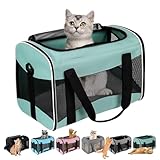
- [PRODUCT DIMENSIONS] Pet travel carrier size : 17x11x11 inches, recommended up to 15 lb pets, it is suitable for large, medium cats and small dogs. Please don't choose your airline cat carrying case based on weight, please refer to your pet's length and height when choosing a pet carrier size.
- [AIRLINE APPROVED] This cat carrier is designed with airline approved, it can fit comfortably under most flight seats, we can take our pets wherever we want. Dog travel carrier offers two attachment loop handles that can be used as a dual harness or as a luggage strap for balanced carry and secure transport.
- [EXCELLENT MATERIAL] Collapsible cat carrier is made of polyester fabric, supported by a steel ring, washable, wear-resistant and durable. The three sides and the top of this pet carrier are nylon mesh, scratch-resistant and not easy to damage, it can not only check your pet in real time, but also ensure enough air circulation.
- [SAFE AND COMFORTABLE] Dog travel bag has metal zippers on the top and side entrances, durable and not easy to deform, it allows your pets to enter and exit easily. The cat carrying case is equipped with an anti-escape safety buckle, which can effectively prevent pets from accidentally falling. It is suitable for car rides and vet rides.
- [PORTABLE AND FOLDABLE] Pet travel carrier comes with a detachable and hand washable wool pet bed, it can provide a comfortable sleeping space for your traveling pet. The cat travel case comes with an adjustable shoulder strap and handle for easy portability. When not in use, you can fold it up for storage.
How do I compare cats without choosing on looks alone?
Use the same decision criteria for every cat you are considering. A written comparison prevents a memorable first meeting from eclipsing practical information.
| Decision area | Questions to compare | Why it matters |
|---|---|---|
| Social style | Does the cat seek laps, prefer nearby companionship, or need considerable personal space? How does it respond to visitors? | Your preferred amount of contact should match the cat’s boundaries. |
| Energy and age | What play, supervision, and socialization does this kitten or adult currently need? | Kittens generally require more supervision and guidance; an adult often has clearer established habits. |
| Household compatibility | How has the cat responded to children, dogs, cats, noise, and time alone? | Compatibility lowers stress and makes safe introductions more achievable. |
| Care complexity | Are grooming, medication, special food, dental care, urinary monitoring, or repeat appointments needed? | These obligations affect time, skills, and recurring expenses. |
| Transition support | Is there foster information, a complete record, counseling, and a named post-adoption contact? | Better information gives you a clearer starting plan when behavior changes after moving. |
When two cats seem equally appealing, choose the one whose needs you can meet consistently. A less dramatic first meeting can still lead to an excellent long-term relationship once the cat feels secure.
What should I prepare at home before pickup?
Set up the cat’s environment before leaving for the shelter. Preparation prevents you from improvising with an open door, an unsuitable litter box, or toxic household items while a frightened animal is trying to hide.
Create a quiet safe room
Choose a small, closed room or dedicated area away from heavy traffic. Put food and water at separate locations, a litter box well away from both, comfortable bedding, toys, a scratching post or other scratching surface, and a hiding option. Leave the carrier open so it can become a familiar retreat rather than an object that appears only before stressful trips.
Remove fragile objects and block inaccessible gaps behind appliances or furniture. Make sure the door latches securely, and tell everyone in the home that this room is off-limits unless they are following the agreed introduction plan.
Cat-proof the room and routes out of it
- Secure windows, screens, balconies, exterior doors, and any opening through which a cat could escape.
- Cover, tie up, or route electrical and blind cords so they cannot be chewed or wrapped around a body.
- Remove toxic plants, chemicals, medicines, essential oils, and cleaning products.
- Pick up small items that can be swallowed, including string, rubber bands, hair ties, plastic pieces, and children’s toys.
- Anchor unstable shelves and remove breakable objects from climbing areas.
Inspect the whole home, not just the safe room, before granting additional access. Cats can reach high shelves and narrow gaps that people overlook.
Buy and stage the basic supplies
| Need | Prepare before arrival | Practical setup note |
|---|---|---|
| Transport | Secure, well-ventilated cat carrier | Place it where you can close the door calmly; never carry a loose cat to or from a vehicle. |
| Food and water | Current food if available, sturdy bowls, and fresh water | Use the shelter’s food initially, then change diets slowly if needed. |
| Toileting | Litter box, familiar litter type, scoop, and a washable mat | Keep the box easy to reach and away from feeding stations. |
| Rest and security | Bed, washable blankets, and a hideaway | Retain the open carrier as another retreat. |
| Scratching and enrichment | Scratching post or pad, safe toys, and simple food puzzles | Offer choices without filling the room with overstimulating objects. |
| Grooming | Brush suited to the coat and cat nail clippers | Wait until the cat is comfortable before attempting grooming or nail trims. |
Arrange veterinary and emergency care
Choose a veterinarian before adoption and schedule an initial appointment soon after arrival. Bring every shelter record, medication label, test result, and diet instruction. Ask the clinic which preventive care is due and what symptoms should prompt an urgent call.
Add the regular veterinarian and the nearest emergency animal hospital to your household contacts. Make a plan for feeding, medication, and supervision during travel, work emergencies, or other absences; identify a backup caregiver who can access the cat and carrier.
How should I bring an adopted cat home?
Keep transport and the first days quiet, predictable, and low-pressure. The goal is not to make the cat socialize immediately; it is to establish safety, food, water, litter access, and a dependable routine.
Free tools Windows power users keep installed
One-click scans. No signup required.
Also popular on Amazon

- High Quality Design:Sturdy steel cage structure and wooden support board maintain good spatial stability and shape. Breathable mesh windows on four sides,which can ensure good air circulation and views,make pets have a comfortable and safe travel.It can also be easy for you to check on your pets.There is a front pocket to store pet toys,treats,etc.
- Dimension and Weight:Made of durable tear-resistant fabric.Four easy entrances for pets. Dimensions: 17 inch x 11 inch x 11 inch (L*W*H), suitable for pets up to 16 lbs.Please don't choose your carrier based on weight only,consider your pet's length and height when choosing a carrier.
- Airline Approved & Safty:Can be placed under the seats of most airplanes(Four non-slip feet on the bottom to prevent movement), and comfortably on the seat next to you in a car or bus.It has a adjustable shoulder strap.Can also be fastened to the car seat with a safety belt or shoulder strap to keep your pet safe.
- Easy to Clean :You can clean the stains and dirt on the surface with a soft cloth.Soft mat inside the pet carrier is removable and washable.You can take it out and wash it easily to solve all stains.
- Easy to Collapsible & Lightweight:When not in use,fold it into a flat,space saving and easy to store.Only 2.2lbs,it's easier to carry around.It can also used as a toy of pet house,allowing pets to play in a safe space to relax and rest.
- Secure the carrier before leaving. Check that the door is latched and the carrier is stable. In the vehicle, position it securely and keep the trip calm; do not open it outdoors or during travel.
- Go directly to the safe room. Close exterior doors first, carry the closed carrier inside, and place it on the floor before opening the door.
- Let the cat choose the exit. Open the carrier and step back. Do not pull the cat out, pass it from person to person, or force a greeting.
- Keep the routine simple. Offer the familiar food and litter, provide fresh water, and keep noise and visitors to a minimum.
- Observe without crowding. Check eating, drinking, urination, defecation, breathing, and general responsiveness. Give the cat places to hide and approach only for necessary care.
The ASPCA’s adoption guidance is explicit: “Don’t force interactions with people or other pets.” A cat that hides is communicating a need for distance, not failing at adoption.
How do I introduce an adopted cat to resident pets?
Start with complete separation and progress only when each animal is calm. Introductions can take days or weeks; moving faster than the animals can handle creates setbacks.
Begin with scent and closed doors
Keep the newcomer in the safe room while resident animals retain their normal areas. Exchange bedding or other safe scent items, allowing each animal to investigate without direct contact. Feed pets on opposite sides of the closed door so the other animal’s smell predicts something positive, while keeping bowls far enough away that everyone will eat.
Add visual access through a barrier
When reactions at the closed door are relaxed, use a secure screen, tall gate, or another barrier that prevents physical contact. Keep sessions short and end while the animals remain calm. Provide escape routes and elevated spaces for the cat; never trap an animal in a corner.
Quick wins for a faster PC:
Fix the driver behind crashes, sound loss and screen glitchesFind Drivers →Clear out junk files and repair common Windows errorsFree Scan →Scan for outdated or missing drivers - takes under a minuteDriver Scan →Make first contact controlled
Move to brief, supervised meetings only after repeated calm barrier sessions. Keep a dog on a leash, prevent chasing, and use treats or toys to reward quiet behavior. Do not hold the cat up to a dog or force nose-to-nose contact.
Delay unsupervised time
Continue separation whenever you cannot watch. Increase freedom gradually and return to an earlier step if you see stalking, lunging, persistent hissing, panic, cornering, or guarding of food and litter. Do not leave a dog and cat together unsupervised until safety is well established.
Share resident pets’ vaccination status and behavior history with your veterinarian. The clinician can help you judge health risks and identify a qualified behavior professional if introductions stall.
Independent reader supportYour contribution helps us test, update, and keep practical guides available for everyone.How long does an adopted cat take to settle in?
There is no universal timetable. Some cats investigate within hours; others need considerably longer before they eat confidently, use the litter box in view of people, or explore beyond the safe room. A shelter kennel can suppress or distort normal behavior, so the first impression is not a final personality assessment.
Outdated Drivers Are Slowing You Down
One free scan finds every outdated or missing driver and matches the right update for your exact hardware.Free scan · exact hardware matchWindows Errors? Fix Them Before They Spread
Repair common Windows errors and clear accumulated junk for a smoother, more stable PC - no reinstall needed.Free scan · no reinstallMaintain consistent meal times, litter care, sleep routines, and low-key interaction. Invite contact with a toy or a hand offered at floor level, then stop when the cat turns away, crouches, flicks its tail sharply, or shows other signs of overstimulation. Expand access one area at a time after the cat is eating, eliminating, resting, and recovering from ordinary household sounds.
Also popular on Amazon
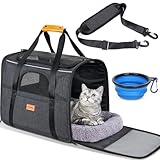
- 【 Spacious & Comfortable Cat Carrier 】The large cat carrier provides ample space for your feline friend to move, turn, and stretch during travel. Measuring 17.3 x 12.2 x 13.4 inches, it is wider and taller than most cat carriers, ensuring your pet feels comfortable and at ease while on the go.
- 【Balanced Mesh Design】Unlike other cat carrier hard, our cat carrier soft strikes the perfect balance with 40% mesh surface area. This ensures your pet can observe the surroundings and breathe easily while feeling safe and secure at the same time. The cat carrier large is suitable for pets in all kinds of situations.
- 【Built-in Dual-Sided Cushion】The detachable pad offers two distinct comforts: a cool side for summer and a super-soft, warm side for winter. You can easily flip it to match the season, providing the perfect temperature for your pet in any weather.
- 【Includes Foldable Bowl】Designed for on-the-go use, our foldable bowl carries 410g of food or 20oz of water. After use, simply collapse it and attach it directly to your pet's collar or leash, perfect for keeping your pet fueled and hydrated anywhere.
- 【Safe & Durable】Safety is our top priority, and the pet carrier for cat is equipped with a secure buckle to prevent your pet from escaping. The cat carrier soft is made of reinforced snow silk fabric and hard mesh material, ensuring durability and preventing any tearing during long-distance travel.
Call your veterinarian if appetite, drinking, elimination, fear, aggression, vomiting, diarrhea, breathing, or lethargy concerns persist or worsen. A qualified behavior professional can help with hiding, conflict between pets, handling sensitivity, or destructive behavior; do not punish a frightened cat, because punishment can increase fear and conceal warning signals.
What adoption costs and follow-up responsibilities should I confirm?
Organizations set their own fees and inclusions, so ask for an itemized explanation rather than relying on a headline price. Confirm which preventive services have already been provided and which future costs are yours: veterinary examinations, boosters, parasite prevention, dental care, medication, special diets, litter, grooming, and emergency treatment.
Ask whether the shelter offers a post-adoption telephone line, behavior counseling, medical follow-up, or a formal return process. Keep the signed agreement and records in a place every caregiver can access. If circumstances change, contact the organization early; quietly giving away a cat can violate the agreement and deprive you of safer rehoming help.
What should my first-week checklist include?
- Verify that the cat is eating, drinking, and using the litter box, and record anything unusual.
- Attend the planned veterinary visit with all shelter paperwork and medication.
- Keep doors, windows, cords, plants, chemicals, and small objects secured.
- Maintain the known food and litter routine before making gradual changes.
- Give the cat daily opportunities for quiet play, scratching, hiding, and rest.
- Continue pet introductions at the current successful stage; do not skip ahead because one meeting went well.
- Review the emergency plan and confirm that a backup caregiver can follow it.
What does a successful adoption plan look like?
A successful plan matches the cat’s established needs with your real household, prepares a secure first room, preserves familiar routines, and leaves room for gradual change. You obtain records, arrange veterinary care, supervise introductions, and ask for help promptly when health or behavior does not improve. Patience is not passive: it is a structured process of observation, predictable care, and carefully increased freedom.
Frequently Asked Questions
Should I adopt a kitten or an adult cat?
Choose based on the care pattern your household can sustain. Kittens usually need more supervision, play, and socialization, while an adult’s established energy level, handling tolerance, and litter habits may be easier to evaluate before adoption.
Can I adopt a cat if someone in my home has allergies?
Discuss the allergy history with the shelter and your healthcare professional before committing. Spend enough time around the individual cat to notice symptoms, and make a household plan for cleaning, sleeping areas, and medical management rather than assuming any cat will be symptom-free.
What should I do if my new cat will not come out of hiding?
Keep food, water, and a clean litter box near the hiding area without blocking the exit. Reduce noise and handling, monitor eating and elimination, and call the veterinarian if the cat is not eating, seems ill, or remains intensely fearful; do not drag it out or punish it.
Do these 3 things before closing this tab:
1Scan for outdated or missing drivers - takes under a minute2Repair Windows errors before they cause bigger problems3Fix the driver behind crashes, sound loss and screen glitchesHow can I tell whether a shelter’s behavior information is reliable?
Ask whether each observation came from a foster home, a kennel, or a controlled test, and request specific examples and dates. Behavior can change after relocation, so treat the information as a starting point and continue observing the cat under calm home conditions.
What should I do if the adoption is not safe or sustainable?
Contact the shelter or rescue promptly and read the return or rehoming clause in your agreement. Give clear details about medical, behavioral, housing, or safety problems so the organization can advise you and arrange a responsible next step.





Leave a Reply