Windows Errors? Fix Them Before They Spread
Repair common Windows errors and clear accumulated junk for a smoother, more stable PC - no reinstall needed.Free scan · no reinstallCrashes, No Sound, or Screen Glitches?
Random freezes, missing sound and display glitches usually trace back to one bad driver. Find and replace yours safely.Free scan · under a minuteBefore adopting a dog with a grooming or medical need, ask the shelter or rescue for the dog’s history, current care plan, records, and any known uncertainties. Then work out whether you can provide the time, household support, veterinary care, grooming, and ongoing costs that this particular dog needs. After adoption, arrange a veterinary examination and review the available records with the veterinarian.
What “special needs” means for an adoption decision
There is no single standardized category that tells you what a “special-needs dog” will require. One dog may need a particular coat-care routine; another may have a known health condition, medication, monitoring, or follow-up appointments. Some details may still be uncertain when you meet the dog. The practical question is not whether a label applies, but what care this dog needs now, what may be needed later, and whether that care fits your life.
As an Amazon Associate I earn from qualifying purchases.
The American Veterinary Medical Association (AVMA) notes that dogs can differ in health risks, training and exercise needs, and patience required to help them settle in. It also points out that some dogs need special grooming to manage their coats. Those differences are reasons to learn about the individual dog, not grounds to assume a diagnosis or routine from appearance alone. AVMA guidance on selecting a dog discusses health, grooming, and fit with an adopter’s circumstances.
Recommended Free Tools
Ask the organization what is known and what is not. A clear account of completed care, current needs, and unanswered questions helps you make a more informed decision and gives your veterinarian a useful starting point. A disclosed need does not by itself tell you whether an adoption is right for you; the answer depends on the dog’s actual care plan and your capacity to follow it.
#1 Best Overall

- DUAL-SIDED DESIGN: Our Undercoat Rake Dog brush is perfect for deshedding your pet's coat. Designed with a dual-sided design, start with a 9-teeth side to tackle stubborn mats and tangles, and finish with a 17-teeth side to thin out and deshed after.
- HEALTHY COAT AND REDUCED SHEDDING: Our deshedding brush for dogs is designed with sharpened but finely rounded teeth that allow you to easily and safely remove mats, tangles, knots, and loose hair without irritation or scratching.
- EFFECTIVE DESHEDDING TOOL: This dematting and deshedding brush gently removes loose hair and eliminates tangles, knots, dander, and trapped dirt. The perfect cat grooming tool solution for pets with thick fur or dense double coats.
- COMFORTABLE TO USE: Keep your pet clean and healthy with our dog and cat brush for grooming. Designed with a lightweight, comfortable handle and a non-slip rubber base to keep the brush from moving around as you brush your pet.
- PERFECT GIFT FOR PET LOVERS: Our dog comb brush is a must-have grooming products for dogs and cats. A great gift undercoat rake dog for pet lovers who want to keep their fur buddies clean, healthy, and well-groomed!
Questions to ask the shelter or rescue
Use these questions in a conversation with the adoption staff or rescue. If a foster caregiver or prior caregiver knows the dog, ask whether they can share what they have observed. Petfinder recommends asking what medical care a dog has received and whether it has medical needs. Its adoption guidance also says organizations should disclose known medical issues. Petfinder’s questions to ask before adopting includes examples of the information to request.
- What veterinary care has the dog received? Ask about examinations, tests, treatment, and preventive care. Request copies of available records, including vaccination and deworming information.
- What condition is known, and what remains uncertain? Ask whether a diagnosis has been made or whether a concern is still being evaluated. Find out what changes or signs should prompt a call to a veterinarian.
- What is part of the current care plan? Ask about medication, diet, monitoring, follow-up appointments, and any instructions the organization has received from a veterinarian.
- Who is responsible for pending or continuing treatment? Clarify whether the organization will complete a planned appointment or treatment, what the adopter is expected to arrange, and whom to contact with questions after the adoption.
- What grooming does this dog need? Ask what the routine involves and how often it is needed. Find out how the dog responds to brushing, bathing, nail care, handling, and professional grooming, if those have been tried.
- Who has cared for the dog so far? If the dog has lived in a foster home, ask whether the foster caregiver can describe the daily routine, handling tolerance, and any response to care. Experience in one setting can help you prepare, though it cannot guarantee how the dog will behave in a new home.
- What transition support is actually available? Ask about a post-adoption contact, introductory veterinary appointment, foster-to-adopt arrangement, or assistance related to a particular condition. Confirm eligibility, what the support covers, how long it lasts, and what you must do to use it.
For each answer, distinguish what is documented from what is based on a caregiver’s observation. You can also ask when a medication or grooming routine was last given and whether the dog has a scheduled follow-up. If treatment or evaluation is pending, ask what will happen if the result changes the plan. These questions help you understand both the day-to-day routine and what remains unresolved; they are not a substitute for advice from the dog’s veterinarian.
Ask for written details when possible. A medication name, schedule, next appointment, or grooming instruction is easier to follow when you can refer back to it instead of relying on memory. If a detail is unavailable, record that as an open question to discuss with the veterinarian rather than treating it as proof that no care is needed.
How to decide whether the dog’s care fits your life
Consider the routine the dog needs, not just the adoption-day conversation. The AVMA advises considering a dog’s health, grooming, temperament, and activity requirements, along with whether you can provide veterinary care throughout the dog’s life. The Seattle Animal Shelter’s adoption guidance identifies supplies, potentially specialized food, routine and emergency veterinary care, grooming, training, and travel care as factors in planning.
Map the time and practical work
Write down the care tasks the organization describes and how they would fit into an ordinary week. Include appointments, medication or monitoring if applicable, and the grooming routine recommended for this dog. Consider who will perform each task, whether household members can help, and what happens when the usual caregiver is ill, away, or working late. If the dog needs professional grooming or repeated veterinary visits, consider the travel and scheduling involved as well as the appointment itself.
Talk through the plan with everyone who will share responsibility. If one person expects to handle medication or appointments, make sure that person understands the routine and that another caregiver can step in if needed. Consider household constraints that could affect care, and whether you can arrange reliable backup during travel or an unexpected change in schedule. A plan that works only on an ideal week may need more thought before adoption.
Rank #2

- SAVE MONEY: Reduce expensive trips to the groomer. Our dog shedding brush works great as a dog brush for short haired dogs & dog brush for long haired dogs. It is an absolute essential for pet supplies, dog supplies, and a dog grooming kit.
- ALL HAIR & FUR TYPES: Our dog brushes for grooming safely removes loose hair without irritation. SleekEZ dog hair brush works great as a pet hair remover / dog hair remover for pets of all fur types and hair lengths.
- EASY AND FAST CLEANUP: SleekEZ also works great as a carpet rake, pet hair rake, & dog fur remover tool. It removes hair & fur from couches, cars, blankets, beds & more! Its innovative design ensures that hair is easily gathered and removed.
- PAINLESS AND ENJOYABLE: SleekEZ's patented design helps grab at the tips of the hair to extract from the skin without painful tugging. It is the perfect undercoat brush for dogs and deshedding dog brush. Works on all coat types and animal breeds!
- GREAT GIFT: A must have metal dog comb for any pet grooming kit. The perfect pet grooming metal comb for dogs & dog deshedding brush. Worlds best grooming brushes / dog grooming brush. Voted #1 dog brushes for shedding & deshedder brush for dogs.
Do not infer a grooming schedule or technique from coat type alone. Ask the shelter what has been done, then check with a qualified groomer or veterinarian about what is suitable for the individual dog. A brush or other grooming supply may be appropriate, but the right tool depends on the coat and care plan. Do not start clippers, medicated products, or a new technique based on a general recommendation when the dog’s needs have not been established.
Estimate the costs without assuming a standard budget
There is no universal cost estimate for a dog with medical or grooming needs. Costs depend on the dog, location, providers, and the care actually recommended. Ask the shelter what expenses are anticipated and request estimates from local veterinary and grooming providers for the specific services involved. Include ordinary supplies and food, any specialized food mentioned in the care plan, routine veterinary care, possible urgent care, grooming, training, and care during travel. Keep anticipated recurring expenses separate from uncertain or occasional costs so you can see what your household must be ready to manage.
When asking for estimates, describe the known routine and any pending follow-up rather than requesting a generic figure for a “special-needs dog.” Ask which services are regular and which are contingent on a future veterinary recommendation. If the organization or a provider cannot estimate an uncertain item yet, note that uncertainty in your plan rather than treating it as a confirmed expense or assuming it will not arise. Seattle Animal Shelter names these expense categories but does not provide a universal budget, so use local, dog-specific estimates.
The AVMA says pet health insurance is available and may help defray unexpected costs. Treat it as one possible budgeting option, not a promise that a particular condition will be covered. Read the current policy terms and ask how they address exclusions, waiting periods, and the dog’s disclosed condition; the cited adoption guidance does not establish that pre-existing conditions will be covered.
Compare individual dogs by care requirements
If you are considering more than one dog, compare the information you have about each one rather than ranking them by a broad “special needs” label. The categories below are decision aids, not a validated scoring system. An unknown answer is a reason to ask a follow-up question, not an automatic reason to accept or reject an adoption.
Free tools Windows power users keep installed
One-click scans. No signup required.
| What to compare | Questions to answer for each dog |
|---|---|
| Health history and uncertainty | What is diagnosed or suspected? What evaluation or treatment has occurred? What is still unknown? |
| Ongoing care | What medication, monitoring, diet, or appointments are currently part of the plan? |
| Grooming and handling | What care is recommended, how often, and how has the dog responded to handling or grooming? |
| Time and household fit | Can the people in the household provide the care and activity the dog needs, including when routines change? |
| Likely expenses | What estimates can local providers give for the known routine, grooming, and follow-up needs? What costs are uncertain? |
| Available support | What assistance does this organization offer for this dog, and what are the written eligibility and duration terms? |
Use the same questions for each dog so that differences in the amount of information do not get mistaken for differences in need. One dog may have a clearly described routine while another has unanswered questions; ask whether those gaps can be filled before deciding. The goal is not to find a dog with no care needs, but to understand which plan your household can realistically provide.
Rank #3

- 【Easy Desheding】: Swihauk self cleaning dog brush for long haired dogs with release bottom helps effortlessly reduce shedding. A must have dog brush for short haired dogs, cat brush for indoor cats, cat brush for shedding, slicker brush for dogs.
- 【Safe Design】: Soft and protective plastic round head bristles creating a comfortable feeling while deshedding without hurting your pet. Ideal puppy brush for small dogs, dog brush for shedding and grooming.
- 【Sturdy & Durable】: Premium stainless steel metal and compact design make our product sturdy and durable for long term use.
- 【Ergonomic Design】: Press bottom for easy cleaning, high-quality & lightweight TPR handle make your grooming effortlessly.
- 【Effective to Remove Loose Fur】: Swihauk pet grooming brush is effective to remove loose fur, suitable for dogs, cat with long and short hair, perfect for your lovely pet like puppies, golden retriever, rabbit, kitten, bunny, yokie and more.
What to do before bringing the dog home
- Collect the available records. Ask for veterinary notes and the dog’s vaccination and deworming history, along with any written instructions for current care. Make a list of records or answers that are not available.
- Confirm the current routine. Review medication, diet, monitoring, grooming, and scheduled follow-up with the organization. Make sure you understand what the dog is receiving now and what is expected to continue.
- Clarify adoption and support terms. Ask what the organization will provide, what you will need to arrange, and how to reach someone after adoption. Do not count on a discount, appointment, or other benefit until the organization confirms that it applies to this dog and explains its terms.
- Plan the first days. Decide where the dog will rest, who will handle care, and how you will keep the routine manageable while the dog adjusts. Bring the records and care instructions together so they are available to household members and the veterinarian.
- Arrange a veterinary examination after adoption. The AVMA recommends a veterinary examination after acquiring a dog. Bring the medical information you received, including vaccination and deworming records, and discuss the disclosed condition, any unresolved questions, and the care plan with the veterinarian. The AVMA’s guidance on keeping adopted pets healthy also addresses veterinary care for adopted pets.
Before the appointment, organize the records and write down the questions you want to resolve, including anything unclear about medication, monitoring, diet, or grooming. Tell the veterinarian what the shelter or foster caregiver reported and identify which details are documented versus observed. This gives the veterinarian a clearer picture of the dog’s history and helps you leave with a plan you understand. If the organization has offered post-adoption contact, keep that information available for follow-up questions about the dog’s prior routine.
The examination is an opportunity to review the dog’s needs with a veterinarian who can advise on that animal’s care. It does not replace requesting the history from the adoption organization or guarantee that every unknown will be resolved at one visit.
What adoption support can—and cannot—tell you
Some organizations offer transition assistance or place dogs with foster caregivers who can give them more individualized attention. These are local program details, not standard adoption benefits. Ask the organization handling the dog’s adoption what is available, whether it applies to that dog, and what the terms require.
Do these 3 things before closing this tab:
1Scan for outdated or missing drivers - takes under a minute2Repair Windows errors before they cause bigger problems3Fix the driver behind crashes, sound loss and screen glitchesFor example, King County Regional Animal Services says pets needing one-on-one attention because of medical, socialization, or behavioral needs may be placed with foster volunteers. Its adoption page also describes items and services included in that county’s process. Those details apply to that local program; they should not be assumed for another shelter or rescue. King County Regional Animal Services’ adoption-process information explains its local arrangements.
Danbury Animal Welfare Society describes an Angel Pet program offering discounted medication or blood tests through its clinic for adopters of certain animals with chronic conditions; it says routine care is not covered. This is another specific local example, not a general promise of assistance. Check directly with DAWS for current eligibility and terms. DAWS Angel Pet Program provides the organization’s program information.
Petfinder notes that some organizations may offer support such as discounted services or a first veterinary appointment. Whether any such offer is available depends on the organization and adoption. Verify the details before treating it as part of your care or financial plan. Petfinder’s adoption questions page was updated February 10, 2023; confirm current offers and terms directly with the organization rather than relying on examples of assistance.
Rank #4

- 【Professional Pet Grooming Kit 】3 Pet grooming tools selected by pet lovers, which can meet daily all the grooming needs of pets. Let you, as the groomer, personally give your furry friend a shiny and healthy coat. This is a must-have beauty product set for pet lovers! The Best Dog Gifts - Merry Christmas
- 【Why Choose Augwind 3PCS ?】 Augwind Pet Grooming Rake makes it easy to remove stubborn, tangled hair. Augwind Self-Cleaning Slicker Brush quickly removes loose hair, dander, and residual dirt. Augwind Flea Comb effectively remove small objects and Dandruff Flakes. Our 3-in-1 Pet Grooming Kit handles all your needs: detangling, hair removal and removes fleas and ticks – The Ultimate Pet Essentials
- 【Dematting and Deshedding Tools】 Augwind Pet Grooming Rake features a double-sided design: The 9-tooth bristle side detangles stubborn knots and mats. The 17-tooth bristle side trims excess pet hair. Augwind self-cleaning dog brush includes a push-button retractable mechanism – simply retract the bristles after use to remove loose hair quickly and effortlessly
- 【Flea Comb】Use this fine-toothed lice comb regularly to effectively remove small debris and dandruff, help keep away fleas and ticks, and maintain your pet’s coat tidy and healthy
- 【2-Year Warranty】We are a professional pet products company, committed to bringing the safest, practical and affordable pet products to pets and owners. We promise to solve it for you at any time if there is any quality within 2 years. We provide 7*24 hours after-sales service, if you have any questions, please feel free to contact us
Questions to resolve when the history is incomplete
An incomplete record does not by itself tell you what the dog’s current condition is. It does mean you should be specific about what is missing and how you will get answers. Ask the organization whether it can obtain the information from a prior caregiver or veterinary provider, and whether any evaluation or follow-up is pending. If the answer remains unknown, decide whether you can take on the uncertainty and arrange veterinary advice after adoption.
For grooming, ask what handling the dog has tolerated and whether the routine is based on prior professional advice or caregiver experience. If neither the appropriate technique nor the dog’s tolerance is known, avoid assuming that the dog will accept a full grooming session immediately. A groomer or veterinarian can help you determine an appropriate approach for that dog.
For medical needs, ask who can explain the available records and whether there are written instructions for medication or monitoring. Take unclear instructions to a veterinarian rather than changing a treatment or guessing at a dose. If the organization offers post-adoption contact, ask how and when to use it, but make sure you also know how to reach veterinary care independently.
If the organization cannot answer a question before adoption, ask whether it can identify what information is missing and who might have it. Decide whether the remaining uncertainty is something you can manage financially and practically, and whether you are comfortable arranging follow-up with a veterinarian. You do not need to treat every unanswered question as a reason to walk away, but you should not mistake an unknown for a confirmed absence of need.
Adoption disclosures and legal questions
Adoption disclosures and consumer protections can vary by jurisdiction; the sources cited here do not establish a universal legal disclosure rule for companion-dog adoptions. If you have a question about legal obligations, check the requirements that apply where the adoption takes place or consult an appropriate local authority.
The U.S. Department of Justice’s ADA FAQ says service-animal handlers are responsible for care that includes grooming and veterinary care. That statement concerns service animals under the ADA FAQ; it is not an adoption rule for ordinary companion dogs. The DOJ’s service-animal FAQ explains that limited context.
Best Value
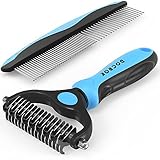
- 【Easy Dematting and Deshedding Tools】: Our Grooming brush and comb combo help effortlessly dematting and reduces shedding. A must have dog brush for shedding, pet supplies, cat supplies, dog supplies metal comb for dogs shedding.
- 【Safe Design】: Soft and protective edge brush and comb creating a comfortable feeling while detangling matted hair and deshedding without hurting your pet. Perfect metal comb for dogs, dematting comb for cats, undercoat rake for dogs double coat.
- 【2-in-1 Rake】: Our undercoat rake is perfect for medium and long-haired dogs and cats and other double coat pets. Wide side for easy dematting, dense side for deshedding. Well made deshedding tool, grooming brush and deshedder brush for dogs.
- 【2-in-1 Comb】: Wide sided for comb knot, smoothing and modeling your pet's hair, dense side for removal of loosen hair, you can use it on the legs, head or tail of your pets where the brush can’t. Perfect metal comb for dogs, dematting comb for cats deshedding tool for dogs.
- 【Sturdy and Comfortable Design】: Premium Stainless steel metal teeth and compact design make our product sturdy and durable. High-quality & lightweight TPR handle make your grooming effortlessly. High-quality undercoat rake for dogs double coat, metal comb for dogs, dematting comb for cats, dog comb for matted hair.
Frequently Asked Questions
What questions should I ask when adopting a dog with medical needs?
Ask what veterinary examinations, tests, treatments, and preventive care the dog has received; what condition is known or still uncertain; what medication, diet, monitoring, or follow-up is planned; and what records will be provided. Clarify who is responsible for pending care and whom to contact after adoption.
How can I tell whether I can manage a dog’s grooming or medical needs?
Write down the specific care tasks and how often they are expected, then consider who will do them, how appointments and backup care will work, and what local providers estimate for the dog’s needs. Include routine and possible urgent veterinary care, grooming, food and supplies, training, and travel care. There is no universal budget or schedule for every dog.
Should I buy a grooming brush or other equipment before adopting?
First ask what grooming the individual dog needs and what tools, if any, are appropriate for its coat and care plan. A qualified groomer or veterinarian can advise when needed. Do not assume that a particular brush, clippers, medicated product, or technique is suitable for every dog.
What’s actually slowing this PC down?
Pick the symptom - the matching free tool is one click away.
Will a shelter or rescue pay for the dog’s ongoing care?
Not necessarily. Ask the organization whether any appointment, discount, foster-to-adopt option, or condition-specific assistance applies to this dog, what it covers, how long it lasts, and what eligibility rules apply. Treat local programs as examples, not standard adoption benefits.
When should I take an adopted dog with known needs to a veterinarian?
The AVMA recommends a veterinary examination after acquiring a dog. Bring available medical information, including vaccination and deworming records, and discuss the disclosed condition, current routine, and unresolved questions with the veterinarian.
The Bottom Line
Adopt on the basis of this dog’s documented history, current care plan, grooming needs, and realistic costs—not a broad label or an assumed benefit. Ask what is known and unknown, confirm support terms, and make a practical plan for household care. Then bring the records to a veterinarian for an examination and dog-specific guidance after adoption.
Quick Recap
Product prices and availability are accurate as of the date/time indicated and are subject to change. Any price and availability information displayed on Amazon at the time of purchase will apply.
Quick wins for a faster PC:
Scan for outdated or missing drivers - takes under a minuteDriver Scan →Repair Windows errors before they cause bigger problemsFix Now →



