
Some links on this page are affiliate links: if you buy through them we may earn a commission, at no extra cost to you.
To adopt a rescue cat, start with a current shelter or rescue listing, confirm that organization’s rules, complete its screening process, meet the cat, review the medical and adoption paperwork, and take the cat home in a secure carrier. Before you travel, check whether the cat is at the shelter, in foster care or at an off-site event; whether appointments are required; what identification and payment are accepted; and whether same-day pickup is possible.
Prepare a quiet room with food, water, a litter box, a hiding place and enrichment before adoption day. Fees and included veterinary care differ by organization, so confirm the local schedule and what vaccines, parasite treatment, microchip and spay/neuter services are covered. A cat may live 15 years or more, making this a long-term commitment to daily care and veterinary support.
As an Amazon Associate I earn from qualifying purchases.
Recommended Free Tools
How do I find a rescue cat that fits my household?
Use the shelter or rescue’s own, current listing as your starting point. Read the full profile rather than choosing from a photograph alone. RSPCA guidance says adopters can filter listings by location, age, temperament and whether a cat can live with children or other pets.
Read the profile for practical details
- Location: Confirm whether the cat is at the main shelter, in a foster home or at an off-site adoption partner.
- Age and temperament: Look for information about activity level, sociability, handling and the kind of companionship the cat seeks.
- Household compatibility: Check notes about children, other cats, dogs, indoor-only living and any bonded companion requirement.
- Availability: Listings can change quickly. Confirm that the cat is still available and ask whether another applicant is already being considered.
Check the organization’s rules before traveling
Age limits, appointment requirements, walk-in hours, payment methods, landlord permission, application procedures and pickup timing are local policies rather than universal adoption rules. An adoption event may use the host organization’s paperwork while the cat’s medical records remain with a partner shelter or foster caregiver.
Popular on Amazon

- Pet Carrier: 17.5” L x 11” W x 11” H, Recommended max load of 16 lbs cats small dogs. Please do not choose your carrier based on weight--please reference your pet's length and height in selecting a pet carrier size.
- Fits for under-seat dimensions of most airlines. Every airline has a specific set of rules and regulations, please contact with airline before flying with your cats small dogs.
- Mesh windows for ventilation, top and side entry with locking zippers for safety. Carrying handles, adjustable shoulder strap which can also be used as seatbelt, and back strap can fasten the pet carrier to your luggage.
- Pet carrier comes with a removable base insert, which creates a solid surface for your pet to stand on, along with a removable & hand washable cozy fleece pet bed, which offers a cozy sleeping space for your traveling cats small dogs.
- "Toys for pets, of textile materials". Mostly used as a Toy of Fabric Pet Home for pets playing and relaxing.
Ask these questions before you leave home:
- Is the cat physically at this location today?
- Do I need an appointment, or can I walk in?
- Can I submit an application or questionnaire in advance?
- Are all household members expected to participate?
- Is same-day departure available, or will pickup be scheduled later?
- Which forms of identification and payment are accepted?
- What must a renter provide to show that pets are permitted?
What should I do before applying to adopt?
Review your household’s schedule, housing, other animals, children and ability to provide daily interaction and enrichment. The goal is not to present a perfect home; it is to give the counselor accurate information so the match is safe and sustainable.
Prepare your household
- Confirm that everyone who lives with you agrees to the adoption and understands who will handle feeding, litter care and veterinary visits.
- Check your lease or building rules for the number of pets, indoor-only requirements, breed or species restrictions, deposits and written approval.
- Plan how the cat will be separated from resident pets at first. Wisconsin Humane Society advises leaving current pets at home and using gradual introductions after adoption.
- Consider work hours, travel, noise, children’s ages and the amount of play, attention and hiding space you can provide.
- Set aside money for food, litter, routine and unexpected veterinary care, and insurance if you choose to purchase it.
Questions to ask about the cat
Bring a written list so an exciting visit does not crowd out important questions. Ask the counselor or foster caregiver:
- Where is the cat living now, and how long has it been there?
- What personality and behavior have been observed in shelter, foster or home settings?
- How does the cat respond to handling, visitors, noise and being alone?
- What is known about vaccination, microchip, parasite treatment, sterilization and medical history?
- What food, litter and routine does the cat currently use?
- Does the cat need to be adopted with a bonded companion?
- Are any tests, treatments or surgeries still pending?
- What return, foster-to-adopt or post-adoption support does this organization provide?
What do I need to bring to a shelter or adoption event?
Bring government-issued photo identification, an accepted payment method and a secure carrier. Verify the exact requirements with the host first, because event and shelter procedures differ.
Documents and information
- Government photo ID showing your current details, if required by the organization.
- Lease, landlord letter or other proof of permission if your housing provider requires it.
- Contact information for your current or previous veterinary practice, if requested.
- Names and basic information for everyone in the household, including resident pets.
- Confirmation of an appointment, pre-adoption questionnaire or event registration when applicable.
Safe transport equipment
Use a rigid, escape-resistant cat carrier with a secure door. Brandywine Valley SPCA requires a carrier for cats and small animals, and Wisconsin Humane Society requires animals leaving the shelter to be transported in one. A cardboard box, open basket or someone’s arms is not a safe substitute.
Place a washable towel or small blanket in the carrier. Keep the carrier closed in the vehicle, secure it so it cannot slide, and go directly to the prepared settling area after pickup. Do not open the carrier outdoors, in a parking lot or while the car is moving.
How does the shelter or rescue application process work?
Most organizations use a screening step, a counselor conversation and a meeting with the cat before final paperwork and payment. The order and timing vary. A shelter may call the step an application, questionnaire, adopter profile or survey.
Complete the questionnaire accurately
BC SPCA uses a pre-adoption questionnaire; Wisconsin Humane Society describes its adopter profile as a starting point for discussion; Best Friends uses a survey at its Sanctuary and applications at other locations. These labels describe similar goals: understanding your home, expectations and ability to meet the cat’s needs.
Answer every question truthfully and explain circumstances that need context. Nashville Humane Association says it may refuse an adoption when an applicant misleads the organization or fails to provide accurate information. An honest answer about a rental, a resident animal or your schedule gives the counselor a chance to suggest a better match or a practical plan.
Also popular on Amazon
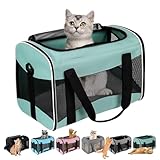
- [PRODUCT DIMENSIONS] Pet travel carrier size : 17x11x11 inches, recommended up to 15 lb pets, it is suitable for large, medium cats and small dogs. Please don't choose your airline cat carrying case based on weight, please refer to your pet's length and height when choosing a pet carrier size.
- [AIRLINE APPROVED] This cat carrier is designed with airline approved, it can fit comfortably under most flight seats, we can take our pets wherever we want. Dog travel carrier offers two attachment loop handles that can be used as a dual harness or as a luggage strap for balanced carry and secure transport.
- [EXCELLENT MATERIAL] Collapsible cat carrier is made of polyester fabric, supported by a steel ring, washable, wear-resistant and durable. The three sides and the top of this pet carrier are nylon mesh, scratch-resistant and not easy to damage, it can not only check your pet in real time, but also ensure enough air circulation.
- [SAFE AND COMFORTABLE] Dog travel bag has metal zippers on the top and side entrances, durable and not easy to deform, it allows your pets to enter and exit easily. The cat carrying case is equipped with an anti-escape safety buckle, which can effectively prevent pets from accidentally falling. It is suitable for car rides and vet rides.
- [PORTABLE AND FOLDABLE] Pet travel carrier comes with a detachable and hand washable wool pet bed, it can provide a comfortable sleeping space for your traveling pet. The cat travel case comes with an adjustable shoulder strap and handle for easy portability. When not in use, you can fold it up for storage.
Talk with an adoption counselor
The conversation may cover your housing, household members, work schedule, other pets, children, previous pet experience and plans for veterinary care. It is also your opportunity to ask about behavior, medical history, litter habits, diet and support after adoption.
Approval is not a guarantee that a particular cat will remain available. Organizations may be reviewing several applicants, waiting for a medical procedure or deciding that another match better fits the cat’s needs.
What’s actually slowing this PC down?
Pick the symptom - the matching free tool is one click away.
How should I meet the cat and decide whether it is a good match?
Spend enough time with the cat to ask questions and observe its responses, but do not treat a brief shelter interaction as a prediction of exactly how the cat will behave at home. RSPCA guidance describes the meeting as a chance to discuss personality, behavior and care, and notes that some cats need more than one visit.
Observe and ask, rather than forcing contact
- Watch whether the cat seeks interaction, retreats, plays, vocalizes or becomes overwhelmed.
- Ask the counselor or foster caregiver how the cat behaves after settling, during feeding and around ordinary household activity.
- Ask what situations have not been observed. A lack of information is different from a guarantee that a behavior will never occur.
- Discuss the cat’s energy level and enrichment needs alongside its affectionate behavior.
- Ask whether the cat has lived with children, cats or dogs, and how those observations were made.
Do not stage an in-shelter introduction with your pets
Wisconsin Humane Society recommends leaving current pets at home and introducing them gradually after adoption. A shelter is stressful and unfamiliar, so an interaction there may not be safe or representative. Plan separate spaces and a slow transition instead.
How much does it cost to adopt a rescue cat?
There is no universal adoption fee. The local shelter, rescue or event host sets the amount, and the fee may differ by cat, location, age or promotion. Ask for the current fee schedule before committing to travel.
What the fee may include
Common inclusions are age-appropriate vaccines, microchipping, parasite treatment and spay or neuter surgery. BC SPCA lists assessment, vaccines, parasite treatment, spay/neuter and microchip services among its cat-adoption inclusions. Other organizations may provide some services, arrange them after adoption or charge separately.
The Tool Desk
Outbyte Driver Updater FREEScan for outdated or missing drivers - takes under a minuteDriver Scan →Outbyte PC Repair FREEClear out junk files and repair common Windows errorsFree Scan →Ask for a written explanation of:
- Services already completed and their dates.
- Any surgery, booster, test or treatment still pending.
- Medication that must continue at home.
- When and how to register the microchip.
- What veterinary records you will receive.
Budget beyond the adoption fee
Plan for food, litter, bowls, a carrier, scratching surfaces, toys, routine examinations, preventive care and unexpected illness or injury. RSPCA identifies food, insurance and veterinary care as ongoing ownership costs. A lower fee does not mean a lower long-term cost, and a higher fee does not by itself indicate better compatibility.
What paperwork and medical information should I review before taking the cat?
Before payment, read the adoption contract and ask the staff member to explain any clause you do not understand. Confirm the organization’s return policy, ownership-transfer requirements, restrictions on breeding or outdoor access and any obligations for completing pending veterinary care.
Also popular on Amazon

- High Quality Design:Sturdy steel cage structure and wooden support board maintain good spatial stability and shape. Breathable mesh windows on four sides,which can ensure good air circulation and views,make pets have a comfortable and safe travel.It can also be easy for you to check on your pets.There is a front pocket to store pet toys,treats,etc.
- Dimension and Weight:Made of durable tear-resistant fabric.Four easy entrances for pets. Dimensions: 17 inch x 11 inch x 11 inch (L*W*H), suitable for pets up to 16 lbs.Please don't choose your carrier based on weight only,consider your pet's length and height when choosing a carrier.
- Airline Approved & Safty:Can be placed under the seats of most airplanes(Four non-slip feet on the bottom to prevent movement), and comfortably on the seat next to you in a car or bus.It has a adjustable shoulder strap.Can also be fastened to the car seat with a safety belt or shoulder strap to keep your pet safe.
- Easy to Clean :You can clean the stains and dirt on the surface with a soft cloth.Soft mat inside the pet carrier is removable and washable.You can take it out and wash it easily to solve all stains.
- Easy to Collapsible & Lightweight:When not in use,fold it into a flat,space saving and easy to store.Only 2.2lbs,it's easier to carry around.It can also used as a toy of pet house,allowing pets to play in a safe space to relax and rest.
Verify the medical handoff
- Ask for the cat’s veterinary history and vaccination dates.
- Confirm microchip registration instructions and whose contact information is currently attached.
- Ask which parasite treatments were given and when the next dose is due.
- Confirm spay or neuter status. Nashville Animal Care and Control notes that an animal may need to remain at the facility until surgery is complete.
- Get written instructions for medication, diet, litter and follow-up appointments.
RSPCA says adopters should receive veterinary history, settling-in advice and ongoing support. If a record is not available on adoption day, ask when it will be sent and whom to contact.
What is different about adopting from a shelter versus an adoption event?
The core decision is the same: match the cat’s needs to your household, complete the host’s screening, meet the cat and finalize the contract. The logistics can be very different, so confirm the event’s process instead of assuming it follows the main shelter’s routine.
| Point to confirm | At a shelter | At an adoption event |
|---|---|---|
| Cat’s location | Usually the shelter, although some listings identify foster or partner locations. | May be an event venue, foster home, partner shelter or another off-site adoption center. |
| Application process | May involve an intake desk, queue, appointment or on-site questionnaire. | May use the host’s questionnaire, a partner organization’s application or a preapproved profile. |
| Medical records | Often held by the shelter’s staff, subject to that organization’s release process. | May be split between the event host, partner organization and foster caregiver. |
| Departure timing | May be same-day or delayed for surgery, treatment or administrative processing. | May be same-day, scheduled pickup at the shelter or a later handoff from foster care. |
| Selection | Often includes the animals currently housed at that facility. | Usually limited to the cats brought or listed by participating organizations. |
| Support after adoption | Depends on the shelter’s return, behavior and follow-up policies. | May come from the event host, the partner rescue or the foster organization; ask which contact handles each issue. |
Wisconsin Humane Society notes that foster and off-site animals can require separate meeting arrangements. Nashville Animal Care and Control directs adopters to contact foster caregivers in some cases. These examples illustrate why an event listing should state exactly where and how the meeting will occur.
What happens if the cat is in foster care?
A foster caregiver may know more about the cat’s behavior in a home than a shelter listing can show, but the cat may not be available for an unscheduled visit. Contact the organization for the caregiver’s meeting process rather than going to a private address without an appointment.
Use the foster conversation to fill gaps
- Ask how the cat handles ordinary household sounds, visitors, handling and time alone.
- Ask about litter-box habits, food preferences, sleep routine and hiding places.
- Ask how the cat behaves with children or other animals if those interactions have actually occurred.
- Confirm who will complete the contract, collect payment and provide medical records.
- Ask whether foster-to-adopt is available and what happens if the match is not suitable.
Some organizations have different procedures for foster animals, so the listing’s contact person is the authority on scheduling and pickup.
How do I prepare my home before the cat arrives?
Set up a quiet settling area before adoption day. RSPCA and SPCA of Northern Virginia emphasize safe preparation, food, enrichment and litter planning. A separate room or secure section of the home gives a frightened cat control while you establish a routine.
Do these 3 things before closing this tab:
1Repair Windows errors before they cause bigger problems2Fix the driver behind crashes, sound loss and screen glitches3Clear out junk files and repair common Windows errorsSet up the essentials
- Food and fresh water placed away from the litter box.
- A litter box with the type of litter the cat already uses when possible.
- A hiding place such as a covered bed or sturdy box.
- A scratching surface and a small amount of quiet enrichment.
- Secure windows, screens, doors, balconies, toxic plants, medications, strings and other hazards.
- A carrier that remains available as a familiar safe place.
Keep the first transition calm
Take the cat directly from the vehicle to the prepared room. Open the carrier only after the door is closed and the room is secure. Start with familiar food and litter when possible, keep activity quiet and allow the cat to approach at its own pace. Expand access to the rest of the home gradually as eating, drinking, litter use and comfort improve.
Independent reader supportYour contribution helps us test, update, and keep practical guides available for everyone.How do I introduce a rescue cat to children and other pets?
Use separation and gradual introductions rather than immediate face-to-face contact. The shelter’s notes can guide your plan, but they cannot replace a controlled transition in your home.
Also popular on Amazon
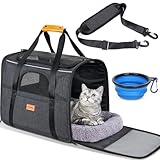
- 【 Spacious & Comfortable Cat Carrier 】The large cat carrier provides ample space for your feline friend to move, turn, and stretch during travel. Measuring 17.3 x 12.2 x 13.4 inches, it is wider and taller than most cat carriers, ensuring your pet feels comfortable and at ease while on the go.
- 【Balanced Mesh Design】Unlike other cat carrier hard, our cat carrier soft strikes the perfect balance with 40% mesh surface area. This ensures your pet can observe the surroundings and breathe easily while feeling safe and secure at the same time. The cat carrier large is suitable for pets in all kinds of situations.
- 【Built-in Dual-Sided Cushion】The detachable pad offers two distinct comforts: a cool side for summer and a super-soft, warm side for winter. You can easily flip it to match the season, providing the perfect temperature for your pet in any weather.
- 【Includes Foldable Bowl】Designed for on-the-go use, our foldable bowl carries 410g of food or 20oz of water. After use, simply collapse it and attach it directly to your pet's collar or leash, perfect for keeping your pet fueled and hydrated anywhere.
- 【Safe & Durable】Safety is our top priority, and the pet carrier for cat is equipped with a secure buckle to prevent your pet from escaping. The cat carrier soft is made of reinforced snow silk fabric and hard mesh material, ensuring durability and preventing any tearing during long-distance travel.
With children
- Explain that the cat chooses when to approach and that hiding is not misbehavior.
- Supervise all handling and prevent chasing, cornering, pulling or waking the cat.
- Create a child-free retreat where food, water and litter can remain undisturbed.
With resident cats or dogs
- Keep the new cat in a separate room initially.
- Exchange bedding or allow scent investigation before visual contact.
- Use controlled, short introductions and provide escape routes and separate resources.
- Ask the organization for behavior guidance if either animal shows persistent fear or aggression.
Do not bring your resident pet to the shelter for an improvised introduction. Wisconsin Humane Society specifically advises against that approach.
What can delay or stop an adoption?
A delay does not necessarily mean the cat is unavailable permanently. Common causes include a pending surgery, additional medical care, an incomplete application, missing landlord permission, a required household-member conversation or a meeting that must be arranged with a foster caregiver.
Windows Errors? Fix Them Before They Spread
Repair common Windows errors and clear accumulated junk for a smoother, more stable PC - no reinstall needed.Free scan · no reinstallOutdated Drivers Are Slowing You Down
One free scan finds every outdated or missing driver and matches the right update for your exact hardware.Free scan · exact hardware matchResolve the issue systematically
- Ask the organization to identify the exact missing requirement.
- Request the deadline, acceptable documents and the correct contact person.
- Confirm whether the cat can be held, whether another applicant is ahead of you and whether a new appointment is needed.
- Do not make nonrefundable travel or supply decisions based on an assumption of same-day approval.
Organizations may also decide that a different household is a better match. Accurate answers and a flexible approach make it easier for staff to recommend another cat whose needs fit your home.
What support should I expect after adoption?
Keep the shelter, rescue and foster contact details with your adoption paperwork. Best Friends says adopters can seek behavior and training guidance, and some locations provide post-adoption check-ins. It also documents a lifetime return policy and foster-to-adopt at some locations, but those options are not universal.
Ask before leaving:
- Who should answer medical or behavior questions?
- What is the return process if the placement fails?
- Is there a time-limited adjustment period or foster-to-adopt arrangement?
- Which veterinary provider should handle follow-up care?
- How should a lost microchipped cat be reported?
Adoption is a long-term commitment. Best Friends Animal Society reported that 396,000 cats and dogs were killed in shelters in 2025; that national figure provides context for choosing adoption, but it should not be treated as a statistic for any particular local shelter without local data.
Adoption-day checklist
- Current listing and organization contact details checked.
- Cat’s location and meeting arrangement confirmed.
- Landlord or housing permission verified.
- All required household members informed and available.
- Government photo ID packed.
- Payment method confirmed.
- Secure carrier and washable liner ready.
- Quiet settling room prepared with food, water, litter, hiding place and enrichment.
- Questions about behavior, medical care, diet, litter, bonded status and pending treatment written down.
- Contract, veterinary records, microchip instructions and support contacts collected before departure.
Frequently Asked Questions
Can I adopt a rescue cat if I rent my home?
Often, but the organization may ask for proof that cats are permitted, such as a lease clause or landlord letter. Check pet limits, deposits and written-approval rules before applying, because permission from one property manager does not override a building’s restrictions.
Quick wins for a faster PC:
Fix the driver behind crashes, sound loss and screen glitchesFind Drivers →Repair Windows errors before they cause bigger problemsFix Now →Is same-day pickup guaranteed at an adoption event?
No. A cat may need surgery, additional treatment, record transfer or a scheduled handoff from foster care. Ask the event host whether approved adopters leave with the cat or collect it later.
Should I bring my current cat to meet a shelter cat?
Usually not. Wisconsin Humane Society advises leaving resident pets at home and using gradual introductions after adoption, since shelter encounters can be stressful and misleading.
What if the rescue cat and my household are not a safe match?
Contact the organization promptly rather than giving the cat away or moving it elsewhere. Return, foster-to-adopt and post-adoption behavior policies vary, so confirm those terms before signing the contract.
How do I know what food and litter to buy first?
Ask the shelter or foster caregiver what the cat already uses and begin with those products when possible. A sudden change can add stress during the move; transition to a different diet or litter gradually with veterinary guidance.
Free tools Windows power users keep installed
One-click scans. No signup required.





Leave a Reply