
Some links on this page are affiliate links: if you buy through them we may earn a commission, at no extra cost to you.
Ask your veterinarian to assess a longevity medication as an individualized, prescription-level decision—not as a general anti-aging purchase. Bring your dog’s age, weight, breed or size, diagnoses, medicines and supplements, recent laboratory and medical records, planned procedures, and your quality-of-life goals. Then ask what product is actually approved and available, whether your dog fits the intended population or a legitimate trial, which outcome will be measured, what harms and interactions are plausible, what monitoring is required, and when treatment would be stopped.
At present, no published result establishes that a longevity drug extends the lifespan of pet dogs. Several products are in development, and rapamycin remains an actively studied, generally extra-label option whose canine benefit-risk balance and dosing are not established. A veterinarian can help you separate approved treatment, a regulated clinical trial, and unsupported self-medication.
As an Amazon Associate I earn from qualifying purchases.
What’s actually slowing this PC down?
Pick the symptom - the matching free tool is one click away.
What should I bring to the appointment?
A useful consultation starts with a complete picture of the individual dog. Create a one-page record and update it immediately before the visit.
- Identity and measurements: age, current weight, body-condition score if known, breed or mix, sex, and whether the dog is neutered.
- Medical history: diagnoses, previous cancers, kidney or liver problems, diabetes or glucose abnormalities, infections, seizures, heart disease, and any recent changes in appetite, thirst, urination, mobility, sleep, or behavior.
- Every substance the dog receives: prescription drugs, over-the-counter products, preventives, vitamins, herbal products, compounded medicines, and treats used to deliver medication. Include dose, timing, and how often each is given.
- Records: recent bloodwork, urinalysis, imaging, pathology, vaccination and parasite-prevention history, and discharge notes from other clinics.
- Upcoming events: dental work, anesthesia, elective surgery, cancer treatment, travel, or a planned change in diet or exercise.
- Your goal: more remaining lifespan, more healthy years, better mobility, preserved cognition, improved quality of life, or treatment of a defined disease. These are different endpoints and require different evidence.
Bring the actual medication bottles or clear photographs of labels. Ask the clinic whether it wants records sent in advance; this allows the veterinarian to check interactions and decide which baseline tests are useful before discussing a prescription or trial.
Popular on Amazon
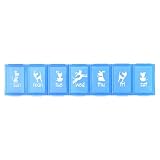
- 7-DAY PET MEDICATION ORGANIZER: Keep your pet’s medication routine organized with this weekly pill organizer for dogs. Seven individual compartments help you sort and plan daily pills, vitamins, and supplements for easy access throughout the week
- LARGE CAPACITY COMPARTMENTS: Designed with plenty of room for your dog’s daily medications, vitamins, supplements, and treats. The large compartments help keep pet essentials together in one convenient location
- TRANSPARENT EASY-OPEN LIDS: Clear compartment lids make it easy to see what is stored inside, helping you quickly identify medications and check daily supplies. Simple-to-use lids provide convenient access when it is time for your pet’s medication
- VERSATILE PET STORAGE: More than a dog pill organizer, this weekly medicine planner can also be used to organize small treats, vitamins, supplements, and other pet essentials. A practical solution for keeping your pet’s daily routine on track
- CONVENIENT WEEKLY PLANNING: Organize seven days of pet medications in one compact container to help simplify daily care at home or while traveling. Blue design makes this pet medication and vitamin organizer a useful addition to your pet care supplies
How do I ask whether a product is approved or experimental?
Start with the regulatory question: “Which longevity medications are FDA-approved for dogs, and which are experimental or being used extra-label?” FDA explains that approval means a drug is safe and effective when used according to its label. Federal law also requires a veterinarian’s involvement for prescription animal drugs, and state rules may add requirements.
Ask the veterinarian to identify the product’s exact status in writing:
- Approved: the FDA-approved label specifies the species, indication, dose, administration, warnings, and monitoring information.
- Conditionally approved: a product may be available under a limited approval pathway with defined conditions and remaining evidence requirements.
- Investigational: the product is being studied under a clinical-trial protocol. Eligibility, consent, visits, and data collection are controlled by the study.
- Extra-label (off-label): a licensed veterinarian may use an approved human or animal drug under applicable veterinary conditions, but the use is not an FDA-approved canine longevity indication.
- Unregulated supplement or internet product: a supplement is not automatically equivalent to an approved drug, and a marketing claim is not evidence of canine safety or lifespan benefit.
Do not treat a company milestone, a recruitment announcement, or a patent as marketing approval. Ask who would legally prescribe the product, where it would be dispensed, and what documentation supports its use.
What longevity medications are being developed for dogs?
One company, Loyal, describes three prescription products in development. The company states that FDA approval is not guaranteed and that exact mechanisms are confidential until approval. The descriptions below are development targets, not proof that any product is approved, available for routine prescribing, or effective.
| Product | Company-described intended population | Administration and stated aim | What is established |
|---|---|---|---|
| LOY-002 | Dogs age 10 or older and weighing at least 14 lb | Flavored daily pill; intended to improve insulin sensitivity and lower insulin | In development. Loyal reports a double-blinded, placebo-controlled STAY efficacy study recruiting 1,300 senior dogs through 70 veterinary practices. |
| LOY-001 | Dogs age 7 or older and weighing at least 40 lb | Long-acting injection | In development; approval and routine availability are not guaranteed. |
| LOY-003 | Dogs age 5 or older and weighing at least 60 lb | Daily pill | In development; approval and routine availability are not guaranteed. |
The STAY figure—1,300 dogs at 70 practices—is a company-reported study input, not an efficacy result. Recruitment does not show that a product extends life, improves healthspan, or is safe for every enrolled dog. Ask whether a proposed product is still trial-only, whether enrollment is open in your region, and what happens if your dog is assigned to placebo or leaves the study.
Is rapamycin safe for dogs, and is it approved?
Rapamycin inhibits the mTOR pathway and is being investigated in laboratory species and companion dogs. A 2025 peer-reviewed review describes canine longevity use as active research. A 2024 veterinary review states that rapamycin had no FDA-approved veterinary indication in that review and that its canine benefit-risk ratio and dosing could not yet be assessed on an evidence-based basis.
Also popular on Amazon

- AWARD-WINNING DESIGN: Recipient of the Arthritis Foundation Ease-of-Use Commendation for its effortless, push-button opening. Perfect for individuals with arthritis or limited dexterity, making medication management easier and pain-free. A practical and thoughtful stocking stuffer for loved ones who appreciate simple, everyday solutions that make life easier
- PHARMACIST DESIGNED: Features four silicone “feet” that firmly grip the counter, keeping the planner stable and secure. This thoughtful design allows for easy one-handed opening, making medication management simpler and more convenient
- LARGE PILL STORAGE COMPARTMENTS: Each AM/PM section holds up to 35 Aspirin. Perfect for organizing large supplements, fish oil, vitamins, and daily medications. Ideal pill organizer for arthritis hands, seniors, and travel use
- CONTOURED SCOOP BOTTOM: The specially designed curved base lets you easily remove pills using just your fingertips, eliminating the need for digging or tipping, making medication access quick and hassle-free
- BUILT TO LAST: Crafted with high-quality BPA-Free materials, this durable design is made to endure repeated use over time without wear, ensuring long-term reliability and consistent performance for your daily medication needs
That review discusses possible decreased glucose tolerance and delayed wound healing as concerns from experimental use. Those concerns matter if a dog has diabetes risk, receives medicines affecting glucose, has an infection, or is scheduled for dental work or surgery. They do not establish that every dog will experience those effects, nor do they provide a general-purpose dose.
One study discussed in the 2024 review involved 324 pet dogs with appendicular osteosarcoma. The review reports no significant difference in disease-free interval or survival time between treatment groups. This is not evidence of preventive longevity benefit in otherwise healthy dogs. Ask your veterinarian to distinguish findings in cancer treatment, laboratory animals, and healthy aging from outcomes relevant to your own dog.
What outcome should the medication improve?
“Live longer” is too broad to guide a prescription. Ask, “What outcome are we trying to improve, and how will we know?” Possible endpoints include:
- Remaining lifespan: time until death from any cause, which requires long follow-up and careful study design.
- Healthspan: time without disabling disease or loss of function.
- Quality of life: comfort, appetite, sleep, interaction, mobility, and enjoyment, tracked with a consistent questionnaire or diary.
- Cognition or mobility: measurable changes in navigation, sleep-wake patterns, stairs, gait, or willingness to exercise.
- Disease-specific control: a glucose, kidney, inflammatory, or cancer endpoint that may not translate into longer life.
Ask for the starting value, the target change, the time allowed to see it, and the rule for deciding that treatment is not helping. A medication that changes a laboratory number without improving how a dog functions may not meet your goal.
What evidence exists in dogs?
Ask the veterinarian to rank the evidence rather than presenting all studies as equal. A randomized canine outcome is more directly relevant than a mouse study or a theory about aging biology.
- Randomized canine outcomes: look for a controlled comparison, a prespecified endpoint, adequate follow-up, and published results.
- Canine safety or observational data: useful for detecting possible harms, but less able to prove that a drug causes longer life.
- Laboratory-species evidence: helps explain a biological pathway but does not establish a safe canine dose or benefit.
- Mechanistic theory or company development claims: hypotheses that still require clinical evidence.
Ask whether the evidence includes dogs of your dog’s age, size, breed type, sex, and health status. Ask how missing data, dropouts, placebo effects, and competing causes of death were handled. At present, no published result establishes a canine lifespan extension from a longevity medication. That absence should be part of informed consent.
Also popular on Amazon

- AM/PM COMPARTMENTS: Weekly AM/PM pill dispenser with 14 compartments helps you plan & manage morning & evening medication doses for each day of the week
- LARGE CAPACITY: Each compartment holds up to 12 aspirin-sized tablets, providing ample room for vitamins, supplements & daily medications
- CONTOURED BOTTOMS: Planner compartments feature contoured bottoms so retrieving your medication out of the organizer is simple & hassle-free every time
- CLEAR LID VISIBILITY: Transparent clear lids keep your medication visible at a glance, helping you stay on track with your medication schedule throughout the week
- COMPACT PORTABLE DESIGN: Blue rectangle-shaped easy-open pill organizer measures 7.5 x 3.75 x 1.45 inches & weighs 0.24 pounds for easy storage & portability
Which questions should I ask about safety and interactions?
Use direct, specific questions instead of asking only whether a product is “safe.” Request the veterinarian’s plan for foreseeable harms, interactions, and emergencies.
- “Does my dog’s age, breed or size, weight, diagnoses, laboratory profile, and current medication list make this reasonable?”
- “Which side effects are expected, which are urgent, and which symptoms should make me withhold a dose?”
- “Could this affect glucose tolerance, immunity, the liver or kidneys, or wound healing?”
- “Could it interact with any prescription, preventive, supplement, or food my dog receives?”
- “How should we handle a missed dose, vomiting, diarrhea, or accidental extra dose?”
- “How far before a dental procedure, anesthesia, biopsy, or surgery should treatment be paused, if at all?”
- “What would make us reduce, pause, or stop treatment, and whom do I call after hours?”
Do not change a dose or combine products based on an online schedule. Prescription oversight exists so a veterinarian can evaluate the whole medication list, explain uncertainty, and coordinate changes with other clinicians.
Crashes, No Sound, or Screen Glitches?
Random freezes, missing sound and display glitches usually trace back to one bad driver. Find and replace yours safely.Free scan · under a minuteWindows Errors? Fix Them Before They Spread
Repair common Windows errors and clear accumulated junk for a smoother, more stable PC - no reinstall needed.Free scan · no reinstallWhat tests and follow-up might be needed?
There is no universal longevity-drug monitoring panel. The veterinarian should tailor testing to the product, the dog’s risks, and the intended endpoint. Ask for a written schedule before starting.
Before treatment
- Confirm weight, body condition, vital signs, and a complete physical examination.
- Review prior bloodwork and obtain updated tests when the history or product warrants them, potentially including blood counts, chemistry values, glucose, kidney and liver markers, and urinalysis.
- Document baseline mobility, cognition, appetite, sleep, and quality-of-life scores if those are treatment goals.
- Record every medicine and supplement, including recent antibiotics, steroids, diabetes drugs, and products that may affect bleeding or healing.
During treatment
- Set the first recheck date and the tests that will be repeated.
- Track appetite, vomiting, diarrhea, thirst, urination, energy, gait, skin or wound changes, and behavior at home.
- Use the same quality-of-life or mobility measure at each interval so a small change is not mistaken for a treatment effect.
- Ask who reviews results, how quickly you receive them, and what threshold triggers a call or treatment pause.
At reassessment
Ask the veterinarian to compare the dog with its own baseline, not with an idealized “senior dog.” If the target endpoint has not improved, harms outweigh possible benefits, or a new illness changes the risk profile, agree on a stop or change plan.
How do I compare two longevity options?
When a veterinarian discusses more than one candidate, compare them on the same axes. This prevents a convenient daily pill from seeming better simply because its uncertainties are less visible than an injection’s.
| Decision axis | Questions to ask |
|---|---|
| Regulatory status | Is it fully approved, conditionally approved, investigational, or extra-label? |
| Evidence | Are there randomized canine outcomes, canine safety data, laboratory-species findings, or only a theory? |
| Target dog | What age, weight, breed or size, diagnoses, laboratory values, and exclusions apply? |
| Administration | Is it a daily tablet, a long-acting injection, or a trial-only protocol? Who gives it? |
| Monitoring burden | How often are examinations, laboratory tests, interaction reviews, and follow-ups required? |
| Endpoint | Is the goal lifespan, healthspan, quality of life, cognition, mobility, or treatment of a defined disease? |
| Uncertainty and reversibility | What remains unknown, what information is confidential, and what happens if treatment is stopped? |
Choose only after the veterinarian explains why the proposed option fits this dog better than observation, preventive care, or a legitimate trial.
Also popular on Amazon

- Easy to Fill: AUVON AM PM pill organizer 7 day is designed to open on the same side and the lid stays open at 180°, so it is easier and more efficient to fill and retrieve your pills
- Large storage: AUVON weekly pill organizer consists of seven daily pill boxes, each with two compartments for day and night. A single compartment can hold 8 fish oils or 16 capsules. The one single compartment size: 1.5" x 1.7" x 0.8", and the daily pill box size: 3.1" x 1.7" x 0.8"
- High Quality: The shell and inner hinges are reinforced for 10,000 uses. The medication organizer letters were UV printed, which is long-lasting for 10,000 times of use, so you do not need to worry about the rub-off labels
- Portable Designed: Each day of the pill holder can fit in any of your wallet or pockets, and the whole morning and night pill boxes with a black case can protect your medication privacy while holding a week's pills for your travel
- Safe for Use: Made of BPA-free materials that are safe for humans, you can safely store your daily pills in this daily vitamin organizer. Tips: Please put your pills in a dry environment
Would a clinical trial be safer or more informative?
A legitimate trial can provide structured eligibility screening, a defined protocol, adverse-event reporting, and systematic follow-up. It may also involve placebo, extra visits, travel, restrictions on other treatments, or the possibility that your dog will not receive the active product.
Ask these questions before consenting:
- Who is the sponsor and which veterinary practice or institution is responsible?
- What are the inclusion and exclusion criteria?
- Is there randomization or placebo, and will you be told which group your dog entered?
- Which visits, tests, and costs are covered, and what expenses remain yours?
- Who owns the data, and how are serious adverse events handled?
- What happens when the study ends, or if your dog becomes ill or needs surgery?
“Would a legitimate clinical trial be safer or more informative than trying an unapproved product?” is an appropriate question. Do not enroll through a page that cannot identify the responsible veterinarian, consent process, protocol, and emergency contact.
Independent reader supportYour contribution helps us test, update, and keep practical guides available for everyone.What proven care should come first?
A longevity medication should not displace interventions with established veterinary value. Ask whether your dog’s fundamentals are optimized before adding experimental uncertainty.
- Weight control with a measured diet and regular reassessment.
- Dental examinations and treatment of painful oral disease.
- Vaccination and parasite prevention appropriate to the dog’s lifestyle and location.
- Routine examinations and screening for age-related kidney, liver, endocrine, heart, eye, and orthopedic problems when indicated.
- Safe, regular exercise adapted to mobility and cardiac status.
- Prompt treatment of diagnosed disease and a plan for pain control.
- Environmental enrichment, predictable routines, and monitoring for cognitive or behavioral change.
These measures may improve quality of life even when no longevity drug is chosen. They also give the veterinarian a stronger baseline against which to judge any new treatment.
Recommended Free Tools
What are warning signs that an online product is not a sound choice?
Pause before purchasing when a seller promises a specific number of extra years, cites only mouse results, hides the ingredient amount, provides no prescribing veterinarian, or says FDA approval is unnecessary. A product that urges you to bypass your veterinarian cannot provide the individualized screening and follow-up that prescription use requires.
Be equally cautious with compounded or imported products whose concentration, storage, identity, or quality controls are unclear. Ask your veterinarian and pharmacist how authenticity, dispensing, and reporting of adverse events would be handled before giving anything to your dog.
Also popular on Amazon

- 💊Large Capacity Medicine Organizer - Overall size: 5 x 5 x 1 inches, 7 slot, each slot size: 1.7 x 1.2x 0.9 inches, each can perfectly hold 7 fish oil/9 vitamins/20 capsules, easy to dispense every day.
- 💊BPA-Free Materials - This pill container is made of food-grade PP plastic, with excellent durability and sturdiness, not easy to damage and break, BPA-Free, can safely store your medication.
- 💊Easy Open Design - Easy to open and close, friendly to the elderly, kids or arthritis. after being locked, it will remain closed, and the secure buckle will ensure that your pill will not slip out.
- 💊Upgraded Printing Technology - The date is more clearly and explicitly marked, not easy to fall off, so you can more easily distinguish and view, can be used up to 10000 times.
- 💊Customer First - KAPENS is committed to customer experience, if you have any questions, we provide 24-hour online after-sales service.
How can I make a shared decision at the end of the visit?
Before leaving, ask the veterinarian to summarize the decision in plain language:
- What is the proposed product and its regulatory status?
- Why does it fit—or not fit—this dog?
- What benefit is realistic, and what evidence supports it?
- What baseline tests and follow-up schedule apply?
- What symptoms require an urgent call?
- What is the stop, pause, and surgery plan?
- When will we reassess whether the dog is better, unchanged, or worse?
Write down the answers, the clinic’s daytime and after-hours contacts, and the next appointment. If the veterinarian recommends against a longevity medication, ask what health problem should be addressed instead and when the decision can be revisited. Declining an unproven drug is a legitimate medical decision, not a failure to pursue healthy aging.
Quick wins for a faster PC:
Scan for outdated or missing drivers - takes under a minuteDriver Scan →Clear out junk files and repair common Windows errorsFree Scan →Fix the driver behind crashes, sound loss and screen glitchesFind Drivers →Frequently Asked Questions
Is LOY-002 available yet?
LOY-002 is described by its developer as a product in development for dogs age 10 or older and weighing at least 14 pounds. The company reports recruitment for a 1,300-dog, 70-practice efficacy study, but recruitment is not an approval or a demonstrated lifespan benefit; ask a veterinarian whether any regulated enrollment is actually open in your area.
Can a supplement replace a longevity prescription?
No. Supplements are not automatically equivalent to an approved animal drug, and a label promising “anti-aging” does not establish canine safety, dose, purity, or benefit. Show every supplement to the veterinarian because it can interact with prescription medicines or complicate interpretation of laboratory results.
What should I do if my dog is scheduled for surgery while taking an experimental drug?
Tell the surgeon and prescribing veterinarian as soon as the procedure is planned. They should decide whether and when to pause treatment after considering wound healing, glucose effects, anesthesia, the drug’s duration, and the reason it was prescribed; do not stop it on your own.
How can I track whether a treatment is helping my senior dog?
Choose a few observable measures before treatment—such as appetite, comfortable walks, stairs, sleep, interaction, or a validated quality-of-life score—and record them consistently. Bring the log to rechecks so the veterinarian can compare it with baseline findings rather than relying on memory.
The Tool Desk
Outbyte PC Repair FREERepair Windows errors before they cause bigger problemsFix Now →Outbyte Driver Updater FREEFix the driver behind crashes, sound loss and screen glitchesFind Drivers →What does extra-label use mean for my dog?
It means a licensed veterinarian is using an approved human or animal drug in a way not covered by its label, under applicable veterinary conditions. The veterinarian remains responsible for evaluating the indication, explaining uncertainty, prescribing lawfully, and monitoring the dog; extra-label use is not the same as FDA approval for canine longevity.





Leave a Reply