
Windows Errors? Fix Them Before They Spread
Repair common Windows errors and clear accumulated junk for a smoother, more stable PC - no reinstall needed.Free scan · no reinstallCrashes, No Sound, or Screen Glitches?
Random freezes, missing sound and display glitches usually trace back to one bad driver. Find and replace yours safely.Free scan · under a minuteSome links on this page are affiliate links: if you buy through them we may earn a commission, at no extra cost to you.
The safest bear-proofing plan is simple: remove food and odors, keep garbage inaccessible until collection morning, and stop using seed or suet feeders whenever bears are active. Store cans and pet food inside a sturdy locked building or an approved bear-resistant container; clean spills and containers; and follow your local wildlife agency and waste hauler’s rules. No feeder is universally safe in bear country, and screened enclosures do not stop bears.
These measures protect more than your property. Unsecured food can reward bears, reduce their fear of people, and increase the chance of a dangerous conflict. The practical steps below cover trash, bird feeding, pet food, collection-day timing, and what to do when a bear is already visiting.
As an Amazon Associate I earn from qualifying purchases.
What are the three rules for bear-proofing a home?
Start with three rules that apply to every attractant:
- Remove access and odor. Bears follow powerful noses to garbage, recyclables, bird seed, suet, pet food, and other smells. BearWise notes that the odor does not have to be pleasant to attract investigation.
- Delay curb exposure. Keep waste in a garage, basement, sturdy locked building, or certified bear-resistant container. Put it at the curb on the morning of pickup, not the night before.
- Treat bird feeding as optional during bear activity. Massachusetts wildlife guidance says there is no safe time of day or year to keep bird feeders out in bear country. Other agencies permit feeding only with strict controls in some circumstances.
Local rules can be stricter. State, provincial, municipal, and waste-provider requirements differ, so verify container specifications and collection practices before changing your setup.
Popular on Amazon
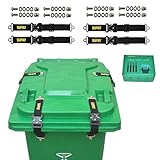
- Animal & Weather Resistant : A practical trash can lock strap that keeps your outdoor bin sealed—helps deter bears, raccoons, squirrels, pets, and gusty wind from opening or tipping the lid. Ideal for home, curbside, camping, and other outdoor use. A simple trash can lock solution for raccoon proof garbage cans and bear proof trash can setups."
- Bite-Resistant & Durable : Made with all-metal hardware and high-strength nylon, these trash can lock straps for animals can withstand chewing, scratching, and clawing from bears, raccoons, squirrels, dogs, and other pets. Designed for all-weather outdoor environments.
- Heavy-Duty X-Box Stitching : Each strap connection is reinforced with X-box cross-stitching, firmly attaching the nylon to metal hooks and locking buckle. This greatly improves tensile strength and tear resistance, making your garbage can lock more durable and long-lasting.
- Easy Installation : Drill a hole with a bit equal to or slightly larger than 8 mm (5/16") and secure the strap using the included screws. The strap length can be adjusted to the optimal position, and once set, it will self-lock without the risk of slipping.
- Universal Fit (28–100 Gallon) : Adjustable from 12.6–16.5 inches, fits most 28–100 gallon trash, recycle, and compost bins. No tools needed—just hook, tighten, and lock for a quick install. A versatile, lockable trash can solution for curbside and backyard use.
How should I store and secure trash cans?
The strongest arrangement is a certified bear-resistant container or ordinary cans kept inside a sturdy locked building. Whichever option you choose, the lid must stay closed, the container must resist tipping and prying, and your waste hauler must agree to service it.
Indoor storage in a locked building
A garage, basement, or other solid building provides the best odor and access control when the door remains closed and locked. Keep bags inside the can rather than beside it, and do not leave loose food waste on the floor. This option usually gives the highest protection without modifying the can, but available space and the building’s capacity determine how much waste you can hold between collections.
Certified bear-resistant containers
A certified container is designed and tested to withstand a bear’s attempts to open, tip, or pry it. Certification does not guarantee that every waste company will empty it: confirm acceptance, truck compatibility, placement rules, and approved sizes with the hauler before buying. Keep the lid latched after every use and follow the manufacturer’s cleaning instructions to prevent odor buildup.
Retrofitting an existing can
Florida Fish and Wildlife Conservation Commission guidance allows adding hardware to a sturdy existing can to make it more bear-resistant. A useful retrofit has to address both prying and tipping; a latch that bears can defeat, or a can they can roll away, is not adequate. The modified can must still fit the hauler’s collection equipment and rules. If the can body is thin, cracked, or unstable, replacing it or moving it indoors is safer than adding hardware.
Why screened enclosures are not enough
Florida wildlife officials state that screened enclosures are not secure against bears. Screens may hide a container from view, but they do not provide a bear-resistant wall, door, latch, or anchoring system. Use a solid locked building or an approved container instead.
Trash-storage options at a glance
| Option | Bear resistance | Odor and access control | Tipping and prying | Cost and capacity | Maintenance | Hauler compatibility |
|---|---|---|---|---|---|---|
| Locked garage, basement, or solid shed | High while the building is closed and locked | Best overall control; keep bags inside cans | Building prevents access and movement | Uses existing cans; limited by available indoor space | Clean cans and floors regularly | Usually compatible with ordinary cans; confirm collection procedure |
| Certified bear-resistant container | Designed for bear attempts when latched | Good, provided the lid is closed and the container is cleaned | Designed to resist tipping and prying | Purchase price and capacity vary; not stated by the cited agencies | Follow the maker’s cleaning and latch care instructions | Confirm the waste hauler will service the exact model and size |
| Retrofitted sturdy can | Depends on the hardware and installation | Improves control only when the lid remains secured | Must resist both prying and tipping | Uses an existing can; retrofit cost and capacity are not stated | Inspect latches, hinges, and the can body for damage | Confirm the modified can remains acceptable to the hauler |
| Screened enclosure | Not secure against bears, according to Florida wildlife officials | Does not reliably block odor or access | Not a bear-resistant barrier | Not a substitute for secure storage | Requires replacement with a solid secure option | Hauler rules do not make it bear-proof |
What should I do on every garbage day?
A consistent routine prevents a short period at the curb from becoming a nightly food source.
Also popular on Amazon
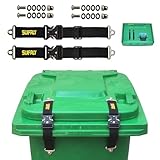
- Animal & Weather Resistant : A practical trash can lock strap that keeps your outdoor bin sealed—helps deter bears, raccoons, squirrels, pets, and gusty wind from opening or tipping the lid. Ideal for home, curbside, camping, and other outdoor use. A simple trash can lock solution for raccoon proof garbage cans and bear proof trash can setups."
- Bite-Resistant & Durable : Made with all-metal hardware and high-strength nylon, these trash can lock straps for animals can withstand chewing, scratching, and clawing from bears, raccoons, squirrels, dogs, and other pets. Designed for all-weather outdoor environments.
- Heavy-Duty X-Box Stitching : Each strap connection is reinforced with X-box cross-stitching, firmly attaching the nylon to metal hooks and locking buckle. This greatly improves tensile strength and tear resistance, making your garbage can lock more durable and long-lasting.
- Easy Installation : Drill a hole with a bit equal to or slightly larger than 8 mm (5/16") and secure the strap using the included screws. The strap length can be adjusted to the optimal position, and once set, it will self-lock without the risk of slipping.
- Universal Fit (28–100 Gallon) : Adjustable from 12.6–16.5 inches, fits most 28–100 gallon trash, recycle, and compost bins. No tools needed—just hook, tighten, and lock for a quick install. A versatile, lockable trash can solution for curbside and backyard use.
- Keep waste inside until collection morning. Do not stage bags outdoors the night before.
- Close and latch the can after each deposit. Check that the lid is fully seated and any locking hardware is engaged.
- Rinse recyclable containers. Food residue creates odor even when the item is technically recyclable.
- Keep bags inside the can. Loose bags are easier to tear and spread odor.
- Wash cans regularly. Cleaning removes residue that can continue attracting bears after the waste has been collected.
- Put the can out only in the hauler’s permitted window. Morning-of-pickup timing is the baseline recommendation from BearWise and state wildlife agencies; a local ordinance may define the exact hour.
- Retrieve the empty can promptly. Return it to the locked building or secure storage area rather than leaving it at the curb.
If a hauler requires an earlier set-out time, ask the hauler or local authority about a bear-resistant service option rather than ignoring the timing rule.
Are bird feeders safe in bear country?
No bird feeder can be called universally safe where bears are active. Massachusetts says there is “no safe time of day or year” to keep feeders out. Florida Fish and Wildlife Conservation Commission and BearWise describe tightly controlled alternatives for locations where local authorities allow continued feeding, but removing seed, suet, and hummingbird feeders at the first sign of bear activity is the lowest-risk choice.
The safest choice: remove all food feeders
Take down seed, suet, and hummingbird feeders when bears are active nearby. Also remove the food stored for refilling and clean any spilled seed from beneath the feeder. A feeder that is empty but still holds residue can continue to provide an odor cue, so clean the feeding area before storing the equipment.
If local guidance permits continued feeding
Use the strictest applicable agency rule, not the most permissive advice found elsewhere. BearWise and Florida guidance call for bringing feeders indoors every night and removing fallen seed before dark. Arizona Game and Fish recommends hanging a feeder at least 10 feet above the ground and away from buildings; Florida guidance also specifies at least 10 feet above ground and 10 feet from trees or structures. These distances reduce access but do not make a feeder bear-proof, and local authorities may prohibit feeders altogether.
Recommended Free Tools
| Bird-friendly option | Benefit to birds | Bear risk and practical requirement | Rule considerations |
|---|---|---|---|
| Remove seed, suet, and hummingbird feeders | Eliminates concentrated food at the home | Lowest attractant risk; requires giving up feeder feeding during bear activity | Consistent with Massachusetts’ no-safe-time warning |
| Controlled feeder use where permitted | Provides food only during supervised periods | Bring feeders in nightly; pick up spilled seed before dark; use agency spacing guidance | Check local wildlife and municipal rules first |
| Birdhouses | Provides nesting habitat without stored seed | Does not replace all feeder benefits, but avoids a food pile | Listed by wildlife guidance as an alternative |
| Birdbaths | Provides water | Clean and maintain the basin; no seed or suet is involved | Confirm any local water or wildlife restrictions |
| Native plants or hanging flower baskets | Offers natural forage or shelter | Choose plantings that do not create a concentrated food store; monitor for bear activity | Use as an alternative to feeders where recommended locally |
Why seed on the ground matters
Spilled seed extends the attractant beyond the feeder itself. Sweep or rake it up before nightfall whenever feeding is allowed, and stop feeding if a bear appears, if seed cannot be cleaned promptly, or if your local agency issues a removal notice.
How should I store and serve pet food?
Feed pets indoors whenever possible, keep kibble in a sturdy locked building or bear-resistant container, and never leave bowls outside overnight or on a screened porch. The goal is to prevent both the food and its lingering odor from becoming a predictable reward.
Also popular on Amazon

- Heavy-Duty Animal-Proof Protection: Durable double metal claws deliver a firm, secure grip to lock trash cans tight. Effectively blocks bears, raccoons, squirrels and other critters from rummaging through garbage.
- Tight-Sealing Spill-Proof Design: The lock’s snug closure prevents trash spillage even in strong winds or when animals try to pry lids open, keeping your outdoor space neat and clean.
- Adjustable Fit for Most Bins: Straps adjust from 30 to 51 inches, fitting a wide range of trash can sizes. Easy to install and customize for a perfect, stable hold on various bin lids.
- Multi-Scene Versatile Use: Not just for trash cans—ideal for securing luggage and outdoor equipment too. A handy tool for both home outdoor areas and adventure trips.
- Tool-Free Quick Installation: No screws or fasteners required. Set up the adjustable strap lock in minutes without extra effort, saving time and hassle.
Indoor feeding routine
- Serve the meal inside the home.
- Return the food bag or storage bin to a locked building or bear-resistant container immediately after dispensing.
- Remove uneaten food and wash the bowl according to the pet’s normal feeding routine.
- Keep crumbs and spills off floors, decks, and thresholds.
When outdoor feeding cannot be avoided
Florida and BearWise guidance recommends giving a single portion, supervising the pet while it eats, removing the bowl as soon as the pet finishes, and cleaning the feeding area. Do not leave a bowl on a screened porch; a bear can still enter or reach through such a space. Outdoor feeding should be a controlled exception, not an unattended schedule.
| Approach | Supervision burden | Cleanup requirement | Storage security | Bear-attractant risk |
|---|---|---|---|---|
| Indoor feeding | Normal meal supervision | Clean bowls and any spills indoors | Store food in a locked building or bear-resistant container | Lowest practical risk |
| Controlled outdoor feeding | Continuous supervision until the pet finishes | Remove bowl immediately and clean the area | Secure the food between meals | Higher risk because food is outside; use only if unavoidable and locally permitted |
Why do trash, feeders, and pet food create public-safety problems?
Food rewards can change bear behavior. Arizona Game and Fish explains that unsecured human food can reduce a bear’s fear of people and create public-safety concerns. Preventing the first reward is easier than trying to correct a bear that has learned a home is a reliable source of food.
The Tool Desk
Outbyte Driver Updater FREEScan for outdated or missing drivers - takes under a minuteDriver Scan →Outbyte PC Repair FREEClear out junk files and repair common Windows errorsFree Scan →Montana Fish, Wildlife & Parks reported the following shares of bear conflicts in the Missoula Valley from 2018 through 2021:
| Attractant | Share of reported conflicts | Source and period |
|---|---|---|
| Garbage | 49% | Montana Fish, Wildlife & Parks, 2018–2021 |
| Birdfeeders | 16% | Montana Fish, Wildlife & Parks, 2018–2021 |
| Livestock feed and pet food | 8% | Montana Fish, Wildlife & Parks, 2018–2021 |
The percentages describe that Montana reporting area and period; they are not a universal prediction for every community. They do show why several small attractants can matter when combined.
Independent reader supportYour contribution helps us test, update, and keep practical guides available for everyone.What should I do if a bear is already visiting?
Do not approach, corner, feed, or attempt to retrieve a container while a bear is nearby. Keep a safe escape route, move people and pets indoors, and follow the incident instructions from your local wildlife agency. The U.S. Fish & Wildlife Service states: “Never feed, leave food for, or make food accessible to bears.”
- From indoors or another safe location, note the bear’s location and behavior without moving closer.
- Keep doors and windows closed and prevent pets from going outside.
- Do not attempt to chase the bear away or recover a damaged can until the area is clear.
- Report a repeated or aggressive conflict to the relevant wildlife agency or local authority, using the emergency channel if officials direct you to do so.
- After the bear leaves, remove the attractant, clean the area, and change storage or collection timing so the reward cannot recur.
Florida law makes it illegal to intentionally place food or garbage out that attracts bears and causes conflicts. Other jurisdictions use different wording and penalties, so check the rule that applies to your address.
Free tools Windows power users keep installed
One-click scans. No signup required.
Also popular on Amazon

- LIDS STAY CLOSED OVERNIGHT: Dual straps secure both sides against pulling and prying, helping keep bears out and trash in the can—not across the yard.
- DUAL SCREW-MOUNTED HOLD: 3000-lb break-strength polyester webbing stays anchored to the cart, resisting shifting when bears pull, pry, or knock the bin over.
- INSTALL ONCE, SECURE IN 3 SECONDS: Screw-mounted straps stay attached to the cart; quick-release buckles lock or release the lid without reattaching straps each day.
- BUILT FOR YEAR-ROUND OUTDOOR USE: 304 stainless steel hardware and weather-resistant polyester webbing withstand rain, UV, snow, and wind for dependable outdoor use.
- FITS MOST 32–96 GAL ROLLING CARTS: Adjustable straps fit common 32, 45, 64, and 96 gal rear-handle carts; check handle structure and fit before drilling.
How do I choose the right setup for my household?
Use this decision path to match the control to your space and local rules:
- You have a solid locked garage, basement, or shed: keep regular cans and sealed pet food there, and put waste out on collection morning.
- You lack secure indoor space: ask the hauler which certified bear-resistant containers it services, then select an approved size and placement.
- You already own a sturdy can: ask the hauler whether a retrofit is permitted, and use hardware that resists both prying and tipping.
- You feed wild birds: remove feeders during bear activity. If local rules allow feeding, bring them in nightly, clean spills before dark, and follow the applicable spacing requirements.
- You feed pets outdoors: switch indoors if possible; otherwise supervise a single portion, remove the bowl immediately, and clean the area.
- You see recurring bear activity: stop all optional outdoor attractants and contact the wildlife agency for local incident guidance.
Review the arrangement whenever collection schedules, local ordinances, or bear activity changes. A setup that is acceptable in a quiet season may not be acceptable after a bear has received a food reward.
Frequently Asked Questions
Can I keep a birdhouse or birdbath out when I remove feeders?
Wildlife guidance lists birdhouses and birdbaths as alternatives to seed feeders because they do not create a concentrated pile of food. They still need ordinary maintenance, and local officials may have additional rules during an active bear incident.
What makes a trash-can retrofit adequate?
The modification must prevent both prying open and tipping over, and the underlying can must be sturdy enough to hold the hardware. Ask the waste hauler whether the altered can remains acceptable for collection before relying on it.
Is a screened porch safe for a pet’s food bowl?
No. A screened porch is not a bear-resistant barrier, so bowls and food stored there can remain accessible. Feed indoors and keep the food in a locked building or bear-resistant container.
Who should I contact about a bear that keeps returning?
Contact the wildlife agency or local authority responsible for bear conflicts in your area, and use the emergency channel if officials instruct you to. Do not approach the bear or try to recover an attractant while it is present.





Leave a Reply