
Some links on this page are affiliate links: if you buy through them we may earn a commission, at no extra cost to you.
You build trust with a nervous dog by making life predictable, giving the dog a safe place to retreat, rewarding voluntary choices, and keeping every exposure below the point where fear takes over. Do not force greetings, punish fearful behavior, or flood the dog with a frightening situation. Short, repeatable exercises—such as hand targeting, treat-and-retreat, calm settling, and carefully controlled trigger pairing—let the dog learn that your actions predict safety and good outcomes. Progress is measured by relaxed body language, the ability to eat and respond, and a willingness to choose exploration, not by how quickly the dog approaches a person, dog, object, or noise.
What is the fastest safe way to earn a nervous dog’s trust?
There is no reliable shortcut. Trust develops through many uneventful interactions in which the dog controls distance, can leave when needed, and receives rewards for calm, voluntary behavior. A steady routine, quiet handling, and a protected retreat reduce surprises; gradual desensitization and counterconditioning then change the dog’s emotional response to specific triggers.
As an Amazon Associate I earn from qualifying purchases.
Outdated Drivers Are Slowing You Down
One free scan finds every outdated or missing driver and matches the right update for your exact hardware.Free scan · exact hardware matchWindows Errors? Fix Them Before They Spread
Repair common Windows errors and clear accumulated junk for a smoother, more stable PC - no reinstall needed.Free scan · no reinstallStart with safety rather than socializing. Feed, walk, rest, play, and train on a reasonably consistent schedule. Greet and leave in the same calm manner, avoid looming over the dog, and keep visitors from reaching toward or cornering the dog. Cornell veterinarian Pamela J. Perry describes a safe, structured environment, consistency, and reward-based training as foundations for fearful dogs.
How should I set up a daily routine that makes my dog feel safe?
Predictability gives a worried dog more information and fewer surprises. Build the day around repeatable events, then add carefully managed practice when the dog is calm enough to learn.
Popular on Amazon

- Lots of flavor, not fillers: Just three simple, all-natural ingredients mean low calories and high nutritional value, making a tasty but healthy treat that your pup will actually love
- Ready for training, wherever you are: The best training is consistent training. Our small treats are lightweight and perfectly sized for quick rewards so they are ready to go whenever there is a training opportunity
- Mess free treats: No oily, greasy, crumbly messes here, Pupford treats keep your hands and pouches clean. You can even keep some in your pocket for walks, classes, or mini adventures without worrying about them getting grimy or stale
- Motivate even the pickiest of pups: A wide range of flavors makes it easy to find the perfect fit for your pup’s tastes
- Pupford Promise: We strive to always provide simple, high-quality, healthy pup essentials. If you or your pup aren't happy with a purchase, let us know so we can help find the right fit!
Use consistent anchors
- Serve meals at roughly regular times and in the same quiet location.
- Keep walks, toilet breaks, rest periods, play, and training in a familiar sequence.
- Use one calm phrase and body position for greetings and departures.
- Schedule several brief training periods instead of one demanding session.
- Protect uninterrupted sleep and retreat time; do not wake or handle the dog in its safe area.
A routine does not need to run by the minute. The goal is a recognizable pattern that helps the dog predict what happens next, while still allowing flexibility for unavoidable changes.
Create an optional retreat
Place a quiet bed, mat, or appropriately introduced crate away from foot traffic. A covered crate in a calm spot can provide a den-like refuge, according to Cornell guidance. Leave the entrance open when possible, let the dog investigate voluntarily, and reward resting there. Never drag the dog inside, block the exit, or send the dog there as punishment.
Do these 3 things before closing this tab:
1Clear out junk files and repair common Windows errors2Fix the driver behind crashes, sound loss and screen glitches3Repair Windows errors before they cause bigger problemsTeach household members that the retreat is off-limits for petting, grooming, reprimands, and forced interaction. If visitors arrive, ask them to sit down, avoid staring, and wait for the dog to approach. Cornell specifically recommends preventing uncontrolled approaches and allowing a fearful dog to initiate contact.
Which exercises build trust without forcing contact?
Choose behaviors the dog can perform easily and reinforce them immediately with a tiny, highly desirable treat. These exercises build communication and confidence because the dog can opt in, succeed quickly, and retreat without losing the reward.
Hand-target practice
- Stand or sit at a distance where the dog remains loose and willing to eat.
- Present an open hand without moving it toward the dog.
- When the dog voluntarily sniffs or touches the hand with its nose, mark the moment with a calm word such as “yes” and deliver the treat.
- Repeat a few times, then stop while the dog is still comfortable.
- Over later sessions, vary the hand’s height and position by very small amounts. Do not use the hand to pull the dog closer.
This progression follows the Arizona Humane Society’s fearful-dog hand-target guidance. If the dog backs away, freezes, or stops eating, return the hand to an easier position or end the session.
Treat-and-retreat
When the dog notices a person, object, or other trigger at a safe distance, deliver the treat and allow the dog to move away. Wisconsin Humane Society lists treat-and-retreat with counterconditioning and desensitization for fearful dogs. The retreat is part of the exercise, not a failure: it teaches the dog that noticing a trigger does not trap it.
Recommended Free Tools
Do not toss food in a way that lures the dog toward a frightening person. Instead, place or toss the reward so the dog can eat, turn away, and regain distance. Ask the person to remain still and quiet until the dog chooses to reorient.
Also popular on Amazon

- ALL NATURAL INGREDIENTS: Real beef is the first ingredient in our bite-sized training treats. Jinx beef & banana tiny treats are low calorie for repeated rewarding. Made with all-natural ingredients you can trust, carefully selected to provide a wholesome and delicious snacking experience.
- SLOW SMOKED TREATS FOR DOGS: Jinx healthy dog treats are slow-smoked for 14+ hours, infusing each bite with an irresistible smoky flavor and soft and chewy texture dogs love. Use as a high value reward during training to teach new tricks and reinforce desired behaviors.
- LOW CALORIE DOG SNACKS: Each Jinx training treat is under two calories, so you can repeatedly reward good behavior while helping your dog maintain a healthy weight.
- REAL BANANA: Real fruit adds adds a touch of sweetness and fiber for healthy digestion. Beef liver added for a savory, craveable flavor
- NO FILLERS: All of the good, none of the bad. Jinx recipes never use corn, wheat, soy, or artificial preservatives.
Mat settling
Place a mat near, but not inside, the dog’s retreat. Reward looking at the mat, stepping onto it, lying down, and relaxing. Increase the time between rewards only while the dog remains comfortable. Practice first with no trigger present; a frightened dog has difficulty learning a new skill in the middle of a stressful event.
Once settling is fluent, use the mat during mild household activity. Keep an escape route available and release the dog before it becomes restless. The goal is relaxed choice, not a stationary dog that is enduring fear.
How do desensitization and counterconditioning change fear?
Desensitization presents a trigger below the intensity that produces a fear response. Counterconditioning pairs that low-intensity trigger with something valuable, usually food, so the emotional association can gradually shift. AAHA and VCA describe the methods as complementary and warn that flooding—exposing a dog to the full frightening stimulus—can worsen fear.
What’s actually slowing this PC down?
Pick the symptom - the matching free tool is one click away.
Build a below-threshold starting point
Identify one trigger and control at least one variable: distance, volume, speed, duration, or a component of the trigger. For a person, begin farther away; for a noise, use a very low volume; for a moving object, begin with slow movement at a greater distance; for a vacuum, start with it stationary and switched off.
The dog should be able to eat, orient to you, and move normally. Loose muscles, ordinary breathing, and the ability to turn away are useful signs that the intensity is manageable. Panting unrelated to heat, trembling, escape attempts, frantic barking, or inability to take food means the setup is too difficult.
Pair, pause, and reduce
- Present the trigger briefly at the selected low intensity.
- While the dog remains calm, deliver a high-value treat.
- Remove the trigger or increase distance so the dog can relax.
- Repeat only a few times, then finish with an easy success.
- After two or three successful sessions, increase intensity by a very small amount. If distress appears, immediately return to the previous easier level.
Advance because the dog’s body language and appetite remain comfortable, not because a calendar says it is time. Some dogs need many repetitions at one level; holding steady is productive when it prevents a setback.
How long and how often should daily sessions last?
Short, successful practice is safer than exhausting the dog. VCA describes sessions ranging from about five to 45 minutes, while emphasizing that they must not be stressful and should end positively. For a very nervous dog, begin at the short end of that range and stop after a few good repetitions.
Also popular on Amazon

- REAL BEEF FIRST: BLUE Bits dog training treats are made with delicious real beef as the first ingredient making them an ideal reward for your best friend’s best behavior
- SOFT TRAINING TREATS: For dogs that love a soft treat, BLUE Bits are tender, bite-sized morsels that are the perfect size for training; plus, with DHA to help support cognitive development, they’re an ideal puppy treat
- WHOLESOME INGREDIENTS: These dog treats don’t contain any chicken (or poultry) by-product meals and are free from corn, wheat, and soy; plus, they’re free from artificial preservatives like Propylene Glycol and colors like Red Dye 40
- HEALTHY DOG TREATS: Blue Buffalo natural dog treats feature the healthy, wholesome ingredients you’ll love feeding as much as they’ll love eating
- Contains: One (1) 11-oz bag of BLUE Bits Natural Soft-Moist Training Dog Treats, Beef Recipe
| Situation | Recommended approach | Stop or lower intensity when |
|---|---|---|
| Routine skill in a quiet room | Several brief repetitions of hand target, mat settle, or orienting to you | The dog loses interest, wanders, or shows tension |
| Planned trigger practice | One trigger, low intensity, reward after each calm notice, then a retreat | The dog will not eat, cannot respond, pants, trembles, barks, or tries to escape |
| Outdoor exploration | Sniffing and voluntary investigation in a low-traffic area with a secure harness | People, dogs, or noises appear too close for the dog to remain loose |
| Visitor practice | Visitor sits quietly; dog chooses whether to approach; treat-and-retreat is available | The dog hides, freezes, growls, lunges, or repeatedly retreats |
End before the dog is overwhelmed. A calm finish—sniffing, resting, or eating a chew in the retreat—helps preserve the next session’s starting point.
What does a practical daily plan look like?
Adjust the schedule to the dog’s tolerance and household demands. The sequence below keeps predictable care separate from one controlled learning exercise.
- Morning routine: Offer a quiet toilet break and meal at the usual times. Avoid crowding the dog while it eats.
- Easy win: Practice two or three hand targets or mat-settle repetitions in a familiar room. Reward immediately.
- Choice-led exploration: In a quiet room or low-traffic outdoor area, allow sniffing and investigation. Do not pull the dog toward people, dogs, objects, or noises.
- One trigger exercise: Select one trigger, set a safe distance or intensity, pair brief exposure with food, and let the dog retreat.
- Recovery: Provide water, rest, and access to the retreat. Do not add another difficult exposure because the first one seemed successful.
- Evening calm: Repeat an easy behavior or quiet enrichment. A stuffable food toy can support calm activity, but ASPCA notes that highly anxious dogs may not eat when left alone; it is not a treatment for severe anxiety.
Record the trigger, distance or intensity, whether the dog ate, and the body-language changes you observed. This simple log helps you reproduce successful setups and spot when a step is too hard.
How can I socialize a scared dog without making fear worse?
Socialization for a fearful dog means controlled exposure with an escape option, not greetings with everyone. Keep the dog far enough away that it can notice a person or dog, eat, and turn away. Reward voluntary orientation, then increase distance or end the interaction.
Manage people
- Ask visitors to sit sideways, keep hands still, and avoid eye contact or reaching.
- Let the dog approach, sniff, and leave without being followed.
- Use a gate, leash, or separate room when a visitor cannot follow these rules.
- Do not allow children to hug, corner, chase, or enter the retreat.
Manage dogs and public spaces
Avoid dog parks, loose dogs, and close approaches when they trigger fear. Choose quieter walking times and routes, and use a secure body harness for controlled movement. If another dog appears, create distance early rather than waiting for barking or lunging.
Which equipment supports a fearful-dog plan?
Equipment should preserve control and choice, not force proximity.
- High-value treats: Use tiny, especially desirable pieces so rewards are fast and do not replace meals.
- Secure body harness: A properly fitted harness can improve control during carefully managed exposure walks.
- Retreat setup: A quiet bed or covered crate offers an optional resting place when introduced positively.
- Mat: A portable mat provides a familiar target for settling in different rooms.
- Food toy: Offer it for enrichment when the dog is relaxed enough to eat; do not rely on it to resolve severe anxiety.
Avoid equipment or handling that tightens, jerks, traps, or physically forces the dog toward a trigger. The plan depends on the dog being able to move away safely.
Also popular on Amazon
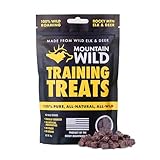
- Wild-Sourced Protein: Our treats are made from all-wild roaming elk and deer protein, sustainably harvested from the Rocky Mountains, offering your dog a unique and premium nutritional experience Wild-Sourced Protein: Our treats are made from all-wild roaming elk and deer protein, sustainably harvested from the Rocky Mountains, offering your dog a unique and premium nutritional experience
- Ideal for Training: With a wild protein source that dogs instinctively crave, these training treats are recognized as an extremely high-value reward, boosting your dog’s attention, focus and motivation
- Pure & Natural: Embrace the wilderness with dog training treats that are all-natural and all-wild, meeting your dog's ancestral dietary needs and cravings for a healthy and active lifestyle
- Eco-Conscious Choice: With every purchase, you support the full utilization of precious wildlife resources along with wildlife conservation and anti-poaching efforts to help maintain strong wildlife populations
- Clean Recipe: Free from nasty fillers, artificial preservatives, and grains, our treats ensure your dog enjoys the healthiest reward. Perfect for dogs of all sizes and puppies too
What should I never do with a nervous dog?
Punishment can intensify fear and create additional behavior problems. Pamela J. Perry advises against punishment for fearful dogs, and UC Davis, Merck, AAHA, and VCA caution against flooding and confrontational dominance techniques.
- Do not yell, leash-correct, pin, alpha-roll, or otherwise confront the dog.
- Do not force a greeting, pull the dog toward a person, or block its retreat.
- Do not expose the dog to the full intensity of a trigger until it “gets used to it.”
- Do not keep repeating an exercise after the dog stops eating or shows escalating stress.
- Do not use the crate or safe bed for punishment.
- Do not interpret freezing or silence as relaxation; a still dog may be overwhelmed.
When a mistake happens, create distance, remove the trigger, and give the dog time to recover. Resume later at an easier level rather than trying to compensate with more exposure.
How do I know whether an exercise is working?
Look for functional signs of comfort rather than dramatic displays of affection. A dog making progress can eat in the presence of a mild trigger, respond to a familiar cue, sniff, move normally, and choose either to approach or to retreat without panic.
| Observation | What it suggests | Your next step |
|---|---|---|
| Loose posture, normal breathing, takes treats | Intensity is likely manageable | Repeat the same level; change only one variable later |
| Turns away, retreats, but quickly relaxes and eats | The dog noticed the trigger and used distance successfully | Keep the same or increase distance; reward the choice |
| Stops eating, freezes, pants, trembles, barks, or scans constantly | The trigger is too intense or the session is too long | End the exposure and restart at a much easier level next time |
| Repeated lunging, snapping, or inability to recover | There is a significant safety concern | Stop DIY exposure and contact a veterinarian or qualified behavior professional |
Progress is rarely linear. A noisy day, unfamiliar visitor, illness, or accumulated fatigue can lower the dog’s tolerance. Treat that change as information and reduce the next session’s difficulty.
Independent reader supportYour contribution helps us test, update, and keep practical guides available for everyone.When should a veterinarian or behavior professional help?
Seek professional help when fear is intense or generalized, involves aggression, creates a safety risk, or fails to improve with careful low-intensity practice. VCA notes that behavior modification can be difficult to design and recommends a behavior expert or veterinary behaviorist when progress is not occurring. ASPCA recommends a Certified Applied Animal Behaviorist or board-certified veterinary behaviorist for moderate or severe cases.
The Tool Desk
Outbyte Driver Updater FREEScan for outdated or missing drivers - takes under a minuteDriver Scan →Outbyte PC Repair FREEClear out junk files and repair common Windows errorsFree Scan →Ask your veterinarian about the most appropriate referral and whether medication could support learning. Medication, when prescribed, should be part of a behavior plan rather than a replacement for gradual training. Until an assessment is available, use management—distance, barriers, secure equipment, and the retreat—to prevent rehearsals of panic or defensive behavior.
How should I respond after a setback?
Stop the difficult exposure and move the dog to a familiar, quiet place. Offer water and rest; do not punish barking, hiding, or retreating. Review what changed—distance, volume, speed, duration, handler movement, or the number of repetitions—and make the next setup easier on every variable you can control.
Also popular on Amazon

- ALL NATURAL: Single ingredient dog treat with no preservatives or artificial flavors. These beef dog treats are not only healthy dog treats but also grain free dog treats.
- NUTRITIONAL: Our high-protein, low-calorie beef lung dog treats make them lean treats & a great alternative to beef liver dog treats & lamb lung dog treats.
- RESPONSIBLY SOURCED: From locally grass fed free range cattle born and raised in the USA - no questionable sourcing means they make high value dog training treats.
- PREVENTS PLAQUE & TARTAR BUILDUP: Our natural dog chews clean your puppies teeth, making them functional dog treats for large dogs and puppies alike.
- MISSION: To make treating your K9 healthier
Return to a behavior the dog already knows, such as orienting to you or settling on a mat, and reward one or two easy successes. Resume trigger work only when the dog is again eating and moving comfortably. If setbacks are frequent or recovery is prolonged, involve a professional rather than increasing exposure on your own.
Can a nervous dog learn to trust its guardian?
Yes, many dogs can build a more secure relationship when their guardian consistently protects distance, honors retreat, and rewards voluntary behavior. The relationship is strengthened by hundreds of small choices: the dog notices a trigger, receives help, and discovers that it is not trapped. Measure success by greater flexibility and recovery, not by forcing the dog to tolerate every situation.
Free tools Windows power users keep installed
One-click scans. No signup required.
Frequently Asked Questions
How can I tell if my dog is too scared to train?
If the dog will not take even a favorite treat, cannot respond to a familiar cue, or shows trembling, frantic escape, freezing, or escalating barking, learning is unlikely in that moment. Increase distance or remove the trigger, allow recovery, and restart later at a much lower intensity.
Should I comfort my dog when it hides?
Let the dog remain in its chosen safe place without dragging it out or crowding it. You may quietly place food nearby or speak softly if that does not draw the dog forward; the important point is to preserve the retreat and avoid turning it into a forced interaction.
Can treats make a fearful dog dependent on food?
Food is used to change the dog’s emotional association and reinforce choices, not to lure the dog into danger. As the dog becomes comfortable, you can gradually vary rewards, but keep especially valuable treats for difficult environments or new triggers.
What should I do if my dog growls at visitors?
Treat the growl as a warning, increase distance, and use a gate or separate room so no one is at risk. Do not punish the warning; arrange a veterinary or qualified behavior assessment before attempting closer visitor exercises.





Leave a Reply