
What’s actually slowing this PC down?
Pick the symptom - the matching free tool is one click away.
Some links on this page are affiliate links: if you buy through them we may earn a commission, at no extra cost to you.
The safest way to bring home a new cat is to prepare one quiet room with a door that closes, make that room escape- and hazard-resistant, and let the cat settle there before opening the rest of the home. Remove or secure toxic plants, chemicals, medicines, cords, strings, small objects, breakables, open windows, balcony access and hiding gaps. Set out food, water, a litter tray, bedding, a hiding place, scratching equipment and safe toys before pickup.
Transport the cat directly to this prepared room in a sturdy, well-ventilated carrier. Keep the first visit calm, allow the cat to leave the carrier in its own time, and expand access gradually. If another cat already lives with you, begin with complete separation and use scent exchange, barrier contact and supervised meetings rather than putting the cats together immediately.
As an Amazon Associate I earn from qualifying purchases.
Quick wins for a faster PC:
Scan for outdated or missing drivers - takes under a minuteDriver Scan →Clear out junk files and repair common Windows errorsFree Scan →Fix the driver behind crashes, sound loss and screen glitchesFind Drivers →What is the safest way to cat-proof a home before arrival?
Start with a single “home base”: a private, quiet room whose door can remain closed. Prepare and inspect that room at the cat’s eye level before the carrier arrives. The arrangement gives a frightened cat a manageable territory, prevents an escape during the first hours and lets you check eating, drinking and litter use without searching the whole house.
Keep children, visitors and resident pets out of the room initially. Cats Protection advises making the space private, while the ASPCA describes a one-room home base containing food, water, litter and familiar comforts. The rest of the home can be opened in stages after the cat is comfortable and the same hazards have been addressed elsewhere.
Popular on Amazon
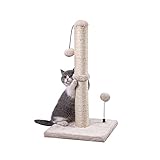
- Premium Quality Materials - This product is made of 100% natural sisal hemp.The base and top is a weighted MDF covering the carpet.Nature High Quality Sisal Safe Plush Long Lasting Usage Stable basement, never tip over easily.
- Protect your furniture - Grab sticks and plush toys combine to attract cats to play and grab, natural sisal is suitable for cats to grab, effectively preventing cats from grabbing furniture
- Designed for indoor use - Neutral colors work well with existing decor in your home.ideal for any living room, bedroom, or home office
- 22"Tall Cat Scratching Post -11.8 x 11.8 x 22 Inches,design for kitties or smaller cats.
- Easy Assemble - ust screw all parts together,Assemble needed, all tools and instructions included.Please contact us if you have any further questions.
Choose the room using five practical tests
There is no single mandatory room. Choose the space that best meets these tests:
| Test | What to look for | Warning sign |
|---|---|---|
| Privacy | Low foot traffic and a way to keep children, guests and pets out | A busy entrance, television room or room that cannot be closed |
| Door control | A solid door that latches reliably and can be opened without the cat slipping past | A broken latch, spring-loaded door or open-plan layout |
| Escape resistance | Secure window screens, no balcony access and no gaps behind appliances or furniture | An unscreened window, loose screen or crawlspace into walls |
| Easy cleaning | Surfaces where spilled food, water or litter can be cleaned promptly | Many inaccessible voids, delicate furnishings or stored chemicals |
| Separation of resources | Enough floor space to keep litter away from food and water | Only one small corner, forcing bowls beside the tray |
A spare bedroom, office or other quiet room can work if it passes these checks. A bathroom or laundry room may be suitable only after detergents, medicines, appliances and small openings are secured; a room that contains an operating washer or dryer needs extra supervision.
The Tool Desk
Outbyte Driver Updater FREEFix the driver behind crashes, sound loss and screen glitchesFind Drivers →Outbyte PC Repair FREEClear out junk files and repair common Windows errorsFree Scan →How do I inspect the room for escapes and falls?
Close every route outdoors and block every route into a wall, cabinet or appliance. A new cat can move through gaps that look too small to an adult, and an anxious animal may dash when the door opens.
Doors, windows and balconies
- Keep exterior doors closed while carrying the cat in and whenever the safe-room door is open.
- When a window is open, use a securely fitted screen. The American Veterinary Medical Association (AVMA) specifically advises secure screening for open windows; a screen that bows, lifts or has a damaged frame is not secure.
- Keep the cat away from an open balcony unless the balcony is completely enclosed. A railing or ordinary insect screen is not an enclosure.
- Check that window cords, blind loops and curtain hardware cannot become a climbing or strangulation hazard.
Gaps and vertical hazards
- Look behind and underneath sofas, bookcases, radiators, refrigerators and other appliances. Block spaces that lead to wiring, vents, plumbing or a door to the outside.
- Close cabinets and drawers, especially those containing tools, batteries, medications or cleaning products.
- Anchor or remove unstable tall furniture and fragile objects that could fall when climbed.
- Inspect at floor level after the room is furnished; a gap hidden by a blanket or box can still be an escape route.
Before releasing the cat, shut the toilet lid, close fireplaces or stove doors and remove access to any crawlspace. Recheck the room whenever furniture is moved or a screen is repaired.
Which plants, chemicals and foods must be removed?
Treat every plant and household chemical as a potential risk unless its safety for cats is established. AVMA’s guidance is to keep toxic chemicals and plants out of reach, and the ASPCA specifically warns about poisonous houseplants and pest-control poison traps.
Plants
Remove lilies and other plants known to be toxic to cats from the home, not merely from the safe room. Fallen leaves, pollen, soil additives and vase water can remain accessible after a plant is moved. If you cannot identify a plant with confidence, keep it outside the cat’s living area until a veterinarian or a reliable poison-control reference confirms it is safe.
Recommended Free Tools
Also popular on Amazon
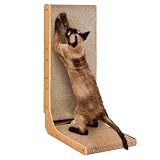
- HIGH QUALITY MATERIALS: The surface of the cat scratching board is made of non-toxic and high-density corrugated paper, which is durable enough to withstand cat scratching.
- INNOVATIVE DESIGN: Our cat scratcher for indoor cats features an L-shaped design. Please place it against wall and sofa to protect your furniture. The L-shaped cat scratcher provides more scratching area for cats to scratch in a variety of positions.
- MULTIFUNCTIONAL USE: Cats can scratch, relax and stretch on our cardboard cat scratcher. Our cat scratch pad also comes with a toy ball to play with. It provides a safe and comfortable environment for cats.
- FLEXIBLE SIZE OPTIONS: Available in multiple size options to suit different cat sizes and indoor spaces. Choose the right fit for your cat and home to create a comfortable and convenient scratching space.
- EASY INSTALLATION: Our cat scratching board adopts a simple installation method and comes with instructions and necessary tools. We also provide an installation video so that you can install it quickly and easily.
Chemicals and medicines
- Put cleaning products, disinfectants, laundry supplies, solvents, paints and automotive fluids in closed cabinets.
- Store human and veterinary medicines behind a latched door; do not leave pill bottles, blister packs or topical products on counters.
- Remove rodent or insecticide bait stations and any loose pest-control poison. Check behind appliances and under cabinets for forgotten traps.
- Keep food waste, bones, alcohol, chocolate, onions, garlic and other foods that may be hazardous to cats in a closed bin or cupboard. Do not rely on a light plastic bag.
Never transfer a chemical into an unlabelled container. If a spill occurs, keep the cat out, follow the product’s cleanup directions and seek veterinary advice if contact or ingestion is possible.
How do I secure cords, strings and small objects?
Anything that can be chewed, swallowed or wrapped around a neck belongs in a closed drawer or behind a barrier. Cats Protection recommends tidying away or covering loose cables and wires and choosing toys without small parts or loose threads.
- Unplug chargers and electrical leads that are not needed. Bundle remaining cables, place them in a cable sleeve or cord cover, and anchor the bundle so it cannot become a dangling toy.
- Secure blind cords and curtain pulls out of reach; do not leave loops hanging beside a bed, chair or climbing surface.
- Put away ribbon, yarn, thread, rubber bands, hair ties, elastic loops, fishing line, sewing supplies and dental floss. A swallowed strand can cause a serious intestinal obstruction.
- Remove coins, batteries, medication caps, plastic packaging, twist ties, earplugs, small toy parts and other objects that fit in the mouth.
- Use toys with securely attached parts and no loose threads. Inspect them regularly and discard a toy as soon as it frays or breaks.
- Move glassware, ceramics, candles and ornaments away from shelves or surfaces the cat can reach.
Cord covers are useful where wiring cannot be removed, but they are not a substitute for keeping tempting loose ends out of reach. Covering a cable also protects it from chewing; it does not make a damaged or overloaded cable safe.
What should be in a new cat’s safe room?
Set up all essentials before pickup so you do not need to open the door repeatedly during the first hours. Use separate food and water bowls, and put the litter tray in a quiet location with space around it and a clear route to the exit. Cats Protection recommends keeping the tray away from food and water.
| Item | Setup guidance | Selection and safety check |
|---|---|---|
| Food bowl and familiar food | Place food in a calm corner, away from the litter tray | If possible, start with the food the cat already eats and change diets gradually with veterinary advice |
| Water bowl | Keep it separate from both food and litter, where it cannot be tipped easily | Use a stable, washable bowl and refresh it regularly |
| Litter tray and familiar litter | Provide an unobstructed, quiet route and enough room for the cat to turn comfortably | Use familiar litter if possible; keep the tray away from feeding areas |
| Bed or blanket | Place it in a low-traffic corner | A washable cover is easier to clean than an irreplaceable fabric |
| Hiding place | Offer a covered bed or sturdy box with one easy entrance | It must not collapse, trap the cat or contain staples, tape or loose plastic |
| Scratching surface | Put it near the resting area or another place the cat is likely to use | It should be stable enough not to tip and tall or broad enough for the cat to stretch |
| Toys | Leave only safe toys during unsupervised periods | Avoid small detachable parts, loose threads, string and ribbon |
| Grooming supplies | Keep them closed away until needed | Choose tools suitable for the cat’s coat and handle them under supervision |
Do not crowd the room. A clear route between hiding place, water, food and litter lets the cat move without squeezing behind furniture. Keep a carrier available as another secure retreat rather than storing it immediately.
How should I prepare the carrier and the journey home?
Use a sturdy, well-ventilated carrier that closes securely and is appropriate for the cat’s size. A carrier prevents a dash through a car door or front entrance; carrying a cat loose is not a safe alternative.
Also popular on Amazon

- Scratching post provides a place for cats to sharpen their claws and keep nails healthy
- Includes a single pillar scratching post in neutral colors with a replaceable dangle toy
- Natural jute fiber provides an optimal scratching surface
- Sturdy wood base helps prevent the post from tipping
- Ideal for redirecting cats away from scratching household carpet or furniture; spot clean as needed
- Line the carrier with an absorbent, washable towel or blanket. If the shelter or breeder can provide a familiar-smelling cloth, place it inside without blocking ventilation.
- Check every latch, hinge and ventilation opening before leaving. Keep the carrier level and supported from underneath rather than swinging it by the handle.
- Take the cat from the vehicle directly to the prepared room. Close the room door before opening the carrier.
- Set the carrier on the floor, open its door and step back. Do not pull the cat out or pass it around for greetings.
- Keep the room quiet and allow the cat to emerge at its own pace. Leave the carrier available so it can retreat.
Ask the source of the cat for its current food, litter and routine where possible. Familiar smells and a predictable schedule can make the transition less disruptive, while a sudden diet change can complicate monitoring of appetite and stool.
How long should the cat stay in one room, and when can it explore?
The RSPCA recommends keeping a new cat in one prepared room for a couple of days and then expanding access slowly. The exact pace depends on the individual cat and the safety of the next area; a timid cat may need longer, while a confident cat still needs each new space inspected first.
Use a gradual expansion
- Keep the safe-room door closed while the cat learns where the litter, food, water and hiding place are.
- When you open the door, secure exterior doors, windows and other pets first. Let the cat choose whether to investigate; never carry it into a larger area to “show” the house.
- Open one additional room at a time and leave the original room accessible as a retreat.
- Repeat the floor-level hazard check in every new room: cords, strings, plants, chemicals, gaps, appliances, breakables and open windows.
- Return the cat to the safe room if the area becomes busy or if maintenance, visitors or deliveries create an escape risk.
Keep the litter tray accessible throughout expansion. If a tray must be moved, move it in small stages or provide another tray at the new location rather than removing the only familiar option.
How do I cat-proof the rest of the home room by room?
Use the same inspection method beyond the safe room: start at the floor, then check shelves, windows and concealed spaces. Secure hazards before the cat gains access, not after it has developed a route to them.
Kitchen and dining area
- Close cupboards containing cleaners, sharp tools, plastic bags and food.
- Keep garbage in a lidded container and clear food from counters.
- Check the oven, dishwasher, refrigerator and washing machine before closing or starting them. Keep doors shut when not in use and look inside before operating an appliance.
- Keep hot burners, pans and dangling appliance cords inaccessible.
Bathroom and laundry
- Close toilet lids, cabinets and drawers.
- Store medicines, cosmetics, razors, detergents and laundry pods behind a secure door.
- Keep washer and dryer doors closed; check the drum and around the appliance before each cycle.
- Block narrow gaps beside or behind machines where a cat could become trapped.
Living room and bedroom
- Anchor unstable furniture and remove breakable objects from reachable shelves.
- Secure television, lamp and charging cables, and keep small remotes, batteries and children’s toys off the floor.
- Close fireplaces or install a barrier that prevents access to flames, ash and hot surfaces.
- Check recliners, sofa mechanisms and adjustable beds before moving them.
Garage, storage areas and balconies
- Keep garages, sheds and utility closets closed unless they have been inspected and made safe.
- Lock away antifreeze, fertilizers, paints, tools and pest-control products.
- Do not allow balcony access unless it is completely enclosed and escape-resistant.
How should I introduce a new cat when another cat already lives here?
Begin with total separation: the newcomer stays in its prepared room and the resident cat keeps its normal territory. The American Humane Society recommends trading scents before the cats meet, followed by controlled stages rather than an immediate face-to-face encounter.
- Trade scents. Exchange bedding or a cloth carrying each cat’s scent while the cats remain apart. Keep each item associated with positive, calm experiences.
- Feed on opposite sides of the door. Place bowls far enough from the closed door that both cats will eat comfortably, then move them closer only if both remain relaxed.
- Exchange spaces. Let one cat explore the other’s area while the other is secured elsewhere. This allows investigation without direct confrontation.
- Add visual contact. Use a secure barrier that prevents either cat from rushing through. Keep sessions brief and end them before either cat becomes distressed.
- Supervise the first meeting. Choose a calm, escape-safe room, keep a clear route to separate the cats and watch continuously. Do not leave them together until repeated meetings are uneventful.
Give each cat its own food, water, resting and litter resources during the introduction. A closed door is a management tool, not a sign that the introduction has failed; slow progress is safer than forcing contact.
Also popular on Amazon
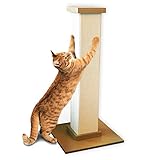
- 32″ height allows cats to stretch fully and tone muscles
- Sturdy 16″ by 16″ base eliminates tipping and wobbling
- Fibrous and durable woven sisal naturally inspires scratching
- Superior to carpeted posts that may snag nail
- Assembles with two included screws
Which cat-proofing products are worth buying?
Buy products that solve a specific hazard and match the cat’s size, age and behavior. AVMA and ASPCA both include scratching equipment in basic cat supplies, while Cats Protection lists a secure carrier, litter tray, toys and grooming tools among kitten essentials.
| Product | What to prioritize | Common failure to avoid |
|---|---|---|
| Scratching post or pad | Stability, a surface the cat can fully stretch against and materials that do not shed loose strands | A lightweight post that tips or a frayed surface left in use |
| Litter box or tray | Easy cleaning, suitable dimensions and a low-entry option when the cat is small or mobility is limited | A covered or cramped box placed beside food or in a blocked corner |
| Carrier | Rigid construction, secure fasteners, good ventilation and enough room to turn without excessive empty space | A damaged latch, poor ventilation or a soft bag that can collapse during transport |
| Cord cover or cable sleeve | Chew resistance, secure closure and a size that encloses the whole cable bundle | Leaving loose ends exposed or using a cover on a damaged electrical lead |
| Window screen or repair kit | A firm frame, intact mesh and fasteners that hold when the window is opened | Relying on a loose, removable or torn screen |
| Hiding bed or box | Stable construction, washable material and an opening that cannot collapse | Plastic bags, unstable stacks or boxes with tape, staples or loose handles |
Products do not replace supervision. Inspect scratching surfaces, toys, screens, carriers and cord covers regularly and replace anything that becomes loose, damaged or ingestible.
What mistakes most often undermine a safe setup?
- Opening the whole house immediately: A large unfamiliar area makes it harder to locate the cat and to notice whether it is using the litter tray. Start with the prepared room and expand in stages.
- Assuming an indoor plant is harmless: Remove unidentified and known toxic plants, including lilies, rather than placing them on a higher shelf.
- Leaving “temporary” items out: Chargers, ribbon, medication, laundry pods and food wrappers become hazards when attention shifts. Put them away before the carrier arrives.
- Putting the litter tray beside the bowls: Provide distance and a quiet approach to the tray.
- Using a barrier that is not escape-proof: A cracked screen, loose baby gate or open balcony does not prevent a determined cat from getting through.
- Allowing unsupervised play with string: Use wand or string toys only with active supervision and store them afterward.
- Rushing introductions between cats: Scent exchange, door feeding, space swapping and barrier contact give both cats time to adjust before physical contact.
What does the available evidence say about the value of cat-proofing?
Veterinary and animal-welfare organizations consistently present cat-proofing as practical risk reduction, not as a guarantee that every accident will be prevented. The AVMA, ASPCA, Cats Protection, RSPCA and American Humane Society emphasize secure windows, removal of poisons, a private base room, safe equipment and gradual introductions.
No quantitative statistic specific to injuries, poisonings or escapes caused by inadequate pre-arrival cat-proofing was established in the available material. That absence should not be read as proof that the hazards are rare; it means the published guidance is primarily preventive and qualitative rather than a prevalence study. American Humane Society guidance was updated in September 2026, RSPCA guidance on adjusting to a new home was updated May 30, 2024, and Ontario SPCA adoption guidance was published December 2, 2025.
Frequently Asked Questions
Can I use a bathroom as my cat’s first room?
Yes, if its door closes, windows are secure and the room has enough space to separate litter from food and water. Remove medicines, cleaners, cosmetics, toilet-access hazards and loose cords, and keep the washer or dryer closed and checked before use.
What should I do if the cat hides as soon as it arrives?
Leave the hiding place available, keep the room quiet and place food, water and litter where the cat can reach them without crossing an exposed area. Do not drag the cat out; contact a veterinarian promptly if it is not drinking, appears ill or you are worried about its condition.
How can I cat-proof a rented home without permanent changes?
Keep windows closed when screens cannot be secured, use removable cable sleeves, shut doors to unapproved areas and store hazards in latched cabinets or containers. Ask the landlord before installing screens or barriers, and never rely on a temporary fix that leaves an opening to the outdoors.
Do kittens need a different safety inspection from adult cats?
Use the same checklist, then assume a kitten can enter narrower gaps, climb more unstable objects and swallow smaller items. Recheck floor-level spaces and toy parts as the kitten grows and its reach changes.
Do these 3 things before closing this tab:
1Scan for outdated or missing drivers - takes under a minute2Clear out junk files and repair common Windows errors3Fix the driver behind crashes, sound loss and screen glitches




Leave a Reply