The Tool Desk
Outbyte PC Repair FREEClear out junk files and repair common Windows errorsFree Scan →Outbyte Driver Updater FREEFix the driver behind crashes, sound loss and screen glitchesFind Drivers →Choose a trainer who has relevant experience with fear and reactivity, uses reward-based methods, works at your dog’s pace, and will collaborate with your veterinarian when needed. Credentials can help verify training and experience, but the trainer’s methods, case fit, and ability to coach you matter just as much.
Start with the right kind of professional
In the United States, the dog-training field has no licensing requirements or regulatory oversight, according to the Certification Council for Professional Dog Trainers (CCPDT). Anyone may use the title “dog trainer,” so look beyond the title to assess relevant experience, methods, education, communication, and references.
For fear, anxiety, reactivity, or aggression, seek a professional who regularly works with behavior cases—not only one who teaches basic obedience. A trainer should be able to explain the plan in plain language, describe what they do when a dog is worried, and recognize when a case needs veterinary or specialist input.
Use credentials as evidence, not a guarantee
Two credentials can help you distinguish behavior-consulting experience from general training experience:
Quick wins for a faster PC:
Clear out junk files and repair common Windows errorsFree Scan →Fix the driver behind crashes, sound loss and screen glitchesFind Drivers →Repair Windows errors before they cause bigger problemsFix Now →#1 Best Overall

- 【Train Like a Pro】Heouvo dog treat pouch and clicker kit are designed to help you train your dog like professionals. With easy access to your pet's favorite treats and a training clicker to supercharge your training sessions, you'll see better results in no time
- 【Compact Body, Large Capacity】Compared to other bulky treat bags, our treat pouch is very compact (5*4*2inch), but can hold 1.67 cups of dry or wet food. While other silicone pouch has large openings that tend to result in snack spillage, we have designed a smaller mouth with stronger magnetic closure that effectively prevents food from falling out, thereby extending the food's freshness.
- 【Food-Grade Silicone Material】Heouvo training bag is made of safe and harmless food-grade silicone that is free from bisphenol. Unlike fabric waist pouches, ours is designed to store both dry and wet or freezing food. It features 2pcs strong built-in magnet that allows for convenient one-hand operation, enable quick reach of food to promptly reward obedient dogs. The flexible silicone material allows for easy bending and flipping for easy cleaning the inner compartments.
- 【Effective Dog Clicker】You can use the pet training clicker to train all your pets. Not only for dog but also for cat, bird, chicken and horse. You can use it to train your pet the basic obedience, small trick, and correct the bad behavior. Scientific method of training your pet safely and easily.
- 【Unique Waist Belt Design】Unlike other silicone dog training pouches, we have taken extensive time and effort to address the risk of plastic clips breaking or failing off. After careful consideration, we are proud to present our latest product that eliminates the worry of your pouch accidentally detaching during training sessions or walks. The waist belt is adjustable for waist sizes ranging from 25“ to 47”, ensuring a comfortable fit for users. Now, you can confidently focus on your training or outdoor activities without the concern of your pouch slipping off.
| Credential | What it indicates | Published experience criteria |
|---|---|---|
| CBCC-KA, CCPDT | Advanced certification focused on behavior modification. | CCPDT’s current eligibility page lists at least 300 hours of consulting experience involving fear, phobias, compulsive behaviors, anxiety, and aggression during the prior three years, plus an attestation and a 200-question exam. These are eligibility criteria, not a guarantee of results. Source: CCPDT |
| CDBC, International Association of Animal Behavior Consultants (IAABC) | Behavior consultant credential for complex cases. | IAABC describes CDBC consultants as having at least three years of consulting experience with complex cases, including fear, anxiety, aggression, and phobias. Source: IAABC |
| Accredited Dog Trainer, IAABC | Training credential for teaching manners, life skills, sports, enrichment, and prevention. | IAABC describes this credential as serving trainers with at least two years of experience. The credential’s focus is broader training rather than the complex behavior-consulting scope described for CDBC. Source: IAABC |
Credentials do not establish that a particular professional’s methods suit your dog. AVSAB clarified in its 2025 board statement that it does not endorse or oppose trainers from any specific organization; it continues to support its 2021 recommendation for reward-based training. Source: AVSAB
Ask how the trainer handles fear
AVSAB recommends reward-based methods for all dog training, including behavior problems. Its current position says: “Based on current scientific evidence, AVSAB recommends that only reward-based training methods be used for all dog training, including the treatment of behavior problems.” Source: AVSAB
Rank #2

- 【No More Stinky Pouches!】Say goodbye to smelly, stained fabric forever! Our revolutionary pouch is crafted entirely from 100% food-grade silicone, creating a waterproof barrier that prevents treat oils and grease from soaking in. No more lingering odors, no more messy residue—just a fresh, clean pouch that wipes clean, rinses under water (The hinge is made of stainless steel, no need to worry about rust issue.), or goes right in the dishwasher.
- 【One-Handed Training】Stop fumbling with treats! Our innovative pull-tab and self-sealing top are engineered for real-world use. Deliver rewards seamlessly with one hand, keeping your focus and your other hand exactly where they need to be—on your pup. This is the ultimate hands-free advantage for flawless training or busy walks.
- 【Pocket-Sized, Packed With Potential】Don't let the compact size fool you! With a 1-cup capacity, this small-but-mighty pouch is perfectly sized for daily drills and walks. It reliably holds everything from dry kibble and moist treats to any high-value reward your dog loves.
- 【Never Forget a Reward Again】Clip it on and go! With an upgraded carabiner and wider 0.5-inch leash clip, it securely fastens to virtually any standard leash (except retractable one) or belt loop. Once attached, you're free to enjoy focused training and walks, with rewards always within reach.
- 【The Last Pouch You'll Ever Need】This superior design meets everyday use durability. We built it to last from rugged, easy-clean silicone and refined the profile to be both compact and capable. Choose from 6 stylish colors to match your gear—this isn't just another accessory, it's the final upgrade your walking essentials deserve.
IAABC’s 2025 standards likewise identify positive reinforcement as the primary strategy and oppose intentional procedures involving pain, fear, or intimidation. Their standards call for plans that account for the animal’s physical and emotional welfare, safety, health, learning history, and choice. Source: IAABC
Ask the trainer to explain the methods and equipment they use, including what they mean by “reward-based.” Be wary of dominance or “alpha” explanations and plans that rely primarily on punishment. If a trainer proposes a prong or shock collar, ask what purpose it serves, what the dog is expected to experience, and how the method fits reward-based guidance. AVSAB’s clarification says it does not support aversive methods in any context. Source: AVSAB
Rank #3
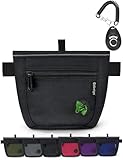
- 【Upgraded Stronger Magnet】 There are two pairs of strong magnets on opening of the bag, auto closing and no food spilling out at all. Open easily by one hand when food needed.
- 【Versatile wearing options】 Gobeigo dog treat bag offers two wearing modes: an adjustable waist belt (25-47 inches) catering to a wide audience, or the option to use the back metal clip independently. Simple and convenient, ensuring a comfortable fit for everyone.
- 【Compact but Large Capacity】 The dog treat bag looks exquisite and compact on waist, but it can hold 2 cups of food, large enough for daily walking with your furry friends.
- 【Effective Dog Clicker Included】You can use the pet training clicker to train all your pets. Not only for dog but also for cat, bird, chicken even horse. You can use it to train your pet the basic obedience, small trick, and correct the bad behavior. Scientific method of training your pet safely and easily.
- 【Convenient Design】There is a zipper pocket in front with poop bag outing, you can get poop bags easily anytime. Also lining material of the fanny pack is water resistant, can be inside out easily for cleaning.
A gradual plan should protect the dog’s ability to cope
Fear work commonly combines management with desensitization and counterconditioning. Management reduces avoidable close encounters and gives the dog distance from triggers; training then proceeds gradually at a pace the dog can handle. These approaches aim to change the dog’s emotional response, not simply suppress visible behavior. Source: AVSAB
Ask what the trainer will do if your dog becomes worried, stops engaging, barks, growls, or lunges during an exercise. Those responses can signal that the dog is struggling; a suitable plan adjusts the distance or difficulty rather than pushing through. Avoid forced greetings, overwhelming exposure, or advice to make the dog “get over it.”
Rank #4
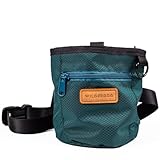
- Two pockets with zipper closures and additional magnetic closure on the big pouch. Adjustable strap fully extended measures up to 52 and 1" wide to fit perfectly through belt loops
- Approximate total capacity: 0.8 L
- Stitched webbing front loop and d-ring make it easy to attach items such as Poop Bag Holder, Crap Carrier, keys, etc.
- Measures 7" x 3" x 6" and weighs 5 oz
- Interior fabric is human food-grade fabric and outer is made of easy-to-clean ripstop
Choose socialization that is safe, not overwhelming
Socialization is not a requirement to greet every person or dog, attend crowded classes, or tolerate close contact. For a fearful dog, useful work may mean calmly noticing a trigger from a safe distance, having the option to move away, and gradually building comfort. A crowded setting or forced interaction can be too much rather than helpful.
For puppies, AVSAB’s socialization guidance emphasizes safe exposure that does not overwhelm them. Its updated public statement says puppies displaying fear should receive veterinary guidance. Source: AVSAB
Best Value

- ONE-HAND TREAT ACCESS — TRAIN SMARTER, REWARD FASTER: The OllyDog Goodie Treat Bag’s powerful magnetic closure opens and snaps shut in one smooth motion — no zippers, no fumbling, no missed moments. Reach in and reward your dog’s good behavior the instant it happens, so every training session is sharper, faster, and more effective. Perfect for obedience work, recall training, agility, and everyday walks.
- ECO-FRIENDLY RECYCLED FABRIC: Made from vegan, non-toxic, water-resistant fabric repurposed from 3 recycled plastic bottles, the Goodie Treat Bag is a sustainable choice built to outlast the competition. Our soft recycled fabric is lightweight, flexible, and gentle against your side — whether you’re at the dog park, on a trail, or in a training class. Good for your dog. Better for the planet.
- 3 VERSATILE CARRY OPTIONS — MORE ADAPTABLE: Train hands-free your way: (1) Wear around your waist with the included adjustable quick-release buckle belt, (2) Clip directly onto any belt loop, or (3) Thread onto your own personal belt. Remove the belt entirely and hook the bag straight onto your leash or backpack for effortless on-the-go access. Three carry modes. One bag that adapts to every scenario.
- COMPACT SIZE, SIMPLE CLEANUP — READY FOR EVERY SESSION: At just 4¼” × 5¼” × 3” with a fully adjustable waist belt, the Goodie Treat Bag holds enough treats for a full training session without bulk, bounce, or added weight. When you’re done, simply hand wash in cold water with a pet-safe detergent and air dry — no dishwasher, no complicated disassembly, no lingering odors. Quick, clean, and back in action.
- BACKED BY OLLYDOG'S LIFETIME WARRANTY — BUY ONCE, TRAIN FOR LIFE: Every OllyDog product is backed by a lifetime warranty — if your Goodie Treat Bag ever develops a defect, contact us and we'll make it right, guaranteed. Available in solid colors and expressive prints; pairs perfectly with the OllyDog Scoop Pick Up Bag (sold separately). Note: chewing/biting not covered.
Bring your veterinarian into the plan when needed
Talk with your veterinarian if fear or anxiety is serious, if the behavior changes suddenly, or if you are concerned about your dog’s health. Medical factors can affect behavior, and a veterinarian can discuss whether evaluation or treatment options are appropriate. Fearful puppies should also receive veterinary guidance.
For aggression or a case beyond the trainer’s expertise, AVSAB recommends consultation with another reward-based trainer or referral to a veterinarian, a board-certified veterinary behaviorist, or a certified applied animal behaviorist. CCPDT also describes behavior support as a collaborative effort and expects professionals to refer when a case exceeds their competence. AVSAB; CCPDT
Questions to ask before hiring
- How much of your work involves fear, reactivity, or aggression? Can you describe a comparable case?
- What would you do if my dog became worried or stopped engaging during a session?
- How do you keep exposure gradual and avoid overwhelming the dog?
- What methods and equipment do you use, and how do you define reward-based training?
- How will you assess progress in my dog’s comfort and emotional response, not only whether a behavior stops?
- What will I practice between sessions, and how will you coach me?
- When would you involve my veterinarian or refer us to a veterinary behaviorist or another consultant?
- Can you provide references from clients with similar cases?
CCPDT advises prospective clients to consider whether a trainer explains methods clearly, has experience with the specific problem, communicates well, and can provide references. Source: CCPDT
Compare candidates on fit, not just credentials
After confirming that a candidate’s approach is appropriate, compare the details that will shape your dog’s care:
Outdated Drivers Are Slowing You Down
One free scan finds every outdated or missing driver and matches the right update for your exact hardware.Free scan · exact hardware matchWindows Errors? Fix Them Before They Spread
Repair common Windows errors and clear accumulated junk for a smoother, more stable PC - no reinstall needed.Free scan · no reinstall- Experience with cases similar to your dog’s fear or reactivity.
- Relevant credentials and continuing education.
- Clear explanations of methods and equipment.
- A plan that follows your dog’s pace and avoids flooding.
- Willingness to collaborate or refer when necessary.
- Practical coaching and follow-up for you between sessions.
- Communication, references, and your comfort asking questions.
Discuss session format and price once you are satisfied with the professional and the proposed plan. No outcome statistic or guaranteed number of sessions is established for this choice; ask how progress will be evaluated for your individual dog.
Quick Recap
Product prices and availability are accurate as of the date/time indicated and are subject to change. Any price and availability information displayed on Amazon at the time of purchase will apply.




