The best full-service veterinarian is not simply the clinic with the longest service list. It is a primary-care practice you can reach when your pet needs help, that provides the routine care your cat or dog actually needs, explains what happens in-house versus by referral, handles your pet thoughtfully, and gives clear estimates before treatment. Compare two or three practices using the same questions, then choose the one whose access, medical scope, emergency plan, communication style, and costs fit your household.
What “full-service” should mean for your pet
“Full-service” is a consumer-facing phrase, not a universal legal specification. One clinic may use it for preventive visits and vaccinations; another may also provide dentistry under anesthesia, imaging, laboratory testing, and surgery. Verify the actual services, staffing, equipment, hours, and referral arrangements at the location you would use.


As an Amazon Associate I earn from qualifying purchases.
The American Animal Hospital Association (AAHA) offers a more specific reference point for practices seeking its accreditation. Its eligibility description includes dentistry under anesthesia, quality on-site diagnostic imaging, and surgery. Some laboratory work may be performed by an outside laboratory. That description explains AAHA eligibility; it does not mean every clinic advertising “full service” has identical capabilities.
| Care area | What a capable primary-care practice may provide | Questions to verify locally |
|---|---|---|
| Preventive care | Wellness examinations, vaccinations, parasite prevention, nutrition and behavior guidance | Which vaccines and parasite products are offered, and how often does the veterinarian recommend visits for a pet of this age and health status? |
| Dental care | Oral examinations, dental cleaning under anesthesia, dental radiographs where available, and treatment or referral for advanced disease | Is dentistry performed under anesthesia? Are dental radiographs available? Which cases are referred? |
| Diagnostics | Basic laboratory testing and imaging, with interpretation by the practice or an outside laboratory or radiologist | Which tests are performed on site, where outside tests go, expected turnaround times, and who interprets imaging? |
| Surgery | Common soft-tissue procedures and perioperative monitoring, with referral for complex or specialty surgery | Which procedures are routine, what monitoring and pain-control protocols are used, and when is a specialist recommended? |
| Urgent and specialty care | Same-day assessment during open hours and a defined network for specialty, urgent, or emergency care | Where will your pet go after hours, on weekends, or for a case beyond the clinic’s equipment or expertise? |
AAHA describes general practice as the setting for primary care, preventive services, vaccinations, wellness care, dental care, and common surgical procedures. Treat that as a starting checklist, not a guarantee. Ask what the practice does for your animal rather than relying on the label.
#1 Best Overall
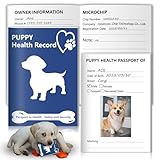
- Product Include:When you choose our dog vaccines records tracker, you'll receive one notebook.This 12-page puppy health journal has 8 dedicated pages for tracking your pup’s health, vet visits, and key details, with 4 blank pages at the end for jotting down extra notes, pet-related info, or anything else you want to record.
- Ideal Size for Record Keeping:Each dog vaccine record book measures 5x3.5 inches folded; 5x7 inches unfolded, allowing for easy portability and storage.These handy health records notebook for dogs with double sided printing, featuring enough space for all your pets important information,plus, it has dedicated spots for sticking on vaccine stickers and adding cute puppy photos.They offer a stylish and organized approach to pet health documentation, a must have addition to your pet supplies.
- Premium Quality: The puppy health record tracker’s cover features 300gsm coated paper with vibrant full-color printing and a protective laminate finish. Inside, 100gsm high-quality offset paper pages are durable and ink-resistant, ensuring no bleeding from pens or markers—so your records stay neat and easy to read.
- Effortlessly Track Vaccinations and More:The canine health record booklets pages include:owner and puppy information,medical history and hospitalizations,vaccination record and sticker,dog service providers,fecal examinations and de-worming,heartworm screening, prevention and treatment etc.This record keeping tool will ensure every important detail is accounted for and make this task easy, organized, and straightforward.Add this essential tool to your pet supplies for a happier, healthier pet.
- Essential for Pet Owners:Designed for veterinary clinics and pet owners, these puppy vaccination record books make tracking key health details—like shots, checkups—simple and organized. When you’re away and leave your pup with a sitter or family, the dog medical record and vaccine book serves as a quick reference for their medical history. Plus, dedicated sections for photos, physical markings, and ID info prepare you for emergencies, helping you recover your friend quickly if they get lost.
Start with access and an emergency plan
Check ordinary access first
A clinic that is excellent but unreachable during a routine illness is a poor primary veterinarian. Compare driving time from home, parking, public-transport options if relevant, appointment availability, and whether the practice accepts new cats or dogs. Ask how far ahead wellness visits usually need to be booked and whether the clinic reserves same-day appointments for sick pets.
- Confirm routine appointment hours and whether they include early mornings, evenings, or weekends.
- Ask how the practice handles a pet that becomes ill between scheduled visits.
- Find out whether a veterinarian is physically present during all advertised hours or whether some periods are technician-only.
- Check whether cats and dogs share a waiting area and whether the clinic can move a fearful animal directly to an examination room.
Know exactly what happens after hours
Many regular veterinarians do not provide 24-hour emergency care. Before enrolling, ask for the name, address, phone number, and opening hours of the emergency hospital or urgent-care service the practice uses. Ask whether the clinic sends medical records electronically, how the primary veterinarian receives the emergency report, and what to do when the recommended facility is closed or full.
AAHA’s directory allows searches for accredited hospitals and includes emergency-availability filters. It can help you identify possibilities, but confirm hours and acceptance policies directly because staffing and availability can change.
The Tool Desk
Outbyte Driver Updater FREEScan for outdated or missing drivers - takes under a minuteDriver Scan →Outbyte PC Repair FREEClear out junk files and repair common Windows errorsFree Scan →Save the emergency number in your phone and keep it with your pet’s carrier or travel documents. In a crisis, you should not be deciding where to go while your pet is deteriorating.
Match the practice to your cat or dog
Build a care list from your pet’s life stage
Write down what your pet needs now and what is likely to matter in the next few years. A kitten or puppy needs a vaccination and parasite-prevention plan, identification advice, behavior guidance, and spay or neuter counseling where appropriate. An adult animal may need weight management, dental assessment, screening based on risk, and help with recurring skin, ear, gastrointestinal, or mobility problems. A senior pet may need more frequent examinations and monitoring for chronic disease.
Rank #2

- All-in-one pet care tracking: vaccinations, vet visits, medical exams, medications and more
- Easy access to pet’s health info: stay organized and on top of your pet's health
- Ample writing space: never run out of space; designed to last entire life of pet
- High-quality materials: durable and elegant design for long-lasting use
- Portable size: convenient A5 size, perfect for on-the-go; practical for vet visits and storage
AAHA’s consumer guide says every pet should have a preventive-care appointment annually and suggests wellness visits every six months as pets age. Those are general consumer recommendations, not an individualized prescription. Ask the veterinarian to set an interval based on your pet’s age, species, breed-related risks, medical history, and medications.
Ask how the team handles fear and stress
A practice can offer every listed service and still be a poor fit if your cat or dog becomes too frightened to examine safely. Ask how staff approach fearful, reactive, painful, or difficult-to-handle animals. Useful details include separate cat and dog areas, quiet appointment times, low-stress handling, treats, towel or basket-muzzle training, pre-visit medication when medically appropriate, and a plan for stopping when restraint is becoming unsafe.
What’s actually slowing this PC down?
Pick the symptom - the matching free tool is one click away.
Describe your pet honestly, including previous bites, escape attempts, panic, or severe motion sickness. The right practice will discuss risk without shaming you and will explain what preparation it needs.
Confirm relevant diagnostics, dentistry, and procedures
Ask whether the practice can perform the tests your pet is most likely to need and how results are reviewed. “In-house laboratory” may mean immediate testing for only certain analytes; other samples may still go to an outside laboratory. For imaging, ask whether radiographs or ultrasound are performed on site, whether a veterinarian or specialist interprets them, and how quickly you receive results.
For dental work, verify that cleaning and treatment are performed under anesthesia and ask whether pre-anesthetic testing, dental radiographs, monitoring, pain control, and discharge instructions are included. For surgery, ask which procedures are routine, who performs them, what monitoring is used, and which findings trigger referral.
Use accreditation as a signal, not a shortcut
AAHA accreditation is voluntary. AAHA says its standards cover areas including anesthesia, dentistry, emergency and critical care, medical records, patient care, client service, pain management, communication, recordkeeping, and team training. Its current standards page describes nearly 50 categories. An AAHA consumer guide published October 27, 2025, describes evaluation against nearly 50 mandatory standards and nearly 900 total standards.
| What accreditation can tell you | What it cannot tell you |
|---|---|
| The practice has been evaluated against AAHA standards and has chosen a voluntary accreditation process. | That the clinic is close to your home, accepting new clients, open when you need it, or affordable for your budget. |
| The evaluation addresses operational and clinical areas such as records, anesthesia, dentistry, patient care, and client service. | That every service is performed at that location, by the same team, with the equipment or specialist your pet may require. |
| It gives you a useful question prompt when comparing practices. | A guarantee of a particular medical outcome or a substitute for assessing communication and pet handling. |
Ask whether the specific location is accredited and which services are covered there. Do not assume that a group with several locations has identical equipment, hours, or accreditation status at each one.
Compare two or three practices with the same questions
Make calls or visits before your pet is sick. Using the same script prevents a polished website or a friendly first impression from hiding important differences.
- Confirm availability. Ask whether the practice is accepting new cats or dogs, the routine appointment hours, typical wait for a wellness visit, and options for a sick-pet appointment.
- Describe your pet. Give the species, age, breed or type, known conditions, medications, and handling concerns. Ask whether the practice is comfortable managing those needs.
- Review the service scope. Ask about preventive care, vaccines, parasite control, dentistry, laboratory testing, imaging, common surgery, hospitalization, and relevant specialty access.
- Map referrals. Ask which outside laboratories, imaging readers, specialists, urgent-care services, and emergency hospitals are used and how records move between them.
- Discuss handling. Ask what the team does for anxious, reactive, painful, or difficult-to-handle animals and what pre-visit preparation you should provide.
- Request a realistic estimate. Ask for the cost of an examination and likely next steps for a common scenario, such as a vaccine visit, ear infection, dental assessment, or vomiting. Ask what is included and how unexpected findings change the estimate.
- Check payment procedures. Confirm accepted payment methods, deposits, when payment is due, and whether the practice offers written estimates before diagnostics or treatment.
- Test communication. Notice whether staff answer directly, explain unfamiliar terms, invite questions, and tell you when and how results will be communicated.
- Verify records access. Ask how to obtain copies of medical records, laboratory reports, imaging, vaccination certificates, and treatment instructions if you move or need a referral.
- Record the answers. Compare each practice on access, service scope and referrals, communication and handling, emergency arrangements, and cost transparency.
Questions worth asking word for word
- “Are you accepting new cats or dogs, and what are your routine appointment hours?”
- “Which preventive, dental, diagnostic, and common surgical services are available at this location?”
- “Which tests are sent to an outside laboratory, who interprets imaging, and how will results reach me?”
- “Where should I go for a specialty problem, an urgent issue during open hours, and an emergency after hours?”
- “How do you approach cats or dogs that are fearful, reactive, painful, or difficult to handle?”
- “Can you provide an estimate for an examination and likely next steps? What happens if you find something unexpected?”
- “Which payment methods do you accept, and when is payment due?”
- “How can I obtain copies of my pet’s records and test results?”
- “Is this practice AAHA-accredited, and which services are covered at this location?”
Evaluate communication before you need it
The first phone call is part of your assessment. Staff should be able to explain appointment types, preparation, expected wait times, and urgent-care instructions without making you feel foolish for asking. During a visit, the veterinarian should state the working diagnosis, alternatives, recommended tests, expected benefits and risks, and what you should watch for at home.
AAHA’s choosing guide puts the relationship plainly: “Creating a trusting relationship with your veterinarian and the whole staff who will be involved in your pet’s care is essential.” The practical test is whether the team listens to your observations, records them accurately, and gives you a clear way to ask follow-up questions.
Ask how results are delivered. Some practices call, some use a portal, and some require a scheduled discussion for complex findings. Make sure you know who contacts you, the usual timeframe, and what to do if you have not heard back.
Independent reader supportYour contribution helps us test, update, and keep practical guides available for everyone.Understand estimates, payment, and insurance
Ask for estimates that show the decision points
A useful estimate separates the examination, diagnostics, medications, anesthesia, procedure, hospitalization, and follow-up. Ask which items are optional, which are recommended for safety, and which costs could change if the veterinarian finds a problem. For a planned procedure, ask whether the estimate includes pre-anesthetic testing, monitoring, pain relief, take-home medication, and recheck visits.
Price alone is not a reliable quality measure. A lower estimate may exclude monitoring, interpretation, or follow-up that another clinic includes. Compare what each number covers and whether you can authorize additional work up to a stated limit if an unexpected finding appears.
Check payment rules before treatment
Ask whether payment is due at checkout, whether a deposit is required for surgery or hospitalization, and which cards, electronic payments, or financing arrangements are accepted. If a practice does not offer a payment option you need, learn that before an emergency.
Free tools Windows power users keep installed
One-click scans. No signup required.
Treat insurance as a separate policy decision
Insurance plans vary in exclusions, waiting periods, deductibles, reimbursement methods, annual limits, pre-existing-condition rules, and whether wellness care is included. A clinic may process paperwork without endorsing a particular insurer. Compare the actual policy documents and ask the practice how claims and medical records are handled; do not assume that a veterinarian accepts or recommends a plan.
Make records and referrals part of your decision
Good continuity of care depends on complete records: examination notes, vaccination history, laboratory reports, imaging, medication doses, surgery and anesthesia records, and discharge instructions. Ask whether you can receive copies electronically and how quickly they are provided for a referral or move. Keep your own organized copies of vaccination certificates, test results, medication lists, and visit notes. A simple folder or digital organizer is sufficient; purchasing a special product is not necessary.
Ask how referrals work in practice. Does the primary veterinarian send a summary and images before the appointment? Will the specialist send a report back? Who coordinates medication changes? A full-service primary clinic should be able to explain its limits and hand your pet’s care to the right service when needed.
Recognize warning signs
- The practice will not explain what is included in an estimate or refuses to discuss how unexpected findings are handled.
- Staff cannot give a clear after-hours destination or tell you how emergency records return to the primary veterinarian.
- The clinic claims broad capabilities but cannot identify which diagnostics, dentistry, or surgery are actually performed at your location.
- Your questions about fear, pain, restraint, or previous handling incidents are dismissed.
- You cannot obtain your pet’s records, test results, or medication instructions within a reasonable process.
- Prices are presented without explaining whether anesthesia, monitoring, interpretation, medications, or follow-up are included.
- The team pressures you to approve treatment without explaining the problem, alternatives, risks, and expected next steps.
One awkward phone call does not prove poor medicine, but repeated evasiveness on safety, records, emergency coverage, or costs is a reason to keep comparing.
Do these 3 things before closing this tab:
1Fix the driver behind crashes, sound loss and screen glitches2Repair Windows errors before they cause bigger problems3Scan for outdated or missing drivers - takes under a minutePrepare for the first appointment
- Bring prior records, vaccination certificates, medication and supplement names, and any adoption or breeder health information.
- Write a short timeline of symptoms, including appetite, drinking, elimination, activity, coughing, vomiting, diarrhea, itching, or behavior changes.
- Bring a list of your questions and your preferred contact method.
- Use a secure carrier for a cat and a well-fitted leash or harness for a dog. Ask in advance about fasting, medication, or urine or stool samples.
- Tell the team at arrival if your pet is frightened, reactive, painful, or likely to need a quieter room.
- Before leaving, confirm the diagnosis or working plan, medications and doses, warning signs, follow-up date, and how results will be communicated.
After the visit, judge whether the practice did what it promised: handled your pet safely, explained the plan in understandable language, documented information accurately, and made the next step clear. That experience is more informative than a service list alone.
Quick Recap
Product prices and availability are accurate as of the date/time indicated and are subject to change. Any price and availability information displayed on Amazon at the time of purchase will apply.




