
Do these 3 things before closing this tab:
1Repair Windows errors before they cause bigger problems2Fix the driver behind crashes, sound loss and screen glitches3Clear out junk files and repair common Windows errorsSome links on this page are affiliate links: if you buy through them we may earn a commission, at no extra cost to you.
The safest flea and tick treatment is not a single brand or ingredient. It is a product whose label matches your pet’s species, current weight, age and health, and whose dosing schedule you can follow exactly. Dogs and cats metabolize pesticides differently, so a dog product must never be used on a cat. For a puppy or kitten below the label’s minimum age, mechanical removal with a flea comb or tick tool may be the appropriate temporary option while a veterinarian advises you.
Start by identifying the parasites and protection you need, then review every active ingredient, warning, dose and interval with a veterinarian when your pet is very young, old, sick, pregnant, nursing, taking other medicines, has a seizure history or has reacted to a product before.
As an Amazon Associate I earn from qualifying purchases.
The Tool Desk
Outbyte PC Repair FREERepair Windows errors before they cause bigger problemsFix Now →Outbyte Driver Updater FREEFix the driver behind crashes, sound loss and screen glitchesFind Drivers →What makes a flea and tick treatment safe?
Safety comes from a correct match between the animal and the label, not from choosing a particular delivery format. Before buying or applying anything, confirm all of the following:
- Species: dog or cat. Never substitute one species’ product for the other.
- Exact current weight: use the product’s stated weight band, not an estimate or an old weigh-in.
- Age and life stage: check the minimum age and whether the label allows use in puppies, kittens, pregnant animals or nursing animals.
- Health and medication: disclose seizures, neurologic disease, skin disease, organ disease, debilitation and every medicine, supplement or pesticide already used.
- Active ingredients and purpose: verify which fleas, ticks and other parasites are covered, and whether the product kills after attachment or helps prevent attachment.
- Directions: follow the dose, route, interval, bathing or swimming restrictions and instructions for separating treated animals until the product is dry.
The U.S. Environmental Protection Agency (EPA) warns that some pesticides are more toxic to one species than another. Its guidance says, “Never apply dog products to cats, and visa versa,” and a 2024 label for a dog topical containing permethrin states, “DO NOT USE ON CATS.” Treat that warning as absolute; do not try to calculate a smaller dog dose for a cat.
Popular on Amazon

- High-Quality Flea Comb: Higher grade metal for the teeth, making them stronger than the previous version. Rubber-sheathed handle, increases the comfortableness of holding the comb/dog comb when combing your pet
- Health Profits: Use this dense fine tooth lice comb and brush your pet regularly can effectively remove small objects and dandruff flakes to keep your pet healthy and well groomed. It also helps monitor the condition of your pet’s skin and coat
- Anti-slip handle grip: You don't have to worry about being too cautious when using our pet hair combs for cats, dogs & other small animals. It has been enhanced with a non-slip handle to help avoid accidents
- Widely use: Use for Bunnies, Horses, Puppies, Kitties, Specially designed to work for cats and dogs with all coat type
- Recommendation: Please clear all matted fur before using this lice comb. This flea comb for dogs might get damaged if used in heavily matted fur. We recommend this comb to be used on cats, dogs, and any other equivalent size animals
The American Veterinary Medical Association (AVMA) describes prevention as individualized: age, species, breed, lifestyle, health and other medicines all affect the choice. Its concise reminder is, “Cats are not small dogs.”
How do I choose a product for my specific pet?
Use this sequence before you compare packages. It prevents the common mistake of picking a familiar format first and checking the label afterward.
PC Slower Than It Used to Be?
A free scan shows the junk files, broken settings and background clutter dragging Windows down - then fixes them in one click.Free scan · Windows 10 & 11Outdated Drivers Are Slowing You Down
One free scan finds every outdated or missing driver and matches the right update for your exact hardware.Free scan · exact hardware match- Identify the animal and measure it. Record dog or cat, sex, age, current weight and whether the animal is pregnant or nursing. Weigh a growing puppy or kitten again whenever the label’s weight band could change.
- Write down health factors. Include seizure history, tremors, balance problems, skin conditions, liver or kidney disease, debilitation and any previous reaction to a flea or tick product. List prescription medicines, over-the-counter medicines, supplements and household pesticides.
- Define the job. Decide whether you need flea control, tick control, prevention of tick attachment, heartworm or intestinal-parasite coverage, treatment of an active infestation, or more than one of these. A flea-and-tick product does not automatically cover every parasite.
- Read the current package label. Check the regulatory approval or registration, species, minimum age, weight range, active ingredients, dose, dosing interval, bathing rules and household separation instructions. Use the label in your country; approvals and directions can differ by region.
- Choose a route you can administer reliably. A theoretically excellent medicine is a poor choice if doses are missed, a collar cannot stay fitted, or a topical cannot be kept away from other animals until dry.
- Plan for local exposure. Fleas can survive indoors throughout the year. Tick activity varies with geography and season, so ask your veterinarian whether year-round prevention is appropriate where you live and where your pet travels.
Cornell University College of Veterinary Medicine summarizes the practical test this way: “Ultimately, the best product is one that is safe and effective, and can be given to your dog easily and regularly.” The same adherence principle applies to cats.
Which format should I use: oral, topical, collar or mechanical removal?
Each format solves a different problem. Compare parasite coverage, attachment prevention, speed, interval, route, prescription status, bathing constraints and your ability to give every dose.
| Format | What it can do | Important limits and checks |
|---|---|---|
| Oral chew or tablet | Convenient dosing; oral isoxazolines are listed by Cornell among options with relatively fast tick kill. | They generally do not prevent a tick from attaching before it dies. Discuss seizure history, neurologic signs and all other medicines with a veterinarian. |
| Topical spot-on | Some actives kill fleas and ticks, and some also repel or help prevent attachment. This can help when oral dosing is difficult. | Species or weight errors can overexpose a pet. Follow instructions about application site, bathing and keeping treated animals apart until dry. Dog-only permethrin products must never be used on cats. |
| Collar | Some collars repel parasites and help prevent tick attachment. Cornell lists Seresto as an example of this type. | Fit and skin contact matter. Inspect the neck and surrounding skin, and remove the collar immediately if a reaction appears. |
| Flea comb | Physically removes adult fleas and eggs without pesticide exposure; an FDA-supported option for very young puppies and kittens. | It has no residual protection and does not treat the home by itself. Comb repeatedly and obtain veterinary advice about a longer-term plan. |
| Tick-removal tool | Mechanically removes an attached tick, including from very young pets for whom a labeled pesticide is not yet suitable. | It does not prevent the next exposure. Ask a veterinarian about disease risk and what to do if removal is incomplete. |
Are oral isoxazoline products safe if my dog has seizures?
Isoxazolines are considered safe and effective for most dogs and cats, but the U.S. Food and Drug Administration (FDA) warns that products in this class can be associated with neurologic adverse events, including tremors, ataxia (unsteady movement) and seizures. These events have been reported in animals with and without a previous seizure history.
A seizure history is therefore a reason to speak with a veterinarian before the first dose, not a reason to change the dose yourself. Tell the veterinarian about prior seizures, fainting, abnormal movements, balance problems and every medicine your pet receives. Ask whether a different active ingredient or route better fits the animal’s risk profile and parasite needs.
Recommended Free Tools
Also popular on Amazon

- DURABLE, EASY CLEAN AND EFFECTIVELY :High strength close stainless steel teeth dog cat comb, remove float hair form your love pet in one times,easy wash by water after using for flea removing, smoothing teeth head won’t hurt your pet, let them enjoy the comb massage right now
- THOUGHTFUL SET: Our pet grooming comb set includes 5 different kinds of flea combs, 2 tooth comb, 1 double sides lice comb, 1 long-needle & 1 short-needle comb to meet different needs. Perfect for straightening out the knotted tangles hair, as well as finishing and fluffing.
- MATERIAL:The comb teeth is made by stainless steel to prevent rusting due to get wet after washing, stainless steel teeth are tightly embedded in the plastic grip to preventing drop out form the comb, non-toxic plastic protect you and your pet health by this great quality in good price
- MULTIFUNCTIONAL & SAFE: Our rounded teeth would also support the pet health by boosting blood circulation and massaging skins, as well as removing loose fur, undercoat, dander, knots, no matter long haired or short haired dogs & cats with thin & thick coats or sensitive skin.
- ROUNDED EDGES: Every comb tooth is finely polished, won’t scratch your pets’ skin while easily removing lice, flea, mess, mucus, stain etc., as well as comb the soft fur nearby eyes, ears and fine hair of the legs, let you and your pet enjoy this fun and harmonious time together. One set of our combs is enough for your pet grooming.
The FDA’s wording is deliberately balanced: it considers isoxazoline products safe and effective for dogs and cats while asking owners and veterinarians to take the potential neurologic events into account when choosing. Monitor after dosing and seek urgent veterinary help for a seizure, repeated tremors, severe wobbliness, collapse or rapidly worsening behavior.
Can I use a dog flea treatment on my cat?
No. A dog product can be dangerous to a cat even when the cat is smaller and receives only part of the tube or tablet. Permethrin-containing dog topicals are a particularly important example: the EPA label for one such product says “DO NOT USE ON CATS.”
Keep dogs and cats separated whenever the label requires it, especially after a topical application while the site is wet. Do not let a cat groom a recently treated dog, and do not transfer product between animals by sharing applicators, collars or bedding before the label permits contact.
If a cat is accidentally exposed to a dog product, call a veterinarian or an animal poison service immediately rather than waiting for signs. Have the package, active ingredient, amount, time of exposure and the cat’s weight available.
What should I use for a puppy or kitten that is too young for medicine?
When no pesticide is labeled for the animal’s age and weight, use a flea comb for fleas and eggs and a tick-removal tool for attached ticks while obtaining veterinary guidance. Do not apply an adult product, divide a tube, or rely on a product labeled for a different species or age.
For fleas
Comb over a light-colored surface so you can see live fleas and dark flea dirt. Concentrate on the neck, around the ears, belly, groin and base of the tail, and repeat as advised by your veterinarian. A comb removes what is on the animal but does not provide residual protection or eliminate fleas developing in the environment.
Also popular on Amazon

- Packing list:Long handle comb x1, Double sided flea comb x1, long needle comb x1, short needle comb x1,Double-sided tear stain removal combx1,Multifunctional to meet your different needs.
- Material: Each comb adopts round teeth and made of high quality stainless steels and durable anti-slip plastic handle,which are rustproof,sturdy and durabl.
- Versatile Applications: Easily removes fleas, flea eggs, lice, scabs, mucus, floating hair, tangles, hair stains, hair removal,Dematting Tool for Small, Medium & Large Pets.
- humanized design: Every comb tooth is finely polished, won’t scratch your pets’ skin while.
- Suitable for most Pets: comb are suitable for most pets such as dogs, cats, chihuahuas and so on and other furry pets.
For ticks
Use a purpose-made tick-removal tool according to its instructions and remove the tick promptly. Avoid improvising with chemicals or burning materials on the skin. If mouthparts remain, the site becomes inflamed, or the pet develops illness, contact a veterinarian and describe the exposure.
When a young pet needs urgent care
Heavy flea burdens can contribute to weakness or anemia in small animals. A very young, pale, lethargic, cold, dehydrated or heavily infested puppy or kitten needs prompt veterinary assessment rather than home treatment alone.
How do I compare kill speed, attachment prevention and dosing intervals?
“Kills ticks” and “prevents tick bites” are not interchangeable claims. Oral isoxazolines can kill ticks relatively quickly after they feed, but they do not necessarily stop attachment. Some collars and permethrin topicals repel or help prevent attachment. Fipronil topicals may kill after a parasite attaches. Your veterinarian can match that distinction to local disease risk.
Cornell’s comparison lists example intervals of one month for products such as K9 Advantix II, Vectra 3D, Frontline and several oral products, three months for Bravecto, and eight months for Seresto. These are examples for those specific products and formulations, not universal rules. Confirm the interval printed on the package you are buying, because versions, countries and species can differ.
For Lyme disease, Cornell notes that the bacteria may require at least one to two days of tick attachment before spreading to a dog. That does not make delayed removal safe: inspect your pet after outdoor exposure, remove attached ticks promptly and ask your veterinarian whether local tick-borne diseases warrant a product that helps prevent attachment.
What label checks prevent the most mistakes?
Read the entire label, including small-print warnings, before opening the package. Pay particular attention to:
Quick wins for a faster PC:
Repair Windows errors before they cause bigger problemsFix Now →Scan for outdated or missing drivers - takes under a minuteDriver Scan →Also popular on Amazon

- THOUGHTFUL SET: Our pet grooming comb set includes 4 combs, 1 tooth comb, 1 double sides lice comb, 1 long-needle & 1 short-needle comb to meet different needs. Perfect for straightening out the knotted tangles hair, as well as finishing and fluffing
- PREMIUM MATERIAL: The combs have high-quality stainless steel teeth tightly embedded in the ergonomic ABS grip. The double-sided comb is made of high-impact ABS, durable & corrosion-resistant, won’t rust or fade, withstands wear & tear in long term use
- ROUNDED EDGES: Every comb tooth is finely polished, won’t scratch pets’ skin, easily removing lice, flea, mess, mucus, stain etc. Ideal for combing soft fur nearby eyes, ears and fine hair of the legs. Let you and your pet enjoy this fun time together
- MULTIFUNCTIONAL & SAFE: Our rounded teeth would also support the pet health by boosting blood circulation, massaging skins, removing loose fur, undercoat, dander, knots, no matter long & short haired dogs, cats with thin & thick coats or sensitive skin
- SUITABLE FOR ALL COAT TYPES: One set of our combs is enough for EASY & EFFECTIVE grooming for rabbits, guinea pigs, ferrets. Regular use of this ergonomic dog comb can help reduce shedding, promote healthy skin & coat, easy to clean by just rinsing
- Species and formulation: verify that the exact product is labeled for your animal, not merely for “pets.”
- Weight band: select the correct range for the animal’s current weight; never stack ranges or split a dose unless the label explicitly directs it.
- Minimum age: a product suitable for an adult may not be labeled for a young puppy or kitten.
- Active ingredients: recognize duplicate ingredients when combining products, shampoos, sprays or household treatments.
- Interval: record the next due date. Do not redose early because you saw a flea unless a veterinarian or label directs you.
- Application and contact rules: follow the exact body site, hand-washing, drying and separation instructions.
- Bathing and swimming: check whether water exposure can reduce performance or requires a waiting period; the package is the controlling source.
- Regulatory status: use a product approved or registered for the intended species and indication in your jurisdiction.
Keep the original carton or a photograph of the label. If a reaction occurs, the active ingredient and lot information help a veterinarian and the appropriate reporting agency respond accurately.
What if my pet reacts to flea or tick medicine?
Possible reactions include skin redness or irritation, intense itching, vomiting, diarrhea, unusual behavior, excessive salivation, tremors, wobbliness and seizures. Stop the product and contact a veterinarian. Severe neurologic signs, breathing difficulty, collapse or repeated vomiting warrant emergency care.
If a topical product is involved
- Remove the pet from further exposure and prevent grooming by other animals.
- Following EPA guidance, bathe the pet with mild soap and plenty of water, then rinse extensively.
- Dry the animal, keep it warm and observe closely while arranging veterinary advice.
- Preserve the package, applicator and remaining product. Record the product name, active ingredients, dose, time applied and the signs you saw.
If a collar is involved
Remove the collar immediately if signs begin while it is being worn. Place it in a sealed bag so it can be identified later, and call a veterinarian. Do not put the collar back on to “test” whether the signs return.
Reporting the event
Your veterinarian can explain whether to report through the EPA or FDA route identified on the label. Accurate reporting is easier when you retain the packaging and write down the pet’s species, weight, age, other medicines, timing and clinical signs.
How should I manage fleas and ticks in the home?
A product on the pet may not immediately remove every flea stage from the environment. Fleas can persist indoors year-round, so vacuuming, laundering washable bedding and following veterinary or label advice for household treatment may be necessary when an infestation is established. Never use a household pesticide directly on an animal unless its label specifically allows that use.
For ticks, concentrate on prevention that fits your region and routine: inspect the pet after walks, remove attached ticks promptly and keep outdoor areas as your local veterinary service recommends. A collar or topical that helps prevent attachment may be useful where tick-borne disease risk is high, while an oral product may be easier for owners who cannot maintain a dry application site.
Also popular on Amazon
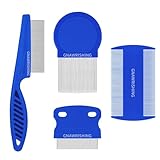
- This professional pet grooming comb set comes with 4 different functional combs to meet all grooming needs for most household dogs and cats. Equipped with large grip comb, double-sided comb, long-tooth and short-tooth stainless steel combs, this all-in-one grooming kit replaces multiple single-function combs. No need to buy extra pet hair removal tools, perfectly solving daily floating hair, knot and flea cleaning troubles for your lovely pets.
- Featured with smooth and polished fine stainless steel teeth, ourflea comb for dogs and cat flea comb works perfectly as a professional tear stain remover comb. It can quickly and thoroughly remove fleas, lice, flea eggs, tear stains and loose floating hair in one single combing. The rounded tooth design avoids scratching or irritating pets’ sensitive skin, bringing a comfortable massage experience while grooming, effectively improving pet hair health and appearance.
- All comb teeth are made of high-quality food-grade stainless steel, featuring excellent rust-proof and water-proof performance, never deform or fade after long-term wet cleaning. The tight embedded tooth structure effectively prevents teeth from falling off, fixing the common defects of ordinary combs. Sturdy plastic grip ensures stable holding and long service life for daily repeated use.
- Designed for targeted grooming of different pet body parts and hair types, this multi-functional tool acts as an efficient deshedding comb for various pets. Short-tooth comb is perfect for cleaning short hair on pet’s head, face and belly; long-tooth comb suits long hair and thick fur on the back; double-sided comb supports flexible use on whole body; large non-slip grip comb is ideal for medium and large pets. Suitable for short-haired, long-haired, curly-haired dogs and cats of all sizes.
- The smooth tooth surface is super easy to clean, just rinse with water directly after use and air dry quickly for next use. Lightweight and portable design is suitable for home daily grooming, pet shop use and outdoor travel. We provide reliable after-sales service, if you have any quality or usage problems with our pet comb set, please feel free to contact us for a quick solution.
When should a veterinarian choose the product for me?
Arrange veterinary advice before treating a very young, elderly, sick, debilitated, pregnant or nursing animal; a pet with seizures or other neurologic signs; a pet with liver, kidney or severe skin disease; an animal taking multiple medicines; or one that has reacted to a flea or tick product before.
Bring the product package or a clear label photograph and a complete medication list. Ask the veterinarian to address the target parasites, attachment prevention, minimum age, weight band, dosing interval, interactions, bathing restrictions and what to do if a dose is missed or a reaction occurs. This is especially important when you are considering more than one parasite product, because overlapping ingredients can increase exposure.
Free tools Windows power users keep installed
One-click scans. No signup required.
What are the most common selection errors?
- Using a dog product on a cat: this can cause serious poisoning, particularly with permethrin products.
- Guessing weight: growing animals can move into a different dose band quickly.
- Ignoring the minimum age: “natural,” OTC or leftover products are not automatically safe for a young animal.
- Assuming one product covers everything: flea, tick, heartworm and intestinal-parasite coverage must be verified separately.
- Combining products without checking ingredients: ask a veterinarian before adding a shampoo, spray, collar or second medication.
- Measuring success only by visible ticks: a product may kill after attachment rather than repel, so inspection and prompt removal remain important.
- Applying a topical where another pet can lick it: follow the label’s drying and separation directions.
- Redosing early after seeing a flea: contact a veterinarian instead; premature reapplication can increase exposure.
- Discarding the package: the label is needed if a reaction or accidental exposure occurs.
What is a practical decision checklist?
Use this short checklist at the shelf, during an online purchase and before every application:
- Is this labeled for my pet’s exact species?
- Is the animal above the minimum age and inside the stated weight band?
- Does the label cover the fleas, ticks or other parasites I actually need to control?
- Do I need attachment prevention, or is killing after attachment acceptable for my circumstances?
- Has a veterinarian reviewed seizure history, illness, pregnancy, nursing status and other medicines?
- Can I follow the route, interval, bathing and separation instructions every time?
- Do I know the signs of a reaction and have the package available if one occurs?
If any answer is “no” or “I do not know,” pause and ask a veterinarian or pharmacist familiar with veterinary products before dosing.
Frequently Asked Questions
Can I split a large-dog flea treatment between two smaller dogs?
Do not divide a tube, tablet or chew unless the product label specifically instructs it. Formulations can distribute active ingredients unevenly, and the resulting amount may not match either dog’s approved weight band; obtain the correctly sized product instead.
Do indoor-only cats really need flea prevention?
Indoor living lowers exposure but does not eliminate it: fleas can enter on people, other animals or items brought indoors. Discuss your building, other pets and local flea pressure with a veterinarian rather than assuming an indoor label is unnecessary.
What should I do if a tick breaks apart during removal?
Do not apply chemicals or dig aggressively into the skin. Clean the area, save the tick if possible, monitor the site and ask a veterinarian whether examination or disease surveillance is appropriate for your region.
Is a flea shampoo enough to protect my pet all month?
A shampoo may remove parasites present during bathing but does not automatically provide the residual protection or interval claimed by a preventive product. Check the shampoo label and ask a veterinarian how it fits with any ongoing flea or tick plan.





Leave a Reply