Neither adopting from a shelter nor taking in a pet through private rehoming is automatically the better choice. Compare the individual animal’s health records, behavior and household fit, the reliability of its history, the transfer terms, and the support available if the placement becomes difficult. Policies and legal requirements vary, so verify the details with the specific shelter, rescue, current guardian, and local authorities.
Compare the animal and the transfer, not just the route
A shelter or rescue may be able to explain its intake, medical and behavior procedures, fees, and return practices. A current guardian may be able to describe the animal’s daily routine and known history directly. Those are potential advantages, not guarantees: ask what happened in this specific case and request evidence where available.
Use these factors to compare the actual options:
- Health evidence: veterinary records, known conditions, medications, vaccinations, sterilization status, recent examinations, and care still due.
- Behavior and household fit: observations around children, unfamiliar adults, other animals, and time alone; who made the observations, where, and for how long.
- Transparency: whether the source gives clear answers about history, care, limitations, and its process.
- Terms and continuity: fees and what they cover, available support if the placement fails, any written return terms, and how records and ownership details will be transferred.
- Your readiness: housing permission, time, ongoing veterinary and care costs, training resources, and other support needed to care for the animal.
Questions to ask before you commit
Ask either a shelter or rescue representative, or the current guardian in a private rehoming, for specific answers. Petfinder recommends asking about behavior with children and other pets, vaccination and sterilization status, fees, medical or behavior issues, and the organization’s return policy. Its transport guidance recommends requesting records before travel and asking about health checks and return terms; these are questions to raise, not promises that every source will offer the same arrangements. Petfinder’s questions for adopting a dog and Petfinder’s guide to transporting a newly adopted pet provide further prompts.
- What is known about the animal’s medical history, current medications, and recent veterinary care? Can I see the records?
- Which vaccinations and procedures have been completed, and what care remains due?
- How does the animal behave around children, unfamiliar adults, dogs, cats, and other animals? What happens when it is left alone?
- Who observed those behaviors, in what settings, and over what period? Are there known triggers, fears, or management needs?
- What is the ordinary routine for food, exercise, sleep, house training, and settling when alone?
- What are the full fees, and what do they include?
- If the placement does not work, whom should I contact? What does the written return or support policy say?
- How will veterinary records, license and microchip information, and other ownership details be transferred?
- If the animal will travel, when will records be available, what health checks will happen, and how will water and welfare be managed during transport?
What a shelter’s process can—and cannot—tell you
The ASPCA recommends that shelters make important processes transparent, including intake and transfer, medical and behavioral care, enrichment, and euthanasia decisions. It also says adoption should transfer ownership, with licenses and microchips among the records to address. This is a recommendation, not a single procedure followed by every shelter. Ask the specific organization to explain its policies and how it will handle your animal’s records. See the ASPCA position statement on shelter intake and adoption.
The Tool Desk
Outbyte PC Repair FREEClear out junk files and repair common Windows errorsFree Scan →Outbyte Driver Updater FREEFix the driver behind crashes, sound loss and screen glitchesFind Drivers →#1 Best Overall
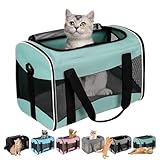
- [PRODUCT DIMENSIONS] Pet travel carrier size : 17x11x11 inches, recommended up to 15 lb pets, it is suitable for large, medium cats and small dogs. Please don't choose your airline cat carrying case based on weight, please refer to your pet's length and height when choosing a pet carrier size.
- [AIRLINE APPROVED] This cat carrier is designed with airline approved, it can fit comfortably under most flight seats, we can take our pets wherever we want. Dog travel carrier offers two attachment loop handles that can be used as a dual harness or as a luggage strap for balanced carry and secure transport.
- [EXCELLENT MATERIAL] Collapsible cat carrier is made of polyester fabric, supported by a steel ring, washable, wear-resistant and durable. The three sides and the top of this pet carrier are nylon mesh, scratch-resistant and not easy to damage, it can not only check your pet in real time, but also ensure enough air circulation.
- [SAFE AND COMFORTABLE] Dog travel bag has metal zippers on the top and side entrances, durable and not easy to deform, it allows your pets to enter and exit easily. The cat carrying case is equipped with an anti-escape safety buckle, which can effectively prevent pets from accidentally falling. It is suitable for car rides and vet rides.
- [PORTABLE AND FOLDABLE] Pet travel carrier comes with a detachable and hand washable wool pet bed, it can provide a comfortable sleeping space for your traveling pet. The cat travel case comes with an adjustable shoulder strap and handle for easy portability. When not in use, you can fold it up for storage.
Behavior assessments are useful information, but they cannot reliably predict every animal’s behavior in a new home. The ASPCA says scientific thinking about predicting aggression from assessments is inconclusive and that assessments have not proved highly accurate or precise for predicting aggression after adoption. It recommends gathering information from multiple sources. Give more weight to a pattern supported by history, foster observations, and repeated interactions than to one test result; where there is a concern, ask whether it has been observed in another setting. The ASPCA’s position statement on behavior assessments of shelter dogs explains these limits.
What a private rehoming conversation can—and cannot—tell you
Speaking with the current guardian may help you learn about ordinary routines, known history, and the reasons for the transfer. Treat those accounts as valuable first-hand information to verify, not independently confirmed proof. Request veterinary documents and concrete examples rather than relying only on broad descriptions such as “good with kids.” When feasible, arrange suitable introductions with household members and existing pets, and discuss how to manage the transition.
Rank #2
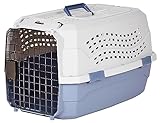
- Hard sided pet carrier with 2 doors for front and top entry; suitable for cat or medium size dog weighing 12 - 20 pounds
- Durable plastic construction with steel wire doors; screws keep the top and bottom sections securely connected
- Spring load latches ensure easy one-handed door opening and closing; top door swings open to the left or right and includes a top carry handle
- Plenty of air ventilation on the sides, top, and back of the carrier
- Note: Be sure to measure the size of the pet when choosing carrier size
The available guidance does not establish a universal screening standard for private transfers. You will need to assess the person’s information, documents, and proposed terms directly. A clear conversation is helpful, but it does not replace records, appropriate introductions, or a written agreement on what happens if the placement fails.
If hardship is driving the decision to rehome
If you are considering rehoming because of veterinary costs, housing limits, or behavior challenges, first ask whether practical support could let the pet stay safely with your family. The ASPCA describes community programs that may help owners keep pets and notes that housing constraints and related financial pressures can contribute to relinquishment. Help varies by location: ask local shelters, veterinary clinics, behavior professionals, housing resources, and pet-support organizations what is available. The ASPCA discusses these issues in its pet-retention resources and position statement on pet-friendly housing.
Free tools Windows power users keep installed
One-click scans. No signup required.
Rank #3

- High Quality Design:Sturdy steel cage structure and wooden support board maintain good spatial stability and shape. Breathable mesh windows on four sides,which can ensure good air circulation and views,make pets have a comfortable and safe travel.It can also be easy for you to check on your pets.There is a front pocket to store pet toys,treats,etc.
- Dimension and Weight:Made of durable tear-resistant fabric.Four easy entrances for pets. Dimensions: 17 inch x 11 inch x 11 inch (L*W*H), suitable for pets up to 16 lbs.Please don't choose your carrier based on weight only,consider your pet's length and height when choosing a carrier.
- Airline Approved & Safty:Can be placed under the seats of most airplanes(Four non-slip feet on the bottom to prevent movement), and comfortably on the seat next to you in a car or bus.It has a adjustable shoulder strap.Can also be fastened to the car seat with a safety belt or shoulder strap to keep your pet safe.
- Easy to Clean :You can clean the stains and dirt on the surface with a soft cloth.Soft mat inside the pet carrier is removable and washable.You can take it out and wash it easily to solve all stains.
- Easy to Collapsible & Lightweight:When not in use,fold it into a flat,space saving and easy to store.Only 2.2lbs,it's easier to carry around.It can also used as a toy of pet house,allowing pets to play in a safe space to relax and rest.
If care cannot continue, the ASPCA’s responsible-guardian statement calls for taking steps to rehome the animal with a suitable, responsible guardian or, as a last resort, placing the animal with a licensed, reputable shelter, rescue group, or sanctuary. That supports careful placement; it does not establish that private rehoming is always preferable to a shelter or rescue. Read the ASPCA position statement on responsible guardianship.
Independent reader supportYour contribution helps us test, update, and keep practical guides available for everyone.U.S. shelter figures are context, not a prediction
The ASPCA reports that approximately 2 million dogs and 2.2 million cats were adopted from U.S. shelters in 2025. Its 2025 figures also include approximately 542,000 dogs returned to their owners, 320,000 dogs euthanized, and 530,000 transferred to other organizations; for cats, approximately 362,000 were returned to an owner or the field, 277,000 euthanized, and 376,000 transferred. The ASPCA reports shelter euthanasia rates declined from 10% in 2019 to 8% in 2025. These national figures describe shelter-system outcomes, not the likely experience or quality of care for a particular animal or facility. See the ASPCA’s shelter intake and outcomes figures.
Quick Recap
Best Value

- AIRLINE APPROVED CARRIER - With airline-approved design, you can take your pet to go to everywhere. This pet carrier provides two connecting loop handles for balanced carrying as a dual seat belt or luggage strap to secure transport
- SAFETY DESIGN - The adjustable shoulder strap help you hands-free carrying and makes it more safe and convenient pet carrier bag for your travel
- DURABLE - This cat carrier is made of durable and lightweight polyester fabric. The four-side mesh will not only give a safe and comfortable travel for your pet, but also easy for you to check on your pet
- PORTABLE & FOLDABLE - This dog carrier is easy to carry and store, which has a padded shoulder strap and handles
- BOTH SIZES AND WEIGHTS - The mediun cat carrier is designed for small and medium pets within 15" x 9" x 9"(smaller than product) and 15 lbs. Please do not choose your carrier only based on weight. Reference your pets' length and height in selecting a carrier size.If carried on board, the maximum dimensions should not exceed 18IN*11IN*11IN.
Rank #4

- Pet Carrier: 17.5” L x 11” W x 11” H, Recommended max load of 16 lbs cats small dogs. Please do not choose your carrier based on weight--please reference your pet's length and height in selecting a pet carrier size.
- Fits for under-seat dimensions of most airlines. Every airline has a specific set of rules and regulations, please contact with airline before flying with your cats small dogs.
- Mesh windows for ventilation, top and side entry with locking zippers for safety. Carrying handles, adjustable shoulder strap which can also be used as seatbelt, and back strap can fasten the pet carrier to your luggage.
- Pet carrier comes with a removable base insert, which creates a solid surface for your pet to stand on, along with a removable & hand washable cozy fleece pet bed, which offers a cozy sleeping space for your traveling cats small dogs.
- "Toys for pets, of textile materials". Mostly used as a Toy of Fabric Pet Home for pets playing and relaxing.
Confirm the handover before it is final
- Review the evidence. Obtain available veterinary records and clarify medications, completed procedures, and follow-up care.
- Discuss fit and routine. Ask for specific behavior examples, identify management needs, and arrange appropriate introductions where feasible.
- Read the terms. Confirm fees, what they include, and who to contact if the placement becomes difficult or does not work.
- Arrange the records transfer. Confirm how veterinary files, license and microchip details, and other ownership information will be updated. Licensing, microchip, and private-transfer rules depend on your jurisdiction, so check local requirements.
- Plan the transition. Agree on how the animal will travel, when records will be available, and what welfare and health checks are needed along the way.
Product prices and availability are accurate as of the date/time indicated and are subject to change. Any price and availability information displayed on Amazon at the time of purchase will apply.




