What’s actually slowing this PC down?
Pick the symptom - the matching free tool is one click away.
For a small, shallow, non-bleeding scrape, gently rinse the wound with warm tap water or sterile saline, dab the area with clean gauze, leave off any creams or disinfectants, and stop your cat from licking it. Bites, punctures, deep or gaping wounds, heavy bleeding, and any wound that becomes swollen, painful, or discharging need a veterinarian. Home cleaning is first aid, not a substitute for a veterinary assessment.
Decide first: home first aid or a veterinary visit
Many cat wounds look minor and are not. Before you clean anything, check whether the injury is one you can safely manage at home. Contact a veterinary clinic promptly if any of these apply:
- The wound is a bite or puncture, even if the opening looks tiny.
- The wound is deep, gaping, or may need stitches.
- Bleeding is significant or does not slow with pressure.
- The wound is near an eye.
- Your cat shows severe pain, or the area is swollen.
- There is discharge or pus, or your cat seems generally unwell.
Emergency-level injuries need emergency care rather than a phone consultation. This list is a practical starting point, not a complete triage system; when in doubt, call a clinic and describe what you see.
Step-by-step: cleaning a minor, superficial wound
Use these steps only for a surface wound that is not bleeding heavily and is not a bite or puncture. Stay calm yourself, since a relaxed cat is easier to handle.
The Tool Desk
Outbyte PC Repair FREERepair Windows errors before they cause bigger problemsFix Now →Outbyte Driver Updater FREEFix the driver behind crashes, sound loss and screen glitchesFind Drivers →#1 Best Overall

- HEALING AID AND SKIN REPAIR: Use a few times daily to flush and decontaminate your cat's wounds, cuts, abrasions, sores, and irritations.
- CAT FIRST-AID ESSENTIAL: Works great on every feline species at any life stage to relieve skin problems
- SAFE & EFFECTIVE: Made with a non-toxic hypochlorous technology that is pH-balanced and safe if licked or ingested
- VETERINARIAN RECOMMENDED: Support wound healing with this anxiety-free, cost-effective alternative to antibiotic or steroid ointments.
- TRUSTED BRAND: Vetericyn is a leader in at-home animal health products manufactured to help cat owners take the best care of their pets.
- Assess the wound and call for help if needed. Look at the depth, size, and location. If any warning sign from the list above is present, arrange veterinary care before cleaning.
- If it is bleeding, apply pressure first. Place clean, dry gauze or another absorbent pad over the wound and press firmly and steadily. Avoid lifting the pad repeatedly to check, because that can disturb a clot. Contact your vet while you hold pressure.
- Flush gently. Rinse away surface dirt with warm tap water or warm saline. Do not scrub, probe inside the wound, squeeze the edges, or try to close the gap yourself. If your cat struggles or becomes distressed, stop and get help rather than forcing the procedure.
- Dab, do not rub. Use clean gauze to gently blot the area around the wound and the wound surface. Do not apply creams, ointments, alcohol, peroxide, soap, or essential oils. Avoid tight bandaging unless you have been trained or specifically told to bandage.
- Protect the wound and watch it. If you need to cover it for transport or temporary protection, use a non-stick dressing so it does not stick to the wound. Keep your cat from licking or chewing, and recheck the wound for swelling, pain, redness, discharge, renewed bleeding, gaping, or signs of illness. Any of these means a call to your vet.
The sources reviewed do not give a universal cleaning frequency for an untreated wound, so no daily schedule is set here. Follow the instructions your clinic gives you for any wound it has already treated.
Choosing a rinse: tap water, sterile saline, or homemade saline
Warm tap water is the simplest option. VCA Animal Hospitals states in its open-wound article, last updated June 20, 2025, that “warm tap water is recommended for cleaning most wounds.” Saline is also a supported rinse. Choose between the options below based on what you have on hand, not on any claim that one works better than another for healing.
Rank #2
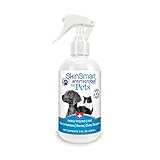
- SAFELY HELPS HEAL WOUNDS, scratches, hot spots and bites; sting-free formula
- DELIVERS ANTIMICROBIAL BENEFITS OF HYPOCHLOROUS with an easy, touch-free spray
- SAFE TO SPRAY AROUND EYES, NOSE, MOUTH AND EARS—safe if licked, no steroids or antibiotics
- HELPS ACCELERATE HEALING AND HELPS PREVENT INFECTION; ideal for post operation recovery at home
- RELIEVES ITCH & DEODORIZES STINKY SKIN; safe for dogs, cats, horses and ALL animals
| Rinse option | How to use it | What the sources say |
|---|---|---|
| Warm tap water | Use warm water to rinse surface debris away from a minor open wound. | Recommended by VCA Animal Hospitals for cleaning most wounds (article last updated June 20, 2025). Readily available. |
| Sterile saline (ready-made) | Use warm, sterile saline as a gentle rinse in the same way as tap water. | Cats Protection lists sterile saline among cat first-aid kit supplies. It is a convenient prepared option, not an essential one. |
| Homemade saline | Dissolve about one level teaspoon (5 mL) of salt or Epsom salt in two cups (500 mL) of water. | VCA Animal Hospitals gives this as an approximate home recipe. It is not a laboratory-measured concentration. |
Whichever rinse you use, keep the flush gentle and stop if your cat is distressed.
What to keep off a cat wound
The most common home mistake is reaching for a strong product. Unless a veterinarian specifically directs otherwise, do not use:
Crashes, No Sound, or Screen Glitches?
Random freezes, missing sound and display glitches usually trace back to one bad driver. Find and replace yours safely.Free scan · under a minuteWindows Errors? Fix Them Before They Spread
Repair common Windows errors and clear accumulated junk for a smoother, more stable PC - no reinstall needed.Free scan · no reinstallRank #3

- COMPREHENSIVE HELP: The Wound Spray is ideal for cat & dog hot spot treatment. Helps with scratches, cuts & skin irritations. It is perfect for dog wound care, as it provides a quick effect.
- HOT SPOT SPRAY TREATMENT FOR DOGS: Our cat & dog Wound Spray is suitable for all sizes & breeds, making it easy to support their well-being. Use our supplement with a cone for dogs to stop licking.
- COLLOIDAL SILVER FOR DOGS & CATS: It is the best hot spot treatment for dogs that has only two ingredients, Colloidal Silver and Deionized Water. It provides gentle skin care and quickly absorbs.
- DOSAGE & WARNING: Our advanced spray form makes our supplement easy to use and administer. Simply spray 2-4 times twice daily, use a cone for cats and dog bandages for wounds to prevent licking.
- SAFE COMPOUND: We created our supplement using only safe ingredients, without any additives, artificial colorants, or GMOs, to provide gentle wound care for dogs and cats.
- Hydrogen peroxide. VCA’s infection article quotes its veterinary authors: “Never use hydrogen peroxide for cleaning a drained abscess, since this will delay healing and can worsen the problem.”
- Rubbing alcohol, soaps, or shampoos, which can irritate tissue and are unsafe if licked.
- Tea tree oil, essential oils, and other herbal preparations.
- Ointments, creams, or disinfectants of any kind. Sources note that prescribed or clinic-recommended products are the exception.
For dressings, use clean gauze or a non-stick (non-adherent) pad. VCA’s “Wound Care Dos and Don’ts” article recommends nonstick gauze, and Cats Protection’s first-aid guidance lists gauze swabs and non-adhesive dressings as useful supplies.
Bites, punctures, and abscesses
A cat bite can look like a small hole or a single dot, yet it can be serious. Cat teeth are sharp and can drive bacteria deep under the skin. The skin often closes over the opening within hours, which traps the bacteria inside. This is why a bite can look healed while an infection is developing beneath it. Treat every bite or puncture as a veterinary problem, even if the surface mark seems minor, and do not rely on cleaning alone.
Rank #4

- Helps Clean & Reduce Risk of Infection – Formulated to gently cleanse cuts, abrasions, and areas of irritation while supporting a healthy environment for recovery.
- Promotes Healing & Skin Repair – Assists in the natural healing process of wounds, hot spots, rash, and general skin irritation in dog and cat.
- Powered by Hypochlorous Acid – Clinically recognized solution that is non-toxic, sting-free, antibiotic free, medicine free, and safe if licked, making it suitable for regular veterinary-grade first aid care at home.
- Daily Care for Sensitive Areas – Suitable for routine use on skin folds, paws, groin, elbows, and other delicate regions. Gentle and safe for use around the eyes, nose, and mouth.
- Made in the USA – Produced under strict quality guidelines to ensure consistency, safety, and reliability for pets of all ages and breeds.
Signs of infection or an abscess
Watch for swelling, pain, pus, fever, or lethargy after a bite. These can indicate an infection or abscess. Do not try to lance, drain, or debride an abscess at home. A veterinarian may need to drain and flush it, sometimes under sedation or anesthesia, and may prescribe medication.
After a clinic has drained a wound
Once a clinic has treated the wound, its instructions take priority. VCA Animal Hospitals’ abscess guidance includes cleaning twice daily after veterinary drainage, but that schedule applies to the clinic’s treatment plan. Open drainage sites, drains, stitches, and bandages each need different care, so ask the clinic exactly what to do and what to avoid.
Best Value

- TARGETED WOUND CARE FOR TROUBLED AREAS designed to help comfort irritated skin, dry patches, hot spots and wounds
- GENTLE, SKIN FRIENDLY FORMULA: Designed to be gentle on your cat's sensitive skin while effectively addressing cuts, scrapes, irritated skin and wounds
- EASY APPLICATION Apply directly where needed for precise, mess-free coverage that helps soothe and moisturize wounds
- SOOTHING SKIN & COAT SUPPORT Formulated with Coconut Oil, Aloe Vera, and skin-conditioning ingredients to help soothe, hydrate, and support healthy-looking skin.
- EVERYDAY COMFORT FOR SENSITIVE SKIN Designed to soothe, hydrate, and condition dry or irritated areas with targeted gel application. Designed for cats of ALL ages & breeds
Stopping licking and chewing
Licking and chewing can reopen a wound, introduce bacteria, and undo a clinic’s treatment. If your cat keeps working at the area, ask your veterinarian about a recovery collar (an Elizabethan collar). It is a veterinary-recommended tool for the care plan, not a standard first-aid item to apply on your own. Keep the collar on as directed, and check that your cat can eat and drink comfortably while wearing it.
Sources for this guidance
This article draws on VCA Animal Hospitals’ “Care of Open Wounds in Cats” (last updated June 20, 2025) and its “Fight Wound Infections in Cats” article, which lists veterinary authors Courtney Barnes, BSc, DVM; Malcolm Weir, DVM, MSc, MPH; Ryan Llera, BSc, DVM; and Ernest Ward, DVM, and does not state a publication date in the version reviewed. It also draws on the VCA Veterinary Specialty Center Seattle pet first-aid handbook, Cats Protection’s “Cat First Aid” page, and VCA’s “Wound Care Dos and Don’ts,” which did not state a publication date in the version reviewed.
Quick Recap
“
Product prices and availability are accurate as of the date/time indicated and are subject to change. Any price and availability information displayed on Amazon at the time of purchase will apply.




