
Recommended Free Tools
Some links on this page are affiliate links: if you buy through them we may earn a commission, at no extra cost to you.
To compare pet insurance policies, compare what each one would pay for the same eligible vet bill—not just the premium. For Australian pet owners, the key terms are the annual limit, reimbursement percentage, excess, sub-limits, exclusions, waiting periods, pre-existing-condition rules and claims process. Check them in each policy’s Product Disclosure Statement (PDS) before choosing; the details differ between insurers and products.
This guide uses Australia as its primary frame, drawing on guidance from ASIC MoneySmart and an Australian pet-insurance shopping guide. Insurance terms and consumer remedies vary by country. The UK Financial Ombudsman guidance mentioned below is specific to UK complaints and is not a rule for Australian policies.
As an Amazon Associate I earn from qualifying purchases.
Quick wins for a faster PC:
Fix the driver behind crashes, sound loss and screen glitchesFind Drivers →Clear out junk files and repair common Windows errorsFree Scan →How do I compare pet insurance policies fairly?
Compare policies against the same hypothetical vet costs and your own pet’s circumstances. A cheaper premium may come with a lower annual limit, a larger share of costs for you to pay, narrower cover or more exclusions. The PDS—not the headline price—sets out what the product covers and how claims are assessed.
Use one row per quote in a comparison sheet. If a term is unclear or missing from the quote summary, find it in the PDS or ask the insurer to explain it in writing. Keep the date of each quote because premiums, eligibility rules and product wording can change.
Popular on Amazon

- Dog multivitamins chewable for skin & coat : Dog multivitamin is rich in Omega-3 fatty acids and vitamin E,which can relieve skin allergies,dryness,itching and other problems.Multivitamin for dogs nourishes skin follicles.Long-term consumption of dog vitamins multivitamin can make dog hair stronger and smoother,and reduce coat loss.The COQ10 in dog multivitamin chewable can resist oxidation and delay cell aging.Dogs with skin injuries can eat dog vitamins and supplements to promote wound healing
- Dog multivitamin relieves joint inflammation: Dog vitamins for hip and joint can supplement high-quality MSM, glucosamine, and chondroitin sulfate to promote cartilage development and repair. Long-term consumption of dog multivitamins chewable can enhance the elasticity and toughness of joint cartilage, improve joint flexibility, and move more freely. Dog multivitamin chews can reduce joint friction and relieve joint pain. Dog vitamins and supplements can prevent and improve dog joint problems
- Dog multivitamin chews are good for the gut: Vet-endorsed formula dog vitamins and supplements made from natural ingredients.Dog vitamins multivitamin chewables contain a rich blend of probiotics to support intestinal and digestive health.Dog vitamins for small dogs can regulate the balance of intestinal flora,help calcium absorption,and promote bone development.Dog multivitamins chewables improve energy metabolism,converting food into energy, making dogs more energetic in their daily activities
- Dog multivitamin chews protect overall health:Senior dog vitamins and supplements help improve blood circulation and prevent cardiovascular disease.Dog multivitamins chewable support normal liver function,promote liver detoxification,and improve negative mood.For dog with heart problems and older dog,taking dog vitamins and supplements in moderation is an auxiliary health care measure.Dog vitamins multivitamin helps enhance white blood cell activity,improve immunity,prevent infection and disease
- Dog multivitamins chewable promote brain development: The DHA in krill oil in multivitamin for dogs is an important component of the brain and retina. Dog vitamins and supplements can improve dog cognitive ability. When training puppies to learn basic commands, puppies who are properly supplemented with dog vitamins multivitamin will behave more intelligently and improve memory.Dog supplements & vitamins can prevent and relieve eye problems such as dry eyes and tear stains, and keep eyes healthy
| Compare this | What to record for each policy | Why it matters |
|---|---|---|
| Premium | Price now and at renewal, if provided | Shows the ongoing cost, but does not tell you how much a claim will pay. |
| Type of cover | Accident-only, accident-and-illness, or broader cover | Policies with different cover types are not like-for-like comparisons. |
| Annual benefit limit | Maximum payable for eligible claims in a policy year | A covered treatment can still leave a large bill if the remaining limit is too low. |
| Benefit percentage | Insurer’s contribution to eligible vet costs | The unreimbursed share is yours, subject to the policy’s excess and limits. |
| Excess | Amount you contribute, and whether it applies per claim, condition or policy period | Application varies; do not assume a single excess rule applies across policies. |
| Sub-limits | Per-condition, treatment or other caps | These may limit payment even when the treatment is otherwise covered. |
| Covered treatment and options | Included treatments and optional benefits, such as dental or routine care | Do not assume an optional or commonly discussed treatment is included. |
| Exclusions | General exclusions and any pet- or condition-specific exclusions | An exclusion may make a policy unsuitable for the risks you want to insure. |
| Waiting periods | Duration by condition or treatment, and the effect of signs or treatment during that time | A condition arising during a waiting period may not be covered; the exact wording matters. |
| Pre-existing conditions | Definition, assessment process, related or bilateral-condition rules, and any review option | Definitions and treatment of past symptoms or related conditions differ by product. |
| Eligibility | Entry rules for your pet’s age, breed, species or other characteristics | A quote does not by itself establish that your pet meets all policy rules. |
| Claims | Upfront payment, required documents, submission method and direct-payment availability | Claim logistics affect how much cash you may need at the time of treatment. |
ASIC MoneySmart recommends checking cover, limits, exclusions and the way claims work. The Australian shopping guide also points readers to the PDS, the Target Market Determination (TMD), which describes the product’s intended market, and the Financial Services Guide (FSG), which provides information about the financial-services provider and disclosures. These documents serve different purposes; use the PDS to check the policy terms that determine cover.
How should I compare premiums and value?
Start with price, but do not rank policies by price alone. Record the premium for the same pet, cover type and payment frequency, then note any renewal figure supplied. Two policies with similar premiums can have very different annual limits, reimbursement percentages, excesses, exclusions and claims procedures. Conversely, a higher premium may buy terms that better match the treatment risks you are trying to cover.
The Tool Desk
Outbyte Driver Updater FREEScan for outdated or missing drivers - takes under a minuteDriver Scan →Outbyte PC Repair FREEClear out junk files and repair common Windows errorsFree Scan →Compare like with like: an accident-only quote should not be presented as equivalent to accident-and-illness cover. Check whether an optional benefit, such as dental or routine care, is included in the quoted price or requires a separate choice. If an option changes the premium, record both versions so you know what you are actually comparing.
What’s the maximum amount available for eligible claims each year?
Check the annual benefit limit, then look for sub-limits that may cap payment for a particular condition or treatment. The annual figure is not necessarily the amount available for every individual claim.
For example, if an eligible procedure costs more than the remaining benefit limit—or a condition-specific cap—the policy may pay only up to the applicable limit. ASIC MoneySmart uses this kind of gap between treatment cost and policy payment to illustrate why limits matter. Compare the stated caps with the treatment costs you are concerned about, but do not assume any particular procedure will be covered: its eligibility and exclusions still apply.
Ask how limits are counted and when they reset, and check whether a sub-limit sits inside or alongside the annual cap. Find out whether separate caps apply to conditions, consultations, prescribed treatment or other categories listed in the PDS. A policy can therefore have a substantial headline annual limit while offering a much smaller amount for a specific treatment. Use the policy wording rather than inferring the answer from a short quote summary.
What percentage of eligible vet costs will the insurer contribute?
The benefit percentage is the insurer’s stated share of eligible vet costs. It is not a promise to pay that percentage of every vet bill: exclusions, limits, sub-limits and the excess can affect the amount paid.
Also popular on Amazon

- Joint Health Supplement for Dogs: Cosequin is the #1 vet recommended retail joint health supplement brand, supporting joint health in dogs for over 25 years
- Contains Glucosamine for Dogs: Cosequin contains glucosamine hydrochloride (FCHG49) and sodium chondroitin sulfate (TRH122), plus methylsulfonylmethane (MSM). This unique combination of ingredients supports healthy joints
- For Any Breed or Size: Whether you have a young or senior dog, a small or large breed, Cosequin helps support their joint health
- Tasty Chews for Daily Use: Cosequin comes in a tasty chewable tablet, making daily administration easy and convenient
- Exceptional Quality: Cosequin is backed by science, undergoing thorough quality inspections to ensure your dog receives a safe, high-quality product. It is manufactured in the United States with globally sourced ingredients
When comparing quotes, write down the percentage alongside the excess and limits. A higher reimbursement percentage on its own does not establish that one policy is better value; the rest of the terms determine how it applies to a claim. Check whether the percentage applies to the eligible amount after an excess is dealt with, or whether the policy describes another sequence. Do not calculate your expected payment from the percentage alone.
How much will I need to contribute in the event of a claim?
Your contribution can include the policy excess and the part of eligible costs the insurer does not reimburse, as well as costs that fall outside cover or exceed a limit. The exact calculation depends on the policy’s wording and the claim.
Do not assume that an excess is deducted in the same way by every insurer. Check whether it applies per claim, per condition or per policy period, and whether the PDS describes any other application rules. Ask how a continuing condition is treated when there are multiple visits or claims, and whether a new policy period changes the calculation. Then read that alongside the benefit percentage and caps. A quote that advertises a low premium can still leave you with a substantial bill if its excess is high, its reimbursement share is low, or a relevant limit is reached.
What isn’t covered?
Read the exclusions list and the definitions that go with it. ASIC MoneySmart identifies pre-existing conditions, bilateral conditions, elective treatment, conditions arising during a waiting period and diseases for which there is a known vaccine among examples owners should check. It also flags less-obvious exclusions such as skin conditions and tick bites.
These are examples to investigate, not a guarantee that every policy excludes each item in the same way. The wording, exceptions and scope can differ. Check both general exclusions and any individual exclusion that applies to your pet or a disclosed condition, and ask the insurer to explain unclear terms before buying.
Look for exclusions that apply only to a particular treatment, body part or diagnosis, as well as exclusions that operate for the whole policy. Ask whether an exclusion is temporary or permanent and whether related conditions are included in its scope. A condition may also be affected by a waiting-period clause even when it is not listed in the general exclusions section.
Some exclusions may be temporary and others permanent. If an insurer says an exclusion may be reviewed after your pet recovers, ask what criteria apply and get any change to cover confirmed in writing. Do not rely on a general statement about an exclusion if the policy documents or a written decision say something different.
Also popular on Amazon
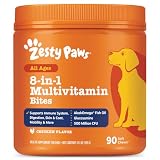
- 8-in-1 Formula - Zesty Paws Multifunctional Bites are functional supplement chews with premium ingredients that support physical performance, antioxidants, hip & joint, heart, immune, skin, liver, & gut health for dogs of all ages, breeds, and sizes.
- Skin Health & Antioxidants – For animals with sensitive skin, this formula contains Cod Liver Fish Oil and Vitamin E to help maintain normal moisture and CoQ10 to help reduce oxidative stress.
- Hip, Joint & Performance Support - Each dog chew features OptiMSM, a premium form of MSM for muscular support, which works synergistically with the Glucosamine HCl and Chondroitin Sulfate in these chews for hip and joint support plus Cod Liver Oil and B-Complex Vitamins support normal physical performance.
- Gut Health & Probiotics - These chews also contain a six-strain Gut Health Blend (500 million cfu per chew) and a Digestive Health Blend to promote gut flora while supporting normal bowel function for dogs.
- Heart, Liver & Immune Health - Multifunctional Bites feature powerful antioxidants, premium CoQ10, Cod Liver Oil and Vitamins A, C, & E to promote healthy cardiovascular function, support liver health and enhance immune response.
How does the insurer assess my pet’s pre-existing conditions?
Find the policy’s definition of a pre-existing condition and its process for assessing your pet’s history. Insurers may consider prior signs or symptoms as well as a diagnosis, but the exact test and any exceptions must be checked in that policy’s documents. Disclose relevant history as requested and ask how the insurer will treat the conditions or symptoms you identify.
Do not treat one insurer’s wording as an industry-wide rule. For example, an RSPCA Pet Insurance policy booklet describes certain temporary conditions that may cease to be excluded after an 18-month symptom-free interval, while treating chronic conditions differently; it also sets out rules concerning bilateral conditions. Those are provisions of that particular product, not a general entitlement or standard that applies to all insurers.
Ask whether related conditions or a problem affecting both sides of the body are treated as pre-existing or bilateral under the proposed policy. If the insurer offers an assessment or review, ask what records it needs, what outcome it can confirm, and whether the decision applies to the condition only or related conditions too. Keep copies of your disclosures, the insurer’s response and any exclusion notice.
What waiting periods should I compare?
Record the waiting period for each relevant condition or treatment rather than writing down one general number. Compare what happens if signs, symptoms, an examination or treatment occurs during that period. A condition that appears during a waiting period may remain outside cover under the policy’s wording, so the trigger matters.
What’s actually slowing this PC down?
Pick the symptom - the matching free tool is one click away.
Waiting periods vary by policy and treatment. The Financial Ombudsman Service in the UK says most policies in its jurisdiction do not cover pre-existing conditions or a condition that appears in the first 14 days. That statement is UK complaint guidance, not a universal Australian rule. For an Australian policy, rely on the proposed insurer’s PDS and written answers.
What should I check before switching insurers?
Before cancelling existing cover, get the prospective insurer’s written terms for any condition your pet has had, including symptoms, treatment or previous claims. ASIC MoneySmart cautions that a condition claimed under an old policy may be treated as pre-existing by a new insurer.
Compare the new policy’s waiting periods, exclusions and eligibility rules as well as its premium. A lower price or a new policy start date does not establish that your pet’s past or ongoing conditions will be covered. Make the decision with the new insurer’s written assessment and PDS in hand, and check the timing of any change in cover so you understand when the old policy ends and the new one begins. Avoid creating a gap while waiting for new cover to start.
Also popular on Amazon
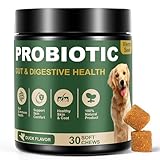
- SYMBIOTIC DIGESTIVE ECOSYSTEM: Our dog probiotics build a 4-way digestive ecosystem: Digestive enzymes pre-break nutrients for easy absorption, while probiotics + prebiotics balance and nourish gut flora. Pumpkin helps dogs with a sensitive stomach maintain regular bowel movements. These layers go beyond ordinary probiotics, turning every meal into steady nourishment, digestive ease, and enduring energy*—so your dog stays balanced and full of life.
- TRIPLE IMMUNE SUPPORT: Gut health drives immunity, and our probiotics for dogs target it. Probiotics help maintain a balanced gut microbiome and support mucosal immunity, while plant antioxidants* (Rosemary & Green Tea) and natural Vitamin E help protect immune cells from daily wear and tear. Formulated for triple immune support - helping your dog stay vibrant and ready for everyday adventures.
- DUAL-ACTION SKIN & COAT NOURISH: True skin and coat health starts from within. Gut and immune support work in sync with Salmon and Flaxseed Oils (Omega-3 & 6) to nourish skin and coat from the inside out. This dual-action care promotes a soft, shiny, and glossy coat you’ll love to touch.
- PURE INGREDIENTS: We believe in complete ingredient integrity. Every batch of our dog probiotic chews is crafted in GMP-certified facilities using trusted, premium sources. They are free from grains, soy, and artificial additives. This commitment to safety and quality ensures a clean formula you can trust for your dog’s overall wellness.
- TASTE DOGS LOVE: Made with natural duck flavor, our probiotic chews are loved by most dogs, even picky eaters. Unlike other hard chews, these soft, easy-to-bite chews are perfect for puppies and senior dogs. They help support digestive comfort, gut balance, and skin & immune health: areas commonly affected by occasional diarrhea, seasonal allergies, itchy skin, or paw licking. A tasty daily chew your dog will love.
What eligibility rules can stop a quote from being suitable?
Check entry rules for your pet’s age, breed, species and any other characteristics stated in the PDS. A quote or online estimate does not by itself prove that every eligibility condition has been met. Ask whether the information you supplied was sufficient for acceptance and whether additional veterinary records are required.
Record any restrictions that apply at entry or renewal and ask how they interact with your pet’s existing history. If a policy offers different cover levels, confirm that your pet is eligible for the level you are comparing, not merely for a more limited option.
Will I need to pay the vet first, or will the insurer pay the vet directly for approved claims?
Check the claims section of the PDS and ask the insurer how payment works. ASIC MoneySmart says most insurers require owners to pay the vet first and claim afterwards, but you should confirm the process for the particular policy.
Ask whether direct payment to a participating veterinarian is available, whether the vet must agree to it, and what you would still need to pay upfront. Also check how to submit a claim, the receipts or veterinary records required, and whether the insurer needs any other documentation. Find out whether digital submission is available and whether a claim can be lodged by the veterinary practice. A policy’s reimbursement terms are only part of the practical comparison: you also need to know whether you can manage the payment and paperwork when care is needed.
Independent reader supportYour contribution helps us test, update, and keep practical guides available for everyone.What documents should I read before buying?
Read the PDS for the actual cover, conditions, limits and exclusions, rather than relying on advertising or a quote page. Use the TMD to see the product’s intended market and the FSG for provider information and disclosures, as recommended in the Australian shopping guide.
Read definitions as well as headings. Terms such as eligible expenses, pre-existing condition, bilateral condition, waiting period and excess determine how broad a promise in a brochure really is. Check schedules, endorsements and any individual exclusion issued for your pet, because those documents may narrow the general wording.
Keep the quote and any written answers from the insurer with the documents you reviewed. If a salesperson or customer-service representative explains how a term applies to your pet, ask for the explanation or decision in writing and compare it with the policy wording. That gives you a clearer record of what you understood when selecting cover.
Also popular on Amazon

- COMPLETE 26-IN-1 DAILY WELLNESS FORMULA: Our advanced multivitamin for dogs is formulated to help support 26 vital nutritional areas as part of a daily routine. With essential vitamins A, C, D3, and E, these gummies help support the immune system and contribute to overall heart and brain health for dogs of all sizes.
- ADVANCED HIP AND JOINT MOBILITY SUPPORT: Formulated with Glucosamine HCl, Chondroitin, and MSM to help support cartilage health, joint flexibility, and everyday mobility — making them a great daily supplement for large breed dogs and active senior dogs.
- SKIN & COAT SUPPORT: Packed with Norwegian Salmon Oil and Biotin, our dog multivitamin helps nourish skin from within and supports a soft, glossy coat. Omega 3 fatty acids contribute to healthy skin and coat as part of a complete daily nutritional routine.
- PROBIOTICS & DIGESTIVE SUPPORT: Features a Six-Probiotic Blend (500 Million CFU) and Digestive Enzymes to help support gut health, smooth digestion, and nutrient absorption. Cranberry Powder is included as part of this comprehensive daily wellness formula.
- UNBEATABLE VALUE 250 COUNT JAR: Our 250-count jar provides lasting daily support in a delicious chicken flavor. Made in the USA in a GMP-certified facility, our soft chews are grain-free and suitable for puppies, adult, and senior dogs alike.
A practical comparison sequence
- Define the cover you are comparing. Separate accident-only cover from accident-and-illness or broader cover. Do not compare premiums as if policies with different cover types provide the same protection.
- Collect the documents. For each quote, locate the PDS and record the premium, annual limit, benefit percentage, excess and sub-limits. Also note the TMD and FSG for context about the intended market and provider.
- Check eligibility. Confirm your pet’s age, breed, species and other entry requirements, and ask whether the quote is conditional on further information.
- Map exclusions to your pet’s history. Review general and pet-specific exclusions, disclose relevant conditions as requested, and ask how past symptoms, bilateral conditions and related conditions will be assessed.
- Compare waiting periods. Record the duration for each relevant condition or treatment and what the policy says about signs, symptoms or treatment during that period.
- Test the limits. Note the annual cap, each sub-limit and when limits reset. Consider whether those caps address the treatment costs you are concerned about.
- Check the claim pathway. Confirm whether you pay first, what documents are needed, how claims are submitted, and whether direct vet payment is possible for approved claims.
- Revisit the premium after the cover comparison. Compare the ongoing price only after recording the terms that determine what you could receive and pay. If a key point remains unclear, get an answer in writing before choosing.
The RSPCA Australian shopping guide puts the point simply: “The policy documents tell you what you’re buying.” Use the quote to identify the product, then use its documents to decide whether its terms suit your needs.
Questions to ask an insurer before you decide
- What is the maximum amount available for eligible claims each year, and which sub-limits sit within it?
- What percentage of eligible vet costs will the insurer contribute after the excess and applicable limits?
- How much will I need to contribute for a claim, and exactly when is the excess deducted?
- What isn’t covered, including skin conditions, tick bites, bilateral conditions, elective treatment and diseases with known vaccines?
- How does the insurer assess my pet’s pre-existing conditions, including related conditions and past symptoms?
- Can a temporary exclusion be reviewed, what evidence is required, and will any change be confirmed in writing?
- Will I need to pay the vet first, or can the insurer pay a participating vet directly for an approved claim?
Frequently Asked Questions
Can I rely on the same waiting-period rule for every pet insurer in Australia?
No. Waiting periods vary by policy and treatment, so check the proposed policy’s exact wording. The UK Financial Ombudsman says most policies in its jurisdiction do not cover pre-existing conditions or a condition appearing in the first 14 days; that is UK complaint guidance, not a standard to apply to Australian policies.
Do these 3 things before closing this tab:
1Scan for outdated or missing drivers - takes under a minute2Clear out junk files and repair common Windows errors3Fix the driver behind crashes, sound loss and screen glitchesIf an insurer says an exclusion is temporary, will it disappear automatically?
Not necessarily. Ask whether a review is available, what conditions must be met and how the insurer will confirm a change. A possible review is not the same as an automatic end to an exclusion.
Does a quote mean my pet has passed the insurer’s pre-existing-condition assessment?
A quote alone does not confirm that a past condition will be covered. Ask the insurer for its written assessment of relevant history and check that answer against the policy’s definition and exclusions.
Where can I raise a complaint if my pet-insurance claim is disputed?
Complaint routes and remedies depend on the country and product. The Financial Ombudsman Service page cited here explains pet-insurance complaints in the UK; Australian readers should check the complaint information applicable to their insurer and policy rather than relying on UK guidance.
Is the annual benefit limit the amount I can claim for every treatment?
No. A policy may apply per-condition or treatment sub-limits, and the remaining annual limit may be lower than the headline figure. Check how each cap is calculated and whether it sits inside or alongside the annual limit.
Free tools Windows power users keep installed
One-click scans. No signup required.
The Bottom Line
Choose pet insurance by comparing the cover you can actually claim, not the premium alone. Put each policy’s limits, reimbursement percentage, excess, sub-limits, exclusions, waiting periods, pre-existing-condition rules, eligibility and claims process side by side, then confirm the details in the PDS and in writing with the insurer.



Leave a Reply