A bug hotel can provide shelter or nesting cavities for some garden invertebrates, but it is not a complete habitat or a guaranteed way to increase native bee populations. Build a modest, sturdy structure from untreated materials suited to the visitors you hope to support, protect it from rain, place it near flowers, and plan to refresh its nesting materials periodically.
For a general bug hotel, separate sections of natural materials can offer different kinds of shelter. For cavity-nesting solitary bees and wasps, use functional hollow stems or tubes, or a small replaceable block of drilled wood; other insects will not necessarily use decorative filler as nesting material.
What a bug hotel can—and cannot—do
In nature, invertebrates use features such as hollow stems, bark, deadwood, leaves, and other sheltered spaces. A bug hotel brings some of these microhabitats together. A general insect hotel may combine shelter options for different invertebrates, while a bee-focused hotel mainly provides nesting cavities for certain solitary bees and wasps. Honey bees and bumble bees do not use these solitary nesting cavities in the same way.
Visitors depend on the design, local conditions, nearby vegetation, and maintenance. Dry leaves, sticks, and bark can provide shelter for some invertebrates, but do not guarantee particular occupants. Likewise, pinecones, loose bark, and moss are not reliable nesting materials for cavity-nesting bees and wasps.
What’s actually slowing this PC down?
Pick the symptom - the matching free tool is one click away.
#1 Best Overall

- Lures Pollinators & Beneficial Bugs:This insect hotel, bee hotel & mason bee house attracts mason bees, pollinating bees. As a pollinator habitat, it pairs with garden bee houses to boost yields, plus draws ladybugs for natural balance
- Multi-Zone for Insect Habitats:It integrates bee home, ladybug house, butterfly house—reed tubes for mason bee, nooks for ladybugs. Fits bug hotel, insect house needs, and works as mason bee houses for the garden
- Durable for Garden Use:This bee hotel for the garden, made of solid wood, has a waterproof roof. Safe as bee houses, insect habitat—it’s chemical-free, ensuring safety for mason bees and all beneficial bugs
- Aids Organic Gardening:As bug house, pollinator habitat & mason bee house, it relies on natural balance instead of artificial products. It pairs with bee houses for pollinating bees to nurture ecosystems, supporting biodiversity
- Versatile & Kid-Friendly:This bug habitat fits garden corners or hangs, doubling as butterfly habitat. It’s a kid-safe bug house for kids, blending with gardens while serving as a functional bee home
Do not treat visible occupancy as the sole measure of success. NC State Extension says there is not strong evidence to determine whether bee hotels consistently increase or decrease native wild bee populations compared with providing no artificial nesting materials. It considers thoughtfully designed and well-maintained hotels a possible habitat enhancement, not a proven conservation fix.
Choose materials for the visitors you want to support
Use a sturdy frame made from untreated wood and divide it into sections instead of packing it with decorative filler. The University of Vermont Extension suggests a frame about eight inches deep as one practical design recommendation, not a universal standard.
| Section or material | Intended use | Keep in mind |
|---|---|---|
| Hollow stems or bamboo tubes | Nesting cavities for some solitary bees and wasps | Keep the openings clear and the nesting section protected from rain. |
| Drilled wood block | Nesting cavities for some solitary bees and wasps | UVM gives hole diameters of 2–10 mm; recommendations vary by species and are not a universal specification. |
| Dry leaves, sticks, or bark | Shelter options for other invertebrates | Describe these as shelter, not guaranteed nesting material or occupants. |
Keep the design modest. NC State Extension advises fewer than about 100 nesting tunnels per hotel; this is extension guidance, not a universal engineering standard. Secure materials so they cannot fall out, and cut stems or tubes evenly to fit the frame.
Rank #2
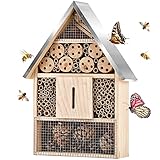
- Dimensions: 9 x 16 x 3 Inch,More capacity, More uses.
- The mason bee house has more holes to accommodate for more Butterflys, bees and ladybugs to habitat, hatcheries or shelter from rain.
- Made of natural materials, such as pine wood, bamboo and pine cone, and not painted. The different filling materials attract a variety of different bugs.
- The metal roof will help protect it from the weather.Waterproof to protect the hotel from erosion,and help stop rain from soaking the bits and pieces that are supposed to keep the ladybirds and lacewings dry.
- Suspension design (via hooks on the back),You can hang it on garden walls, fences, trees, or anywhere else you can hang it.Keep it as dry as possible
Where to put a bug hotel
Choose a sheltered spot near flowering plants, away from strong rain and wind. Nearby forage matters: nesting space and food resources work best as part of the same garden habitat.
UVM Extension suggests a south-facing location at least three feet above the ground. Treat that as a source-specific suggestion and adapt placement to local climate, exposure, and the needs of the chosen design. Whatever the location, secure the frame so it cannot fall, and keep it away from paths or places where it could be disturbed.
How to build a simple bug hotel
- Choose a sturdy frame. Use untreated wood and a modest design that can be secured safely.
- Divide it into sections. Keep the materials separate so you can inspect or replace individual nesting sections.
- Add materials for different purposes. Use hollow stems or tubes, or a small drilled wood block, for cavity-nesting bees and wasps. Add dry leaves, sticks, or bark as shelter options for other invertebrates.
- Secure the contents. Make sure stems, tubes, and other materials fit snugly and cannot fall out. Keep cavity openings clear.
- Add rain protection. Fit an overhang or roof to reduce rain exposure and keep nesting materials from remaining wet.
- Place it near flowers in a sheltered spot. Secure it firmly and adapt the position to local weather and the design.
Keep the surrounding habitat useful
A hotel alone does not supply food or the full range of nesting conditions insects need. Plant suitable flowering plants nearby and, where possible, maintain flowers across the season. Choose plants appropriate for your region; local extension services or native-plant specialists can advise on suitable options.
Rank #3
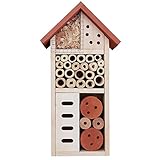
- Shelter for Insect: Lulu Home wooden insect house attracts insects to your garden, and provides them with a safe environment to live, lay eggs, pass the winter or just take shelter from the rain.
- Beneficial for Plants: Some insects are really useful that, when they living in the bug house in your garden, they help to recycle decaying vegetation, pollinate plants, and in some cases even prey on more harmful insects.
- Diverse Rooms in One: To settle more species of insects, each gird of the insect hotel is filled with different material and designed differently. Lulu Home garden bug hotel serves to provide habitat for bees, butterflies, ladybirds, lacewings, etc.
- Premium, Sturdy and Weatherproof: Made of high quality fir wood with exquisite workmanship, it is sturdy and nice-looking. And non-toxic and odorless paint on the proof makes it weather resistant. The materials filled in each grid, such as bamboo, wood shavings, small stakes, are all natural and premium.
- Interesting Decoration: A wonderful ornament to be placed at your garden, balcony, patio, yard, or any place you want. And there is a loop on back for hanging. The bug hotel also provides a great chance for you to find and observe these little creatures in your garden.
Leave some natural habitat in the garden too, such as undisturbed ground, stems, leaves, sticks, and bark. These features support invertebrates that may not use a hotel at all. Avoid insecticides around the habitat where possible, as chemicals can expose beneficial insects and other visitors.
Maintenance and limitations
Artificial nesting materials can concentrate nests in a small space, so make maintenance part of the project. UF/IFAS advises changing hotel materials every two to three years to reduce the risk of parasite and disease buildup. Do not disturb occupied nests unnecessarily; choose replaceable sections and follow reliable local guidance if materials appear damaged or infested.
Recommended Free Tools
Research and regional advice about bee hotels continue to develop. NC State Extension notes that evidence is not strong enough to say whether hotels consistently raise or lower wild native bee populations. Regional reports of concerns about introduced species or parasite concentration are reasons to use careful design and maintenance—not proof that every hotel is harmful.
Rank #4

- Durable & Attractive: Made from sturdy pine wood, this bug house both durable and visually appealing. Each compartment is filled with natural, safe materials like bamboo, Cones, and small stakes, ensuring a healthy environment for beneficial insects.
- Attracts Beneficial Insects: This wooden bee house attracts peaceful bees, butterflies, and ladybirds to your garden, enhancing productivity. It provides a safe habitat for nesting, breeding, and shelter from the rain, promoting a thriving ecosystem.
- Boosts Garden Health: Inhabiting this bee box, beneficial insects help recycle decaying vegetation, pollinate plants, and control harmful pests. They play a crucial role in maintaining a balanced and healthy garden environment.
- Perfect Size & Easy Installation: Measuring ˜26.4 x 14 x 8 cm (10.4 x 5.5 x 3.2 inches), this ladybird house is ideally sized for its residents. Designed for easy installation, it can be quickly set up in any garden or outdoor space.
- Charming Decorative Accent: A beautiful addition to any garden, balcony, or patio, this bee and butterfly houses for the garden enhance the aesthetic appeal of your outdoor area. Attracting these pollinators helps your flowers flourish and makes your garden more vibrant.
Frequently Asked Questions
What should I put in a bug hotel?
Use separate sections of materials suited to their purpose. Hollow stems, tubes, or a small drilled wood block can provide nesting cavities for some solitary bees and wasps; dry leaves, sticks, and bark can offer shelter for other invertebrates. Decorative filler is not automatically useful nesting material.
Where should I put a bug hotel?
Place it in a sheltered spot protected from rain and wind, near flowering plants, and secure it firmly. UVM Extension suggests a south-facing location at least three feet above ground, but local climate and the design may call for a different placement.
How often should I replace bug hotel materials?
UF/IFAS advises changing hotel materials every two to three years to reduce the risk of parasite and disease buildup. Use a design with replaceable sections and avoid disturbing occupied nests unnecessarily.
Do these 3 things before closing this tab:
1Fix the driver behind crashes, sound loss and screen glitches2Repair Windows errors before they cause bigger problems3Scan for outdated or missing drivers - takes under a minuteBest Value

- ALL-NATURAL & BUILT TO LAST: Crafted from premium natural wood with a weather-resistant roof, this insect hotel is treated with non-toxic, odorless waterproof coating for long-lasting use. Filled with bamboo tubes, pine cones, and other natural materials, it offers a safe habitat for beneficial insects.
- ATTRACTS GOOD BUGS: Designed with varied compartments to suit different insect habits, this bug hotel effectively attracts mason bees, solitary bees, butterflies, ladybugs, lacewings, and more. It provides ideal shelter for nesting, breeding, overwintering, and hiding from rain.
- BOOST YOUR GARDEN'S HEALTH: By hosting pollinators and predator insects, this house significantly improves pollination for flowers, veggies, and fruits. It also supports pest control (e.g., aphids), boosting biodiversity and garden health.
- MULTIPLE INSTALLATION OPTIONS: Equipped with a ground stake and top hanging loop, this insect habitat can be easily mounted in gardens- stood on lawns, placed among flowers, or hung on trees, balconies, and porches to blend into various outdoor settings.
- FUNCTIONAL & DECORATIVE GIFT IDEA: Adds rustic charm to gardens and yards while offering a fun nature observation spot. A perfect educational gift for gardeners, kids, and nature lovers!
Do bug hotels increase native bee populations?
That is not established. NC State Extension says evidence is not strong enough to determine whether bee hotels consistently increase or decrease native wild bee populations compared with providing no artificial nesting materials. Treat a hotel as one possible habitat feature, not a proven population boost.
The Bottom Line
A modest, rain-protected bug hotel made from untreated materials can offer shelter or nesting cavities to some invertebrates. Match the materials to their intended use, place the hotel near flowers, avoid insecticides nearby, and maintain or replace nesting materials periodically. It is one small part of a garden habitat, not a substitute for food, natural nesting spaces, or careful upkeep.
Quick Recap
Product prices and availability are accurate as of the date/time indicated and are subject to change. Any price and availability information displayed on Amazon at the time of purchase will apply.




