
What’s actually slowing this PC down?
Pick the symptom - the matching free tool is one click away.
Some links on this page are affiliate links: if you buy through them we may earn a commission, at no extra cost to you.
A healthy winter routine combines the sleep your dog needs with weather-adjusted movement, indoor enrichment and a warm, safe recovery space. Do not follow a universal rule such as a fixed number of walking minutes: cold tolerance changes with age, size, coat, health, acclimation, wind, wetness, ice and your dog’s behavior. Keep the main bed indoors, protect predictable naps, use the safest daylight for outdoor activity, and replace curtailed walks with scent games, food puzzles and short training sessions. Puppies commonly sleep 16–20 hours in 24 hours; adult guidance ranges from about 12–14 hours to about 14 hours, and seniors may need more. Watch your dog rather than forcing a target, and bring them inside at the first sign of cold stress.
How much sleep does a dog need in winter?
Winter does not change a dog’s basic sleep requirement, although shorter days, less activity and cold-weather recovery can alter when a dog naps. RSPCA New South Wales (2026) gives puppies a typical total of 16–20 hours in 24 hours and about 14 hours for adult dogs. Singapore’s Animal and Veterinary Service gives 12–14 hours per day for adult dogs. Those figures are useful ranges, not quotas: breed, age, health, workload and individual temperament all matter.
As an Amazon Associate I earn from qualifying purchases.
Free tools Windows power users keep installed
One-click scans. No signup required.
| Life stage | Typical total sleep in 24 hours | How to use the range |
|---|---|---|
| Puppy | 16–20 hours (RSPCA New South Wales, 2026) | Plan several protected naps as well as overnight sleep. A puppy may need a brief toilet trip during the night. |
| Adult | About 12–14 hours (Singapore Animal and Veterinary Service; RSPCA New South Wales, 2026) | Use the dog’s normal baseline. A highly active dog may rest differently from a sedentary companion. |
| Senior | Often more than an adult dog | Allow extra recovery and make the bed easy to reach, especially for dogs with stiff joints. |
Dogs usually divide rest between one long overnight period and daytime naps. Keep nap periods quiet and reasonably predictable. Interrupting every nap to compensate for a missed walk can produce an overtired, irritable dog rather than a better-exercised one. A dog that suddenly sleeps much more or less, cannot settle, or is difficult to rouse for normal interests needs a veterinary discussion; those changes can reflect pain or illness rather than winter laziness.
How do I build a winter schedule around sleep and activity?
Anchor the day to your household’s existing wake, meal and bedtime rather than forcing arbitrary clock times. The schedule should repeatedly cycle through toilet opportunities, safe movement, food, mental work and uninterrupted rest.
Popular on Amazon

- Durable Protection For Active Dogs: Durable dog coat with iconic roots for the hardest working dogs. Fully insulated firm-hand duck canvas perfect for dogs who need a tough, reliable dog winter jacket in cold, windy conditions
- Built For Tough Conditions: Built with heavy duty firm-hand duck canvas the 12-Ounce exterior shell is crafted to handle the toughest outdoor conditions, offering durability and protection against wind and cold weather. The triple needle stitch on main seams ensures a long lasting product
- Insulated Interior For Cold Weather| Designed as a dog winter coat, this insulated dog jacket features a quilted liner and corduroy-lined collar for added warmth, keeping your dog comfortable even in cold temperatures. Warmer than a traitonal dog puffer jacket
- Easy To Adjust And Wear: The improved neck and chest tabs, along with loop-lined straps for chest and waist, ensure a secure, adjustable fit for small, medium, and large dogs
- Sizing: Offering dog jackets for small dogs(Chest Girth: 16"- 21"), dog jackets for medium dogs (Chest Girth 22"- 28"), dog jackets for large dogs (Chest Girth 25"- 38"), and dog jackets for extra large dogs (Chest Girth 30"- 45") See sizing chart in images
Set a dependable morning start
Take your dog out for a toilet break as soon as they wake. If footing and weather are safe, add a short, sniff-focused walk. Sniffing provides information and mental work without requiring a long, fast route. Dry the coat, belly and paws when you return, remove ice or deicer, offer water and then feed. Follow breakfast with a quiet nap instead of immediately starting another game.
Use the safest daylight window
Schedule the day’s most substantial outdoor activity for the warmest, brightest period with the best footing. In very cold weather this may still be a brief outing. For a cold-sensitive dog, deliberately pair the shorter walk with an indoor scent search or food puzzle so reduced outdoor time does not become reduced stimulation.
The Tool Desk
Outbyte Driver Updater FREEScan for outdated or missing drivers - takes under a minuteDriver Scan →Outbyte PC Repair FREEClear out junk files and repair common Windows errorsFree Scan →Alternate effort and recovery
Several short activity blocks are safer and easier to regulate than one exhausting session. After a training game, retrieve session or walk, provide a calm chewing or licking activity and then leave the dog undisturbed. Puppies need particularly frequent sleep opportunities; older dogs may need longer recovery after slippery or uneven ground.
Protect the evening transition
Offer a brief toilet and movement break before darkness or a forecast deterioration when possible. In low light, use reflective or LED equipment and carry a light. Finish by wiping paws and the belly, checking for cracks or ice, refreshing water and settling the dog in the normal overnight bed.
How long should I walk my dog when it is cold?
There is no scientifically reliable winter minute allowance that fits every dog. Cornell’s Richard P. Riney Canine Health Center identifies age, size, coat, nutritional status, health and acclimation as important determinants of cold tolerance. Wind, rain, wet fur, snow depth, ice and the dog’s behavior can make the same air temperature feel very different. The American Animal Hospital Association (AAHA) recommends short, frequent walks in extremely cold temperatures.
Begin with the shortest outing that allows toileting and relaxed sniffing, then extend only while your dog remains comfortable. Choose cleared, well-lit surfaces, keep your dog close on ice or snow, and avoid a route that forces them to stand still in wind. A healthy, acclimated, thick-coated dog may manage more time than a tiny, thin-coated, elderly or underweight dog, but coat thickness never makes an icy or contaminated route safe by itself.
Adjust the plan before leaving
- Check the surface: Ice, packed snow and hidden holes increase slip and injury risk. A shorter route on a known surface is preferable to a longer route on uncertain ground.
- Check moisture and wind: Wet fur and wind remove body heat faster than a calm, dry day at the same temperature.
- Check the dog: Puppies, seniors, very small dogs, thin-coated breeds and dogs with medical conditions generally need more conservative exposure.
- Check acclimation: A dog moved suddenly from a heated home into severe cold has not developed tolerance simply because it wears a coat.
Turn back while your dog is still comfortable. Do not wait for visible distress to “finish the planned distance.”
What signs mean my dog is too cold?
Cornell lists shivering, whining, lifting paws, reluctance to walk, a hunched posture and sudden anxiety as reasons to stop and warm up. A tucked tail, slowing down or repeatedly looking toward home are also practical signals that the outing is no longer comfortable. Bring the dog indoors, remove wet clothing, dry them gradually and provide a warm resting place.
- Shivering or trembling
- Whining, restlessness or sudden anxiety
- Repeated paw lifting or refusing to place a foot down
- Reluctance to continue, slowing markedly or trying to turn home
- Hunched posture or tightly tucked tail
- Wet fur that will not dry, pale or painful skin, weakness or unusual drowsiness
Suspected hypothermia or frostbite is an emergency requiring immediate veterinary care, according to Cornell. Do not rub potentially frostbitten tissue or apply intense direct heat; transport the dog and follow veterinary instructions.
How can I exercise my dog indoors during a snowstorm?
Replace the physical distance of a walk with several brief blocks that combine sniffing, problem-solving, training and controlled play. Indoor work should challenge the brain without creating collision risks or leaving the dog overstimulated.
Recommended Free Tools
Also popular on Amazon
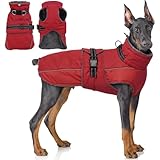
- SNOW & WATER RESISTANT DOG COAT: The dog winter coat is made of premium water-resistant fabric with fleece lining. The windproof dog jacket turtleneck design can keep the dog warm even in cold weather. Ideal for indoor and outdoor activities
- EASY TO WEAR: Quick release buckle and adjustable strap on back make the large dog coat easy to put on and take off. There are adjustable elastic straps on collar that can adjust the tightness and prevent wind and snow. QBLEEV dog clothes can machine washable
- REFLECTIVE DOG COAT WITH HARNESS BUILT IN: This dog winter jacket is designed with reflective strips, which ensuring your dog's safety in low-light conditions. There are two D-rings on the neck, which can be attached to a leash, making outdoor walking more convenient
- WATERPROOF THERMAL DOG JACKET FOR COLD DAYS: Our dog cold weather coats are great for walking, hiking, running, climbing, snow skiing, jogging, camping. Also provides optimal warmth and dryness in foggy, lightly rainy, and snowy conditions. QBLEEV warm dog coat is ideal for winter daily wear
- 6 SIZES AVAILABLE FOR SMALL MEDIUM LARGE DOGS: S, M, L, XL, XXL, XXXL. The fleece dog coat fits for nearly all kinds of breed furry friend. Such as Chihuahua, Beagle, Poodle, Bulldog, Schnauzer, Labrador, Golden Retriever, Teddy, Yorkshire Terrier, Maltese, Pekingese, Pomeranian, Cocker Spaniel, Jack Russel, Pug, Husky, Samoyed, Boston Terriers, etc
Scent and foraging games
Scatter part of the dog’s normal meal over a clear floor or hide a few pieces in easy-to-find locations. A snuffle search, cardboard-box search or “find it” game lets the dog use their nose. Start with obvious placements, then increase difficulty only when the dog understands the task. Count all food used for games toward the day’s ration.
Food puzzles and licking activities
Use a puzzle feeder suited to the dog’s size and chewing style. Supervise new equipment and remove it if the dog breaks pieces off. A stuffed, freezable toy or lickable food spread can provide calm engagement after active play; avoid foods your veterinarian has restricted.
Short reward-based training
Run two-to-five-minute sessions for hand targeting, place, spin, touch, stays or carrying a toy. End while the dog is succeeding. Several tiny sessions generally produce better focus than one long drill, especially for puppies.
Controlled interactive play
Gentle tug, a short retrieve in a clear hallway or toy exchanges can provide movement. Remove slippery mats, block stairs and keep play away from furniture corners. Avoid high-speed turns and repeated jumping on hard floors, particularly for puppies, seniors or dogs with orthopedic problems.
Finish with downshifting
Offer a safe chew or licking activity, dim household stimulation and allow a nap. Mental work is still exercise, so a dog may need recovery even when the session occurred entirely indoors.
| Indoor option | Primary benefit | Safety control |
|---|---|---|
| Scent scavenger hunt | Nose work and low-impact movement | Use non-toxic hiding places and keep small objects out of reach. |
| Puzzle feeder | Problem-solving and slower eating | Match difficulty to the dog and supervise the first uses. |
| Two-to-five-minute training | Focus, communication and mental fatigue | Use rewards from the normal food allowance. |
| Gentle tug or retrieve | Short bursts of physical activity | Use a clear, non-slip area and stop before frantic running. |
Is it safe for my dog to sleep outside in winter?
The primary sleeping area should be indoors. The RSPCA states, “We don’t advise keeping dogs outside in any weather.” Outdoor housing exposes a dog to cold, wind, wetness, changing temperatures and hazards that are difficult to monitor overnight. A kennel or covered run is not a substitute for bringing the dog into a safe indoor room, particularly for puppies, seniors, small or thin-coated dogs, and dogs with illness.
Provide a quiet, dry, draft-free bed insulated from the floor. RSPCA guidance recommends a safe heat source that keeps a sleeping space above 10°C for dogs kept in that space. A warm elevated bed can reduce contact with a cold floor, but it must not wobble or create a fall risk for an arthritic dog. Keep bedding dry and replace it when damp.
Make the room sleep-friendly
- Place the bed away from doors, radiators that could burn skin and busy walkways.
- Block cold drafts while maintaining normal ventilation.
- Give the dog enough room to stretch, turn and change position.
- Keep water available and check that it has not become excessively cold or frozen.
- Use a heated bed or pad only if it is designed for animals, cannot overheat, and cannot be chewed; follow the product instructions and ask a veterinarian about special needs.
Does my dog need a winter coat, boots or paw balm?
Not every dog needs clothing. A dog winter coat can help a small, senior, thin-coated or otherwise cold-sensitive dog, but it is an aid, not permission to stay out longer. Cornell, AAHA and RSPCA guidance all support tailoring protection to the individual dog.
Choose and introduce a coat
The coat should cover the trunk without restricting walking, breathing, toileting or normal body language. It must not rub the armpits or neck, and it should remain dry. Introduce it indoors: show the garment, reward investigation, put it on for a few seconds, remove it, and gradually increase wear time. Stop if the dog freezes, panics, overheats or cannot move naturally. Check under straps after every outing.
Protect paws from ice and deicers
Booties can reduce contact with salt, grit and ice if the dog accepts them and they fit securely without cutting circulation. Introduce one boot at a time indoors, then walk briefly on a clean surface. Paw balm may help with dryness, but it does not make contaminated snow safe and should not replace rinsing and inspection. Wipe or rinse every paw and the belly after walks, remove lodged ice and dry thoroughly.
Also popular on Amazon

- 【Triple-Shield Protection】This dog coat features a windproof, waterproof, and dirt-resistant softshell, keeping your dog warm and dry in harsh winter weather.
- 【3-Layer Fabric】Built with durable 150D 4-way stretch outer layer, TPU waterproof breathable membrane, and soft thermal fleece lining for comfort and warmth.
- 【Functional Fit for All Dogs】Adjustable neck buckle, elastic belly band, rear leg straps, and tail-end buckle provide a secure fit for small, medium, and large dogs.
- 【Pet-Friendly Design】High collar blocks cold wind, U-shaped belly cut ensures no interference for male or female dogs, while dual zipper leash opening makes walks easier.
- 【Safety in Low Light】Reflective strips increase visibility during evening walks, ensuring your dog stays safe outdoors. Available in multiple sizes from S to 2XL for breeds like Pomeranian, Corgi, Labrador, and Golden Retriever.
What should I do after every winter outing?
- Bring the dog inside promptly when the walk ends or when discomfort appears.
- Remove the coat and inspect the skin, ears, tail and between the toes.
- Wipe or rinse paws and the lower belly to remove rock salt, grit, ice and deicers.
- Dry wet fur, especially on small dogs and dogs with dense coats.
- Offer fresh water and allow an undisturbed rest period.
- Record unusual stiffness, persistent licking, cracks, redness or behavior changes and contact a veterinarian if they do not resolve.
How do I prevent common winter poison and ice hazards?
- Antifreeze: Secure products containing ethylene glycol and clean spills immediately. Even a small exposure can be deadly; contact a veterinarian or emergency poison service at once if ingestion is possible.
- Frozen water: Keep dogs away from frozen ponds, lakes and rivers. Ice may not support their weight, even when it appears solid.
- Salt and grit: Prevent licking contaminated paws after walks by cleaning them before the dog settles.
- Low visibility: Use reflective or LED equipment and carry a light in darkness.
- Overheating indoors: Keep beds and heaters away from direct high heat and inspect cords for chewing.
How should food and hydration change in winter?
Keep fresh water available indoors and after every outing. Do not automatically increase food because the calendar says winter. Outdoor or highly active dogs may need more energy in genuinely cold conditions, while a dog exercising less indoors may need portion control. Weigh the dog regularly, monitor body condition and ask a veterinarian before making a substantial dietary change.
What does a practical winter day look like?
The following is an example framework, not a medical prescription. Shift the clock to your household’s routine and shorten or replace outdoor blocks when conditions deteriorate.
Quick wins for a faster PC:
Scan for outdated or missing drivers - takes under a minuteDriver Scan →Clear out junk files and repair common Windows errorsFree Scan →- Morning: Toilet break and a short sniff walk on safe footing. Dry the dog, clean paws, feed breakfast and protect a nap.
- Late morning or midday: Use the warmest bright period for the main outdoor activity. If the dog is cold-sensitive, make it brief and add a puzzle feeder or scent game indoors.
- Afternoon: Quiet rest followed by a short training or gentle play block. Rotate enrichment items so novelty does not require constant intensity.
- Early evening: Brief toilet and movement break before darkness or worsening weather when possible. Use reflective or LED gear.
- Night: Wipe paws and belly, offer water, and settle the dog in a warm, draft-free bed. Puppies may need a nighttime toilet trip; older dogs may need extra padding and easier access.
The non-negotiables are adequate total sleep, regular elimination, weather-adjusted activity, mental stimulation, hydration and a warm place to recover.
When should a winter change trigger a veterinary call?
Contact your veterinarian for a sudden sleep change, inability to settle, persistent reluctance to walk, ongoing lameness, painful or discolored skin, repeated paw licking, weakness or unusual difficulty waking. Seek immediate care for suspected hypothermia, frostbite, collapse or possible antifreeze ingestion. A veterinarian can also tailor exercise and bedding advice for heart, respiratory, joint, endocrine or other chronic conditions.
Frequently Asked Questions
Can my dog sleep more on dark winter days?
Some dogs nap more when activity and daylight decrease, but a marked or sudden change is not automatically seasonal. Compare the dog with their normal baseline and call your veterinarian if they are difficult to rouse, uninterested in normal activities or unable to settle.
Should I skip a walk if roads are covered in salt?
Avoid contaminated routes when possible and use a clean alternative or indoor enrichment. If you must go out, keep the trip brief, prevent licking, and rinse and dry every paw and the lower belly afterward.
How can I tell whether a coat is making my dog too warm?
Check for panting, restlessness, trying to remove the coat, damp fur or restricted movement. Remove it indoors, inspect for rubbing, and use a lighter or better-fitting layer rather than extending the outing.
Is a heated dog bed safe overnight?
Only use equipment intended for animals, follow its temperature and supervision instructions, and prevent chewing or direct contact with a hot surface. Ask your veterinarian before using heat for a dog with reduced sensation, mobility problems or another medical condition.
What should I do if my dog falls through ice?
Call emergency services or a local rescue service rather than walking onto the ice yourself. Once the dog is safely out, wrap them in dry layers, avoid rubbing cold tissue and seek immediate veterinary assessment.





Leave a Reply