
Do these 3 things before closing this tab:
1Fix the driver behind crashes, sound loss and screen glitches2Repair Windows errors before they cause bigger problems3Scan for outdated or missing drivers - takes under a minuteSome links on this page are affiliate links: if you buy through them we may earn a commission, at no extra cost to you.
You can deep-clean a cat litter box safely without bleach: empty it, scrape off dried litter, scrub with warm water and a small amount of mild unscented dish soap, rinse until no film or fragrance remains, dry it completely, and refill it with the cat’s familiar litter. Scoop waste at least daily and wash the entire box about once a week; homes with several cats, heavy use, visible residue, or persistent odor may need a shorter interval.
Bleach is not necessary for routine cleaning, and stronger chemicals can create problems. Keep the cat away while you clean, never mix products, avoid ammonia, strong fragrances, and phenol-containing disinfectants, and use an enzymatic pet-odor cleaner only for accidents outside the box. Pregnant or immunocompromised people should have someone else handle the box when possible.
As an Amazon Associate I earn from qualifying purchases.
What’s actually slowing this PC down?
Pick the symptom - the matching free tool is one click away.
What is the safest bleach-free way to deep-clean a cat litter box?
The core method is mechanical cleaning: remove the litter and waste, loosen stuck material, wash with warm water and mild unscented soap, rinse thoroughly, and dry fully. This removes soil and odor without leaving a chemical scent that could irritate your cat or make the box unattractive.
Routine washing is different from disinfection. The CDC defines cleaning as physically removing dirt and germs with soap or detergent; disinfection is a separate chemical step intended to kill germs on a cleaned surface. Most household litter-box cleanups only need the first method.
Popular on Amazon

- Cat litter box cleaning brush is made of plastic, and the brush head is equipped with flexible and dense bristles.
- Pet cleaning brush adopts an arc-shaped design, with the brush head facing upwards and no blind spots for cleaning, making it easy to clean the edges of the garbage bin.
- The cleaning brush is designed with a suspended water filter to save space and keep it dry.
- Extended handle design of the litter box cleaning brush is 34 centimeters (13.4 inches) long and easy to use.
- Package Contents: Litter Box Cleaning Brush x 2
Why mild and unscented matters
Cats rely heavily on smell when deciding whether a toilet area feels safe. Fragranced soap, deodorizer, or litter can leave a residue even after the box looks clean. A complete rinse and familiar, preferably unscented litter reduce the chance of litter-box avoidance.
What do I need before starting?
Gather everything before moving the cat away from the cleaning area. A dedicated brush prevents litter residue from being transferred to dishes, sinks, or other household surfaces.
| Supply | Purpose | Important qualification |
|---|---|---|
| Mild unscented dish soap or gentle detergent | Breaks up urine residue, dust, and stuck litter | Use a small amount; fragrance and leftover film can bother cats |
| Warm water | Provides the washing and rinsing medium | It is the routine-cleaning approach supported by veterinary and humane-society guidance |
| Dedicated litter-box brush or sponge | Scrubs the base, corners, sides, and cover | Keep it separate from kitchen and bathroom cleaning tools |
| Disposable gloves | Protect hands during handling | Especially important for people who are pregnant or immunocompromised |
| Clean towels or an air-drying area | Removes moisture before refilling | The box should be completely dry before litter is added |
| Fresh familiar litter | Restores the cat’s normal toilet surface | Use the cat’s usual, preferably unscented, type whenever possible |
| Enzymatic pet-odor cleaner | Treats urine or feces accidents outside the box | It is not a substitute for washing the plastic box |
How do I deep-clean the box step by step?
Work in a ventilated area where the cat cannot walk through wet cleaner or lick the tools. The following sequence keeps dirty litter from spreading and prevents soap from remaining on the plastic.
1. Protect people and pets
Move the cat to another room before opening the box. Keep children and other animals away until the box, cover, and surrounding floor are dry. If a pregnant or immunocompromised person must do the job, disposable gloves and immediate handwashing are advised; the CDC recommends having another household member clean when possible.
2. Empty the box
Put used litter and feces in the garbage. Do not flush clumping litter or pour it into a sink, shower, or floor drain, because it can swell and clog plumbing. If the box has a removable cover, empty and clean it separately.
3. Scrape before adding water
Use the dedicated brush or a scraper to lift dried clumps from the bottom, corners, and sidewalls. Removing the hard material while the box is dry takes less effort and keeps a large amount of litter from turning into paste in the drain or wash basin.
Also popular on Amazon
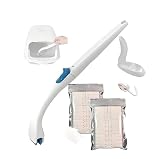
- Usage and Function: Cat litter box accessories featuring an enclosed cat litter box general disposable cleaning brush with arc-shaped handle that makes it easy to clean the deep inside corners of the cat litter box
- Materials and Production: Made of plastic and processed through manufacturing with a smooth surface and comfortable grip for ease of use during cleaning tasks
- Installation and Maintenance: Features flexible frame design with snap-in embedded construction that enables quick installation and removal for easy cleaning and maintenance
- What You Will Get: Package includes 1 brush, 12 pairs (24 pieces) of disposable non-woven fabric brush heads, 1 hook, and 1 base, all protected with thickened corrugated paper to avoid damage during shipping
- Usage Instructions: Use one pair (two pieces) of brushes each time, and moisten the brush head with water or cleaning solution before use for optimal cleaning performance
4. Wash with warm water and a little mild soap
Wet the box and cover with warm water, add a small amount of mild unscented dish soap or gentle detergent, and scrub every surface. Pay particular attention to seams, corners, the area beneath the usual urine-clump location, and the underside of the rim. Edmonton Humane Society guidance specifically recommends mild dish soap and warm water with a dedicated brush; Cornell advises scrubbing with a gentle detergent.
5. Rinse until nothing remains
Rinse repeatedly until the water runs clear and the plastic no longer feels slippery. There should be no visible suds, soap film, or noticeable fragrance. Residue can irritate paws and nose, while a strong new smell may make a cat avoid the box.
6. Dry completely
Shake off excess water, then towel-dry or leave the box in a clean, well-ventilated place until every surface is dry. Do not put litter into a damp box and do not let the cat contact wet soap or disinfectant. Moisture trapped beneath a liner, rim, or cover can also leave odor behind.
7. Refill with the familiar litter
Add the litter the cat already accepts, preferably unscented. A commonly preferred depth is about 1 to 3 inches, but an individual cat’s established depth matters more than a universal target. Sudden changes in litter type, texture, or fragrance can trigger avoidance, so change products gradually if a change is necessary.
The Tool Desk
Outbyte PC Repair FREEClear out junk files and repair common Windows errorsFree Scan →Outbyte Driver Updater FREEScan for outdated or missing drivers - takes under a minuteDriver Scan →8. Put the box back only when the setup is ready
Check that the box is stable, accessible, and in a quiet location away from food, water, and noisy appliances. Return it only after it is dry and filled. If you temporarily moved the box, restore access promptly so the cat is not forced to choose an inappropriate location.
Should I disinfect a litter box instead of washing it?
For ordinary household maintenance, washing with warm water and mild soap is the supported approach. Disinfection is an additional chemical step, not a replacement for removing dried litter and organic soil first.
Also popular on Amazon

- LITTER BOX SCRUBBING WIPES: Cleans litter box messes & breaks down odors on contact
- ENZYMATIC FORMULA: Durable wipes hold up against tough litter box messes
- ODORCAPTURE 360 TECHNOLOGY: Destroys litter box odors
- TOUGH ON LITTER BOX MESSES & ODORS: Gentle on paws
- SAFE FOR PETS & HOME: When used & stored as directed
| Situation | Appropriate first choice | What to avoid or verify |
|---|---|---|
| Routine weekly or as-needed cleaning | Warm water, mild unscented soap, scrubbing, thorough rinsing, and drying | Do not escalate to harsh chemicals simply because odor is present |
| Sick pet or a higher-risk household where disinfection is specifically needed | Clean first, then use an EPA-registered disinfectant exactly according to its label | Keep pets away, observe contact time, allow full drying, and rinse when the label permits |
| Strong odor after a normal wash | Inspect for scratches, cracks, trapped residue, or a contaminated surrounding surface | Replacing damaged plastic is safer than repeatedly increasing chemical strength |
| Accident on a floor, wall, or fabric outside the box | An enzymatic pet-odor cleaner designed to neutralize urine or feces odors | Do not treat the enzymatic product as a substitute for washing the litter box |
Why bleach and ammonia are poor routine choices
Bleach is unnecessary for normal litter-box washing and can become dangerous if mixed with ammonia-based products. The CDC warns that this combination can produce toxic gases. Never combine cleaners in the same bucket, spray bottle, sink, or box.
Ammonia and strong scents can be unpleasant or irritating, and the smell may make a cat reject the toilet area. Products containing phenol are especially dangerous: the CDC says cats should not be exposed to disinfectants with “phenol” in the ingredient list because phenols are very toxic to cats.
Quick wins for a faster PC:
Fix the driver behind crashes, sound loss and screen glitchesFind Drivers →Repair Windows errors before they cause bigger problemsFix Now →Is vinegar a safe replacement for bleach?
Vinegar is not a proven all-purpose disinfectant. The CDC notes that there is not enough research to establish how well vinegar cleans or kills germs and that it does not kill all germs. Cornell also cautions against vinegar in cat-soiled areas because its smell can resemble urine and may be irritating.
If routine cleaning is the goal, mild unscented soap and water provide a clearer, cat-friendlier method. If disinfection is required for a particular illness or household risk, use a product whose label specifically supports that use rather than improvising with vinegar.
How often should I scoop and wash the entire box?
Scoop feces and urine clumps at least once a day. Merck Veterinary Manual recommends daily scooping and cleaning the entire box at least once a week, which is a practical baseline for many homes.
| Use pattern | Starting schedule | When to shorten the interval |
|---|---|---|
| One cat, normal use, no visible residue | Daily scooping; whole-box wash about weekly | Wash sooner if odor, film, or stuck litter appears |
| Several cats sharing boxes | Daily scooping with more frequent full washing | Use the shorter end of the 1-to-4-week range cited by AAFP/ISFM and Edmonton Humane Society guidance |
| Small box or heavy use | Inspect daily and wash as needed | Do not wait for the scheduled day if the base is coated or smells |
| Visible scratches, cracks, or persistent odor | Replace the box | Damaged plastic can retain bacteria and old odors despite washing |
The often-cited 1-to-4-week washing range is not a permission to leave a visibly dirty box for a month. Treat it as a range that depends on the number of cats, box size, litter type, residue, and odor. A box that smells clean only after deodorizer is still overdue for washing or replacement.
PC Slower Than It Used to Be?
A free scan shows the junk files, broken settings and background clutter dragging Windows down - then fixes them in one click.Free scan · Windows 10 & 11Outdated Drivers Are Slowing You Down
One free scan finds every outdated or missing driver and matches the right update for your exact hardware.Free scan · exact hardware matchAlso popular on Amazon

- Effective cleaning: The dust pan and brush set long-lasting brush bristles can capture and move dirt effectively; it can get into small cracks and crevices. It has a wide lip that allows for maximum surface contact and leaves no debris behind.
- High quality: The mini broom and dustpan set are small and made with high quality PET fibers, ensuring comfort and maximum control while cleaning and sturdy construction for durability.
- Creative design: The brush and dustpan handle are ergonomically designed with a non-slip grip. Whisk-broom brush shape with a rubber handle makes it easy to sweep from above and reach in corners and is anti-slippery for easy grip.
- Multipurpose: This dustpan and brush can handle small and large messes anywhere in your home. ideal for cleaning the keyboard, desk, cars, tables, countertops, cabinets, closets, sofa, living environment of small pets, and even mealtime messes, etc.
- Convenient storage: The dustpan handle snaps directly to the dustpan handle for convenient storage in the home or on the go. Both the brush and the dustpan handle have holes for hanging storage options are perfect for easy storage.
How do I remove old litter-box smell without bleach?
Start by removing the source rather than covering it. Empty all litter, scrape dried clumps from the base and corners, scrub with warm water and mild unscented soap, rinse until no film remains, and dry completely. Wash the cover and any removable parts as well.
Then inspect the plastic. Deep scratches, cracks, and seams can hold residue that ordinary scrubbing cannot remove; persistent odor after a thorough wash is a reason to replace the box. Also clean urine or feces deposited on the floor, wall, mat, or furniture with an enzymatic pet-odor cleaner designed for that surface.
When odor points to a bigger problem
A cat that repeatedly eliminates outside a clean box may have a medical or behavioral problem, not a housekeeping problem. Clean accidents promptly and arrange a veterinary check when litter-box avoidance persists. Do not respond by adding stronger fragrance to the box, because scent can increase rejection.
How many boxes should a household have?
Provide at least one litter box per cat plus one extra. Place them where cats can reach them quietly and safely, away from food, water, and loud appliances. Multiple accessible boxes reduce the consequences when one box is being cleaned or temporarily unavailable.
Free tools Windows power users keep installed
One-click scans. No signup required.
Keep the box in a location where the cat can see an approach and leave without being cornered. A clean box in an inaccessible or noisy spot can still be rejected, so location is part of litter-box hygiene.
Independent reader supportYour contribution helps us test, update, and keep practical guides available for everyone.What health precautions apply to litter-box cleaning?
Cat feces can contain Toxoplasma gondii. The CDC recommends that pregnant or immunocompromised people have another household member clean the box when possible. If they must do it, use disposable gloves, scoop daily, and wash hands immediately afterward.
Also popular on Amazon

- Effortless Wipe Clean - Contactless design, after scrubbing, just push to replace the cleaning cloth effortlessly
- Easy Corner Cleaning - Long curved handle design, allows for 360° interior cleaning without reaching in
- Package including - Includies hook convenient storage, easy to grab and use
Daily removal matters because the parasite generally cannot spread until 1 to 5 days after the cat defecates. Wear gloves even when the box looks clean, avoid touching your face while working, and wash hands after removing gloves. Keep the cat away from the work area until the box and surrounding surfaces are dry.
What common mistakes make a bleach-free cleaning fail?
- Adding water before scraping: Dried clumps become a sticky slurry and are harder to remove.
- Using too much soap: Excess detergent takes longer to rinse and leaves a smell or film.
- Skipping the rinse: A box can look clean while still carrying residue that irritates paws or changes its smell.
- Refilling while damp: Moisture traps odor and exposes the cat to wet cleaner.
- Changing litter at the same time: A new texture or fragrance can be mistaken for a cleanliness problem and provoke avoidance.
- Flushing clumping litter: It can clog household plumbing.
- Mixing products: Bleach and ammonia can generate toxic gas; never combine cleaners.
- Using deodorizer instead of washing: Masking odor does not remove the residue causing it.
- Keeping damaged plastic in service: Scratches and cracks can retain bacteria and old smells.
What is the practical bleach-free routine?
- Scoop feces and urine clumps at least once every day.
- Choose a quiet, ventilated cleaning area and move the cat away.
- Empty used litter into the garbage; never flush clumping litter.
- Scrape dry residue before wetting the box.
- Scrub the box and cover with warm water and a little mild unscented soap.
- Rinse until the plastic has no slick feel, suds, or fragrance.
- Dry every surface completely.
- Refill with the cat’s familiar litter at its usual depth.
- Return the stable box to a quiet, accessible location.
- Replace plastic that is cracked, deeply scratched, or still odorous after a complete wash.
Frequently Asked Questions
How long should a litter box stay out of service after washing?
There is no universal clock time because drying depends on ventilation, temperature, and the box’s shape. Put it back only when the plastic, rim, cover, and any seams are completely dry and free of soap smell; then add the usual litter before allowing the cat access.
Recommended Free Tools
Why does my cat avoid a box that looks spotless?
Cats can react to changes they can smell even when people see a clean surface. Fragranced products, soap residue, a new litter texture, a different litter depth, or a box moved near noise or food can all alter acceptance, so restore the familiar setup before changing chemicals.
Can I pour used litter into a sink or toilet if I am careful?
No. Clumping litter can swell and obstruct plumbing, so bag used litter and waste for the garbage instead. This disposal rule applies even when only a small amount remains after scraping.
When should litter-box avoidance prompt a veterinary appointment?
Arrange a veterinary evaluation when a cat continues to urinate or defecate outside clean, accessible boxes. Persistent avoidance can reflect a medical or behavioral issue that stronger cleaning products will not solve.





Leave a Reply