
Some links on this page are affiliate links: if you buy through them we may earn a commission, at no extra cost to you.
The safest tarantula feeding routine keeps your hands out of the enclosure: offer one captive-bred, appropriately sized feeder with long feeding tongs, place it near the retreat, and remove it promptly if it is ignored. Never handle, tap, corner, or provoke the spider to make it eat. Remove every live insect as soon as premolt or molt is suspected, because a vulnerable tarantula may be injured by prey it normally could subdue. Keep a shallow water dish available, and treat raised legs, exposed fangs, hissing, or hair-flicking as a signal to stop and close the enclosure.
This method reduces both bite risk and feeder-related injuries while accommodating the fact that tarantulas vary widely in appetite, temperament, defensive behavior, and venom. The family contains more than 1,000 species, so a routine that is safe for one individual is not a reason to handle another.
As an Amazon Associate I earn from qualifying purchases.
What is the safest way to feed a tarantula?
Use long feeding tongs to place a single, captive-bred insect close to the tarantula’s retreat, then step back and let the spider strike on its own. Keep fingers, face, and loose clothing away from the enclosure, and do not pick up or restrain the tarantula as part of feeding.
Routine feeding should be deliberately uneventful. Open the enclosure only as far as necessary, position the feeder, close the lid securely, and observe from outside. If the spider shows a defensive display, stop the task rather than trying to complete it quickly.
Popular on Amazon
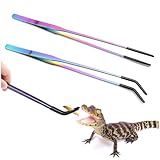
- Both curved and straight reptile feeding tongs feature firmly attached rubber tips to protect your pet's mouth from injuries while feeding. They are perfect for bearded dragon and other reptile tanks, and the rubber tips also make gripping easier.
- Crafted from high-quality stainless steel, these tongs are sturdy, corrosion-resistant, and easy to clean. They can withstand regular use without bending or breaking and are designed for durability and longevity.
- Ergonomically designed with a comfortable grip, these tongs offer precise control and reduce the risk of slips. They are perfect for handling small objects like worms, crickets, and stones with accuracy, making them ideal for feeding and managing delicate tasks.
- With a length of 10.6 inches, these snake feeding tongs provide the perfect reach for directly feeding your reptiles while avoiding injury to your hands. They are also ideal for organizing tanks, cages, or aquariums, allowing you to rearrange decorations or manage water plants without getting your hands dirty.
- These tweezers are not limited to feeding pets but also perfect for crafting and adjusting terrarium or aquariums. Whether it’s moving small stones, removing plants, or grasping items in hard-to-reach spots, these long tweezers will make the task easier and more precise.
- Use commercially raised prey rather than insects collected outdoors.
- Choose prey no longer than the tarantula’s body or abdomen; use smaller items for spiderlings.
- Offer one item, not a handful of insects.
- Remove an ignored feeder during the same observation session whenever possible.
- Remove all live prey immediately when premolt or molt is suspected.
Which feeder insects are appropriate?
Commonly recommended captive-bred feeders include gut-loaded crickets, dubia roaches, mealworms, locusts, silkworms, and hornworms. “Gut-loaded” means the feeder has been given nutritious food before it is offered; it does not make an unsafe species safe.
Match the prey to the spider’s size
A practical upper limit is prey no larger than the tarantula’s body or abdomen length. For a sling, select a distinctly smaller insect. Smaller prey is easier to control with tongs and less capable of injuring a young or recently molted spider.
There is no benefit to proving that a tarantula can overpower a large cricket. A smaller item can still provide a meal while giving the keeper more time to remove it if the spider declines.
Reject risky or unknown insects
Do not use wild-caught insects. Their pesticide exposure, parasites, and species identity are unknown. Also avoid prey that is poisonous, stinging, or excessively spiny. The University of Illinois Veterinary Medicine cautions that hungry feeder insects can bite a tarantula, so “live” does not automatically mean “safe.”
What equipment keeps my hands away from the spider?
The most useful accessory is a pair of long feeding tongs or forceps. PetSmart’s care guidance specifically recommends long feeding tongs to reduce accidental strikes. Choose a tool long enough that your hand stays well outside the tarantula’s reach while you place or retrieve the feeder.
Set up the enclosure for a controlled handoff
- Keep the enclosure on a stable surface so it cannot shift while the lid is open.
- Identify the retreat or usual feeding area before opening the top.
- Have the closed container for the feeder and the tongs ready first.
- Keep a shallow, stable water dish in the enclosure. It should be easy to reach and not deep or steep-sided.
- Close the enclosure immediately after placing or removing prey.
Do not use fingers to drop, nudge, retrieve, or crush a feeder near the spider. Even a calm tarantula can mistake a moving finger for prey or react defensively to sudden contact.
Outdated Drivers Are Slowing You Down
One free scan finds every outdated or missing driver and matches the right update for your exact hardware.Free scan · exact hardware matchPC Slower Than It Used to Be?
A free scan shows the junk files, broken settings and background clutter dragging Windows down - then fixes them in one click.Free scan · Windows 10 & 11How do I put a cricket into the enclosure without getting bitten?
Use this sequence every time, including with a spider that has never acted defensive. Consistency prevents rushed movements when the tarantula suddenly approaches the feeder.
Also popular on Amazon
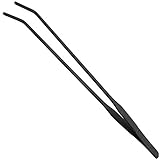
- Premium Anti-slip Clips: Curved Tweezers with serrated tips for picking up smaller objects like small stones, worms, never worry slip off; also their handle with anti-skid design, help you grip stuff firmly
- Excellent Aquarium Tools: Perfect for feeding and handling aquarium plants, bearded dragon, tarantulas, snakes, spiders, Gecko, aquatic fish, slings, salamanders, live food for larger aquatic pets or corals and more
- Quality Feeding Tweezers: Superior forged stainless steel reptile feeding tweezers with fine carbonation protection coating processing surface, sturdy and flexible enough
- Prepare one feeder. Confirm that it is captive-bred, appropriately sized, and free of a sting, venom, or prominent spines. Keep the remaining insects in their container.
- Open the enclosure only as far as needed. Keep your face and free hand away from the opening. If the tarantula is already near the lid, wait for it to move or use the enclosure’s normal access point without reaching over the spider.
- Grip the feeder with long tongs. Hold it securely enough that it cannot jump or fall onto your hand, but do not crush it.
- Place it near the retreat or feeding area. Set the insect down rather than waving it over the tarantula. The spider should be able to choose whether to strike.
- Withdraw the tongs slowly. Do not tap the substrate, touch the legs, or corner the tarantula to trigger a response.
- Close and secure the lid. Watch from outside. If the spider does not take the feeder, follow the short removal timer below.
A tarantula that walks away is not an invitation to add another insect. Repeatedly adding prey increases the chance that one will hide, bite, or remain in the enclosure when the spider enters premolt.
How long can I leave a cricket with my tarantula?
Remove an ignored feeder during the same observation session; about 10 minutes is the conservative target. University of Illinois veterinary guidance recommends removing uneaten food within approximately 10 minutes. Some general care guides describe an outer limit of 12 to 24 hours, but that longer window increases exposure to a biting feeder and should not be treated as the routine standard.
| Situation | Action | Reason |
|---|---|---|
| Spider strikes and feeds | Allow the meal to finish; remove any remaining insect parts during normal maintenance. | There is no live feeder left to injure the spider. |
| Spider ignores the insect during observation | Remove it at about 10 minutes. | This follows the conservative veterinary recommendation. |
| A feeder hides or escapes inside the enclosure | Retrieve it as soon as practical with long tongs and keep fingers out. | A hidden live insect can bite a resting or molting tarantula. |
| Premolt is suspected or molt has begun | Remove every live insect immediately. | A molting tarantula cannot reliably defend itself. |
If a care sheet permits 12–24 hours, treat that as an outer limit rather than permission to leave prey overnight by default. The shorter interval is safer whenever you can observe the enclosure.
Do these 3 things before closing this tab:
1Clear out junk files and repair common Windows errors2Scan for outdated or missing drivers - takes under a minute3Repair Windows errors before they cause bigger problemsHow do I know when not to feed because of premolt or molt?
Do not offer live prey during a molt, and remove any feeder immediately if premolt is suspected. The spider’s ability to defend itself is reduced during this period, while a cricket or other insect remains capable of biting.
Before the molt
Appetite often changes around a molt, and a healthy tarantula may refuse food for a long time. A refusal should prompt removal of the feeder, not repeated offerings in the same session. If your normal observations suggest premolt, leave the spider undisturbed and keep live insects out.
During the molt
Never touch, move, or “check” a tarantula that is molting. Do not use tongs to reposition the spider. Remove prey only if it can be done without contacting the tarantula; otherwise prioritize keeping your hands out and seek qualified exotic-pet veterinary advice.
After the molt
Petco advises waiting 7–10 days after a molt before offering food. The new exoskeleton and fangs need time to harden, so an immediate feeder can injure a freshly molted spider even if it appears alert.
Free tools Windows power users keep installed
One-click scans. No signup required.
Also popular on Amazon

- Enough to Use: the package includes 2 pieces of stainless steel feeding tongs in different tips, providing you with much convenience, having a backup tool for feeding is always good to have, meeting your using needs and replacing needs
- Different Tips: long tweezers for aquarium come with different tips, including straight and curved tips, giving you the flexibility to handle different kinds of tasks, whether you need to pick up small particles or need accuracy while feeding, these tweezers cover your needs
- Quality and Material: aquarium tongs are crafted from stainless steel, ensuring robust and rust resistant usage, the rubber tip is black, reliable to use, will not hurt the mouth of the reptile while feeding, offering a long lasting use
- Comfortable Size: the straight tweezer is about 10 inches/ 25.2 cm, and the curved tweezer is about 10.5 inches/ 26.7 cm in length, these reptile tongs are designed keeping in mind the comfort and ease of the users, their length makes them suitable for feeding reptiles without putting your hands close to the reptile
- Wide Application: feeding tongs are versatile and suitable for various usages, such as feeding reptiles, handling aquarium plants, picking up worms and so on, providing you with a nice using experience
How often should an adult or sling be fed?
About one feeding per week is a typical adult baseline, while spiderlings generally eat more often. Treat that as a starting point, not a fixed appointment: species, age, body condition, season, and molt timing all affect appetite.
Healthy tarantulas can refuse food for extended periods. Do not compensate for a missed meal by offering multiple insects or a larger prey item. Continue providing water, monitor the spider’s condition, and resume the normal single-prey routine when it is active and not in premolt or post-molt recovery.
Hydration is separate from feeding
Keep a shallow, stable water dish available and refill it regularly. A dish is preferable to relying on occasional spraying as the only source of water because it lets the tarantula drink when it chooses. Keep the container easy to access and avoid deep or steep-sided designs that could trap a small spider.
What behavior means I should stop and close the enclosure?
Stop feeding and close the enclosure if the tarantula raises its front legs, displays its fangs, hisses, or begins defensive hair-flicking. These are warnings that the spider feels threatened, not signs that it needs more stimulation to eat.
Recommended Free Tools
Do not test a defensive display
Do not tap the enclosure, blow on the spider, wave the feeder, or use tongs to push the tarantula. Back away, secure the lid, and wait until the animal is calm before attempting routine maintenance. Handling is unnecessary for feeding and increases risk to both keeper and spider.
Poison Control pharmacist Karen D. Dominguez explains: “When a tarantula feels threatened or is roughly handled, it might bite.” Taking that warning literally is safer than assuming a familiar pet cannot react.
Hair-flicking can be the first hazard
Tarantulas can release urticating hairs when threatened. On skin, the hairs can cause painful itching and swelling; in the eye, they can cause serious injury. Keep your hands away from your face and eyes after enclosure work. Gloves and eye protection are prudent for cleaning or any close work, but protective equipment does not replace distance and long tongs.
Also popular on Amazon
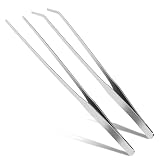
- Your Feeding Partner: We get the joy of nurturing your small creatures-and the hassle of messy, risky feeding. This premium tweezer is your reliable sidekick, making reptile & aquarium care easier, safer, worry-free
- Premium Stainless Steel: Crafted from corrosion-resistant stainless steel, these tweezers maintain their strength and finish even in humid environments. The smooth surface cleans easily and won't bend or fade with regular use
- Secure & Comfortable: At approx 10.6 inches, the ergonomic handle fits naturally in your hand for effortless use at any angle. Keeps hands safe from pet bites/scratches while feeding, and dry during underwater tasks-no messy, risky interactions
- Dual-Tip Design: This set includes both straight and curved stainless steel tips. Serrated edges provide a firm grip for precise feeding and aquascaping, while smooth, rounded ends protect your pets. Easily handle plants, moss, and decorations without slipping
- Multi-Purpose Design: Ideal for feeding reptiles (snakes, lizards, bearded dragons), aquarium maintenance, terrarium setup, and even useful for cooking, gardening, and craft projects. A truly versatile tool for pet owners and hobbyists
What should I do if a tarantula bites or flicks hairs?
End the interaction, secure the enclosure, and treat the exposure promptly. Do not try to handle the spider again to identify it while you are injured.
The Tool Desk
Outbyte PC Repair FREERepair Windows errors before they cause bigger problemsFix Now →Outbyte Driver Updater FREEFix the driver behind crashes, sound loss and screen glitchesFind Drivers →For a bite
- Wash the bite with soap and water.
- Contact a poison center for species-specific advice.
- Seek urgent medical care for breathing difficulty, severe or spreading symptoms, or marked swelling.
Venom effects vary among the more than 1,000 Theraphosidae species recognized worldwide, so do not assume that a previous mild reaction predicts the next one.
For hairs on skin
Use sticky tape to lift urticating hairs from the skin, then avoid rubbing the area. Keep contaminated hands away from your eyes and face until they have been washed thoroughly.
For eye exposure
Eye exposure is an emergency because hairs can embed in the eye and cause lasting complications. Seek urgent medical help; an ophthalmology assessment may be needed when hairs enter the eye. Do not deliberately rub the eye or attempt to scrape it with household tools.
How risky are tarantula bites and hair exposures?
Most reported incidents are minor injuries, but the consequences depend on the species, the person exposed, and where hairs or venom land. A 2022 NCBI StatPearls review recorded 44 tarantula-related poison-control reports from 2018; 17 required healthcare evaluation. The figures are reports, not a measure of the risk from every species or enclosure.
Eye injuries deserve special caution. Merck Veterinary Manual’s 2025 page revision notes the diversity of the family, and that diversity helps explain why defensive behavior and venom effects cannot be generalized from one tarantula to another.
Which feeding approach gives the most safety margin?
The safest approach combines distance, a single manageable feeder, a short removal window, and a strict no-prey rule during premolt or molt. The trade-offs are clearest when the common alternatives are compared directly.
| Decision point | Lower-risk choice | Higher-risk alternative | Why it matters |
|---|---|---|---|
| Distance | Long tongs; hands remain outside the enclosure | Fingers placing or retrieving insects | Fingers can be mistaken for prey or enter the strike zone. |
| Number of feeders | One appropriately sized insect | Several insects at once | Multiple feeders are harder to track and leave more opportunities for bites. |
| Removal timing | About 10 minutes when the feeder is ignored | Leaving it for the 12–24-hour outer window | A longer exposure gives a live insect more time to injure a resting spider. |
| Molt status | No live prey during suspected premolt or molt | Feeding because the spider has skipped meals | A molting tarantula cannot reliably defend itself. |
| Spider response | Close the enclosure after a warning display | Provoking a strike or trying to force a meal | Defensive behavior raises the chance of bites and hair exposure. |
What common feeding mistakes should I avoid?
Using a feeder that is too large
Oversized prey can fight back and is difficult to remove quickly. Choose an insect no longer than the spider’s body or abdomen, and go smaller for slings.
Also popular on Amazon

- 【HIGH QUALITY MATERIAL】 Quelong Reptile Long Feeding Tongs, Feeding Spoon Set is made of high grade stainless steel, firm and durable, corrosion resistant, won't deform or tear with regular use. And it is easy to clean and does not hide dirt. We recommend rinsing with fresh water after use, then probe clean and air dry.
- 【PERFECT DESIGN】 The clever gourd handle design of the long feeding spoon is beautiful and not easy to fall off, it will be a long spoon that you will love; The serrated tip inside the long feeding tongs can easily and steadily holder your pet's small food with a good and easy-to-control grip.
- 【PERFECT LENGTH AND CAPACITIE】 Curved long tweezers 10.6 in, long spoon 10 in, this distance is long enough and easy to handle, make sure your hands won't be bitten or scratched when feeding your pet. The long feeding spoon is 0.6 in wide proper size capacities, feeding volume has more choices.
- 【BEST FEEDING SET】 Our one long ingestor and one long spoon will easily help you with most reptile feeding tools, including feeding lizards, bearded dragons, ball pythons, frogs, turtles, leopard geckos, tarantulas, ornamental fish, pet birds and more.
- 【MULTI-PURPOSE TWO PIECE SET】 Regent helps you aquarium aquascape, trimming and planting aquatic plants, cleaning the aquarium, gardening to remove weeds. if you don't choose it to feed your pet, you can also use it for enjoying your leisure time, such as the long spoon can be used for mixing the coffee, regent can be used as a kitchen cooking and grilling tool and so on.
Leaving a cricket because the spider may eat later
Delayed feeding is not worth the added risk. Remove an ignored feeder during the observation session, especially if the spider’s appetite has recently changed.
Adding prey during premolt
Skipping food is normal for some healthy tarantulas. A live insect in the enclosure during premolt is a preventable hazard, so remove it rather than offering another.
Reaching in to make the tarantula move
Touching legs, tapping the substrate, or cornering the spider converts a feeding task into a defensive encounter. Let the spider choose whether to strike.
Assuming a calm species cannot bite
Temperament is individual and species-dependent. A calm response yesterday does not make direct handling necessary today.
What should a repeatable feeding checklist look like?
Print or save this short checklist near the enclosure:
Quick wins for a faster PC:
Repair Windows errors before they cause bigger problemsFix Now →Fix the driver behind crashes, sound loss and screen glitchesFind Drivers →- Is the feeder captive-bred, non-stinging, non-poisonous, and not excessively spiny?
- Is it no larger than the tarantula’s body or abdomen, and smaller for a sling?
- Are long tongs, a secure feeder container, and the enclosure lid ready?
- Is the spider free of signs that suggest premolt or an active molt?
- Can one feeder be placed near the retreat without touching or cornering the spider?
- Will the feeder be removed at about 10 minutes if it is ignored?
- Is a shallow, stable water dish filled and accessible?
- Afterward, have hands been washed before touching the face or eyes?
Following the same sequence makes feeding predictable: one suitable insect, one controlled placement, no handling, and prompt removal whenever the spider does not eat or enters a vulnerable molt period.
Frequently Asked Questions
Can a tarantula go without food if it refuses a feeder?
Yes. Healthy tarantulas may refuse food for long periods, particularly around a molt. Remove the uneaten insect, keep water available, and wait for normal activity rather than compensating with extra prey.
Why are captive-bred feeders preferred over insects from outdoors?
Commercially raised feeders have a known identity and husbandry history, while wild insects may carry pesticides, parasites, or defensive traits you cannot identify. Captive breeding also makes it easier to select a consistent size.
Should I use gloves every time I feed?
Gloves are not a substitute for long tongs and a closed enclosure, but they are prudent for cleaning or close work where urticating hairs may contact skin. Eye protection is sensible when your face must be near the enclosure.
What’s actually slowing this PC down?
Pick the symptom - the matching free tool is one click away.
What if the feeder disappears into the substrate?
Treat a hidden live insect as a removal priority, because it can bite a resting or molting tarantula. Use long tongs and avoid digging around or touching the spider; if retrieval would disturb a molt, keep the enclosure closed and obtain qualified exotic-pet veterinary advice.





Leave a Reply