
What’s actually slowing this PC down?
Pick the symptom - the matching free tool is one click away.
Some links on this page are affiliate links: if you buy through them we may earn a commission, at no extra cost to you.
To foster a rescued dog or cat, contact a local shelter or rescue, describe your household and schedule, and ask which foster roles are available. Choose an animal whose expected stay, supervision, isolation and care tasks fit your home. Before arrival, confirm who supplies food and equipment, pays for veterinary care, authorizes treatment, provides transport and handles adoption inquiries.
Your job is to provide safe temporary housing, follow the organization’s written care plan, observe the animal closely and report medical or behavior changes promptly. The shelter or rescue remains responsible for the care pathway and adoption process. A calm home and accurate observations can make an animal healthier, less stressed and easier for the right adopter to understand.
As an Amazon Associate I earn from qualifying purchases.
What fostering is—and what it is not
Fostering is a temporary team arrangement. You provide day-to-day home care while a shelter or rescue sets the animal’s care plan, supplies or approves treatment, supports you and manages placement. The arrangement may last a day, several weeks or several months, depending on the animal and the program. ASPCA’s New York City program says placements can range from a few days to several months and explains the anticipated duration when matching an animal with a household; an Austin Animal Center manual describes a range from one day to several months. Those ranges illustrate program variation, not a universal promise. Ask your local coordinator for a written estimate and a plan if the placement must end early. ASPCA’s NYC foster information and the Austin Animal Center foster manual show how different programs define support.
Foster homes can serve animals who are ready for adoption, overwhelmed by shelter life, recovering from illness or injury, too young for shelter care, undersocialized, or coping with medical or behavioral needs. ASPCA describes general caregivers as well as specialized caregivers for medical cases, young kittens and puppies, animals needing socialization and animals recovering from cruelty or neglect. The organization should tell you which category applies and train you for the actual assignment. ASPCA’s foster-caregiver overview explains these categories.
Popular on Amazon

- Pet Carrier: 17.5” L x 11” W x 11” H, Recommended max load of 16 lbs cats small dogs. Please do not choose your carrier based on weight--please reference your pet's length and height in selecting a pet carrier size.
- Fits for under-seat dimensions of most airlines. Every airline has a specific set of rules and regulations, please contact with airline before flying with your cats small dogs.
- Mesh windows for ventilation, top and side entry with locking zippers for safety. Carrying handles, adjustable shoulder strap which can also be used as seatbelt, and back strap can fasten the pet carrier to your luggage.
- Pet carrier comes with a removable base insert, which creates a solid surface for your pet to stand on, along with a removable & hand washable cozy fleece pet bed, which offers a cozy sleeping space for your traveling cats small dogs.
- "Toys for pets, of textile materials". Mostly used as a Toy of Fabric Pet Home for pets playing and relaxing.
Do not assume fostering means taking an animal home with no oversight. ASPCApro describes foster homes as an extension of sheltering and provides health-care protocols for organizations supporting them. Your coordinator, the designated veterinary team and the emergency contact are part of the care system. ASPCApro’s foster-health-care guidance provides that organizational context.
Choose a foster role that fits your household
Describe your available room, resident animals, children, work hours, transport access and experience honestly. A healthy adult that mainly needs a quiet home is a different commitment from neonatal kittens requiring frequent care or a dog recovering from surgery. If a program offers several placements, compare them before accepting one.
| Possible placement | Typical purpose | Questions about your capacity |
|---|---|---|
| Adoption-ready dog or cat | Temporary home, routine care and an accurate picture of the animal’s behavior outside the shelter. | Can you provide daily feeding, toileting, exercise or litter care, observation and transport to scheduled appointments? |
| Quiet break from the shelter | Relief for an animal stressed by noise, crowding or constant handling. | Can you offer a calm, low-traffic room and limit visitors while the animal settles? |
| Medical recovery | Rest after illness, injury or a procedure, sometimes with medication or other hands-on care. | Can you follow exact instructions, give only authorized medication and reach the program’s veterinary contact when required? |
| Behavior or socialization support | Predictable exposure and positive routines for a fearful, undersocialized or behaviorally challenged animal. | Can you follow the behavior plan, prevent unsafe interactions and record what you actually observe? |
| Neonatal kittens or puppies | Care for animals too young for ordinary shelter housing. | Can your schedule accommodate the frequency of care, close monitoring and any required transport or training? |
| Recovery from cruelty or neglect | A stable, low-stress home while the organization addresses physical and emotional recovery. | Can you maintain strict routines, privacy and safety while reporting changes without making promises about untested behavior? |
Placement decisions should be individualized. ASPCA’s shelter-responsibilities statement describes weighing medical and behavioral status, the organization’s capacity, likelihood of placement and public safety rather than applying one rule to every animal. Read the ASPCA position statement for that framework.
Questions to ask before you say yes
Have a conversation with the foster coordinator before collecting the animal. Write down answers, names and phone numbers so another household member can follow the same plan.
Health, history and daily routine
- What is known about the animal’s medical history, vaccinations, parasites, current symptoms and veterinary diagnosis?
- What is known about behavior around adults, children, dogs, cats, handling, food, confinement and ordinary household activity?
- What does the animal eat, how much and how often? What exercise, litter, toileting or rest routine is currently working?
- Is the placement for ordinary temporary care, a quiet break, treatment recovery, behavior support or neonatal care?
Duration and an exit plan
- What is the expected foster period, and what factors could shorten or extend it?
- What should you do if your circumstances change, the animal’s needs exceed your capacity or an urgent safety issue arises?
- Who authorizes a transfer, and how much notice is normally needed?
Supplies and transport
- Who supplies food, medication, bedding, litter materials, crates, gates, carriers and cleaning equipment?
- Who transports the animal to intake, follow-up appointments, adoption meetings or a new foster home?
- Which items must be returned, and which costs, if any, are your responsibility?
Support differs by organization. ASPCA says its foster program provides guidance and training, medical care, food, equipment and supplies. Austin Animal Center’s manual says the center provides medical care but lists transport and some supplies among foster responsibilities. Treat each as an example of a specific program, not a guarantee for every shelter. ASPCA program details and the Austin manual illustrate the difference.
Also popular on Amazon
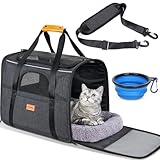
- 【 Spacious & Comfortable Cat Carrier 】The large cat carrier provides ample space for your feline friend to move, turn, and stretch during travel. Measuring 17.3 x 12.2 x 13.4 inches, it is wider and taller than most cat carriers, ensuring your pet feels comfortable and at ease while on the go.
- 【Balanced Mesh Design】Unlike other cat carrier hard, our cat carrier soft strikes the perfect balance with 40% mesh surface area. This ensures your pet can observe the surroundings and breathe easily while feeling safe and secure at the same time. The cat carrier large is suitable for pets in all kinds of situations.
- 【Built-in Dual-Sided Cushion】The detachable pad offers two distinct comforts: a cool side for summer and a super-soft, warm side for winter. You can easily flip it to match the season, providing the perfect temperature for your pet in any weather.
- 【Includes Foldable Bowl】Designed for on-the-go use, our foldable bowl carries 410g of food or 20oz of water. After use, simply collapse it and attach it directly to your pet's collar or leash, perfect for keeping your pet fueled and hydrated anywhere.
- 【Safe & Durable】Safety is our top priority, and the pet carrier for cat is equipped with a secure buckle to prevent your pet from escaping. The cat carrier soft is made of reinforced snow silk fabric and hard mesh material, ensuring durability and preventing any tearing during long-distance travel.
Veterinary and emergency instructions
- Which veterinarian or clinic must you use?
- What number handles evenings, weekends and holidays?
- Which signs require an immediate call, and which can wait for the next scheduled check-in?
- How do you obtain approval before starting, stopping or changing medication?
Resident animals, children and visitors
- What separation, vaccination and disease-control precautions does the program require?
- Does the organization arrange a dog-to-dog meeting or another controlled assessment?
- Are children allowed to interact, and what supervision rules apply?
Adoption responsibilities
- Who answers applications, schedules meetings and makes the final placement decision?
- Should you provide photographs, a written profile, behavior notes or transport to an introduction?
- How should you handle inquiries from friends, social-media users or people who approach you directly?
Prepare a safe space before arrival
Set up the animal’s area before pickup. A smaller, secure space reduces the number of new variables and lets you monitor eating, drinking, elimination, medication and behavior. Choose a room or section that can be closed off, cleaned easily and kept at a comfortable temperature. Remove hazards, secure doors and windows, cover or block access to unsafe gaps, and store household chemicals, medicines, strings, small objects and human food out of reach.
Use the organization’s supply plan
Ask what will arrive with the animal before buying equipment. ASPCA’s NYC program says it supplies food, equipment and supplies; other programs may ask caregivers to provide transport or selected items. A crate, bowls, bedding, litter supplies or a baby gate may be useful for a particular placement but are not automatically required for every foster. Confirm the program’s current supply policy.
Set up separate zones
- Resting area: a bed, crate or other approved retreat where the animal can withdraw without being disturbed.
- Food and water: positioned according to the care plan and away from litter or toileting areas where appropriate.
- Toileting or litter area: easy to reach and easy for you to inspect and clean.
- Observation point: a place where you can notice appetite, drinking, elimination, energy and behavior without forcing interaction.
Transport cats securely
Use a closed carrier for every vehicle trip with a foster cat; never allow the cat to ride loose. Best Friends’ cat manual specifically instructs caregivers to use a carrier for travel to and from appointments. Ask whether the organization can provide one before purchasing a cat carrier for vet visits. See the Best Friends cat foster manual.
Make the first days quiet and predictable
Bring the animal directly to the prepared area and keep early activity limited. Avoid a parade of visitors, unnecessary handling and immediate introductions to every household member or pet. A foster cat may hide; a dog may be unsettled, tired or unusually quiet. Let the animal approach at its own pace while you confirm that basic routines are occurring.
- Show the animal the designated safe area and allow exploration without pressure.
- Offer the prescribed food and water, then give a quiet period.
- Record what the animal eats, drinks, eliminates and does during the first day.
- Follow the stated medication, exercise, confinement and appointment instructions exactly.
- Send the coordinator an early update, including anything that differs from the description you received.
Best Friends’ dog and cat manuals recommend limiting new people and pet introductions while a foster adjusts and giving the animal a space of its own. Dog foster guidance and cat foster guidance provide examples of this decompression approach.
Free tools Windows power users keep installed
One-click scans. No signup required.
Also popular on Amazon
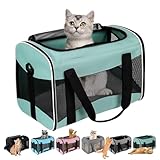
- [PRODUCT DIMENSIONS] Pet travel carrier size : 17x11x11 inches, recommended up to 15 lb pets, it is suitable for large, medium cats and small dogs. Please don't choose your airline cat carrying case based on weight, please refer to your pet's length and height when choosing a pet carrier size.
- [AIRLINE APPROVED] This cat carrier is designed with airline approved, it can fit comfortably under most flight seats, we can take our pets wherever we want. Dog travel carrier offers two attachment loop handles that can be used as a dual harness or as a luggage strap for balanced carry and secure transport.
- [EXCELLENT MATERIAL] Collapsible cat carrier is made of polyester fabric, supported by a steel ring, washable, wear-resistant and durable. The three sides and the top of this pet carrier are nylon mesh, scratch-resistant and not easy to damage, it can not only check your pet in real time, but also ensure enough air circulation.
- [SAFE AND COMFORTABLE] Dog travel bag has metal zippers on the top and side entrances, durable and not easy to deform, it allows your pets to enter and exit easily. The cat carrying case is equipped with an anti-escape safety buckle, which can effectively prevent pets from accidentally falling. It is suitable for car rides and vet rides.
- [PORTABLE AND FOLDABLE] Pet travel carrier comes with a detachable and hand washable wool pet bed, it can provide a comfortable sleeping space for your traveling pet. The cat travel case comes with an adjustable shoulder strap and handle for easy portability. When not in use, you can fold it up for storage.
Protect resident pets and people
Do not assume a foster animal is safe to leave alone with resident pets or children. Keep animals separated whenever you cannot confidently supervise a safe interaction. Use closed doors, barriers or other measures approved by the organization, and provide each animal with its own food, water, resting and toileting resources as directed.
Health precautions
Tell the coordinator about resident animals’ health and vaccination status. ASPCA’s NYC program asks that resident pets be vaccinated and that foster animals have a separate space for gradual introductions; for dogs, it may arrange a dog-to-dog meeting with its behavior team. Those requirements are specific to that program.
Best Friends describes an initial separation period as one possible disease-control approach but emphasizes that risk and appropriate separation depend on the animals and circumstances. Discuss your resident pets’ health and vaccination status with a veterinarian and follow the shelter’s plan rather than applying a fixed timeline to every case. Best Friends’ safety guidance explains this individualized approach.
Controlled introductions
- Ask the coordinator whether an introduction is appropriate and what setting to use.
- Start with separation and scent or sound exposure only if the plan permits it.
- Use short, controlled, supervised sessions and stop if any animal becomes highly stressed or aggressive.
- Increase access gradually only after the organization’s instructions and your observations support it.
- Maintain separation when no responsible adult is present.
If an interaction goes poorly, pause introductions and contact the coordinator for a revised plan. Do not punish an animal or improvise a behavior program beyond your training.
Run a simple daily care and observation routine
Follow the written plan for feeding, medication, exercise, litter or toileting and appointments. A brief daily note creates useful continuity when several people share care and gives the organization specific information for treatment and placement. Maddie’s Fund states that daily assessment supports early detection of health and behavior problems and helps evaluate medical treatment or behavior modification. See Maddie’s Fund’s animal and population-management resources.
Also popular on Amazon
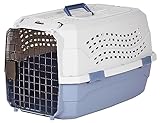
- Hard sided pet carrier with 2 doors for front and top entry; suitable for cat or medium size dog weighing 12 - 20 pounds
- Durable plastic construction with steel wire doors; screws keep the top and bottom sections securely connected
- Spring load latches ensure easy one-handed door opening and closing; top door swings open to the left or right and includes a top carry handle
- Plenty of air ventilation on the sides, top, and back of the carrier
- Note: Be sure to measure the size of the pet when choosing carrier size
| Record each day | What makes the note useful |
|---|---|
| Appetite and drinking | State what was offered, what was consumed and any clear change from the normal routine. |
| Elimination | Note toileting or litter use and any unusual change you observed. |
| Medication | Record the prescribed dose and time; report a missed dose rather than compensating on your own. |
| Energy and physical condition | Describe activity, rest, mobility and any illness or injury concern in concrete terms. |
| Behavior | Record specific triggers, responses, recovery and interactions actually observed. |
| Environment | Note changes in confinement, visitors, food, routine or contact with other animals that could explain a change. |
Medication and veterinary care
Give medication only as prescribed and only through the organization’s approved process. Contact the foster coordinator promptly about illness, injury, a missed medication, a concerning behavior change or a situation you cannot safely manage. Use the organization’s veterinary and emergency instructions; do not start, stop or alter treatment without veterinary direction. ASPCA describes medical fosters administering medication or providing hands-on care with guidance from a medical team. ASPCA’s caregiver descriptions provide examples.
When behavior is difficult
Describe what happened, what preceded it, what the animal did and how long recovery took. “Aggressive” or “bad” alone does not tell a coordinator what to change. If the animal threatens a person or another animal, cannot be safely confined, repeatedly escapes or shows severe distress, separate everyone safely and call the designated contact. The organization can decide whether the placement, equipment or behavior plan must change.
Independent reader supportYour contribution helps us test, update, and keep practical guides available for everyone.Communicate early and keep the organization in control
Send updates at the frequency requested, even when the placement is going smoothly. Early communication allows the organization to arrange a veterinary visit, change instructions, provide supplies, move the animal or clarify a misunderstanding before it becomes an emergency. Keep the coordinator’s name, veterinary contact, after-hours number and transfer instructions accessible to every caregiver in the home.
PC Slower Than It Used to Be?
A free scan shows the junk files, broken settings and background clutter dragging Windows down - then fixes them in one click.Free scan · Windows 10 & 11Crashes, No Sound, or Screen Glitches?
Random freezes, missing sound and display glitches usually trace back to one bad driver. Find and replace yours safely.Free scan · under a minuteFoster care does not authorize you to promise a medical outcome, disclose confidential case information, approve an adopter or change the animal’s treatment. Ask before posting details or arranging meetings. The organization’s policies determine who can access records, answer applications and make the final placement decision.
Give adopters accurate, useful information
A foster home reveals details that may be difficult to see in a shelter: how the animal settles into a routine, responds to ordinary household sounds, uses a litter box or goes outside, accepts handling, plays, rests and interacts under the conditions you actually observed. Share specific examples, dates or patterns rather than broad labels.
Also popular on Amazon

- AIRLINE APPROVED CARRIER - With airline-approved design, you can take your pet to go to everywhere. This pet carrier provides two connecting loop handles for balanced carrying as a dual seat belt or luggage strap to secure transport
- SAFETY DESIGN - The adjustable shoulder strap help you hands-free carrying and makes it more safe and convenient pet carrier bag for your travel
- DURABLE - This cat carrier is made of durable and lightweight polyester fabric. The four-side mesh will not only give a safe and comfortable travel for your pet, but also easy for you to check on your pet
- PORTABLE & FOLDABLE - This dog carrier is easy to carry and store, which has a padded shoulder strap and handles
- BOTH SIZES AND WEIGHTS - The mediun cat carrier is designed for small and medium pets within 15" x 9" x 9"(smaller than product) and 15 lbs. Please do not choose your carrier only based on weight. Reference your pets' length and height in selecting a carrier size.If carried on board, the maximum dimensions should not exceed 18IN*11IN*11IN.
- Describe the setting: “During a quiet evening, the dog approached two adults after about 10 minutes,” not “friendly with everyone.”
- Separate observation from uncertainty: explain what you have not tested, such as behavior with cats, toddlers or being left alone.
- Report both strengths and challenges, including triggers, management that helped and any ongoing concern.
- Provide clear photographs and routine notes if the organization requests them.
Never guarantee behavior you have not seen or tested. ASPCA describes an Adoption Ambassador role in which a foster caregiver actively promotes an adoption-ready animal, but the organization still controls the process. ASPCA’s NYC foster page gives an example of that arrangement.
Handle inquiries through the program
Forward interested people to the shelter or rescue unless your coordinator gives different instructions. Austin Animal Center’s manual, for example, describes notifying a coordinator and using an approval process for prospective adopters. Other organizations may use different steps, so follow the policy attached to your placement rather than accepting an animal directly. The Austin manual is an example, not a universal adoption procedure.
Quick wins for a faster PC:
Clear out junk files and repair common Windows errorsFree Scan →Scan for outdated or missing drivers - takes under a minuteDriver Scan →Repair Windows errors before they cause bigger problemsFix Now →Know when the placement needs to change
Contact the coordinator as soon as the animal’s needs exceed the agreed plan, your household can no longer provide safe care, a resident animal is at risk, or the expected end date is approaching. Do not abandon the animal, give it to an unapproved person or arrange an informal handoff. Ask for authorized transport, a new foster home, veterinary evaluation or another solution.
Before accepting a placement, write down the organization’s process for an early return and the notice it needs. Having that plan protects the animal and prevents a crisis if work, travel, illness or a household change makes fostering impossible.
A practical go/no-go checklist
You are ready to accept a particular foster when you can answer “yes” to each applicable item:
- I know the animal’s current care needs, known risks and expected duration.
- I have a secure space that can remain separate from resident pets and unsupervised children.
- I know who supplies food, equipment and medication and who pays or authorizes veterinary care.
- I have the routine veterinary and after-hours contacts and know what requires an urgent call.
- I can provide the required feeding, medication, exercise, cleaning, observation and transport.
- I understand how introductions, disease precautions and visitor access will be managed.
- I know how to report observations, request help and end the placement safely.
- I can describe the animal honestly to prospective adopters without promising untested behavior.
If any answer is “no,” ask the coordinator whether another role, more equipment, additional training or a different animal would be a better match. Choosing a placement that fits your real capacity is more helpful than accepting one you cannot safely sustain.
Do these 3 things before closing this tab:
1Fix the driver behind crashes, sound loss and screen glitches2Clear out junk files and repair common Windows errors3Scan for outdated or missing drivers - takes under a minute




Leave a Reply