Free tools Windows power users keep installed
One-click scans. No signup required.
If you have found kittens, the first step is usually to watch rather than pick them up, because a mother cat is often nearby. If you want to foster, the first call is to a local shelter or rescue, not a pet store. Their program sets the feeding schedule, the supplies, and the veterinary plan you will follow, so ask them before you buy anything or bring kittens home.
If you found kittens outside, start by watching
A kitten found alone is not automatically orphaned. The ASPCA notes that a mother may be out getting food or hiding until people leave. Work through these steps before you intervene:
- Observe from a distance. Step back, keep people and pets away, and check whether the mother returns over a few hours.
- Look for warning signs. Kittens that are dirty, thin, crying excessively, cold, or injured need prompt help. Call a local shelter, rescue, or veterinarian now rather than waiting for the mother.
- Check for identification. Look for an ID tag, and ask a shelter or veterinary clinic to scan for a microchip.
- Check local found-animal rules. Reporting requirements differ by location, so check with your city or county animal services or the shelter you contact.
The ASPCA’s guidance separates apparently healthy kittens that can be monitored safely from kittens that may need intervention. The warning signs above are the practical dividing line, but a shelter or veterinarian can make the final call for a specific kitten.
The ASPCA says kittens can generally be brought in for foster care and adoption preparation once they can eat wet food on their own, around four to five weeks of age. That is general guidance. Individual age, health, the mother’s presence, and local program policy all matter. Older kittens who are not socialized to people fall under community-cat guidance, including trap-neuter-return-manage (TNRM) plans, so ask your shelter or rescue which path applies.
#1 Best Overall
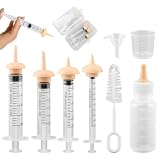
- One-Stop Scientific Feeding: Designed specifically for newborn kittens, puppies, and various small animals, this kit includes a 50ml professional feeding bottle, four precision syringes of different capacities (1ml, 3ml, 5ml, 10ml), four biomimetic nipples, as well as a funnel and measuring cup. From precise feeding immediately after birth to supplemental feeding during the transition period, this single kit meets all your care needs.
- Precise Measurement for Safe Feeding: Recognizing that newborn pets are extremely sensitive to feeding amounts, the kit includes four syringes of different sizes, each featuring clear, durable graduations. This allows you to control feeding with milliliter-level precision based on your pet’s weight and age, effectively preventing choking or digestive strain caused by overfeeding.
- Bio-Mimetic Nipples: Made from ultra-soft, food-grade silicone, these bio-mimetic nipples replicate the natural feel of a mother dog or cat’s mouth. They are bite-resistant and gentle on the mouth. Multiple nipple shapes are available to suit pets of different sizes and developmental stages, increasing the success rate of feeding.
- Easy to Clean, Comes with a Dedicated Storage Case: The included cleaning brush easily reaches the bottom of bottles and syringes, ensuring no milk residue remains. All accessories are neatly stored in a transparent storage jar/container, making it convenient for home storage and keeping your tools organized and ready to use—whether you’re traveling with your pet or on the go.
- Essential Professional Tools for Young Pets: Whether caring for orphaned puppies or kittens, administering medication to sick adult pets, or providing nutritional support for frail premature pets, this multifunctional kit offers the most professional support. The included measuring cup and funnel make the process of mixing formula more precise and spill-free, making it the ideal assistant for pet owners and animal rescuers.
What a foster home is expected to do
Fostering is organized care, not just temporary housing. Best Friends Animal Society’s Utah kitten foster manual says foster homes provide care and transport to veterinary appointments as needed. Feeding depends on age: very young kittens may need bottle-feeding every two to three hours, while older kittens may eat on their own and need feeding only a couple of times a day. The same manual says the program’s coordinators can match kittens to a foster’s schedule, but you may still need to be available for appointments. These details come from one organization’s program and are not a universal standard.
Day-to-day work typically includes:
- Monitoring appetite, weight, elimination, warmth, and signs of illness.
- Cleaning the kitten area and keeping bedding dry and warm.
- Socialization and play. Best Friends says daily socialization sessions matter between four and twelve weeks of age.
- Coordinating veterinary visits and adoption preparation with the shelter or rescue.
Before you accept kittens, ask who to contact after hours and what to do if a kitten becomes ill. A general guide like this one cannot replace a kitten-specific veterinary plan.
Rank #2

- SQUEEZE BOTTLE - 60ml nursing bottle for newborn kittens and puppies, 2.1 ounce capacity, small animal feeding bottle is easy to squeeze and easy to control the amount of milk.
- SMALL ANIMAL FEEDER SET - 1ml for small nipples, 3ml, 5ml, 10ml for medium and large nipples, 60ml feeding bottles can be freely combined with (small, medium, large) nipples.
- 5 REPLACEABLE NIPPLES - Different sized nipples to meet the needs of small animal at every stage, the soft rubber-tipped nipple prevents scratching the gums of newborn kittens and puppies.
- 5ML BROWN FEEDER - The brown 5ml syringe is made of light-safe material to prevent photosynthesis of medication, use a separate dedicated feeder for better use when your pet is sick.
- NEWBORN KITTENS & PUPPIES GIFT - Suitable for newborn and not yet teething small animals, kittens, puppies, hamsters, chinchillas, squirrels, rabbits, etc. you will be a very gentle owner, take care of it, love it and grow with it.
Care by age: what changes week to week
Age determines how intensive the care is. The ASPCA defines neonatal kittens as zero to four weeks old and pee-wee kittens as four to eight weeks old, and describes both groups as extremely vulnerable. The table below combines those labels with feeding and care guidance from Best Friends Animal Society.
| Age stage | Feeding and care described | Notes and sources |
|---|---|---|
| Under 4 weeks (ASPCA “neonatal”) | Feeding every two to four hours, warmth, and stimulation to go to the bathroom (Best Friends kitten-season guidance). The Utah manual gives an example of bottle-feeding every two to three hours for very young kittens in that program. | The ASPCA says these kittens often cannot survive without round-the-clock care. Call a local shelter first, since many provide supplies and guidance. |
| About 4 to 8 weeks (ASPCA “pee-wee”) | Gruel is introduced during the transition around four weeks. A litter box is introduced as kittens begin to eliminate on their own. Kittens move toward solid food (Best Friends orphaned-kitten guide). | The ASPCA’s general guidance is that kittens who can eat wet food on their own, around four to five weeks, may be ready for foster care and adoption preparation. Socialization sessions matter during this window. |
| Around 8 weeks (healthy kittens) | Best Friends describes healthy eight-week-old kittens as fully weaned and soon ready for spay/neuter and adoptive homes. | Timing depends on the individual kitten. Follow the local program and veterinarian. |
Best Friends’ kitten-season guidance says neonatal kittens under four weeks need feeding every two to four hours. That is a demanding schedule. Do not improvise it without support from a shelter, rescue, or veterinarian.
Rank #3

- VERSATILE FEEDING KIT: Complete kitten and puppy feeding set includes 1xbottle (50ml), 4xsyringe:(10ml/5ml/3ml/1ml) ,4 x nursing nipples for newborn pet care , cleaning brushes Funnel, measuring cup, and storage container.nursing kit Designed to meet the diverse needs of small pets, specifically for hand-rearing puppies, kittens, and other newborn animals.
- WIDE RANGE OF APPLICATION:Ensure a nourishing start for your beloved pets with our bottle feeding set – engineered for safe, comfortable feeding of teething newborns. Ideal for kittens, puppies, hamsters, squirrels, rabbits, and other small wildlife during their critical development phase.
- PRECISE FEEDING: Liquid syringe allows accurate measurement and controlled dispensing of formula or milk for optimal feeding. the minimum scale is 1ml/0.0338oz, the maximum scale is 50ml/1.69oz, making it easy to measure and feeding.
- SAFE MATERIALS: OCTKITE kitten nursing nipples are crafted from food-grade silicone, while the bottles utilize BPA-free PP material. This ensures odorless feeding for small animals. Being non-toxic, tasteless, and heat-resistant (suitable for high-temperature sterilization), they guarantee your pet's health and safety. Note: Nipple holes are pre-pierced to eliminate risks and hassles of self-piercing.
- COMPLETE SET: All-in-one feeding solution includes bottle, multiple nipples, and feeding accessories for newborn pet care
Setting up the space and supplies
Best Friends recommends a small, warm, draft-free area, such as a spare room or bathroom, with food, water, and a litter box. Before you buy anything, ask what your shelter or rescue already supplies. Best Friends’ broader kitten-season guidance notes that many shelters provide kitten milk replacer, feeding bottles, and guidance.
If you need to supply items yourself, the Utah program lists the following as supplies. The list is a useful checklist, not a requirement for every program:
Rank #4
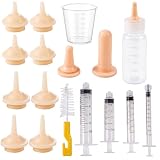
- All-in-One Complete Pet Feeding Kit : Comes with 60cc large-capacity nursing bottle, 4 multi-size oral feeders in 1ml, 3ml, 5ml and 10ml, 10 soft silicone replacement nipples and a dedicated cleaning brush. One fully equipped set meets all daily milk and liquid feeding needs for newborn puppies, kittens and small pets.
- Multi-Capacity Design for Precise Feeding :All feeding parts are made of premium food-grade material, odorless, non-toxic and durable. The ultra-soft silicone nipple fits the mouth of newborn pets naturally, flexible and bite-resistant, effectively avoiding choking and bringing a comfortable feeding experience.
- Multi-Capacity Design for Precise Feeding :Multiple capacity combinations cover tiny to regular feeding demands, easy to control feeding flow and portion accurately. Perfect for supplementary milk feeding, liquid nutrition supply and gradual ration feeding for fragile newborn small animals.
- Equipped with Special Cleaning Brush : The matched dedicated cleaning brush easily cleans the inner wall of the nursing bottle and small feeding tools, removes milk residue thoroughly. Keep the whole feeding set clean, hygienic and reusable for long-term daily use.
- Ergonomic & Portable Easy to Use : Lightweight body design is easy to grip and operate with one hand, labor-saving for daily feeding. Suitable for family pet owners and pet breeders, it is a must-have daily care supply for newborn puppies, kittens, rabbits and hamsters.
- Bowls and kitten food
- Kitten milk replacer and feeding bottle kit, with a new bottle for each bottle-fed litter
- Low-sided litter box and non-clumping litter
- A safe heat source and soft bedding
- A secure sleeping area and kitten-safe toys
The Utah manual names specific brands that its program requires or recommends. Those brand choices are specific to that program, so do not assume they apply where you live.
The same manual says foster kittens should be isolated, with separate supplies, for at least two weeks before exposure to resident pets under its program policy, and advises consulting a veterinarian about resident pets. Follow your own organization’s isolation policy and your veterinarian’s advice.
What’s actually slowing this PC down?
Pick the symptom - the matching free tool is one click away.
Best Value

- Angled Bottle Design for Natural Feeding: 45 angled kitten bottles allow nursing pet babies to drink milk while lying down, which is the most natural way for pet babies to feed. The ergonomic design provides comfort during feeding sessions, and holding the kitten feeding bottle for extended periods will not cause fatigue. The kitten nipple can be used in conjunction with a syringe for accurate milk portion control, especially useful when weak kittens need syringe feeding
- Three Silicone Nipple Sizes for All Ages: Three different sizes of pacifiers ensure kitten feeders can be used from birth to weaning. The soft silicone nipple is appealing for kittens and puppies. If the nipple's milk outlet needs adjustment, scissors can be used to widen the opening for better flow
- Ventilation System to Reduce Choking: Bottle features a ventilation system similar to human baby bottles, eliminating the need for manual ventilation during feeding and reducing the probability of choking on milk. Provides a safety protection comparable to infant feeding products
- Complete Feeding Kit Included: The product includes 1 x 60ml bottle, 1 x 5ml syringe, 1 x small nipple, 1 x medium nipple, and 1 x large nipple, providing everything needed for feeding kittens at various stages of development
- Safety Precaution for Teething Pets: When pet babies develop sharp teeth, use the feeding products with caution as nipples can be easily bitten off or swallowed by accident. Monitor your pet during feeding to ensure safe usage
If you cannot foster yourself
Fostering is not the only way to help. If your schedule or home cannot support frequent feeds, veterinary visits, or isolation from resident pets, contact the shelter or rescue and ask what support it offers. Ask about supplies, guidance, and whether it can match you with a different kind of help. If kittens are with their mother, the most useful step is often to leave them in place while you monitor the situation and ask for guidance.
Why fostering matters
The ASPCA describes foster care as a safe, healthy environment while an animal grows, heals, or prepares for adoption, and says it creates room in shelters for other animals. In its article “Why Should You Foster a Cat or Kitten? Here are 5 Great Reasons!” (2026), the organization puts it this way: “By fostering a cat or kitten in need, you’re creating space at the shelter or rescue to help even more animals in need!”
The sources cited here do not give a population-level figure for how many lives an individual foster saves, so avoid repeating such a number. What they do support is simpler: neonatal and pee-wee kittens depend on trained, round-the-clock care, and a foster home can provide that care outside the shelter while freeing space for other animals.
Quick Recap
Product prices and availability are accurate as of the date/time indicated and are subject to change. Any price and availability information displayed on Amazon at the time of purchase will apply.
Recommended Free Tools




