
Recommended Free Tools
Some links on this page are affiliate links: if you buy through them we may earn a commission, at no extra cost to you.
The fastest practical plan is two-part control: use a label-approved fire-ant bait across the affected lawn when ants are actively foraging, then spot-treat the few dangerous or persistent mounds that remain. Keep pets, children, and livestock away exactly as the product label requires. No residential treatment permanently prevents fire ants; reinvasion after rain, flooding, or movement from neighboring land is normal, so plan to reinspect and repeat treatment when necessary.
For a yard with many mounds, the research-backed “Two-Step Method” generally provides better overall suppression than spraying each mound individually. Texas A&M reports that a properly applied program can reduce mound numbers by approximately 80–90%, but it is not 100% effective or permanent. Fire ants may return within a year, and UGA notes that populations can recover in roughly 12–18 months after bait treatment, especially in wet, low-lying, or flood-prone areas.
As an Amazon Associate I earn from qualifying purchases.
PC Slower Than It Used to Be?
A free scan shows the junk files, broken settings and background clutter dragging Windows down - then fixes them in one click.Free scan · Windows 10 & 11Crashes, No Sound, or Screen Glitches?
Random freezes, missing sound and display glitches usually trace back to one bad driver. Find and replace yours safely.Free scan · under a minuteFirst, decide how extensive the problem is
Do not disturb a mound just to identify it. Fire ants can swarm when their nest is disturbed, increasing the risk of painful stings to people and pets. Instead, look for ants around mounds, sidewalks, play areas, garden borders, utility boxes, and other places where your dog or cat regularly walks.
| What you are seeing | Best starting point | Important limitation |
|---|---|---|
| Many mounds spread through a lawn | Broadcast fresh fire ant bait, then spot-treat problem mounds | It takes time and must be repeated when reinvasion occurs |
| A few mounds in a small yard | Individual, label-approved mound treatment | It is more labor-intensive and does less to stop new colonies entering |
| One mound beside a garden or other sensitive location | A label-approved mound treatment or carefully applied hot water | Hot water is incomplete and can burn people, damage turf, or injure plants |
| Fire ants are entering the house | Indoor-labeled ant bait or professional assessment, plus sealing entry points | Outdoor fire-ant bait is not automatically legal or suitable indoors |
| Pets, children, or livestock use the area | Only a product labeled for that exact site and pest | Keep animals away during application and until the label permits reentry |
Texas A&M describes the Two-Step approach as particularly useful for medium or large lawns with at least about five mounds per quarter-acre—approximately 20 mounds per acre. With fewer mounds, treating individual colonies may be more selective and practical. [Texas A&M AgriLife; University of Georgia Extension]
Popular on Amazon

- Fire ant control product is easy to apply and ideal for mound treatment
- Dual-action treatment targets visible and hidden mounds for pest control. Attracts and kills ants immediately, and see fewer ants within only one week!
- Fast-acting formula is an outdoor ant killer that kills imported fire ants, native fire ants, Argentine ants, bigheaded ants, and harvester ants
- For best results, apply ant killer for lawns in early morning or late afternoon when ants are most active; do not apply when the ground or grass is wet or heavy rain is expected
- For maximum protection, use this fire ant bait with Amdro Fire Ant Killer for Lawns following the two-step method
The Two-Step Method: the fastest sensible approach for many mounds
Step 1: Broadcast bait over the affected area
Broadcast bait works differently from a contact spray. Worker ants collect the food-based granules and carry them into the colony, where the bait is shared with other ants and the queen. That makes bait useful for colonies you cannot see and for lawns where treating every mound individually would be difficult.
Choose a product whose current label specifically permits use against fire ants on your intended site. A product marketed for ants is not automatically suitable for fire ants, lawns, gardens, playgrounds, pet areas, or indoor use.
Do these 3 things before closing this tab:
1Scan for outdated or missing drivers - takes under a minute2Repair Windows errors before they cause bigger problems3Fix the driver behind crashes, sound loss and screen glitchesBefore applying it, confirm that worker ants are actively foraging:
- Place a small amount of the bait near—but not on or inside—a mound.
- Watch for approximately 30 minutes.
- If ants begin removing the bait, conditions are suitable for application.
Late afternoon or evening is often useful during hot, dry weather, when ants may forage more actively. Apply only when the grass and soil are dry, and follow the label’s restrictions on rain, irrigation, mowing, and reentry. Do not mix bait with fertilizer, seed, or another pesticide.
Use fresh bait. A newly opened container is preferable; if you have already opened it, it must have been tightly resealed and stored as directed. Old, damp, or rancid bait may be less attractive to ants. A handheld lawn spreader can help distribute granular bait evenly across a lawn, but calibrate and use it according to the bait label rather than guessing from a fertilizer setting.
Step 2: Spot-treat the mounds that remain
Wait several days or longer, depending on the bait’s active ingredient and label directions. Then inspect the property again and treat only the mounds that remain in high-traffic or sensitive locations—such as beside a kennel, patio, path, children’s play area, or doorway.
Also popular on Amazon

- Advion fire ant bait effective and fast acting. Combined with an alluring formulation, Advion ensures control of imported fire ants in 24-72 hours for fast colony control.
- Broadcast or mound treatment
- Recreation areas as well as institutional or private service areas
- Other noncrop/nongrazed areas
- Effective on all life stages
Individual mound products may be sold as baits, granules, dusts, liquid drenches, or aerosols. Their directions are not interchangeable:
- Some granules must be watered into the mound.
- Some baits must remain dry and must not be watered in.
- Some products require the mound to remain undisturbed.
- Some labels restrict mowing immediately before or after treatment.
Read the exact current label before treating. Never combine a watering instruction from one product with the dosage or application method of another. For example, the EPA label for Antixx Fire Ant Bait instructs users not to disturb mounds, not to water in the bait, and to observe specific watering, mowing, storage, and pet or livestock restrictions. That is an example of why a generic internet recipe is unsafe.
How quickly will fire-ant bait work?
Timing depends on the active ingredient, colony condition, weather, bait freshness, and application quality. Research-based general ranges include:
Quick wins for a faster PC:
Scan for outdated or missing drivers - takes under a minuteDriver Scan →Clear out junk files and repair common Windows errorsFree Scan →| Bait category | Typical control window | What to expect |
|---|---|---|
| Indoxacarb | Approximately 3–10 days for developing control | Often comparatively fast, though broadcast control may take longer |
| Hydramethylnon | Approximately 2–3 weeks when broadcast | Requires ants to find and carry the bait into the colony |
| Spinosad | Several weeks | Do not judge failure too early if the label allows a longer window |
| Insect-growth regulators | Sometimes months | Slower action may provide longer suppression |
These are general ranges, not guarantees. The product label controls the legal directions and the manufacturer’s stated timing. Rain or irrigation soon after application can reduce effectiveness for some products. Do not automatically reapply just because you cannot see immediate results; first check the label’s waiting period and weather restrictions.
When individual mound treatment is better
Individual treatment can make sense when there are only a few mounds, when a particular mound poses an immediate danger, or when you want to limit pesticide use in a small area. It is faster for a visible colony but does not provide the same coverage as broadcast bait. New colonies can still move in from untreated neighboring property.
For an urgent mound beside a pet run or walkway, keep the area closed, remove the pet, and apply only a product labeled for that location. Do not let an animal investigate the mound while the treatment is taking effect. Reopen the area only at the time and under the conditions specified by the label.
Can boiling water kill fire ants?
Very hot or boiling water is a nonchemical option for an isolated mound, but it is not a dependable whole-yard solution. University of Georgia and Texas A&M sources describe using approximately 2–3 gallons and report about 60% elimination of treated mounds under favorable conditions. Surviving ants may relocate, and the queen may remain alive.
The Tool Desk
Outbyte Driver Updater FREEFix the driver behind crashes, sound loss and screen glitchesFind Drivers →Outbyte PC Repair FREERepair Windows errors before they cause bigger problemsFix Now →Also popular on Amazon
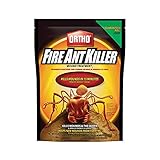
- FAST-ACTING FIRE ANT TREATMENT: This insect control product kills fire ant mounds in 15 minutes when used as an fire ant killer outdoors
- KILLS FIRE ANTS & THE QUEEN: Ortho Fire Ant Killer Mound Treatment1 ant granules kill mounds and the queen, and keep new mounds from forming
- WHERE TO USE: Use these fire ant granules for outdoors to kill fire ants on residential lawns and on ornamentals and flower gardens
- WHEN TO APPLY: Apply this fire ant mound killer outdoors when temperatures are between 65°F to 80°F, or early in the morning or late evening when ants are most active
- HOW TO USE: To use this 3 lb. bag of Ortho Fire Ant Killer Mound Treatment1, apply 2/3 cup of ant killer outdoor granules to mounds and surrounding 3-ft. diameter and drench with 2 gallons of water
Hot water is more likely to work when ants are near the surface, such as on a cool, sunny morning. It can also:
- Cause serious burns to people or pets;
- Kill grass and damage roots;
- Injure desirable plants;
- Spill during transport or handling; and
- Fail to eliminate the colony completely.
Do not carry boiling water near children or animals. Keep pets indoors or in another secured area, wear appropriate protection for the task, and do not pour it where it can run onto turf, plant roots, paths used by people, or other vulnerable surfaces.
How to stop fire ants from coming back
You cannot reliably block every new colony from entering a residential property, but you can make reinvasion easier to detect and less disruptive.
Inspect after warm weather and rain
Check the lawn, pet areas, garden edges, sidewalks, driveway borders, and utility boxes after warm weather and rainfall. Flooding and wet conditions can move colonies or encourage new mound formation. Give special attention to locations where pets stand, eat, sleep, or play.
Repeat bait only when appropriate
Texas A&M describes once- or twice-yearly broadcast bait applications as a common suppression schedule, while UGA emphasizes treating again when reinvasion occurs and mound numbers become problematic. Do not create your own calendar by combining labels: use the selected product’s current directions and local extension guidance.
Treat new nuisance mounds early
A newly appearing mound beside a path or dog run is easier to manage than a growing infestation. Spot-treat it using a product labeled for the site, or use the carefully controlled hot-water option where appropriate. Early action reduces the chance that a small number of colonies becomes a larger problem, but it will not prevent ants from entering from untreated land.
Protect competing native ants
UGA identifies preserving native and other nonproblem ant species that compete for food and nesting sites as the best currently available biological-control approach for homeowners. Avoid indiscriminate, repeated broad-spectrum spraying when selective bait or individual mound treatment will solve the immediate problem. This can reduce unnecessary pesticide exposure and preserve helpful competition.
Also popular on Amazon

- Kills fire ants all season-long with Amdro Fire Ant Killer for Lawns, an Amdro ant killer that provides up to 3 months of fire ant control
- This fire ant bait targets existing mounds and prevents new ones from forming; attracts and kills imported fire ants, native fire ants, harvester ants, bigheaded ants and other listed ants
- Unique two-way killing formula for outdoor ant bait combines fire ant bait with insect growth regulator; pair with the two-step method for an extra layer of protection
- Ready-to-use outdoor ant killer is convenient and requires no mixing; simply check for ants and apply using a broadcast spreader
- Use for pest control when ants first appear; for best results, apply in early morning or late afternoon when ants are most active
Seal routes into the home
If ants are appearing indoors, follow their trail and inspect cracks, crevices, thresholds, utility penetrations, and gaps around windows or doors. Seal suitable entry points after identifying the route. For indoor control, use only a bait or treatment specifically labeled for indoor use in that setting. A lawn product is not automatically permitted inside a house.
Free tools Windows power users keep installed
One-click scans. No signup required.
Fire-ant treatment safety for dogs, cats, and families
EPA guidance requires consumers to use only EPA-registered pesticides and follow the label. The label identifies the permitted pest and site, amount, timing, protective measures, storage requirements, and restrictions.
- Keep pets, children, livestock, food, and animal feed away from pesticide products.
- Do not allow pets or livestock to consume fire-ant bait.
- Store products in the original container, tightly closed, dry, and out of reach.
- Never transfer pesticide into a food or drink container.
- Do not measure pesticide with kitchen utensils.
- Do not apply a product to a lawn, garden, hardscape, kennel area, or indoor space unless that use appears on the label.
- Use chemical-resistant garden gloves only when the label requires or recommends hand protection, and use the glove material specified by that label.
- Observe the label’s reentry period; “dry” does not automatically mean “safe for pets.”
If a pet may have eaten bait or contacted a pesticide, remove the animal from the area and contact a veterinarian or an animal poison service promptly. Keep the product container or a photograph of its label available so the professional can identify the active ingredient.
What not to do
- Do not promise yourself a permanent cure. New colonies and recovery are expected possibilities.
- Do not assume every ant bait works on fire ants. Fire ants need an attractive, properly labeled bait product.
- Do not spray the entire yard with a household insecticide. Broad-area contact treatment may cost more and use more pesticide, and the product must be registered and labeled for that use.
- Do not water in every granular product. Some baits must remain dry.
- Do not disturb a mound to confirm it is active. Swarming ants can sting people and animals.
- Do not treat immediately before rain or irrigation unless the label permits it. Water can reduce bait performance or violate the directions.
- Do not use a lawn fire-ant product indoors. Indoor legality and directions are separate label questions.
When to call a professional
Consider a licensed pest-control service if mounds are widespread, colonies repeatedly return despite correct label-based treatment, ants are entering the house, someone in the household has a serious sting allergy, or you cannot keep pets and children away during treatment. Ask the provider which product and active ingredient will be used, where it is labeled for application, what the reentry interval is, and how pets should be protected.
Professional treatment is not a guarantee that fire ants will never return. Its value is correct site assessment, safer application planning, and help with persistent or difficult-to-access infestations.
What to buy—and what matters more than the brand
For most multi-mound lawns, the central purchase is a fresh, label-approved fire-ant bait. The active ingredient, permitted site, weather restrictions, application rate, and pet-safety directions matter more than a claim that one brand is universally “best.” Texas A&M does not endorse a single best product.
A spreader is useful for even broadcast coverage. Gloves may be appropriate when required by the selected product label, but do not treat generic glove advice as a substitute for reading that label. Named products such as Amdro Fire Ant Killer for Mounds, Advion Fire Ant Bait, and Antixx Fire Ant Bait are examples of products discussed in the research, not universal recommendations; availability and exact directions can vary by location and current package label.
Also popular on Amazon

- Fire ant control product is easy to apply and ideal for mound treatment
- Dual-action treatment targets visible and hidden mounds for pest control. Attracts and kills ants immediately, and see fewer ants within only one week!
- Fast-acting formula is an outdoor ant killer that kills imported fire ants, native fire ants, Argentine ants, bigheaded ants, and harvester ants
- For best results, apply ant killer for lawns in early morning or late afternoon when ants are most active; do not apply when the ground or grass is wet or heavy rain is expected
- For maximum protection, use this fire ant bait with Amdro Fire Ant Killer for Lawns following the two-step method
Frequently Asked Questions
How long does it take to get rid of fire ants?
Depending on the active ingredient and conditions, bait may begin producing control in several days or may take several weeks or longer. Indoxacarb products are often comparatively fast; hydramethylnon and spinosad can take longer, while insect-growth regulators may take months. Follow the current product label and do not reapply early simply because results are not immediate.
Will one treatment keep fire ants away permanently?
No. A well-applied Two-Step program can substantially reduce mound numbers, but no ordinary residential treatment is permanent. Colonies can recover, and new ants can enter from neighboring or flood-prone areas. Reinspect after warm weather and rain and repeat treatment only as the label and local extension guidance allow.
Is fire-ant bait safe around dogs and cats?
Only if the specific product is labeled for the site and used exactly as directed. Fire-ant bait is attractive to ants and may also attract pets. Keep animals away during application and for the label-specified reentry period, prevent them from eating granules, and store the product securely.
Does boiling water always kill the queen?
No. Hot water eliminates only some treated mounds—about 60% under favorable conditions in extension guidance—and surviving colonies may relocate. It also creates serious burn and plant-damage risks.
What should I do if my pet is stung by fire ants?
Move the pet away from the mound and monitor closely. Fire-ant stings can cause painful pustules and, rarely, severe allergic reactions. Seek emergency veterinary care for difficulty breathing, facial or throat swelling, weakness, collapse, or widespread symptoms. Contact your veterinarian promptly if many stings occurred or you are concerned.
When is a fire-ant sting an emergency for a person?
Seek emergency medical care for trouble breathing, swelling of the throat or tongue, faintness, collapse, or widespread allergic symptoms after a sting. Severe allergic reactions can be life-threatening.
The Bottom Line
The best fast-and-lasting strategy is not a single “miracle” spray: use fresh, label-approved broadcast bait for broad suppression, spot-treat the few mounds that remain dangerous, and inspect again after warm weather and rain. Keep pets and children away as directed, preserve helpful native ants where practical, and expect periodic retreatment because reinvasion is normal.





Leave a Reply